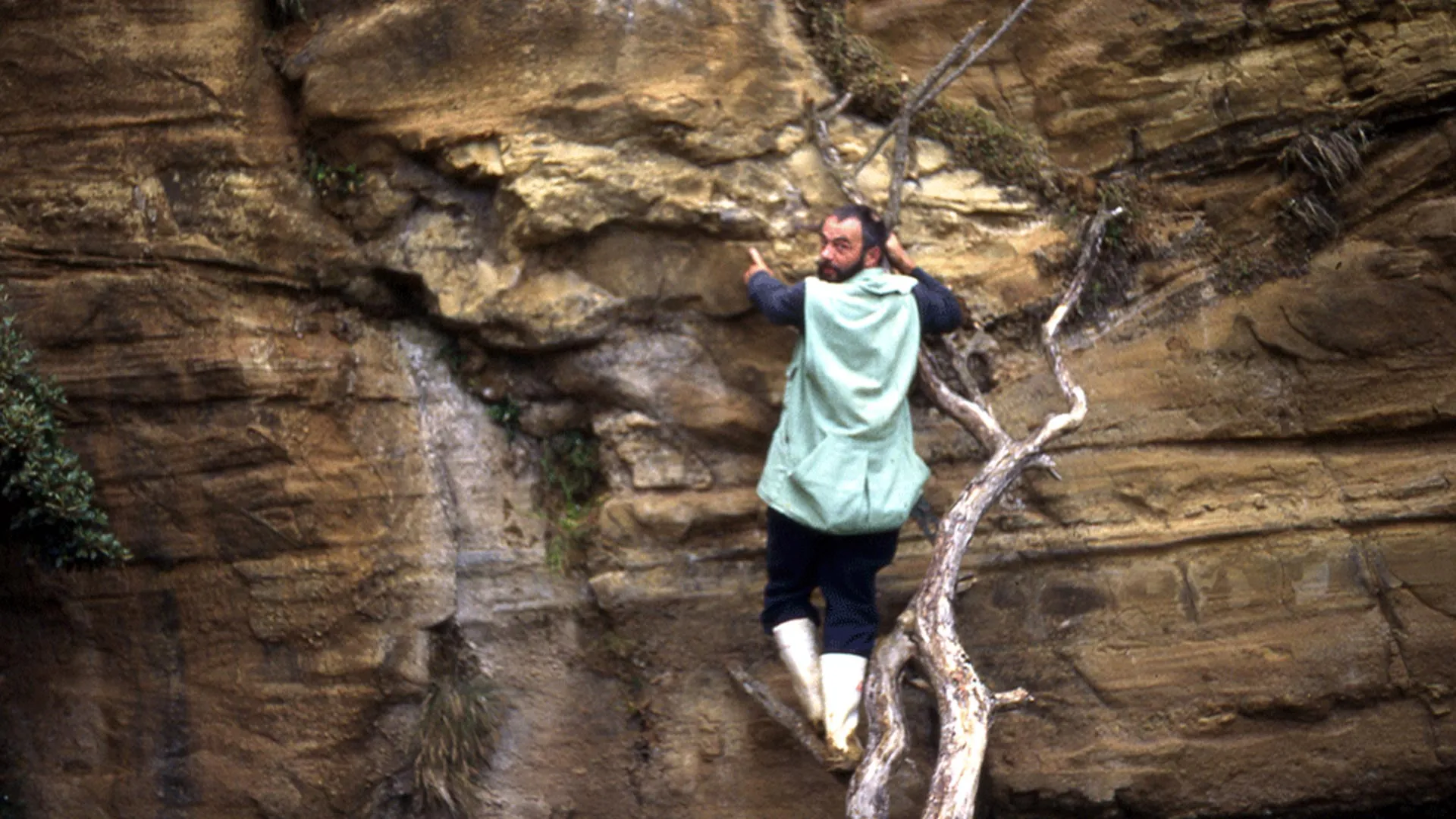
The Missing Notebooks That Solved a 55-Million-Year-Old Fossil Mystery
Researchers recovered lost field notes that provided the exact geographic and stratigraphic location of fossils dating to 55 million years ago. This recovery allows scientists to accurately place these specimens within the Eocene epoch, solving a long-term mystery regarding their origin and evolutionary significance, according to reports on the missing notebooks that solved a 55-million-year-old fossil mystery – ScienceDaily.
The recovery of these documents transforms a collection of “homeless” fossils into precise scientific data. In paleontology, a specimen without a known location—known as provenance—is often relegated to a secondary status because it cannot be tied to a specific moment in geologic time or a specific ancient environment. By reconnecting these fossils to their original site through the rediscovered notebooks, researchers can now map the distribution of species during a period of extreme global warming.
How the Recovery of Lost Field Notes Solved the Fossil Mystery
The central conflict in this discovery was the lack of provenance. For decades, several fossil specimens had existed in museum collections without accompanying data regarding where they were dug from the ground. Without this information, the fossils were essentially “silent,” unable to tell scientists about the climate, the soil, or the neighboring species of their era.
The mystery was resolved when a set of missing notebooks, written by the original collectors, was located. These notebooks contained detailed sketches, coordinates, and stratigraphic descriptions—the vertical layering of rock that acts as a timeline for the Earth. By matching the descriptions in the notebooks to the physical characteristics of the fossils and the known geology of the region, the research team was able to pinpoint the exact layer of earth where the animals lived 55 million years ago.
According to the research, this process involves several critical steps:
- Physical Matching: Comparing the fossil’s unique morphology with the sketches and descriptions recorded in the notebooks.
- Stratigraphic Correlation: Using the notebooks’ notes on rock color, composition, and layer depth to find the corresponding site in the field.
- Geochronological Dating: Applying radiometric dating or bio-stratigraphy to the identified layer to confirm the 55-million-year age.
Why Provenance Is Critical for 55-Million-Year-Old Fossils
To the casual observer, a fossil is a static object. To a paleontologist, a fossil is a data point in a four-dimensional map. The “missing notebooks that solved a 55-million-year-old fossil mystery – ScienceDaily” highlight a recurring problem in the history of science: the “orphan specimen.”
Provenance provides three essential types of information that a fossil alone cannot offer:
- Temporal Precision: A few meters of difference in a rock layer can represent thousands or even millions of years. Knowing the exact layer allows scientists to determine if a species appeared suddenly or evolved gradually.
- Paleoenvironmental Context: The surrounding rock (the matrix) tells scientists if the animal lived in a swamp, a rainforest, or a coastal plain.
- Association: If multiple species are found in the same layer, it proves they coexisted. Without provenance, researchers can only guess if two animals lived in the same region at the same time.
“A fossil without provenance is like a page torn out of a book; you can read the words, but you don’t know the story they belong to.”
The Significance of the Eocene Epoch and the PETM
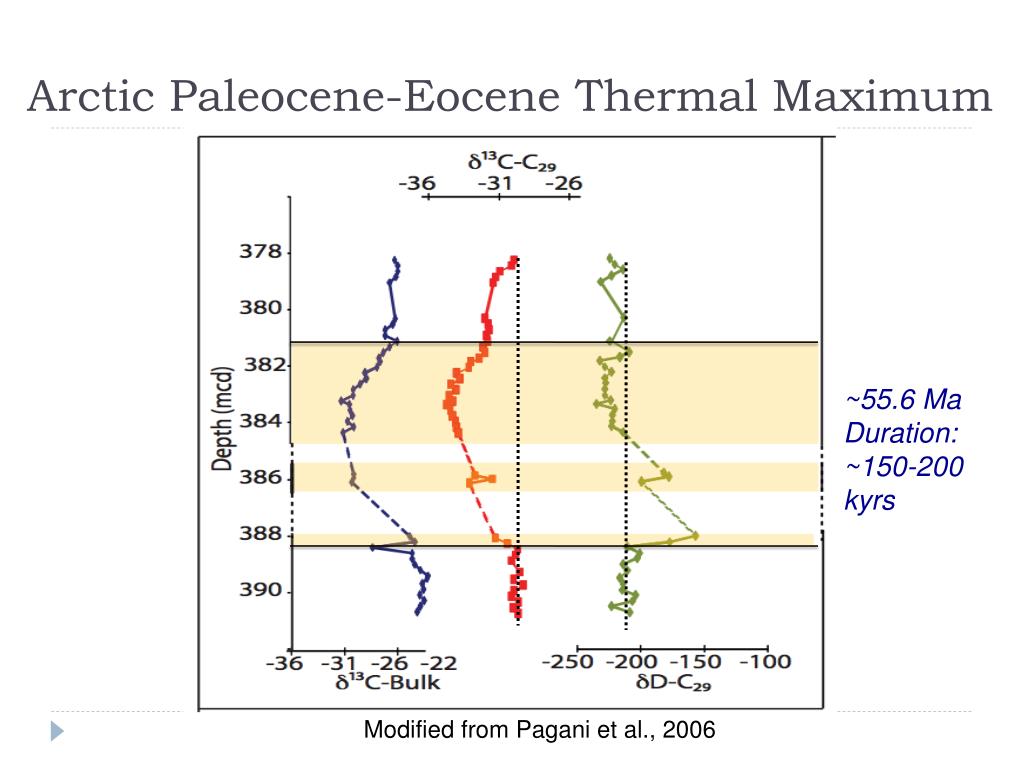
The 55-million-year mark is not an arbitrary date. It coincides with the Paleocene-Eocene Thermal Maximum (PETM), one of the most rapid and extreme global warming events in Earth’s history. During this window, global temperatures spiked, and the carbon cycle was severely disrupted.
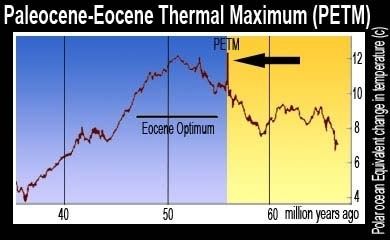
This era is a primary focus for modern scientists because it serves as a deep-time analog for current anthropogenic climate change. By studying fossils from this specific period, researchers can see how mammals and plants responded to a rapidly heating world. The recovered notebooks allow these specific fossils to be integrated into the PETM timeline, providing a clearer picture of how species migrated or evolved to survive the heat.
| Feature | General Fossil Value | Fossil with Provenance (via Notebooks) |
|---|---|---|
| Scientific Use | Morphological study (shape/size) | Evolutionary and ecological mapping |
| Climate Data | Inferred from species type | Confirmed via stratigraphic rock analysis |
| Timeline | Broad epoch estimate | Precise geologic window (e.g., PETM) |
| AI/Digital Modeling | Limited to 3D structure | Can be placed in a spatial-temporal model |
The Risks of “Orphan Fossils” in Global Museums
The case of the missing notebooks is an outlier because the data was actually recovered. In most instances, when field notes are lost, the scientific value of the fossils is permanently diminished. This issue stems from the early days of paleontology, where “trophy hunting” for the most complete skeletons often took precedence over the meticulous recording of site data.
Many museums worldwide house thousands of specimens with “unknown” or “approximate” locations. This creates a gap in the fossil record. When a researcher tries to track the migration of a species across a continent, these orphan fossils cannot be included in the map, potentially leading to a skewed understanding of how animals moved in response to climate shifts.
The recovery of these notebooks serves as a case study for the importance of digital archiving. Modern paleontology now relies on GPS coordinates, digital photography, and cloud-based databases to ensure that the link between the specimen and the earth is never broken again. Related explainer on digital paleontology.
Implications for Mammalian Evolution
The fossils solved by these notebooks provide specific insights into the radiation of modern mammal orders. Around 55 million years ago, the ancestors of primates, hoofed mammals (ungulates), and carnivorous mammals began to diversify rapidly.
By placing these fossils in their correct stratigraphic context, scientists can now ask more precise questions:
- Did these specific mammals migrate from Asia to North America during the PETM warming?
- Did their body size shrink (a common response to heat known as “dwarfing”) as the temperature rose?
- Were they part of a new ecosystem that emerged specifically because of the thermal maximum?
Without the notebooks, these questions were unanswerable. With them, the fossils become evidence in a broader argument about biological resilience and adaptation.
Common Misconceptions About Fossil Dating
A frequent misunderstanding is that the fossil itself can be “dated” like a piece of carbon. However, most fossils are too old for carbon dating, which only works for organic material up to about 50,000 years old.

Instead, scientists use two primary methods, both of which require the provenance found in the missing notebooks:
Relative Dating (Stratigraphy)
This method relies on the law of superposition: older layers are on the bottom, and younger layers are on top. If the notebooks record that a fossil was found in “Layer B,” and “Layer B” is known to be 55 million years old, the fossil is dated by association.
Absolute Dating (Radiometric)
Scientists look for volcanic ash layers (tuff) above and below the fossil. By dating the crystals in the ash using isotopes like Potassium-Argon, they can bracket the fossil’s age. If the notebooks didn’t record which ash layer the fossil was near, this precise dating would be impossible.
The Role of Archival Research in Modern Science
This discovery underscores a shift in scientific methodology. While much of today’s funding goes toward new excavations, “museum paleontology”—the study of existing collections—is becoming equally vital. The act of searching through old archives, letters, and diaries is now a recognized form of primary research.
The recovery of the notebooks demonstrates that the “discovery” of a fossil does not happen only in the field. It happens in the library and the archive as well. By applying modern detective work to old records, scientists can “rediscover” specimens that have been sitting in drawers for a century, effectively granting them a second life in the scientific community.
Frequently Asked Questions
What is fossil provenance and why does it matter?
Provenance is the exact record of where a fossil was found, including the geographic coordinates and the specific rock layer (stratum). It matters because it allows scientists to date the fossil accurately and understand the environment in which the animal lived. Without it, a fossil’s scientific value is significantly reduced.
Why is 55 million years ago a significant time period?
This period marks the beginning of the Eocene epoch and includes the Paleocene-Eocene Thermal Maximum (PETM), a time of extreme global warming. It is a critical era for studying how mammals evolved and migrated in response to rapid climate change.
Can’t scientists just date the fossil directly?
Most fossils are mineralized, meaning the original organic carbon is gone. Scientists cannot use carbon dating for fossils this old. They must instead date the surrounding rock layers or use volcanic ash markers, both of which require knowing exactly where the fossil was located in the ground.
How did the notebooks solve the mystery?
The notebooks contained the original field notes, sketches, and location data from the people who first collected the fossils. By matching these notes to the specimens and the geology of the site, researchers were able to restore the lost provenance, effectively “re-dating” the fossils.
Is this a common occurrence in paleontology?
While losing field notes is unfortunately common in older collections, recovering them is rare. This specific case is an example of how archival research can salvage the scientific value of “orphan fossils” that were previously considered useless for stratigraphic study.
