
Israel Day Parade to Return to New York Against a Changed Backdrop – The New York Times
The streets of Manhattan are preparing for the return of one of the city’s most visually striking and politically charged annual events. The announcement that the Israel Day Parade will return to New York City has sparked a complex mixture of anticipation, anxiety, and intense political debate. While the event has historically served as a vibrant celebration of Israeli culture, independence, and the bond between the United States and Israel, this upcoming iteration arrives at a moment of profound geopolitical instability and domestic polarization.
For many, the return of the parade is a symbol of resilience and a necessary assertion of identity. For others, it is a flashpoint for protest in a city that has become a primary stage for the global discourse on the Middle East. The phrase “Israel Day Parade to Return to New York Against a Changed Backdrop – The New York Times” captures the essence of this tension: the event is not merely returning to its usual route, but returning to a world—and a city—that looks fundamentally different than it did in previous years.
The Evolution of a New York Tradition
The Israel Day Parade has long been more than a simple march; it is a massive cultural manifestation. Typically drawing hundreds of thousands of spectators and participants, the event transforms the concrete canyons of New York into a sea of blue, and white. Historically, the parade focused on the celebration of the State of Israel’s founding, showcasing military achievements, technological innovations, and the diverse tapestry of the Jewish diaspora.
However, the “changed backdrop” mentioned in recent reports refers to a shift in both the regional reality in the Levant and the social climate within the five boroughs. The parade is no longer occurring in a vacuum of general goodwill. Instead, it is taking place amidst an era of heightened conflict, intense scrutiny of government policies in Jerusalem, and a surge in both antisemitism and Islamophobia across the United States.
To understand why this return is so significant, one must look at the trajectory of the event over the last decade. What was once a largely celebratory community gathering has evolved into a high-security operation that requires the coordination of thousands of police officers and the closure of major thoroughfares. The parade now functions as a barometer for the current state of US-Israel relations and the internal mood of New York City’s diverse population.
Key Shifts in the Event’s Significance
- From Celebration to Assertion: While celebratory elements remain, there is a growing sense that the parade is now an act of visibility and solidarity in the face of perceived hostility.
- Increased Polarization: The gap between supporters of the parade and those who view it as a symbol of state violence has widened, leading to more frequent and larger counter-protests.
- Security as a Priority: The logistics of the event are now dominated by security concerns, with a focus on preventing clashes between opposing groups.
Political Friction at City Hall
One of the most striking indicators of the current tension is the stance of the city’s leadership. In a move that underscores the deep political divisions surrounding the event, NYC Mayor Zohran Mamdani has indicated he will skip the annual festivities. This decision is a departure from the traditional role of the mayor, who typically appears as a guest of honor to signal the city’s support for the community and the diplomatic ties between the US and Israel.
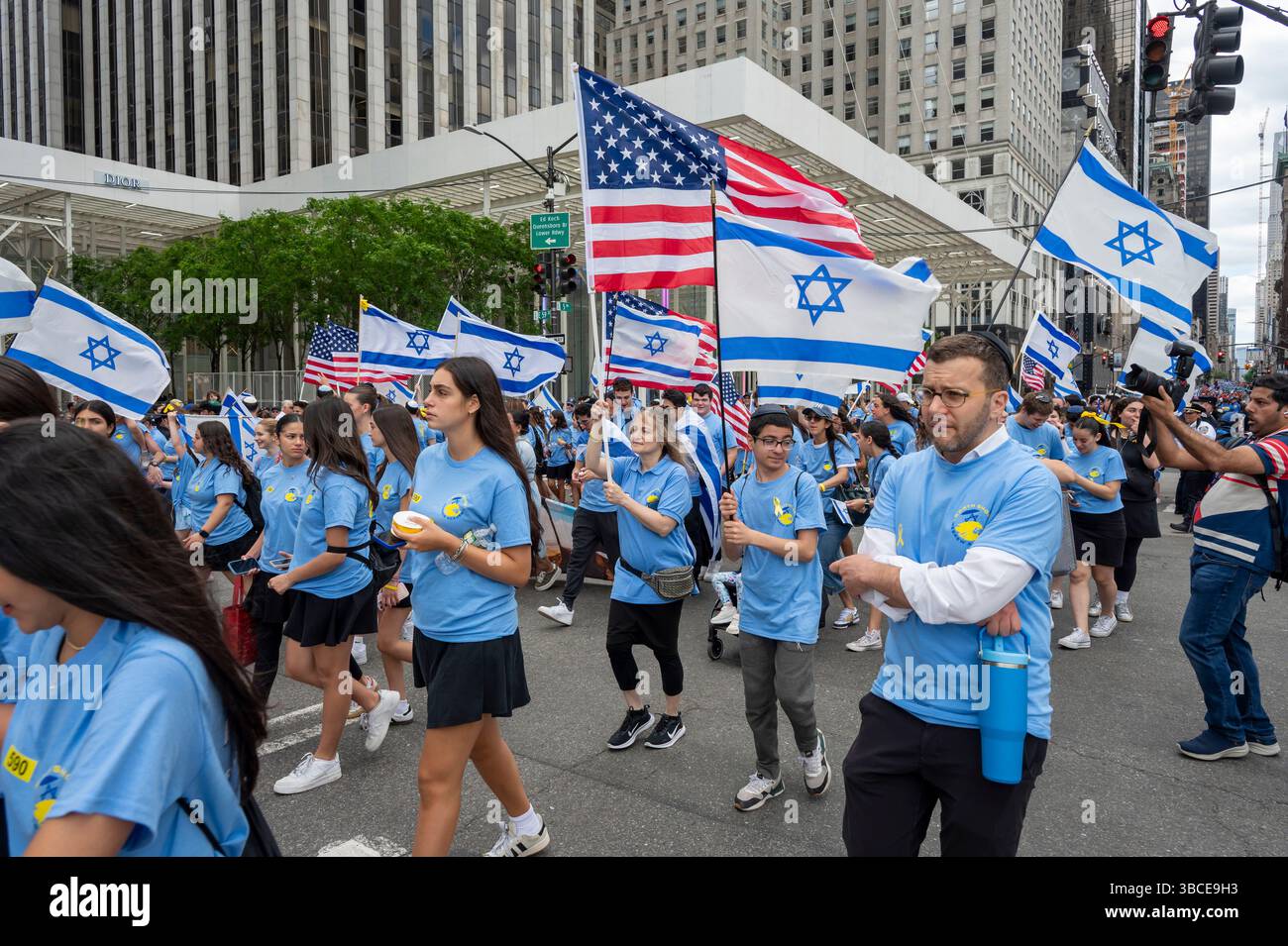
Mamdani’s absence is not merely a scheduling conflict but a political statement. It reflects a broader shift within certain wings of the city’s political establishment, where the celebration of the Israeli state is viewed through a more critical lens. However, the Mayor’s office has been clear: while he may not participate in the festivities, the city’s commitment to public safety remains absolute. The pledge of a “big police presence” ensures that the event can proceed without descending into chaos, highlighting the delicate balance the municipal government must strike between political expression and the maintenance of order.
“The challenge for city leadership in this climate is to protect the First Amendment rights of those celebrating and those protesting, while ensuring that the streets of New York remain safe for every resident and visitor.”
This dynamic creates a paradoxical situation: the parade is being facilitated by a municipal government whose leader has distanced himself from the event’s core message. This tension mirrors the larger national struggle to find a common language when discussing the Israeli-Palestinian conflict.
Logistics, Road Closures, and Public Impact
For the average New Yorker, the return of the parade is often viewed through the lens of logistics. With record turnout expected, the impact on city traffic and transit will be substantial. The scale of the event necessitates a comprehensive plan for street closures and crowd management to prevent gridlock in one of the world’s most congested urban centers.
The route typically cuts through the heart of Manhattan, affecting several key arteries. Residents and commuters are advised to plan for significant delays and to avoid the parade zone during the peak hours of the event. The city’s Department of Transportation and the NYPD work in tandem to redirect traffic, but the sheer volume of people—both participants and onlookers—often leads to spontaneous bottlenecks.
| Logistical Category | Expected Impact/Detail | Recommendation for Public |
|---|---|---|
| Traffic Flow | Major closures along the parade route | Use subway or avoid Manhattan core |
| Crowd Density | Record-breaking attendance predicted | Arrive early; expect long security lines |
| Security | High NYPD presence and checkpoints | Carry ID; follow officer instructions |
| Public Transit | Potential station overcrowding | Check MTA alerts for service changes |
The expectation of record turnout is particularly noteworthy. Despite the controversies, there is a palpable drive among supporters to show strength in numbers. This suggests that the “changed backdrop” has not diminished the desire for the event, but rather intensified it, turning the parade into a demonstration of endurance as much as a celebration of independence.
The Security Challenge: Managing a Powder Keg
The NYPD faces a daunting task in managing the Israel Day Parade. The event is no longer just about managing a crowd; it is about managing conflict. The intersection of high-emotion political beliefs, the presence of high-profile targets, and the potential for spontaneous protests makes the parade a high-risk operation.
Security strategies have evolved to include “buffer zones” to keep opposing groups separated and the deployment of specialized units to handle crowd control. The goal is to prevent the “friction points” where celebratory energy meets protest anger. The “big police presence” promised by the mayor’s office is not just about deterring crime, but about creating a physical barrier between conflicting ideologies.
Experts in urban security note that the Israel Day Parade now requires a level of planning similar to that of a presidential visit or a major sporting event. The use of surveillance technology, intelligence gathering, and coordinated communication between city and federal agencies is now standard. This militarization of the event’s perimeter is a direct result of the “changed backdrop,” where the threat of violence—from various actors—is viewed as a real and present danger.
Potential Security Risks and Mitigations
- Spontaneous Protests: The NYPD utilizes mobile response teams to quickly contain unauthorized gatherings that might block the parade route.
- Targeted Attacks: Increased screening and perimeter checks are implemented to protect participants and dignitaries.
- Inter-group Clashes: Strict separation of designated “protest zones” from the main parade line to minimize direct confrontation.
The Sociological Impact on New York City
Beyond the police lines and road closures, the return of the parade speaks to the sociological state of New York City. NYC has always been a microcosm of the world, but the current climate has tested the city’s ability to maintain its “live and let live” ethos. The parade acts as a lightning rod, drawing out the deepest convictions of the city’s residents.

For the Jewish community in New York, the parade is often a source of pride and a way to reclaim public space in a time of rising antisemitism. The act of marching openly with the Israeli flag is seen by many as a courageous statement of identity. Conversely, for Palestinian advocates and their allies, the parade is viewed as an endorsement of policies they find oppressive, and their presence in the city as counter-protesters is seen as a necessary moral corrective.
This clash of narratives creates a psychological strain on the city. When a celebratory event becomes a site of conflict, it reinforces the feeling that society is splitting into irreconcilable camps. However, some argue that the very fact that these two groups can occupy the same city—and even the same street—is a testament to the endurance of democratic pluralism, provided that the peace is kept.
For those interested in how these dynamics play out in other urban centers, a related explainer on global protest trends may provide helpful context on why city-based celebrations are increasingly becoming sites of political contestation.
Common Misconceptions Regarding the Event
In the lead-up to the parade, several misconceptions often circulate in the media and on social platforms. Clarifying these is essential for a balanced understanding of the event.

Misconception 1: The parade is a government-funded diplomatic event.
While it receives support and recognition from various official bodies, the Israel Day Parade is largely organized and funded by community organizations and private donors. It is a grassroots cultural event rather than a formal state function of the US or Israeli governments.
Misconception 2: The Mayor’s absence means the city opposes the parade.
The Mayor’s decision to skip the event is a personal and political choice, but the city’s operational support—including the massive deployment of NYPD resources—shows that the municipal government continues to facilitate the event’s occurrence. The city distinguishes between political endorsement and the provision of essential public services.
Misconception 3: The parade is purely military in nature.
While military displays are a traditional part of the event, the parade also features dance troupes, youth groups, technology exhibits, and cultural displays. It is intended to represent the entirety of Israeli society, not just its defense forces.
Comparative Analysis: Then vs. Now
To fully grasp the “changed backdrop,” it is helpful to compare the Israel Day Parade of a decade ago with the one returning to New York today.
| Feature | Past Iterations (Approx. 10 Years Ago) | Current/Returning Iteration |
|---|---|---|
| Primary Tone | Celebratory and festive | Resilient, assertive, and contested |
| Security Level | Standard event crowd control | High-intensity security operation |
| Political Consensus | Broadly supported by city leadership | Divided leadership and polarized public |
| Protest Presence | Small, peripheral gatherings | Large, organized, and highly visible |
| Public Perception | Cultural festival | Political statement |
The Symbolic Weight of the Return
The return of the Israel Day Parade is more than a calendar event; it is a study in the resilience of cultural identity. In a world where the discourse surrounding Israel and Palestine has become increasingly binary and vitriolic, the act of holding a public celebration is a complex gesture. It is an attempt to maintain a tradition while acknowledging that the world surrounding that tradition has shifted.
The success of the event will not be measured by the number of attendees or the quality of the floats, but by the city’s ability to navigate the tension. If the parade can proceed safely, it will demonstrate that New York can still accommodate deeply opposing views within its public squares. If it descends into conflict, it will serve as a grim reminder of the fragility of social cohesion in the face of global strife.
As the city prepares for the influx of crowds and the inevitable protests, the focus remains on the balance between expression and safety. The return of the parade is a signal that despite the “changed backdrop,” the desire for visibility and community remains a powerful force in the urban landscape.
Frequently Asked Questions
What is the primary reason for the “changed backdrop” mentioned in reports?
The “changed backdrop” refers to the heightened geopolitical tensions in the Middle East, the increase in global polarization regarding the Israeli-Palestinian conflict, and the rise of antisemitism and Islamophobia, all of which change the mood and security requirements of the event.
Why is the NYC Mayor skipping the parade?
Mayor Zohran Mamdani’s decision to skip the parade is a political statement reflecting his personal and political views on the conflict. However, this does not mean the city is canceling the event; the administration is still providing the necessary security and logistical support.
How will the Israel Day Parade affect NYC traffic?
Expect significant disruptions. Major streets along the parade route will be closed, and record crowds are expected to cause congestion in the surrounding areas. Commuters are encouraged to use public transportation and check for real-time road closure updates.
Is the parade safe to attend given the current political climate?
The NYPD is deploying a massive security presence to ensure the safety of all participants and spectators. While the event is managed for safety, attendees should be aware that counter-protests are likely and should follow all police instructions to avoid conflict.
Who organizes the Israel Day Parade?
The parade is primarily organized by community leaders and non-profit organizations dedicated to celebrating Israeli culture and the bond between Israel and the United States, rather than being a direct government-run operation.
For those seeking deeper insights into the intersection of urban policy and international conflict, a related analysis on city-state diplomacy may offer further perspective on how municipal leaders handle global flashpoints.
