Trump Strips Job Protections From 8,000 Senior Federal Workers: Understanding the Impact on the Civil Service
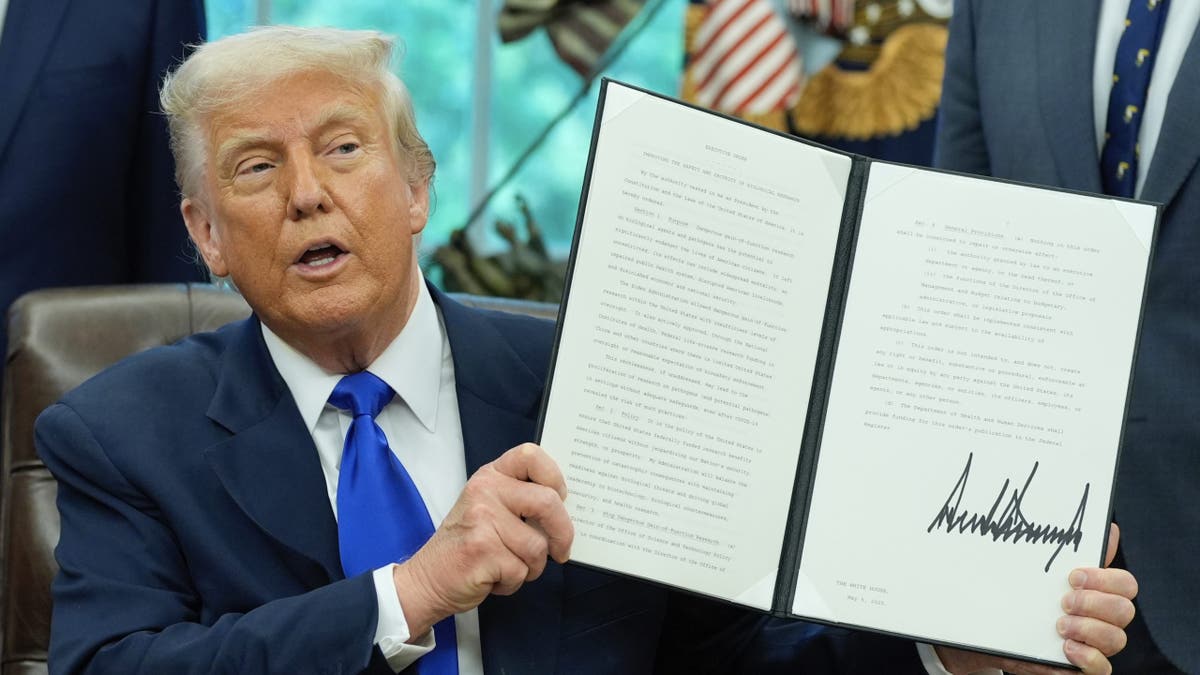
In a move that significantly alters the landscape of the United States federal bureaucracy, President Trump has signed an executive order that removes job protections for approximately 8,000 senior federal workers. This action, which effectively makes it easier to fire these employees, represents a major shift in how the executive branch manages its highest-level non-political staff. By stripping these protections, the administration is moving toward a model of federal employment that prioritizes executive flexibility and direct accountability over the traditional safeguards of the merit-based civil service.
The decision to reclassify these positions has sent ripples through the federal workforce, sparking an intense debate over the balance between a professional, non-partisan bureaucracy and the ability of a president to implement their policy agenda without internal resistance. For the 8,000 affected individuals, the shift means a transition from a system where termination requires a rigorous process of documentation and appeals to one where they can be removed far more readily.
The Mechanics of the Order: What Changed?
The core of this policy shift lies in the reclassification of federal positions. Specifically, the administration has moved about 8,000 federal positions into a category referred to as “Schedule Policy/Career.” To understand why this is significant, it is necessary to understand the distinction between the different “schedules” or classifications of federal employment.
Traditionally, most senior federal employees operate under the Competitive Service. This system is designed to ensure that government roles are filled based on merit rather than political affiliation. One of the primary benefits of the Competitive Service is the high level of job protection it provides. employees cannot be fired without “just cause” and are entitled to a series of due process protections, including the right to respond to charges and appeal termination decisions to the Merit Systems Protection Board (MSPB).
By moving these 8,000 positions to a different classification, the administration is effectively stripping away those due process shields. Under the new designation, these senior roles operate more like “at-will” employment. This means the president and their appointed political leaders can remove these employees more quickly and with far less justification than would be required under the standard civil service rules.
Key Changes at a Glance
| Feature | Standard Competitive Service | New Schedule Policy/Career |
|---|---|---|
| Hiring Basis | Strictly merit-based competition | Increased executive discretion |
| Termination Process | Rigorous due process; “just cause” required | Streamlined; easier to remove |
| Appeal Rights | Extensive rights via the MSPB | Significantly reduced or eliminated |
| Primary Goal | Non-partisan continuity | Alignment with presidential policy |
Who Is Affected by the Removal of Protections?
The order specifically targets “senior” federal workers. While the administration has not provided a public, name-by-name list of every affected role, the scope encompasses those in high-level management and policy-shaping positions across various federal agencies. These are the individuals who typically translate presidential directives into operational reality, overseeing the day-to-day functions of the government.
The focus on senior-level employees is strategic. By targeting the upper echelons of the bureaucracy, the administration aims to ensure that the people leading agencies are fully aligned with the president’s goals. The logic is that senior career officials—who often remain in their posts across multiple administrations—can sometimes act as a “brake” on a president’s agenda, utilizing their expertise and institutional knowledge to slow down or modify policies they believe are impractical or contrary to established norms.
- Policy Coordinators: Those who draft the rules and regulations that govern industry and public life.
- Agency Managers: Senior executives who oversee large budgets and thousands of subordinates.
- Technical Experts: High-level specialists whose expertise informs national security, health, or economic policy.
The Philosophical Conflict: Merit vs. Mandate
The move to strip job protections from 8,000 senior federal workers highlights a fundamental tension in American governance: the conflict between the Merit System and the Presidential Mandate.

The Argument for the Merit System
Proponents of the traditional civil service argue that a professional, non-partisan workforce is essential for the stability of the state. The merit system was created to prevent the “spoils system,” where every change in administration led to a total purge of government employees and their replacement with political loyalists. The benefits of this system include:
- Institutional Memory: Career professionals maintain a deep understanding of how programs work, preventing the government from making the same mistakes every four to eight years.
- Expertise: Hiring based on qualifications ensures that the people managing the nation’s nuclear stockpile, food safety, or airspace are experts in their fields, not political appointees.
- Continuity: Essential services continue to function smoothly regardless of who occupies the White House.
The Argument for Executive Flexibility
Conversely, the administration argues that the “deep state”—a term used to describe career bureaucrats who may resist political leadership—impedes the democratic process. If a president is elected on a specific platform, they should have the authority to remove any employee who obstructs the implementation of that platform. The arguments in favor of this shift include:
- Accountability: Making it easier to fire senior workers ensures they are accountable to the elected leader of the executive branch.
- Efficiency: Removing “bureaucratic red tape” and internal resistance allows for faster policy execution.
- Democratic Legitimacy: Ensuring that the people running the government are aligned with the will of the voters who elected the president.
“The shift toward a ‘Schedule Policy/Career’ model is a direct attempt to reshape the relationship between the political head of the executive branch and the professional staff that executes the law.”
Potential Implications for Federal Governance
The removal of protections for 8,000 senior workers is not merely an administrative change; it has profound implications for how the U.S. Government operates. There are several key areas where the impact will likely be felt most acutely.

1. The Risk of “Brain Drain”
One of the most immediate concerns is the potential for a mass exodus of experienced talent. When job security is removed, high-level experts may choose to leave the public sector for the private sector, where their roles are more stable or better compensated. If thousands of senior managers leave simultaneously, the government could face a critical loss of institutional knowledge, leading to operational errors and decreased efficiency.
2. The “Chilling Effect” on Truth-to-Power
A cornerstone of the professional civil service is the ability of an expert to tell a political leader that a proposed course of action is illegal, impractical, or based on faulty data without fear of immediate termination. By making it easier to fire these workers, the administration may inadvertently create a “chilling effect.” Senior workers may become hesitant to provide candid, critical feedback, instead telling leaders only what they want to hear to avoid being purged.
3. Increased Politicization of Agencies
As the threshold for firing senior workers drops, there is an increased likelihood that these roles will be filled by individuals based on political loyalty rather than technical competence. While political appointees are a normal part of government, expanding this “at-will” status to 8,000 senior positions could blur the line between the political layer of government and the professional layer, potentially undermining the neutrality of agencies like the Department of Justice, the EPA, or the Treasury.
For more information on how these changes affect different departments, you may want to explore a related explainer on federal employee rights.
Historical Context: From the Spoils System to Today
To understand the gravity of the current move, it is helpful to look back at the history of the U.S. Civil service. In the 19th century, the U.S. Operated under the “spoils system,” where the winning political party would fire nearly all government employees and replace them with supporters. This led to widespread corruption, incompetence, and instability.
The Pendleton Civil Service Reform Act of 1883 was the turning point. It established that federal jobs should be awarded on the basis of merit through competitive exams and protected employees from being fired for political reasons. This created the “career” civil servant—a professional who serves the office, not the person.
The current executive order represents the most significant challenge to the Pendleton-era philosophy in decades. By reintroducing a level of “at-will” employment to the senior ranks, the administration is effectively rolling back parts of the merit-based shield that has defined the American bureaucracy for over 140 years.
Addressing Common Misconceptions
There are several oversimplifications regarding this order that require clarification to provide a full picture of the situation.
Misconception: All federal workers are losing their jobs.
This is incorrect. The order specifically targets approximately 8,000 senior positions. The vast majority of the millions of federal employees remain under their existing job protections.
Misconception: This is a simple “firing spree.”
While the order makes it easier to fire workers, it does not automatically terminate them. It changes the status of the position. The administration can now choose to remove individuals more quickly, but the actual removals happen on a case-by-case basis.
Misconception: This is the first time a president has tried to change civil service rules.
While the scale and method (the “Schedule Policy/Career” shift) are notable, various administrations have historically sought ways to increase their control over the bureaucracy. However, the removal of due process for such a large block of senior staff is a distinct escalation in strategy.
Frequently Asked Questions
How many federal workers are affected by the removal of job protections?
Approximately 8,000 senior federal positions are being moved to a new classification that removes their traditional job protections.
What is “Schedule Policy/Career”?
It is a designation for federal positions that removes the rigorous due process and “just cause” requirements for termination found in the Competitive Service, making these employees easier to fire.
Why did the administration take this action?
The administration aims to increase executive flexibility, ensure that senior officials are aligned with the president’s policy goals, and reduce resistance from the professional bureaucracy.
Will this affect the average government employee?
No. The order is specifically targeted at senior-level positions. Most federal workers continue to operate under standard merit-based protections.
Can these workers still appeal if they are fired?
Their ability to appeal is significantly reduced. Unlike the Competitive Service, where employees have extensive rights via the Merit Systems Protection Board, those in the new classification have far fewer protections against removal.
As the administration begins to implement these changes, the focus will shift to how many of these 8,000 positions are actually vacated and who is hired to replace them. The long-term impact on the efficiency and neutrality of the U.S. Government will likely be a subject of legal challenge and political debate for years to come.
