Recent IRA Claim on Lurgan Attack: Analysis of a Proxy Bomb Attempt and its Horrifying Echoes of Massereene
A major security alert in Lurgan has reignited concerns over the persistent threat posed by dissident republican groups in Northern Ireland. Following a calculated attempt to target a police station using a coerced civilian, the New IRA claim on Lurgan attack has horrifying echoes of Massereene, signaling a return to a particularly cruel form of terrorism known as the “proxy bomb.”
The incident, which saw a delivery driver hijacked and threatened at gunpoint, underscores a chilling reality: while the numbers of active dissidents may be small, their capacity for violence and their willingness to weaponize innocent civilians remain a critical security challenge for the Police Service of Northern Ireland (PSNI).
The Lurgan Incident: A Detailed Breakdown of the Attack
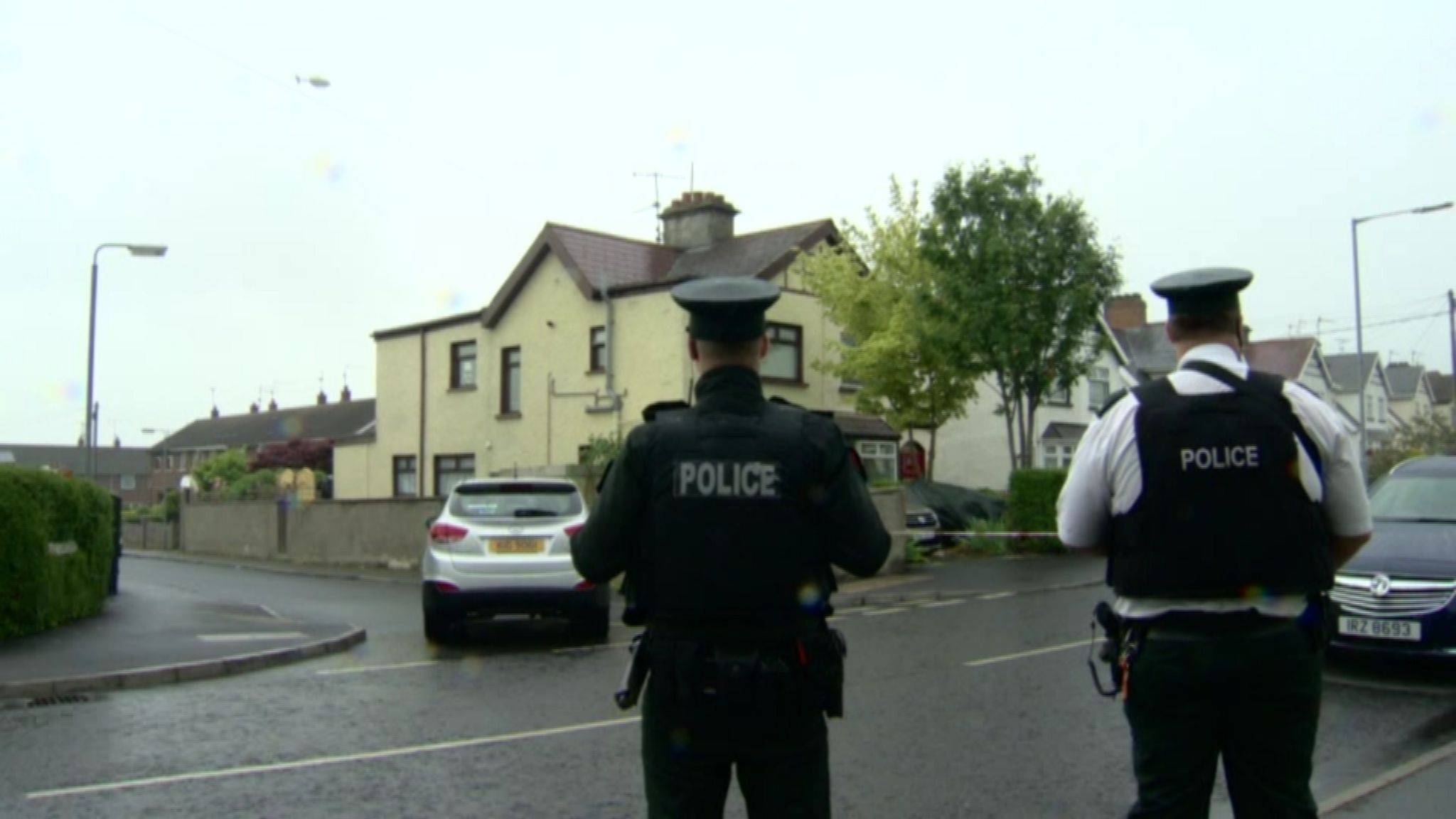
The security alert centered on Lurgan town centre, which was forced to close on Tuesday after a terrifying sequence of events targeting the local police station. The operation was designed to bypass traditional security perimeters by using a civilian as an unwitting delivery mechanism for an explosive device.
According to reports, a delivery driver—identified in some accounts as a pizza delivery worker—was hijacked. The driver was threatened at gunpoint and told explicitly that he would be killed if he did not comply with the hijackers’ demands. The attackers placed an object in the boot of his vehicle and forced him to drive it directly to the PSNI station in Lurgan.
Upon investigation, security forces discovered that the object in the vehicle was a “crude, but viable improvised explosive device” (IED). The device was designed to cause significant destruction, and the use of a coerced driver was a deliberate tactic to ensure the bomb reached the target while minimizing the risk to the perpetrators.
| Detail | Incident Specifications |
|---|---|
| Target | PSNI Police Station, Lurgan, Co Armagh |
| Method | Proxy Bomb (Coerced Delivery Driver) |
| Weapon | Crude but viable Improvised Explosive Device (IED) |
| Responsible Group | New IRA |
| Immediate Impact | Closure of Lurgan town centre; major security alert |
The New IRA Claim and the Logic of Terror
Shortly after the event, the ‘New IRA’ claimed responsibility for the attempted attack. In their statement, the group did not merely admit to the crime but attempted to justify the horrifying tactic of forcing a civilian to deliver a bomb. The group claimed that the delivery driver was “servicing the PSNI,” using this as a pretext for the hijacking and the threat to the driver’s life.
The Psychology of the Proxy Bomb
The use of a proxy bomb is widely regarded as one of the most ruthless tactics in the history of the conflict in Northern Ireland. By forcing a civilian to transport an explosive device, the attackers achieve two objectives:
- Tactical Advantage: A civilian delivery vehicle is less likely to trigger immediate suspicion than a known militant vehicle, allowing the device to gain closer to the target.
- Psychological Warfare: It creates a climate of fear where any civilian, regardless of their profession, could be coerced into becoming a tool of terrorism.
The assertion that the driver was “servicing the PSNI” serves as a thin ideological veneer for an act that targeted both the police and an innocent worker, emphasizing the group’s disregard for civilian life in pursuit of their political goals.
Official Reactions: Capacity, Desire, and Persistence
The reaction from government and police leadership has been one of gravity, and caution. The incident is being viewed not as an isolated event, but as a demonstration of the ongoing capabilities of dissident groups.
Justice Minister Naomi Long’s Assessment
Northern Ireland’s Justice Minister, Naomi Long, visited senior police officers at Lurgan following the alert. In her assessment, she stressed that while the numbers of people involved in dissident republican groups are “not large,” their danger is not diminished by their size.
“Dissident republican groups still have the capacity, ability and desire to carry out attacks on police despite their small numbers.”
Minister Long further elaborated that those involved in these organizations are “wedded” to destruction and violence. She argued that the very nature of these groups is defined by their intent to cause harm, stating that if they were not intent on causing destruction, they would not be members of such organizations. Her comments serve as a warning against complacency, noting that while there may not be a general “uptick” in activity, the commitment of these individuals to violence remains absolute.
The PSNI Perspective
The Chief of the PSNI described the Lurgan bomb attempt as a “timely reminder” of the persistent terror threat facing police officers. The force continues to work toward suppressing the activities of these organizations and bringing those involved to justice, but the Lurgan attack proves that the threat remains active and evolving.
For more information on current security trends, you may find our related explainer on dissident republican activity useful.
Analyzing the ‘Horrifying Echoes’ of Massereene
The description of the Lurgan attack as having “horrifying echoes of Massereene” refers to the specific, traumatic nature of the proxy bomb tactic. While the details of past tragedies are not the primary focus of current police reports, the parallel is drawn because the coercion of a civilian to deliver a bomb is a signature of the most brutal periods of the Troubles.
When a modern group like the New IRA employs these specific methods, it is seen as more than just a tactical choice; it is a symbolic gesture. It signals a desire to return to a level of violence and cruelty that the region has spent decades trying to move beyond. The “echoes” are not just in the method, but in the intent to terrorize the general population by turning their neighbors or service providers into involuntary participants in an attack.
Key Points on the Current Threat Landscape:
- Small but Committed: The threat comes from a minority of individuals who remain committed to violence over many years.
- Targeted Hostility: The PSNI remains the primary target for dissident activity.
- Civilians at Risk: The use of proxy bombs places innocent workers in the direct line of fire.
- Viable Weaponry: Despite being “crude,” the IEDs used are still “viable” and capable of causing death and destruction.
Implications for Public Safety and Security
The Lurgan incident has several short- and long-term implications for the security architecture of Northern Ireland.
Short-Term Impact
In the immediate aftermath, the attack caused significant disruption to the local community in Lurgan. The closure of the town centre and the deployment of bomb disposal experts create a tangible sense of instability. For the delivery driver involved, the psychological trauma of being threatened at gunpoint and forced to participate in a bombing attempt is immense.
Long-Term Security Concerns
The New IRA’s claim suggests that they are still capable of planning and executing complex operations. The ability to hijack a vehicle, plant a viable IED, and coerce a driver requires a level of coordination that contradicts the idea that these groups are entirely fragmented or powerless.
Security forces must now account for the possibility that other “proxy” targets may be identified. This puts an additional burden on the PSNI to protect not only their own stations but to provide guidance and protection to the civilian workforce that services those stations.
To understand the broader context of policing in the region, see our analysis of PSNI security protocols.
Common Misconceptions Regarding Dissident Groups
In the wake of attacks like the one in Lurgan, several misconceptions often arise in public discourse. It is important to clarify these based on the facts provided by security officials.
Misconception 1: Small numbers mean low risk
Many assume that because the number of active dissidents is small, the threat is negligible. However, as Justice Minister Naomi Long pointed out, “capacity” is not solely about numbers. A small, committed group with the “ability and desire” to kill can be just as dangerous as a larger, less committed organization.
Misconception 2: The “proxy bomb” is an obsolete tactic
Some believe that the methods of the past are no longer used. The Lurgan attack proves that these tactics are still in the New IRA’s playbook and are being actively deployed to bypass modern security measures.
Misconception 3: These attacks are random
While the civilian driver is a random victim, the target (the PSNI) is highly specific. These attacks are calculated efforts to undermine the authority of the police and the stability of the peace process.
Frequently Asked Questions
What is a “proxy bomb” attack?
A proxy bomb attack occurs when terrorists coerce a civilian—often by threatening them or their family at gunpoint—into transporting an explosive device to a target. This allows the attackers to deliver a bomb without personally entering a high-security area.
Who claimed responsibility for the Lurgan attack?
The ‘New IRA’ claimed responsibility for the attempted proxy bomb attack on the police station in Lurgan.
How did the New IRA justify the use of a delivery driver?
The group claimed that the delivery driver was “servicing the PSNI,” using this as a justification for hijacking the vehicle and forcing the driver to deliver the IED.
What was the outcome of the Lurgan security alert?
The bomb was discovered and found to be a “crude, but viable” improvised explosive device. The Lurgan town centre was closed during the operation, and no injuries were reported from the device itself, though the driver was subjected to severe threats.
What did Justice Minister Naomi Long say about the threat?
Minister Long stated that dissident republicans still possess the “capacity, ability and desire” to attack police and that those involved are “wedded to destruction and violence,” warning that the public and security forces cannot be complacent.
The events in Lurgan serve as a stark reminder that the path to total peace is still obstructed by those who refuse to depart from violence. The use of an innocent delivery driver as a human shield for a bomb is a tactic that transcends political grievance and enters the realm of pure terror. As the PSNI continues to suppress these organizations, the focus remains on preventing the “capacity” of these small groups from translating into further tragedies.
