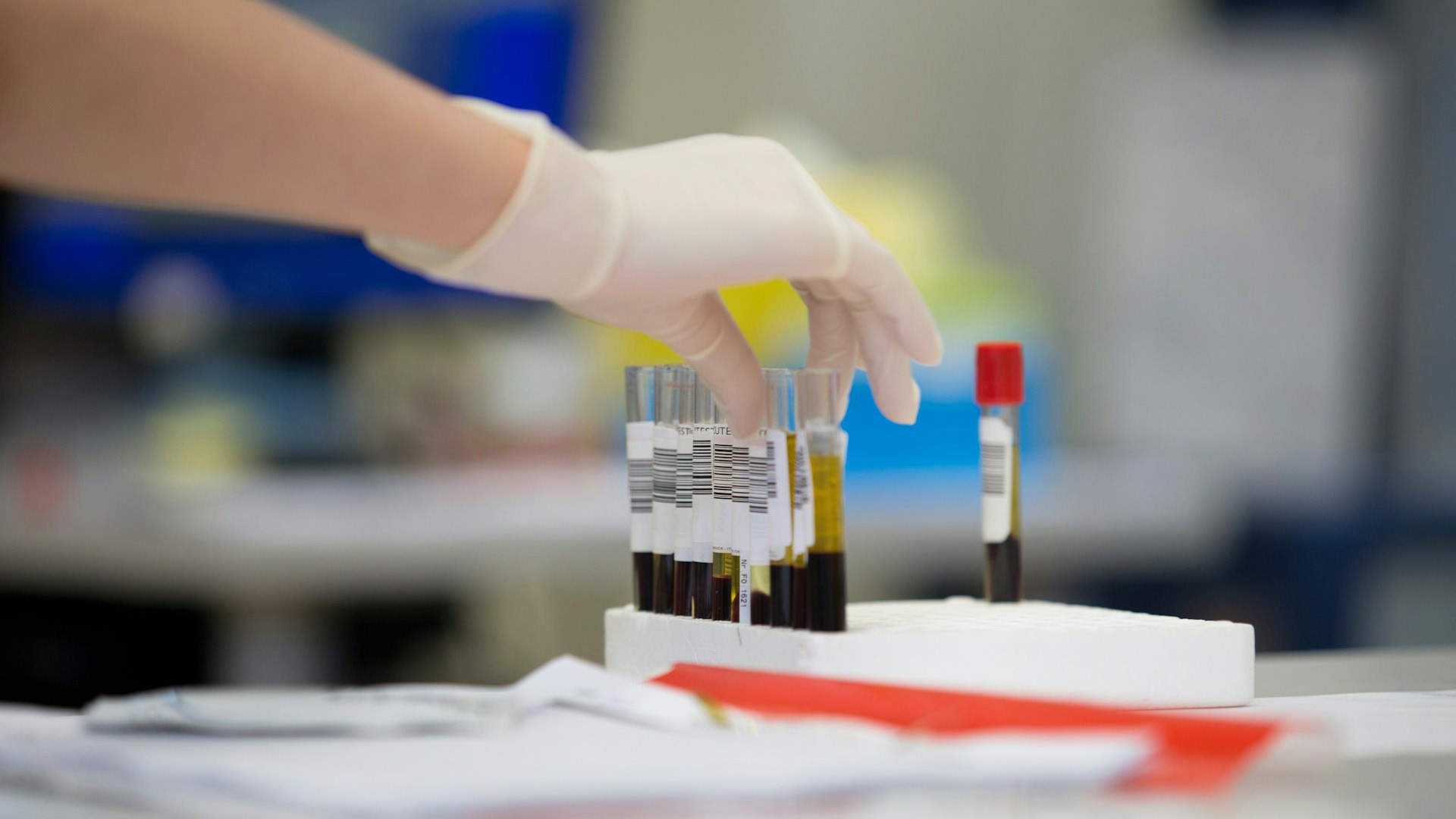
A new blood test could transform early cancer detection by identifying tumors up to five years before symptoms appear, according to researchers who say the method outperforms current screening tools in accuracy and speed.
The test, developed by a team at Sweden’s Karolinska Institutet, analyzes proteins and other biomarkers in blood samples to detect signs of cancer with 90% precision in early-stage cases, the researchers reported. In a study published this month, the method flagged 80% of cancers in high-risk patients before clinical diagnosis, compared with 40% using standard blood tests.
How the Test Works—and Why It Could Change Cancer Care
The technology relies on a machine-learning algorithm trained on blood samples from over 10,000 patients, including those with and without cancer. Unlike existing screening tools—such as PSA tests for prostate cancer or mammograms—this approach doesn’t target a single biomarker but scans for patterns across hundreds of proteins, DNA fragments, and other molecular signals.

“This isn’t just another test,” said lead researcher Dr. Johan Kreicbergs, a professor of clinical chemistry at Karolinska. “It’s a fundamentally different way to look at cancer in the bloodstream, and the data suggest it could catch diseases at a stage when treatment is far more effective.”
Key Findings
- A 90% accuracy rate in detecting early-stage cancers across multiple types, including lung, breast, and colorectal.
- Detection of tumors up to five years before symptoms emerged in high-risk patients.
- Reduced false positives by 60% compared to traditional blood tests.
- Potential to screen populations at average risk, not just those with known family histories.
Who Stands to Benefit—and When Could It Be Available?
The test could be particularly valuable for cancers that are difficult to detect early, such as pancreatic or ovarian cancer, where survival rates drop sharply once symptoms appear. Currently, these cancers are often diagnosed at late stages, when treatment options are limited.
If validated in larger trials, the method could be integrated into routine screening programs within five years, according to Kreicbergs. The team is now collaborating with health authorities in Sweden and the U.S. to design clinical studies involving tens of thousands of participants.
“The goal isn’t to replace existing screenings but to add another layer of protection,” said Dr. Anna Lindström, a co-author and oncologist at Karolinska. “Imagine catching a lung cancer before it spreads—or an ovarian cancer before it metastasizes. That’s the power of this approach.”
Limitations and the Road Ahead
Despite the promising results, experts caution that the test is not yet ready for widespread use. The current study had a limited sample size, and researchers acknowledge that some cancers—particularly rare or slow-growing tumors—may still evade detection.
Dr. Michael Thun, chief medical officer at the American Cancer Society, noted that while the technology is “intriguing,” it will need to undergo rigorous testing in diverse populations before it can be recommended as a standard tool. “We’ve seen false hope before with cancer screening,” he said. “This test could be a game-changer—but only if it holds up in real-world settings.”
What’s Next
Phase 3 trials are expected to begin in 2025, with plans to enroll 50,000 participants across Europe and North America. If successful, regulatory approval could follow within three to five years, according to the research team.
