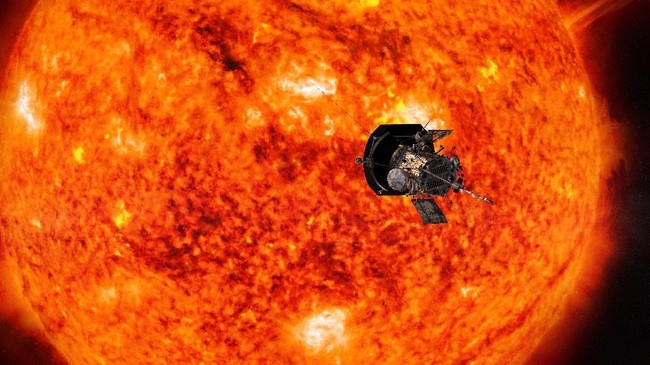
The Earth and other planets orbit a shared center of mass known as the barycenter rather than the exact center of the Sun, according to data from NASA. This gravitational relationship means that while the Sun maintains the dominant pull, the combined mass of the planets causes the Sun to wobble around this common focal point.
- The Barycenter: The solar system revolves around a center of mass called the barycenter, not the Sun’s geometric center.
- Gravitational Interaction: Every object with mass exerts a gravitational pull; the planets pull on the Sun just as the Sun pulls on them.
- Solar Movement: This mutual attraction causes the Sun to move in a small, irregular orbit around the barycenter.
How the Solar System’s Center of Mass Works
In basic astronomy, the Sun is often described as the stationary center of the solar system. However, NASA explains that gravity is a mutual force. While the Sun contains the vast majority of the solar system’s mass, the planets—particularly the gas giants—possess enough mass to shift the balance of gravity.

This shift creates the barycenter, the point around which two or more bodies orbit. Because the Sun is so massive, the barycenter is usually located very close to the Sun’s center, but it is rarely exactly at the core. As the planets move in their respective orbits, the location of this center of mass shifts, forcing the Sun to move in response.
The Role of Jupiter in Solar Stability
The movement of the barycenter is most heavily influenced by Jupiter, the largest planet in the solar system. According to NASA’s gravitational models, Jupiter’s massive size pulls the barycenter far enough that it sometimes resides outside the physical surface of the Sun.
When Jupiter and other large planets align on the same side of the Sun, the barycenter moves further away from the solar core. When they are on opposite sides, the pulls partially cancel out, moving the barycenter back toward the center. This constant shifting is what creates the observed “wobble” of the Sun.
Why This Differs from Traditional Models
The concept of the barycenter replaces the simplified heliocentric model—which posits that the Sun is a fixed point—with a more accurate dynamical model. In the simplified version, the Sun is the anchor. In the actual physical system, the Sun is a participant in the orbital dance.
This distinction is critical for scientists when calculating precise planetary trajectories or searching for exoplanets. By observing the “wobble” of a distant star caused by the barycenter of its own planetary system, astronomers can detect the presence of planets that are otherwise invisible to telescopes.
