Roman Telescope’s Massive Infrared Mirror is Ready to Fly: A New Era for Deep Space Observation
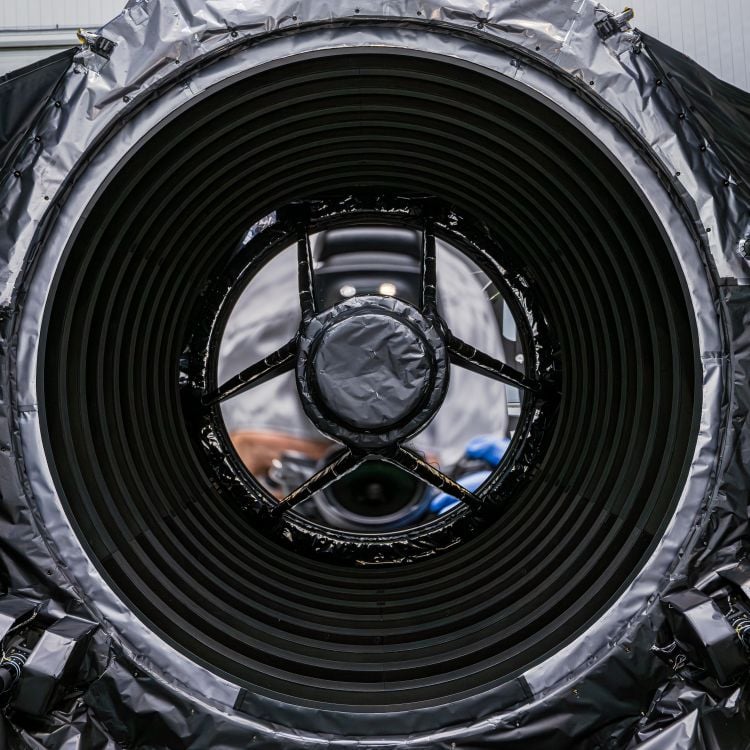
NASA has reached a pivotal milestone in its quest to unlock the mysteries of the dark universe and the distribution of distant worlds. The Nancy Grace Roman Space Telescope, a mission designed to survey the cosmos with unprecedented speed and precision, is entering its final preparations for flight. Central to this achievement is the completion and verification of its primary mirror, a massive piece of optical engineering that serves as the heart of the observatory. With the hardware finalized and the mission trajectory set, the Roman Telescope’s massive infrared mirror is ready to fly – Universe Today enthusiasts and the global scientific community now look toward a scheduled launch this September.
The Roman Space Telescope is not merely an incremental upgrade to our existing orbital fleet; We see a strategic leap in how we map the galaxy. By combining a wide field of view with the sensitivity of an infrared instrument, the telescope is poised to capture data on a scale that was previously impossible. From identifying thousands of new exoplanets to probing the elusive nature of dark energy, the mission represents the culmination of over a decade of planning, inter-agency cooperation, and astronomical ambition.
The Engineering Behind the 2.4-Meter Primary Mirror
At the core of the Nancy Grace Roman Space Telescope is its 2.4-meter (7.9-foot) diameter primary mirror. For those familiar with the history of space observation, this measurement is instantly recognizable: it is the same aperture size as the mirror used by the legendary Hubble Space Telescope. However, while the size is similar, the application and the technology surrounding the mirror are tailored for a vastly different objective.
The primary mirror is designed to collect infrared light, allowing the telescope to peer through the dense clouds of gas and dust that often obscure our view of the Milky Way’s center and its far side. Infrared capabilities are essential for seeing the oldest, most distant stars and galaxies, whose light has been stretched (redshifted) over billions of years of cosmic expansion.
The donation of two 2.4-meter diameter mirror assemblies from the U.S. National Reconnaissance Office (NRO) in 2012 provided a critical foundation for the project, accelerating the development of the telescope’s optical system.
This partnership between NASA and the NRO highlights a unique intersection of national security technology and pure scientific exploration. The precision required for reconnaissance satellites—where clarity and resolution are paramount—translates directly to the needs of an astrophysicist seeking to detect the faint dip in light caused by a planet crossing in front of a distant star.
Technical Specifications and Comparative Capabilities
To understand why the Roman Telescope is considered a “game-changer,” it is helpful to compare its primary mirror and field of view to its predecessors. While Hubble provided deep, narrow views of the universe (similar to looking through a straw), Roman is designed to provide wide-angle surveys (similar to a wide-angle lens on a camera).
| Feature | Hubble Space Telescope | Nancy Grace Roman Space Telescope |
|---|---|---|
| Primary Mirror Diameter | 2.4 Meters | 2.4 Meters |
| Primary Spectral Range | Visible, Ultraviolet, Near-Infrared | Near-Infrared |
| Field of View | Narrow/Deep | Wide/Panoramic |
| Primary Mission Goal | Detailed Target Observation | Large-Scale Cosmic Surveys |
Revolutionizing Exoplanet Discovery and Rogue Worlds
One of the most anticipated aspects of the Roman mission is its ability to revolutionize our understanding of planetary systems. Astronomers expect the telescope to find roughly 100,000 new transiting planets within just five years of operation. A transiting planet is one that passes between its host star and the observer, causing a slight, periodic drop in the star’s brightness—a signal that the Roman Telescope is uniquely equipped to detect across vast swaths of the sky.
Beyond the traditional search for planets orbiting stars, the Roman Space Telescope is tasked with a more mysterious objective: the cataloging of “rogue worlds.” These are planetary-mass objects that do not orbit a star, drifting instead through the cold vacuum of the galaxy in total isolation.
The Search for Rogue Planets
Rogue planets are challenging to detect because they lack a host star to illuminate them. However, through a process known as gravitational microlensing, the Roman Telescope can spot these drifting worlds. When a rogue planet passes in front of a distant background star, its gravity acts like a lens, bending and magnifying the light of that star. By monitoring millions of stars simultaneously, Roman is expected to assemble the largest catalogue of rogue worlds ever created, providing critical data on how planets are formed and subsequently ejected from their home systems.
Key goals for exoplanet research include:
- Mapping the distribution of planets across the Milky Way’s far side.
- Identifying the frequency of Earth-sized planets in the habitable zones of their stars.
- Determining the population density of rogue planets in the galactic disk.
- Analyzing the atmospheric compositions of distant worlds via infrared spectroscopy.
The Legacy of Nancy Grace Roman
The naming of the telescope in 2020 serves as a tribute to one of the most influential figures in the history of American astronomy. Nancy Grace Roman was a pioneer whose work laid the groundwork for the modern era of space-based observation. Joining NASA in 1959—only six months after the agency’s inception—she quickly rose to become the first Chief of Astronomy.

Roman’s contributions were not limited to her administrative leadership. She pioneered essential research into stellar motion and stellar classification, providing the theoretical framework necessary to understand how stars evolve and move within the galaxy. However, she is perhaps most famously remembered as the “Mother of Hubble.”
It was Nancy Grace Roman’s relentless advocacy, scientific vision, and organizational skill that pushed the Hubble Space Telescope from a conceptual dream to a physical reality on the launchpad. Her ability to navigate the complexities of government funding and engineering challenges ensured that humanity would eventually have a clear window into the deep universe. Although she passed away in 2018, the telescope that bears her name continues her legacy of expanding the horizons of human knowledge.
From WFIRST to Roman: A Decade of Development
The journey to the current state of readiness has been a long and complex pipeline. The mission did not begin as the Roman Space Telescope; it was originally known as the Wide Field Infrared Survey Telescope (WFIRST). The project’s roots can be traced even further back to design elements incorporated from the previously proposed Joint Dark Energy Mission.
The strategic importance of the mission was recognized early on. WFIRST was designated as a high priority in NASA’s Astrophysics Decadal Survey as far back as 2010. The Decadal Survey is a critical process where the scientific community identifies the most pressing questions about the universe and ranks the missions best suited to answer them. By prioritizing this mission, NASA signaled that mapping the “dark” components of the universe—dark matter and dark energy—was a primary goal for the 21st century.
The transition from WFIRST to the Nancy Grace Roman Space Telescope in 2020 marked more than just a name change; it symbolized the mission’s transition from a developmental project to a flight-ready observatory. The years spent refining the infrared sensors and integrating the NRO-donated mirrors have ensured that the telescope can handle the immense data loads required for wide-field surveying.
The Role of Infrared Technology in Galactic Mapping
To understand why the “infrared” part of the Roman Telescope’s massive infrared mirror is ready to fly – Universe Today narrative is so vital, the nature of the Milky Way. Our galaxy is filled with interstellar dust—tiny grains of carbon and silicates that scatter visible light. This creates “dark nebulae” that block our view of the galactic center and the opposite side of the disk.
Infrared light has longer wavelengths than visible light, allowing it to pass through these dust clouds relatively unimpeded. By operating in the near-infrared spectrum, the Roman Space Telescope can effectively “see through” the dust, unveiling the hidden architecture of our galaxy and discovering stars and planets that have remained invisible to every previous telescope.
Implications for Modern Astrophysics
The deployment of the Roman Space Telescope is expected to trigger a paradigm shift in several fields of study. By providing a panoramic view of the sky with the resolution of a flagship observatory, it bridges the gap between the wide-but-shallow surveys of ground-based telescopes and the narrow-but-deep observations of the James Webb Space Telescope (JWST).
Potential breakthroughs include:
- Dark Energy Analysis: By measuring the shapes and distributions of billions of galaxies, Roman will help scientists understand why the expansion of the universe is accelerating.
- Galactic Archaeology: Mapping the motion of stars in the Milky Way will allow astronomers to reconstruct the history of how our galaxy merged with smaller galaxies over billions of years.
- Cosmic Web Mapping: Roman will provide a clearer picture of the “cosmic web,” the large-scale structure of dark matter that acts as the scaffolding for all visible matter in the universe.
This synergy between different telescopes is key. For example, the Roman Space Telescope may identify a particularly interesting rogue planet or a distant galaxy cluster through its wide survey; NASA can then point the James Webb Space Telescope at that specific target for a high-resolution, detailed analysis. Together, they form a comprehensive toolkit for exploring the cosmos.
Frequently Asked Questions
What makes the Roman Space Telescope different from the Hubble Space Telescope?
While both have a 2.4-meter primary mirror, the Roman Space Telescope is designed for wide-field surveys in the infrared spectrum. Hubble provides very detailed images of tiny patches of the sky, whereas Roman can capture an area 100 times larger than Hubble in a single image, allowing it to map the universe much faster.
What are “rogue worlds” and how does the telescope find them?
Rogue worlds are planets that do not orbit a star and drift freely through space. Because they are dark, the Roman Telescope finds them using “gravitational microlensing,” where the planet’s gravity bends the light of a distant star behind it, creating a detectable spike in brightness.
Why is the mirror’s infrared capability so essential?
Infrared light can penetrate the thick clouds of dust and gas that fill our galaxy. This allows the telescope to see through the “fog” of the Milky Way to observe the galactic center and the far side of the galaxy, which are invisible to telescopes that only see visible light.
Who was Nancy Grace Roman?
Nancy Grace Roman was a pioneering American astronomer and NASA’s first Chief of Astronomy. She was instrumental in the development of the Hubble Space Telescope and is widely regarded as the “Mother of Hubble” for her leadership and scientific vision.
When is the Roman Space Telescope expected to launch?
Based on recent NASA announcements, the telescope is currently set for a launch in September.
As the final checks are completed at the Goddard Space Flight Center, the anticipation for the mission grows. The readiness of the primary mirror is the final green light for a journey that promises to redefine our place in the universe. By peering into the furthest reaches of the infrared spectrum, the Nancy Grace Roman Space Telescope will not only honor the legacy of its namesake but will provide the data necessary to answer some of the most fundamental questions about the origin and fate of the cosmos.
