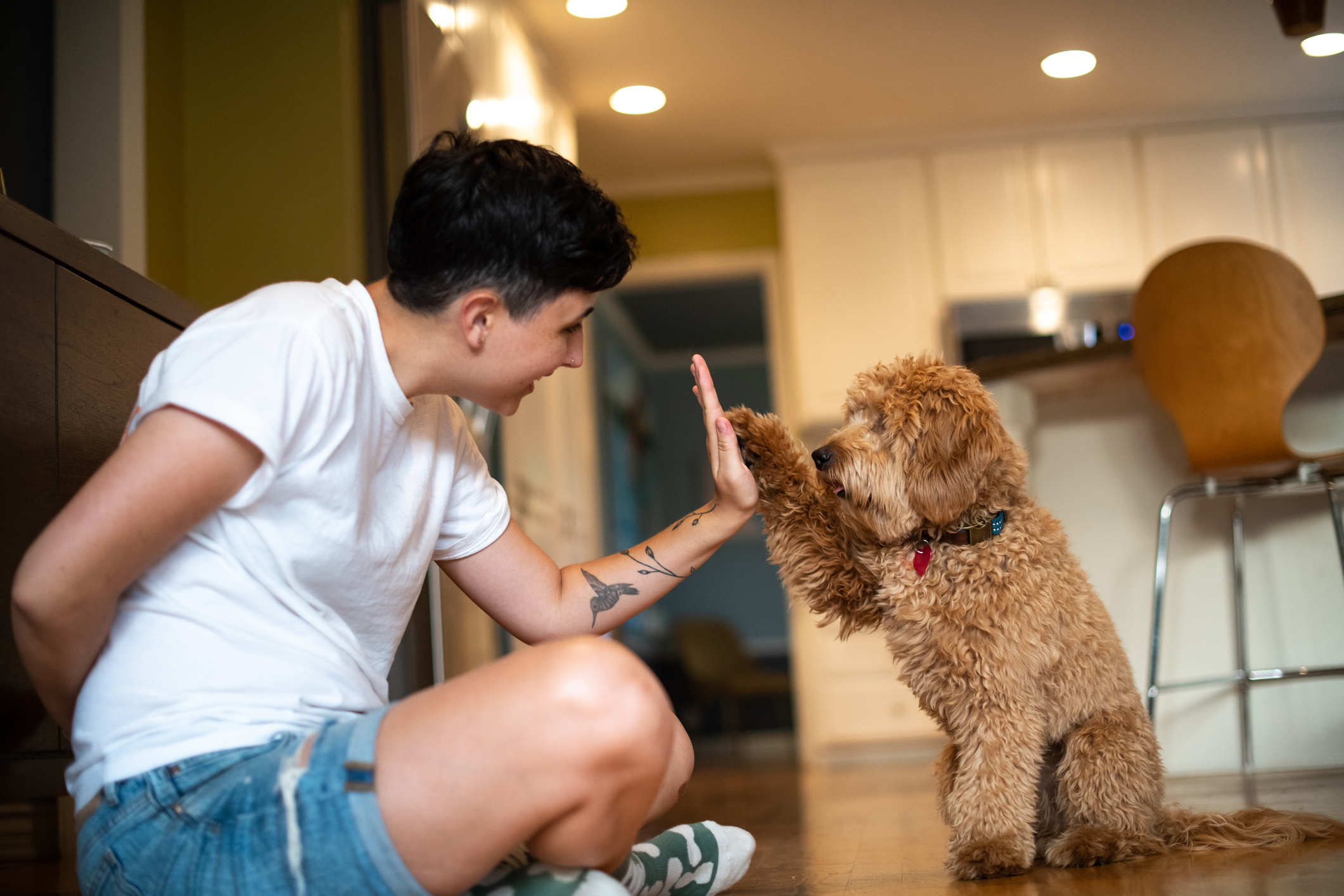
‘Left Pawness and Right Pawness’: New Research Reveals Dogs Can Show Single-Sided Preference Similar to Humans
Dogs exhibit “left pawness” and “right pawness,” a behavioral trait known as lateralization where an animal prefers one side of its body over the other for specific tasks. According to research detailed by New Scientist, this single-sided preference mirrors human handedness and suggests that canine brains may organize information and motor control in ways similar to the human biological model.
How do researchers identify paw preference in dogs?
Identifying whether a dog is “left-pawed” or “right-pawed” requires controlled observation of how the animal interacts with its environment. Researchers typically use a variety of “choice tests” to determine if a dog consistently favors one limb. One common method involves placing a treat inside a narrow tube or container that requires the dog to use a paw to fish the reward out. If a dog consistently uses its right paw across multiple trials, it is categorized as right-pawed.

Other tests focus on the initial movement a dog makes when faced with a new object or a command. For example, when a dog is asked to “shake” or “give paw” without a specific side being prompted, the paw they offer first often indicates their natural preference. New Scientist reports that these preferences are not random but are often stable over time, suggesting a hard-wired neurological basis rather than a learned habit.
Key indicators of paw preference include:
- Initial Reach: Which paw the dog uses first to touch a novel object.
- Problem Solving: The limb used to manipulate a toy or retrieve food from a tight space.
- Spontaneous Action: The paw offered during a generic “shake” command.
What is canine lateralization and why does it happen?
Lateralization is the functional specialization of the two hemispheres of the brain. In humans, this is most evident in handedness, where the left hemisphere typically controls the right side of the body and is dominant for language in most individuals. In dogs, lateralization indicates that one side of the brain is more specialized for certain types of processing than the other.
According to the research highlighted by New Scientist, this division of labor allows the brain to process information more efficiently. By specializing hemispheres, the brain can handle different types of stimuli—such as emotional processing versus analytical problem solving—simultaneously without interference.
In the canine brain, the right hemisphere is often associated with the processing of emotional cues and the detection of threats, while the left hemisphere is more linked to approach-oriented behaviors and the processing of familiar scents. When a dog shows a strong preference for one paw, it may reflect which hemisphere is dominating the motor control for that specific action.
“The existence of ‘left pawness’ and ‘right pawness’ suggests that the canine brain is not a symmetrical mirror, but a specialized tool where different sides handle different priorities.”
How does dog paw preference compare to human handedness?
The parallel between human handedness and canine paw preference is more than just a behavioral quirk; it is a reflection of similar evolutionary trajectories in mammalian brain development. While humans have a vast majority of right-handed individuals, the distribution in dogs appears more varied, though the underlying mechanism of hemispheric dominance remains the same.
Researchers note that while humans use their dominant hand for complex tool use and writing, dogs use their dominant paw for foraging, exploring, and interacting with owners. The “single-sided preference” mentioned in the New Scientist reporting indicates that dogs, like humans, are not perfectly ambidextrous. Most dogs lean toward one side, even if the preference is less pronounced than the stark divide seen in human right- vs. left-handedness.
| Feature | Human Handedness | Canine Paw Preference |
|---|---|---|
| Primary Driver | Hemispheric Specialization | Hemispheric Specialization |
| Common Use Case | Tool use, writing, eating | Foraging, exploring, “shaking” |
| Consistency | High (usually lifelong) | Moderate to High |
| Brain Link | Contralateral Control | Contralateral Control |
What does paw preference reveal about a dog’s brain?
The presence of a dominant paw can provide a window into a dog’s cognitive state and personality. Because the brain’s hemispheres handle different emotional responses, a dog’s side preference may correlate with how they perceive the world. For instance, some studies in animal behavior suggest that left-pawedness in certain species is linked to increased emotional reactivity or a higher sensitivity to stress, as the right hemisphere (which controls the left side) often processes negative emotions.
However, New Scientist notes that these links are not absolute. A “lefty” dog is not necessarily more anxious than a “righty” dog. Instead, these preferences indicate how the dog’s brain is wired to prioritize information. A dog that consistently uses its left paw might be relying more heavily on the right hemisphere’s ability to process environmental threats or emotional nuances in that moment.
This neurological mapping is crucial for understanding canine cognition. It moves the conversation away from seeing dogs as simple instinct-driven animals and toward viewing them as complex beings with specialized brain functions. Read more on canine cognitive development.
Is paw preference found in other animals?
Dogs are not alone in showing lateralization. The phenomenon is widespread across the animal kingdom, though it manifests differently depending on the species. In primates, handedness is very similar to humans, with a strong preference for one hand in tool use. In birds, lateralization is often seen in the eye they use to scan for predators versus the eye they use to forage for food.
According to the broader context of animal lateralization research, these preferences often evolve to help animals multitask. For example, a bird might use its right eye to focus on a specific seed while using its left eye to keep a wide-angle watch for hawks. Similarly, a dog’s paw preference may be a byproduct of a brain that has evolved to balance the need for focused task execution with the need for constant environmental awareness.
Comparative observations show a spectrum of lateralization:
- Strong Lateralization: Humans and certain primates (clear dominant hand).
- Moderate Lateralization: Dogs and cats (preference exists but can be flexible).
- Functional Lateralization: Birds (specialized eyes for different tasks).
Common misconceptions about ‘lefty’ and ‘righty’ dogs
One common misconception is that a dog’s paw preference is a result of injury or physical limitation. While a dog with a hurt right leg will obviously use its left paw, “true” paw preference occurs in healthy animals with no physical impairment. This is a biological trait, not a compensatory behavior.
Another myth is that paw preference can be “trained” out of a dog. While a dog can be taught to use either paw for a trick, their natural preference remains. If a right-pawed dog is forced to use its left paw for a command, it may take longer to learn the action or show more hesitation, as it is working against its natural neurological inclination.
Furthermore, some owners believe that a left-pawed dog is “more intelligent” or “more creative,” mirroring myths about left-handed humans. There is no scientific evidence provided by New Scientist or other behavioral studies to suggest that paw preference correlates with overall intelligence or cognitive capacity. It is a matter of organization, not ability.
Why this research matters for dog owners and trainers
Understanding that dogs have a single-sided preference can change how owners interact with their pets. Trainers who recognize a dog’s natural lateralization may find that certain commands are easier for the dog to grasp if they align with the dog’s dominant side. For example, if a dog is naturally right-pawed, asking for a “right paw” may elicit a faster and more confident response than asking for the left.
From a veterinary perspective, knowing a dog’s natural preference can help in identifying early signs of neurological issues. If a lifelong “righty” dog suddenly begins using only its left paw, it could be an early indicator of a stroke, tumor, or other brain-related health problem, rather than a simple joint injury.
The implications for canine-human bonds are also significant. Recognizing these individual differences encourages a more personalized approach to pet care, acknowledging that every dog’s brain is wired uniquely. Explore more on interpreting dog body language.
The future of canine lateralization studies
As neuroimaging technology improves, researchers hope to move beyond behavioral observations and actually map the canine brain in real-time. Using fMRI scans, scientists may be able to see exactly which areas of the brain light up when a “left-pawed” dog performs a task compared to a “right-pawed” dog.

Future research may also investigate whether paw preference is hereditary. If “left pawness” runs in certain breeds or bloodlines, it would suggest a strong genetic component to brain lateralization in dogs. This could lead to a deeper understanding of how domestication has influenced the canine brain over thousands of years.
Moreover, researchers are looking into whether lateralization changes as a dog ages. Just as human children develop a dominant hand during early childhood, it remains to be seen if puppies start as ambidextrous and develop a preference as their brains mature and specialize.
Frequently Asked Questions
How can I tell if my dog is left-pawed or right-pawed?
Observe which paw your dog uses first to touch a new toy, or which paw they offer when you ask them to “shake” without specifying a side. You can also place a treat in a narrow jar and see which paw they use to get it out.
Does being left-pawed mean my dog is “different” or less capable?
No. Paw preference is a natural variation in brain organization. According to research reported by New Scientist, it does not affect a dog’s intelligence, health, or ability to learn commands.
Can I change my dog’s paw preference through training?
You can teach your dog to use either paw for a specific trick, but you cannot change their underlying biological preference. Their brain is wired to favor one side for spontaneous actions.
Is paw preference common in all dog breeds?
Yes, lateralization is a general mammalian trait. While the strength of the preference may vary between individual dogs or potentially between breeds, the capacity for single-sided preference exists across the species.
What is the link between paw preference and the brain?
Paw preference is a result of lateralization, where the two hemispheres of the brain specialize in different tasks. The right hemisphere generally controls the left side of the body and vice versa, meaning a paw preference reflects which side of the brain is dominant for that specific movement.
