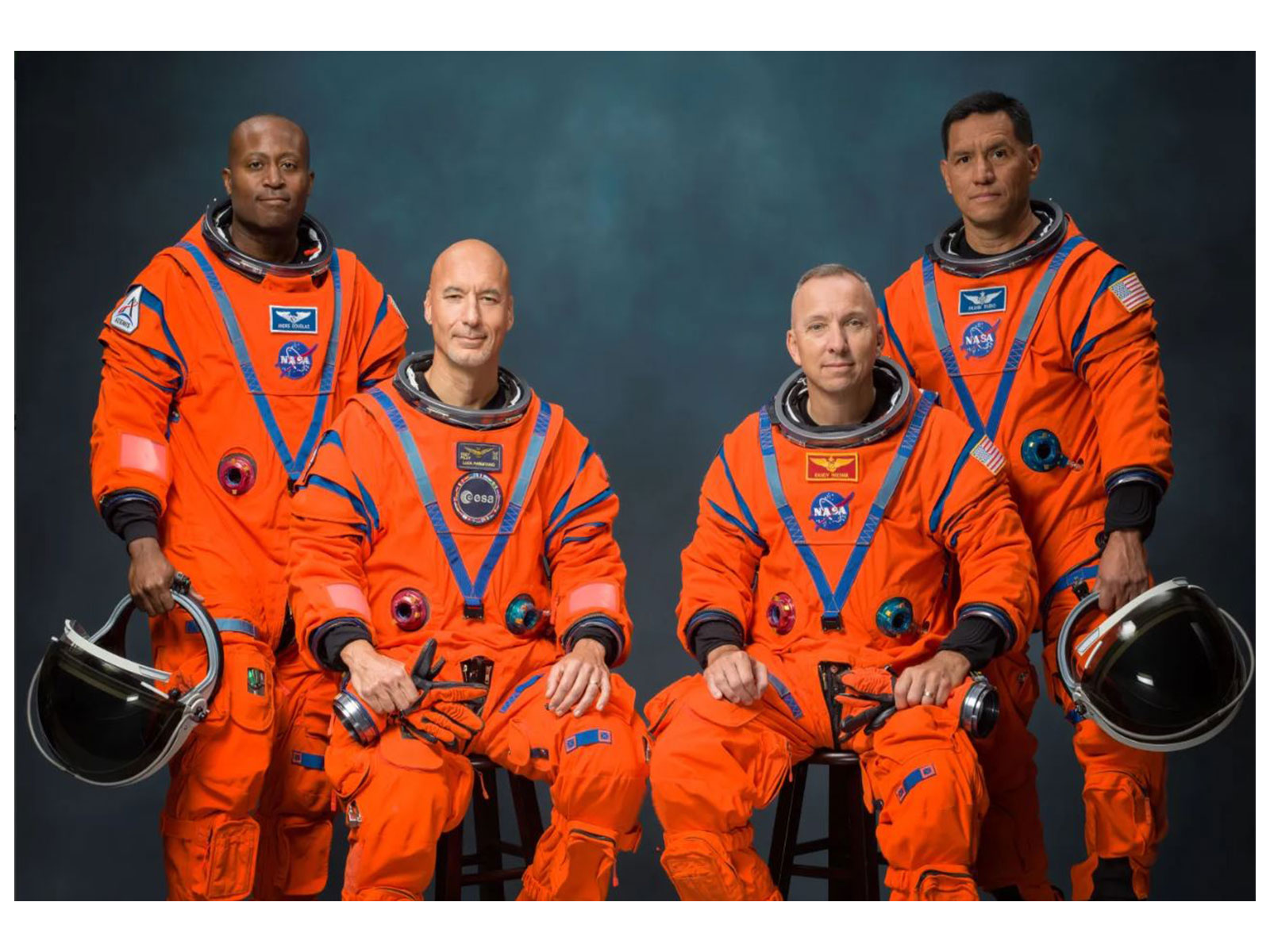
NASA Announces Artemis III Crew for 2027 Test Flight; First ESA Astronaut Assigned to Programme
NASA has named the crew for the Artemis III mission, scheduled for 2027, which includes the first European Space Agency (ESA) astronaut assigned to the program. Luca Parmitano, an Italian astronaut, will serve as a pilot for the mission intended to return humans to the lunar surface for the first time since the Apollo era, according to official NASA announcements and reports from Nepalnews.com.
Who is the first ESA astronaut assigned to the Artemis III crew?
Luca Parmitano, an experienced Italian astronaut from the European Space Agency (ESA), has been named as a pilot for the 2027 Artemis III test flight. According to Phys.org, Parmitano’s assignment marks a significant milestone in international space cooperation, as he becomes the first ESA astronaut integrated into the crew of a mission designed to land humans on the Moon.
Parmitano brings a history of high-stakes spaceflight experience to the mission. The Times of India reports that Parmitano previously survived a life-threatening incident during a spacewalk where water began leaking into his helmet. The astronaut nearly drowned in the vacuum of space as water filled his visor, forcing him to rely on emergency protocols and the assistance of ground control to survive. This event is cited by analysts as a testament to his composure and technical proficiency under extreme pressure—traits NASA requires for the complexities of a lunar landing.
His role as pilot will involve managing the spacecraft’s navigation and systems during the transit to the Moon and the subsequent return to Earth. This appointment underscores the strategic partnership between the United States and Europe, where ESA provides critical hardware, such as the European Service Module (ESM), which powers the Orion spacecraft.
What is the primary objective of the Artemis III mission?
The Artemis III mission is designed to land the first woman and the first person of color on the lunar surface. According to the BBC, the mission’s primary goal is not merely to touch down on the Moon, but to explore the lunar South Pole, a region that has never been visited by humans.
NASA targets the South Pole because of the suspected presence of water ice in permanently shadowed craters. Water ice is a critical resource for future long-term habitation; it can be processed into drinking water, breathable oxygen, and liquid hydrogen for rocket fuel. By establishing a presence at the South Pole, NASA intends to create a sustainable lunar base that serves as a stepping stone for eventual human missions to Mars.
The mission architecture differs significantly from the Apollo missions of the 1960s and 70s. While Apollo focused on short-term “flags and footprints” visits to the lunar equator, Artemis III is the first step in a permanent return. The crew will utilize the Space Launch System (SLS) rocket and the Orion capsule, eventually transferring to a Human Landing System (HLS) provided by SpaceX to descend to the surface.
Key Scientific Goals for Artemis III
- Water Ice Mapping: Identifying the volume and accessibility of ice in the lunar South Pole.
- Geological Sampling: Collecting core samples from ancient craters to understand the early history of the solar system.
- Radiation Monitoring: Studying the effects of deep-space radiation on human health over a longer duration.
- Infrastructure Testing: Evaluating the performance of new lunar spacesuits and landing technology in a rugged, polar environment.
When is the Artemis III test flight scheduled to launch?
NASA has scheduled the Artemis III mission for 2027. This timeline follows a sequence of incremental tests designed to ensure crew safety. According to NASA.gov, the program moves through a phased approach: Artemis I (an uncrewed flight around the Moon), Artemis II (a crewed flyby), and finally Artemis III (the landing).

The 2027 date represents a cautious but firm target. Space agencies have faced various delays related to the development of the Human Landing System (HLS) and the next-generation Axiom Space lunar suits. Despite these challenges, the naming of the crew, including Luca Parmitano, signals that NASA is moving from the hardware development phase into active crew training.
| Mission | Target Date | Primary Objective | Crew Status |
|---|---|---|---|
| Artemis I | Completed (2022) | Uncrewed Orion flight around Moon | None |
| Artemis II | Scheduled (2025) | Crewed flyby of the Moon | Named |
| Artemis III | Scheduled (2027) | Human landing at Lunar South Pole | Named (incl. ESA) |
Why does the inclusion of an ESA astronaut matter?
The assignment of an ESA astronaut to the Artemis III crew is a political and technical necessity. The Artemis program is not a solo NASA venture; it is governed by the Artemis Accords, an international agreement aimed at establishing a common set of principles for space exploration.
Technically, the Orion spacecraft cannot function without the European Service Module (ESM). The ESM provides propulsion, power, water, and oxygen to the crew. According to official NASA and ESA partnership documents, the contribution of the ESM earns European astronauts a seat on lunar missions. By placing Luca Parmitano on the 2027 flight, NASA is fulfilling a diplomatic commitment to its international partners.
Furthermore, this collaboration distributes the financial and technical risks of deep-space exploration. The complexity of landing on the Moon—which requires precise timing, autonomous landing software, and extreme thermal protection—is too great for a single agency to manage without global input. The inclusion of an Italian pilot brings a different perspective on mission operations and reinforces the image of the Moon as a global commons rather than a national trophy.
What are the risks and challenges of the 2027 mission?
Landing humans on the Moon in 2027 involves risks that far exceed those of the International Space Station (ISS). The crew will be exposed to galactic cosmic rays and solar particle events, which can cause long-term health issues or acute radiation sickness. Unlike the ISS, which is protected by the Earth’s magnetic field, the Artemis III crew will operate in a high-radiation environment.

The lunar South Pole presents unique lighting challenges. Because the Sun remains very low on the horizon in polar regions, the landscape is characterized by long, deep shadows and blinding highlights. This makes navigation and landing extremely dangerous, as pilots must be able to distinguish between a flat landing zone and a hazardous crater rim.
The survival of the crew also depends on the reliability of the Human Landing System (HLS). According to reports from the BBC, the transition from the Orion capsule to the HLS requires a complex docking maneuver in lunar orbit. Any failure in this transfer would leave the crew stranded in orbit or prevent the landing entirely.
“The mission is as much about the technology of survival as it is about the science of discovery.” — Analysis of Artemis mission parameters.
How does Artemis III differ from the Apollo missions?
While the Apollo missions of the 1960s and 70s are the most famous lunar voyages, Artemis III is fundamentally different in scope and intent. A primary difference is the landing site. Apollo landed near the lunar equator, where the terrain is relatively flat and the lighting is predictable. Artemis III targets the South Pole, where the terrain is jagged and the environment is far more hostile.
Another distinction is the technology. Apollo used the Saturn V rocket and a Command/Service Module. Artemis uses the Space Launch System (SLS), the most powerful rocket ever built, and the Orion spacecraft. Additionally, the Apollo astronauts wore suits designed for short-duration walks. The Artemis suits, developed by Axiom Space, are designed for greater mobility and longer durations, allowing astronauts to climb slopes and enter craters to collect samples.
Finally, the goal of Apollo was to prove that humans could reach the Moon and return safely. The goal of Artemis is sustainability. NASA is building the “Gateway,” a small space station that will orbit the Moon, acting as a communication hub and a staging point for landers. This means future crews will not have to fly all the way from Earth to the lunar surface in one go; they can stop at the Gateway first.
Comparison: Apollo vs. Artemis
- Destination: Apollo focused on the equator; Artemis focuses on the South Pole.
- Diversity: Apollo crews were exclusively white American men; Artemis will include the first woman and person of color.
- Duration: Apollo visits were brief; Artemis aims for long-term lunar habitation.
- Partnership: Apollo was a national Cold War effort; Artemis is an international coalition under the Artemis Accords.
What are the implications for future Mars missions?
NASA views the Moon as a “testbed” for Mars. The challenges faced during Artemis III—managing radiation, recycling oxygen, and operating in a low-gravity environment—are identical to the challenges that will be encountered on a journey to the Red Planet. According to NASA.gov, the experience gained by Luca Parmitano and the rest of the crew in 2027 will provide the data necessary to design a Mars-bound spacecraft.
For example, the ability to extract water from lunar ice (In-Situ Resource Utilization, or ISRU) is a prerequisite for Mars. If NASA can prove that humans can live off the land on the Moon, it proves that a similar strategy can work on Mars, where water ice also exists beneath the surface. Without ISRU, a Mars mission would require an impossible amount of fuel and water to be carried from Earth.
The 2027 flight also tests the psychological endurance of crews in deep space. While a trip to the Moon takes a few days, a trip to Mars takes months. The Artemis missions allow NASA to study how small groups of people from different nations, such as the US and Italy, collaborate under extreme stress and isolation.
For more information on the evolution of deep-space hardware, see our related explainer on the Space Launch System (SLS).
Common Misconceptions About the Artemis III Mission
One common misconception is that NASA is “starting over” because they haven’t been to the Moon since 1972. In reality, NASA is building upon the legacy of Apollo while integrating 50 years of robotic exploration. We now have high-resolution maps of the lunar surface and a better understanding of lunar chemistry than the Apollo astronauts ever did.
Another misconception is that the mission is a “race” against other countries, similar to the Space Race of the 1960s. While competition exists, particularly with China’s own lunar ambitions, the Artemis program is structured as a partnership. The inclusion of the ESA astronaut is a clear signal that the current era of space exploration is defined by collaboration rather than isolationist competition.
Finally, some believe that the 2027 date is a guarantee. In aerospace engineering, dates are targets. As noted by various reports, technical hurdles in the HLS development or delays in suit testing could shift the timeline. However, naming the crew is a strong indicator that the mission is moving toward operational readiness.
Frequently Asked Questions
Will Luca Parmitano actually walk on the Moon?
While Parmitano is assigned as a pilot for the Artemis III mission, his primary role involves the operation of the spacecraft. Whether he will be among the specific astronauts to descend to the lunar surface depends on the final mission manifest and the specific roles assigned to the landing party versus the orbital crew.
How does the ESA get its astronauts on NASA missions?
The ESA provides the European Service Module (ESM), which is the “engine room” of the Orion spacecraft. In exchange for providing this critical hardware and funding, the ESA is granted seats for European astronauts on Artemis missions.

Why is the lunar South Pole so important?
The South Pole contains “permanently shadowed regions” where temperatures are among the coldest in the solar system. These regions trap water ice, which can be converted into oxygen for breathing and hydrogen for rocket fuel, making it the most valuable real estate on the Moon.
What happens if the 2027 launch is delayed?
Delays are common in complex space missions. If the 2027 date shifts, the crew will continue training in simulators and neutral buoyancy labs. NASA generally prioritizes safety over schedule, especially given the high risks of a lunar landing.
Is Artemis III a one-time visit or a permanent base?
Artemis III is a test flight and a landing mission. However, it is the start of a series of missions intended to build the Artemis Base Camp, a sustainable habitat that will allow humans to live and work on the Moon for extended periods.
For further reading on international space law and lunar property, check out our related explainer on the Artemis Accords.
