
DepEd logs 20.7 million enrollees after first week of classes – Daily Tribune
The Department of Education (DepEd) recorded 20.7 million student enrollees following the first week of classes, according to the Daily Tribune. This enrollment surge coincides with the rollout of a new three-term academic calendar and persistent classroom shortages across public schools, as reported by Rappler, Inquirer.net, and Explained PH.
How many students enrolled in the first week of classes?
According to the Daily Tribune, the Department of Education logged 20.7 million enrollees by the end of the first week of the academic year. This figure represents the total student population returning to the public school system as the government implements significant changes to the instructional schedule.
Regional data indicates that this growth is not uniform but is evident in several key areas. The Philippine News Agency (PNA) reported that DepEd-8, covering the Eastern Visayas region, logged 1.1 million learners. This specific regional count surpasses the enrollment numbers recorded in the previous year, signaling a continuing upward trend in student participation within the region.
The increase in enrollment puts immediate pressure on existing school resources. While the total count provides a metric of access to education, the disparity between student numbers and available facilities remains a central point of contention for educators and administrators.
- National Enrollment: 20.7 million learners (Source: Daily Tribune)
- Regional Highlight (DepEd-8): 1.1 million learners, exceeding last year’s totals (Source: PNA)
- Primary Driver: Standard return to school following the summer break and registration periods.
What is the new three-term academic calendar?
Public schools have officially transitioned to a new academic structure. As reported by Rappler, the Department of Education is rolling out a three-term calendar for the current academic year. This shift is part of a broader effort to adjust the school year, moving away from the disrupted schedules seen in recent years.
According to Inquirer.net, Philippine schools opened under this new calendar to better align with traditional academic cycles and mitigate the impact of extreme heat during the peak summer months, which previously forced numerous class suspensions. The three-term system is designed to distribute the curriculum more evenly across the year, theoretically reducing the intensity of the academic load per term while ensuring all learning competencies are met.
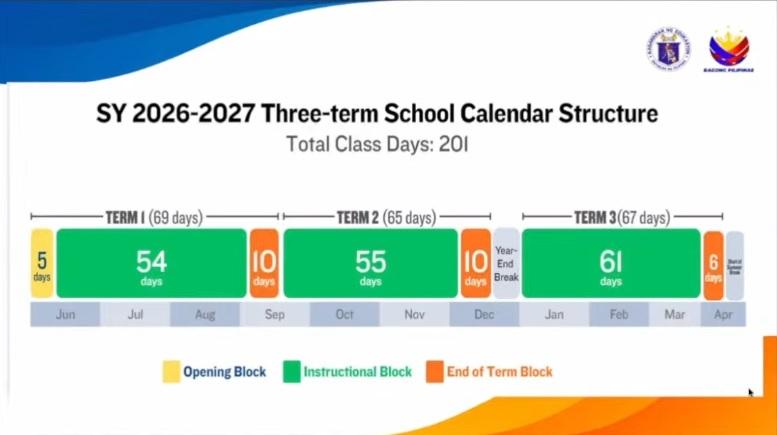
The transition to a three-term system involves several logistical changes for teachers and students:
- Syllabus Redistribution: Lessons are divided into three distinct segments rather than the traditional two-semester approach.
- Assessment Timing: Grading periods and examinations are rescheduled to fit the three-term window.
- Calendar Alignment: The start and end dates of the school year are shifted to avoid the most severe weather disruptions.
“Philippine public schools roll out three-term calendar as academic year opens,” as documented by Rappler, highlighting the systemic shift in how the national curriculum is delivered.
Why are classroom shortages still a critical issue?
Despite the high enrollment numbers, the physical capacity of schools remains a significant hurdle. Explained PH reports that schools are bracing for the opening of classes amid ongoing “classroom shortage woes.” This indicates a gap between the 20.7 million students entering the system and the number of available seats and rooms to house them.
The shortage often leads to several makeshift solutions at the school level. In many districts, this manifests as “shifting” schedules, where one group of students attends in the morning and another in the afternoon to maximize the use of a single room. Other schools may use temporary learning spaces or convert non-academic areas into classrooms.
The tension between rising enrollment and stagnant infrastructure is evident when comparing the reports from different outlets. While the Philippine News Agency focuses on the success of surpassing last year’s enrollment counts in Region 8, Explained PH highlights the struggle to accommodate those very students. This creates a paradox where increased access to education is hindered by a lack of physical space.
| Reported Metric | Source | Context/Implication |
|---|---|---|
| 20.7 Million Enrollees | Daily Tribune | National scale of student population. |
| 1.1 Million (Region 8) | PNA | Regional growth exceeding previous years. |
| Classroom Shortages | Explained PH | Infrastructure gap affecting school openings. |
| Three-Term Calendar | Rappler / Inquirer | Systemic change in academic delivery. |
How does the enrollment surge affect regional education?
The impact of high enrollment is felt most acutely at the regional level. Using DepEd-8 as a case study, the Philippine News Agency’s report of 1.1 million learners demonstrates that regional hubs are seeing a return to, or an increase in, student numbers. This growth suggests that local recruitment and enrollment drives have been effective, but it also amplifies the infrastructure concerns raised by Explained PH.
When enrollment surpasses previous years, the ratio of students to teachers often increases. This can lead to larger class sizes, which may affect the quality of individual instruction. In regions like Eastern Visayas, the ability to maintain educational standards depends heavily on the timely deployment of new teachers and the construction of additional classrooms.
The rollout of the three-term calendar may provide some relief by allowing schools to stagger the use of facilities more effectively. However, the fundamental issue remains the physical lack of rooms. If the student population continues to grow at the rate suggested by the 20.7 million national figure, the pressure on regional DepEd offices to secure funding for infrastructure will intensify.
For more information on how the government plans to address these gaps, readers may look for a related explainer on Philippine education infrastructure.
What are the implications of the new school calendar for learners?
The shift to a three-term calendar is not merely a change in dates but a change in the rhythm of the school year. According to Inquirer.net, the move is intended to stabilize the school opening. By avoiding the height of the summer heat, the government aims to reduce health risks for students and teachers and prevent the frequent “wash-out” days that occur during the monsoon season.
However, the transition period often brings confusion. Students and parents must adjust to new break schedules and a different pace of learning. The three-term structure requires a more disciplined approach to time management from both educators and learners to ensure that the curriculum is completed without rushing the final term.
Key implications for the student body include:
- Health and Safety: Reduced exposure to extreme heat during the traditional April-May peak.
- Academic Pacing: A potentially more balanced distribution of lessons across three terms.
- Logistical Adjustments: Changes in the timing of school supplies procurement and enrollment deadlines.
The success of this calendar shift will likely be measured by the stability of class attendance and the ability of schools to complete the academic requirements without the need for emergency extensions or makeup classes.
Comparing growth and capacity in the public school system
A comparison of the reports reveals a dichotomy in the current state of Philippine education. On one hand, the data from the Daily Tribune and PNA suggests a thriving demand for education, with 20.7 million students nationwide and record-breaking numbers in Region 8. This indicates that the “demand side” of education is robust.
On the other hand, the reports from Explained PH and Rappler highlight the “supply side” struggles. The “classroom shortage woes” and the need to implement a new calendar to avoid weather-related closures suggest that the system is struggling to keep pace with the number of enrollees. The growth in student numbers, while positive for literacy and access, becomes a liability if the infrastructure cannot support it.
This contrast suggests that the Department of Education is managing two simultaneous crises: the need to accommodate a growing population of learners and the need to modernize a calendar and infrastructure system that is no longer fit for the current climate and demographic reality.
Common Misconceptions About the Enrollment Surge
One common misconception is that a high enrollment number automatically equates to a successful school opening. While the 20.7 million figure is a success in terms of registration, it does not account for the quality of the learning environment. As noted by Explained PH, the “bracing” for opening amid shortages suggests that registration is only the first step; the actual delivery of education is where the primary challenges lie.
Another misconception is that the three-term calendar is simply a “shorter” school year. In reality, it is a redistribution of the same required instructional days into a different format to avoid environmental disruptions, as reported by Inquirer.net and Rappler.
Frequently Asked Questions
How many students enrolled in Philippine public schools this year?
According to the Daily Tribune, DepEd logged 20.7 million enrollees after the first week of classes.
What is the current status of enrollment in Region 8?
The Philippine News Agency reported that DepEd-8 recorded 1.1 million learners, which is a count that surpasses the enrollment figures from the previous year.
What is the new academic calendar format?
As reported by Rappler and Inquirer.net, public schools are implementing a three-term calendar to better align the school year and avoid extreme weather disruptions.
Are there still classroom shortages in the Philippines?
Yes. According to Explained PH, schools continue to face significant classroom shortage woes as they open for the new academic year.
Why did the Department of Education change the school calendar?
Based on reports from Inquirer.net, the change was made to move school openings away from the peak summer heat and to create a more stable academic schedule through a three-term system.
