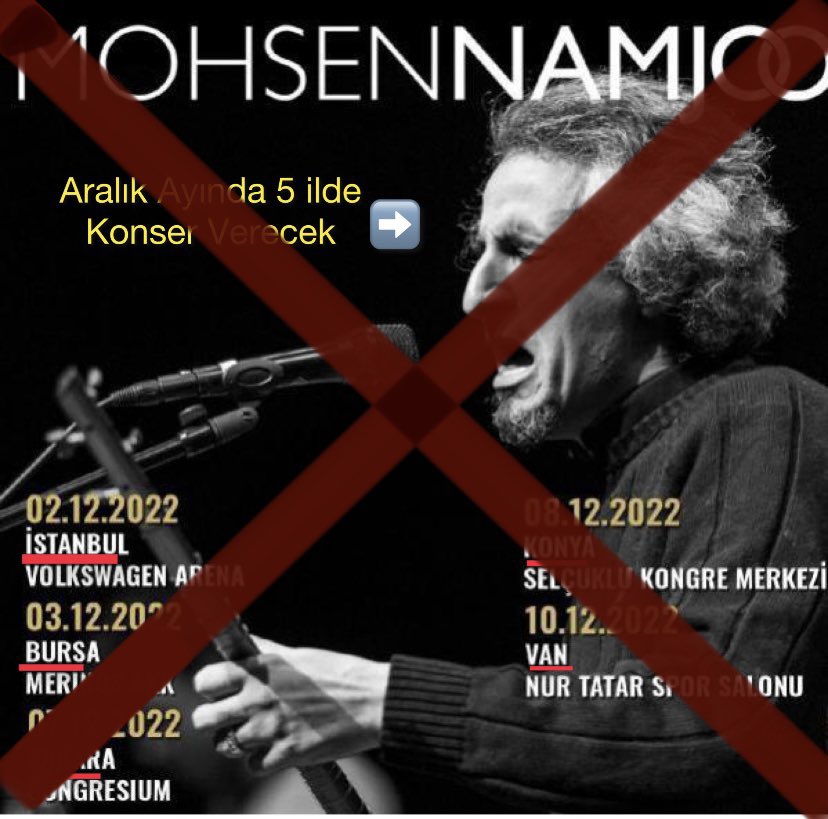
Iranian artist Mohsen Namjoo’s highly anticipated concert in Ankara has been canceled, sparking debate over artistic expression and cultural boundaries. The event, scheduled to showcase the musician’s signature fusion of traditional Persian music with contemporary rhythms, was reportedly scrapped due to “justified sensitivities” linked to his past work. The decision, announced by local organizers, has drawn mixed reactions from fans, critics, and cultural observers across the region.
Who Is Mohsen Namjoo?
Renowned for blending classical Persian poetry with modern musical forms, Namjoo has long been a polarizing figure in the Iranian cultural landscape. His 2014 album *Beyza*—which set verses from the Quran to intricate compositions—garnered both acclaim and controversy, with some praising its artistic ambition and others criticizing its perceived religious irreverence. Over the past decade, his work has frequently navigated the delicate space between tradition and innovation, making him a prominent, if contentious, voice in Middle Eastern music.

The Cancellation and Its Context
The Ankara concert, part of a broader regional tour, was initially framed as a celebration of Namjoo’s cross-cultural influence. However, organizers cited “sensitivity concerns” as the primary reason for the abrupt cancellation, without providing further details. Local media reports suggest the decision may have been influenced by pressure from conservative groups or legal restrictions, though no official statement has been released. This follows a pattern of similar incidents in recent years, where artists have faced backlash for works perceived as challenging established norms.
For fans, the cancellation underscores the ongoing tension between creative freedom and societal expectations. “Namjoo’s music has always pushed boundaries,” said one attendee, who had traveled from Istanbul to see the show. “It’s disappointing to see his work met with hesitation, especially in a city like Ankara, which prides itself on cultural diversity.”
Cultural Implications and Industry Reactions
The incident has reignited discussions about the limits of artistic expression in the Middle East, particularly for creators who blend religious themes with modern genres. While some argue that such restrictions stifle cultural evolution, others contend that artists must navigate complex social landscapes with care. The situation also highlights the challenges faced by musicians seeking to perform in regions with shifting political and cultural climates.
As of now, no official response has been issued by Namjoo’s team, and details about potential rescheduling remain unclear. The cancellation serves as a reminder of the fragile balance between art and convention, a dynamic that continues to shape the region’s creative industries.
