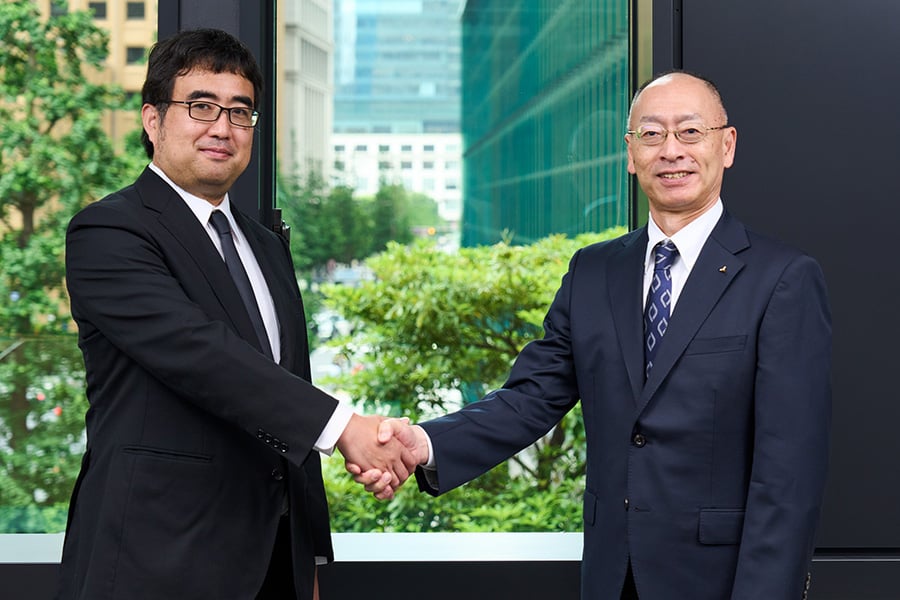
Mitsubishi Heavy Industries and Preferred Networks Form Business Alliance to Jointly Develop Japan-Made AI Technologies for Mission-Critical Applications—Accelerating the Intelligence and Autonomy of Social Infrastructure for Resilient, Secure, and Sustainable Systems
In a strategic move designed to redefine the intersection of heavy industry and cutting-edge computation, Mitsubishi Heavy Industries and Preferred Networks Form Business Alliance to Jointly Develop Japan-Made AI Technologies for Mission-Critical Applications—Accelerating the Intelligence and Autonomy of Social Infrastructure for Resilient, Secure, and Sustainable Systems. This partnership represents more than a simple corporate agreement; It’s a calculated effort to establish “sovereign AI” capabilities within Japan, ensuring that the nation’s most vital infrastructure is managed by technology developed, owned, and secured domestically.
As the global landscape shifts toward an era of autonomous systems and predictive maintenance, the reliance on foreign-developed AI models presents a systemic risk to national security and operational continuity. By fusing the industrial legacy and domain expertise of Mitsubishi Heavy Industries (MHI) with the deep learning prowess of Preferred Networks (PFN), Japan is positioning itself to create a closed-loop ecosystem of intelligence. This alliance aims to transform the “skeleton” of society—power plants, transport networks, and defense systems—into an intelligent, self-healing organism capable of withstanding the volatility of the 21st century.
The Architecture of the Alliance: A Synergy of Hardware and Intelligence
To understand the weight of this alliance, one must look at the complementary nature of the two entities involved. Mitsubishi Heavy Industries is a global titan of engineering, specializing in everything from gas turbines and space systems to shipbuilding and defense. However, the challenge for such a conglomerate has always been the “digital layer”—the ability to make massive, physical machines think and adapt in real-time.
Preferred Networks, conversely, is widely regarded as one of the most sophisticated AI startups in the world. Their expertise lies not just in generative AI, but in the fundamental mathematics of deep learning and the development of specialized hardware to run those models efficiently. While MHI provides the physical theater (the infrastructure), PFN provides the cognitive engine (the AI).
The core objective of this partnership is to move beyond general-purpose AI and develop “Industrial AI” that is specifically tuned for the physics of the real world, where a software hallucination can lead to catastrophic physical failure.
Key Strategic Pillars of the Partnership
- Domain-Specific Model Development: Moving away from generic Large Language Models (LLMs) toward models trained on industrial telemetry and physics-based data.
- End-to-End Sovereignty: Creating a pipeline from data collection and model training to deployment that does not rely on external, foreign cloud providers for its most sensitive operations.
- Autonomous Optimization: Implementing AI that can not only monitor infrastructure but take corrective action autonomously to prevent outages or accidents.
- Resilience Engineering: Utilizing AI to simulate extreme stress scenarios (natural disasters, cyber-attacks) to harden social infrastructure before a crisis occurs.
| Feature | Traditional Infrastructure Management | MHI & PFN AI-Driven Infrastructure |
|---|---|---|
| Maintenance | Scheduled or Reactive (Fix when broken) | Predictive (Fix before failure via AI sensing) |
| Decision Making | Human-operated with manual overrides | Semi-autonomous with real-time AI optimization |
| Security | Perimeter-based / Manual monitoring | Anomaly-based detection / Autonomous response |
| Data Dependency | Fragmented, siloed data logs | Integrated, high-velocity data streams |
Defining “Mission-Critical” AI: Why General AI Isn’t Enough
A recurring misconception in the current tech hype cycle is that a powerful general-purpose AI, such as those produced by Silicon Valley, can be simply “plugged in” to a power plant or a naval vessel. For mission-critical applications, What we have is not only impractical but dangerous. General AI is probabilistic; it guesses the next most likely token or pixel. In a mission-critical environment, “most likely” is not an acceptable standard—certainty and reliability are the only metrics that matter.
The alliance between Mitsubishi Heavy Industries and Preferred Networks is specifically targeting the gap between probabilistic AI and deterministic requirements. Mission-critical AI must operate within the strict laws of physics and engineering tolerances. If an AI is managing the cooling system of a nuclear reactor or the navigation of an autonomous defense platform, there is zero room for “hallucinations.”
The Three Dimensions of Mission-Critical AI
- Reliability and Determinism: The AI must produce predictable outcomes. The alliance is focusing on “physics-informed neural networks” (PINNs), which integrate mathematical laws of physics directly into the AI’s learning process.
- Low Latency and Edge Computing: In a crisis, waiting for a cloud server in another country to process data is impossible. This alliance emphasizes “Edge AI”—processing data locally on the machine itself for near-instantaneous response times.
- Security and Air-Gapping: Mission-critical systems often need to be disconnected from the public internet (air-gapped) to prevent cyber-espionage. Developing Japan-made AI allows for the deployment of powerful models in completely isolated environments.
The Geopolitical Imperative: The Rise of Sovereign AI
The decision for Mitsubishi Heavy Industries and Preferred Networks to form a business alliance to jointly develop Japan-made AI technologies for mission-critical applications is heavily influenced by the global geopolitical climate. For decades, Japan has been a leader in hardware and robotics, but it has lagged behind the US and China in the software and AI revolution. This has created a dangerous dependency on foreign software stacks.

The concept of “Sovereign AI” refers to a nation’s ability to produce its own AI capabilities—including the data, the compute power, and the algorithms—without relying on external entities. This is critical for several reasons:
1. Protection of National Secrets
When industrial data is fed into a foreign AI model, that data often resides on servers outside the home country. For a company like MHI, which handles sensitive defense and energy contracts, this is a non-starter. A domestic AI pipeline ensures that the “intellectual blueprint” of Japan’s infrastructure remains within its borders.
2. Economic Autonomy
Reliance on proprietary foreign AI APIs creates a “subscription trap,” where the cost of maintaining national infrastructure is tied to the pricing whims of a few global tech giants. By developing its own technology, Japan ensures long-term cost stability and technological independence.
3. Cultural and Linguistic Nuance
While English-centric models are powerful, industrial AI requires a deep understanding of local standards, Japanese regulatory frameworks, and the specific operational nuances of Japanese industry. A “Japan-made” approach ensures the AI is tailored to the specific environment it is meant to serve.
For those interested in how this fits into the broader regional strategy, a related explainer on East Asian tech sovereignty provides further context on similar moves by other nations in the region.
Transforming Social Infrastructure: Real-World Applications
The theoretical goals of the MHI-PFN alliance translate into tangible improvements across several sectors of social infrastructure. The goal is to move from “passive” infrastructure to “intelligent” infrastructure.
Energy Systems and Grid Resilience
Modern power grids are becoming increasingly complex with the integration of volatile renewable energy sources like wind and solar. AI can manage this volatility by predicting demand spikes and adjusting supply in milliseconds. The alliance will likely focus on the predictive maintenance of turbines and boilers, using AI to detect microscopic vibrations or heat signatures that signal a coming failure weeks before it happens.
Transportation and Urban Autonomy
From high-speed rail to autonomous shipping, the integration of PFN’s AI into MHI’s transport hardware could revolutionize logistics. Imagine a port where cranes, automated guided vehicles (AGVs), and ships communicate in a synchronized AI ballet, optimizing the flow of goods and reducing carbon emissions through hyper-efficient routing.
Disaster Mitigation and Response
Japan is one of the most disaster-prone countries in the world. The alliance aims to create AI systems that can autonomously assess damage to infrastructure following an earthquake or typhoon. By using drone swarms equipped with PFN’s computer vision and MHI’s aerospace hardware, the government could receive a real-time “health map” of the nation’s bridges, dams, and power lines within minutes of an event.
Potential Challenges and Technical Hurdles
Despite the promise, the road to fully autonomous, AI-driven infrastructure is fraught with challenges. The transition from a traditional engineering mindset to an AI-first mindset is a significant cultural shift.
- The Data Silo Problem: Much of the data in heavy industry is still locked in legacy systems or recorded in analog formats. Cleaning and digitizing this data to make it “AI-ready” is a monumental task.
- Regulatory Lag: Certification processes for mission-critical hardware are slow by design to ensure safety. Integrating “black box” AI into these processes requires a new framework for “AI Certification” that can prove a model is safe before it is deployed.
- Talent Acquisition: There is a global shortage of engineers who understand both high-level deep learning and the gritty realities of mechanical engineering. The alliance will need to foster a new breed of “Industrial AI Engineers.”
Comparing Global Approaches to Industrial AI
Japan’s approach through the MHI-PFN alliance differs significantly from the strategies employed by the United States and China.
In the United States, the trend is toward “Platform AI,” where a few massive companies (Microsoft, Google, Amazon) provide the infrastructure for others to build upon. This is highly innovative but creates a centralization of power and a dependency on the cloud.
In China, the approach is often state-driven and integrated, with the government pushing AI into “Smart Cities” and industrial hubs through direct mandates and massive state subsidies, often prioritizing scale over individual system resilience.
Japan’s strategy, as evidenced by this alliance, is a “Precision Partnership” model. It leverages the deep, existing trust and expertise of a legacy industrial giant and a specialized AI laboratory to create highly targeted, high-reliability systems. This is a “quality over quantity” approach, focusing on the absolute reliability of mission-critical nodes rather than the broad application of general AI.
FAQ: Understanding the MHI and Preferred Networks Alliance
What exactly is “Mission-Critical AI”?
Mission-critical AI refers to artificial intelligence deployed in systems where failure could result in catastrophic consequences, such as loss of life, massive economic damage, or a threat to national security. Unlike a chatbot, mission-critical AI must be deterministic, highly reliable, and capable of operating in real-time without constant internet connectivity.
Why is “Japan-made” AI important for this alliance?
The focus on “Japan-made” technology is about sovereignty. It ensures that the control, data, and intellectual property of Japan’s most vital infrastructure remain domestic, reducing the risk of foreign interference, cyber-espionage, or sudden loss of access to essential software services.

How will this alliance affect the average citizen?
While the AI operates “under the hood,” the benefits for the public include more reliable power grids (fewer blackouts), safer public transportation, and faster recovery of essential services following natural disasters.
Is this alliance focused on Generative AI like ChatGPT?
No. While they may use some generative techniques, the primary focus is on “Industrial AI”—predictive analytics, computer vision for inspection, and autonomous control systems based on the laws of physics and engineering.
What role does Preferred Networks play compared to Mitsubishi Heavy Industries?
Mitsubishi Heavy Industries (MHI) provides the domain expertise, the physical machinery, and the industrial data. Preferred Networks (PFN) provides the AI algorithms, the deep learning architecture, and the specialized computing hardware needed to run these models efficiently.
The Path Toward an Autonomous Future
The formation of this alliance marks a pivotal moment in Japan’s industrial evolution. By recognizing that the future of heavy industry is not just about better steel or more efficient turbines, but about the intelligence that governs them, Mitsubishi Heavy Industries and Preferred Networks are sketching the blueprint for the next industrial revolution. This is a shift from the automation of tasks to the automation of intelligence.
As the partnership progresses, the world will be watching to see if this model of “Sovereign Industrial AI” can successfully bridge the gap between the digital and physical worlds. If successful, it will provide a global template for how nations can modernize their social infrastructure without sacrificing their security or autonomy. The integration of high-fidelity AI into the very bedrock of society—its energy, its transport, and its defense—is no longer a futuristic vision; it is an operational necessity for any nation seeking resilience in an unstable world.
The success of this venture will likely depend on the speed at which they can move from pilot projects to full-scale deployment. If MHI and PFN can prove that AI can manage a power grid or a shipping port more safely and efficiently than a human-led team, the ripple effects will be felt across every industrial sector globally, potentially sparking a new arms race—not of weapons, but of autonomous, resilient infrastructure.
