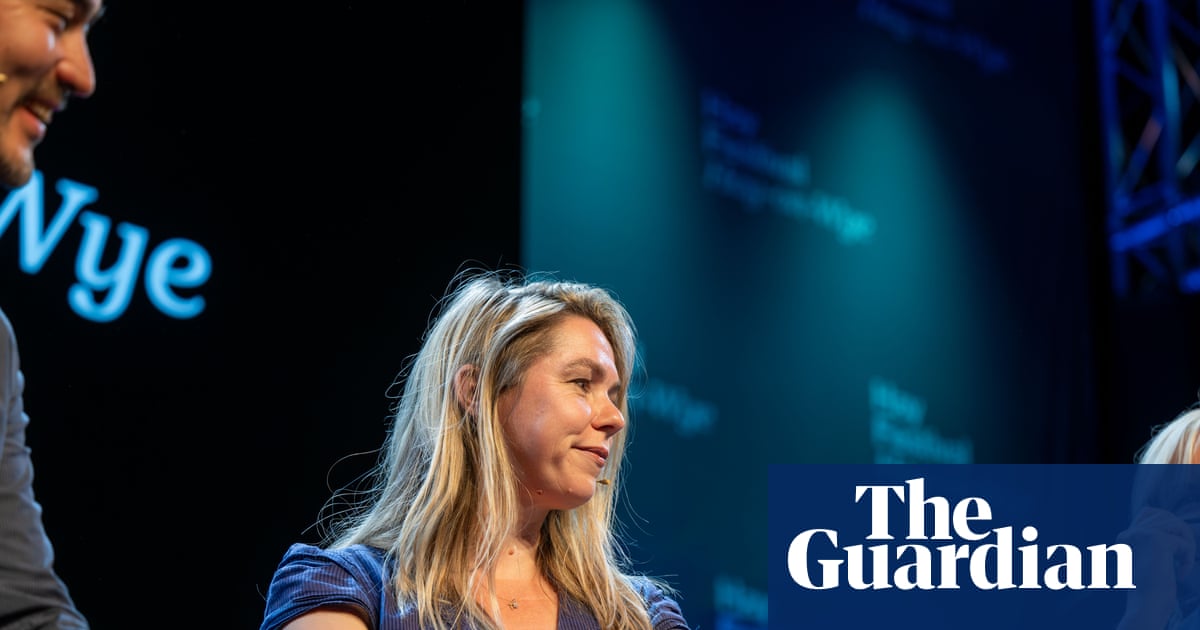
Sales of Meta Whistleblower’s Memoir Soar After Hay Festival ‘Silencing’
Sales of Sarah Wynn-Williams’ memoir increased significantly after the tech giant Meta issued threats that prevented her from speaking at the Hay Festival. The attempt to suppress her public appearance triggered a “Streisand Effect,” where the act of censorship drove heightened public interest and demand for her written account of the company’s internal workings.
What happened at the Hay Festival?
Sarah Wynn-Williams, a former employee of Meta, was scheduled to appear at the Hay Festival to discuss her experiences and the contents of her memoir. However, the appearance did not take place as planned. According to reports, Meta issued legal threats aimed at preventing Wynn-Williams from speaking publicly about the company’s internal operations.
Observers at the event noted that these threats effectively silenced the whistleblower, preventing her from delivering her scheduled talk. The incident occurred in a public forum known for intellectual exchange, making the corporate intervention highly visible to attendees and the media. This suppression of speech did not keep the story quiet; instead, it shifted the public’s attention toward the only available medium for her testimony: her published book.
The sequence of events highlights a recurring tension between corporate non-disclosure agreements (NDAs) and the public’s right to know about the inner workings of platforms that influence global communication. In this instance, the legal pressure applied by Meta served as an inadvertent marketing campaign for Wynn-Williams’ memoir.
Why did the ‘silencing’ lead to a surge in book sales?
The spike in sales is a classic example of the “Streisand Effect,” a social phenomenon where an attempt to hide, remove, or censor a piece of information has the unintended consequence of publicizing the information more widely. When Meta intervened to stop a live discussion, it signaled to the public that the information Wynn-Williams possessed was sensitive and potentially damaging to the company.
This perceived value of the “forbidden” information creates a psychological drive in consumers to seek out the source. Because the live event was cancelled, the memoir became the sole point of access for those wanting to understand why a trillion-dollar company felt the need to silence a former employee. This shift in demand resulted in a rapid increase in book orders and digital downloads.
Key drivers of the sales increase:
- Perceived Value: The legal threats validated the importance of the whistleblower’s claims.
- Curiosity Gap: The cancellation of the Hay Festival talk created a mystery that readers sought to resolve by purchasing the book.
- Public Sympathy: The optics of a massive corporation silencing an individual often generate a “David vs. Goliath” narrative, prompting supporters to buy the book as a form of protest.
Who is Sarah Wynn-Williams and what is her memoir about?
Sarah Wynn-Williams is a former Meta employee who transitioned from an internal role to a whistleblower. Her memoir details her time within the company, focusing on the disconnect between Meta’s public commitments to safety and transparency and its internal operational priorities.
While the specific legal constraints prevent some details from being discussed in live forums, the memoir serves as a documented record of her observations. Whistleblowers in the tech sector typically focus on issues such as algorithmic bias, the handling of user data, and the impact of social media on mental health—areas where Meta has faced significant regulatory scrutiny globally.
By documenting these experiences in a book, Wynn-Williams created a permanent record that is harder to “silence” than a one-time speaking engagement. The memoir provides a narrative framework for understanding how internal corporate pressures can override ethical concerns regarding public safety and platform integrity.
The role of NDAs and legal threats in Big Tech
The conflict between Sarah Wynn-Williams and Meta centers on the use of non-disclosure agreements (NDAs). These contracts are standard in the tech industry, designed to protect intellectual property and trade secrets. However, critics argue that Big Tech companies use them as “gag orders” to prevent employees from reporting illegal activities or unethical behavior to the public.
According to legal analysts, the line between protecting a “trade secret” and suppressing “public interest information” is often blurred. Meta’s actions at the Hay Festival suggest a broad interpretation of these agreements, extending them to prevent the discussion of general corporate culture or systemic failures.
This strategy of “legal intimidation” is often used to discourage whistleblowers from coming forward. The cost of defending a lawsuit against a company with virtually unlimited legal resources is a powerful deterrent. In the case of Wynn-Williams, the legal pressure was successful in stopping the speech but failed to stop the dissemination of the ideas contained in her book.
| Feature | Standard NDA Purpose | Alleged “Gag Order” Use |
|---|---|---|
| Intellectual Property | Protects source code and product roadmaps. | Used to hide systemic failures or bugs. |
| Client Privacy | Protects sensitive user data. | Used to hide policy violations. |
| Competitive Edge | Prevents leaks to rivals. | Prevents leaks to regulators or the press. |
| Legal Recourse | Lawsuits for theft of IP. | Lawsuits to bankrupt whistleblowers. |
Comparing the Wynn-Williams case to other tech whistleblowers
The situation involving Sarah Wynn-Williams follows a pattern seen in other high-profile tech leaks. For example, the case of Frances Haugen, who leaked thousands of internal documents from Meta in 2021, demonstrated that internal documents often contradict public statements. However, the Wynn-Williams case differs in its focus on the act of speaking at a cultural event.

While Haugen worked through regulatory channels and the press, Wynn-Williams attempted to engage in a public, intellectual discourse at the Hay Festival. The attempt to block this specific venue indicates a desire by Meta to control not just the “leak” of data, but the “narrative” constructed around that data in public spaces.
This contrast highlights two different types of corporate suppression:
- Information Control: Preventing the release of specific documents (The Haugen model).
- Narrative Control: Preventing the whistleblower from interpreting those facts for a live audience (The Wynn-Williams model).
Both methods aim to minimize the impact of the whistleblower’s claims, but the latter is more likely to trigger the Streisand Effect because it is an overt act of silencing that the public can witness in real-time.
The broader implications for whistleblower rights
The “silencing” of Sarah Wynn-Williams has reignited a global debate over the need for stronger whistleblower protections. Currently, laws vary significantly by jurisdiction, but many fail to protect employees who speak out about matters of public interest if they have signed a private contract (NDA).
Advocates for reform argue that no private contract should be able to supersede the public interest. They suggest that laws should be updated to render NDAs void if the information being suppressed relates to illegal activity, public health risks, or systemic deception of the public.
The Meta incident serves as a case study in the inefficiency of corporate censorship in the digital age. When a company attempts to block a speaker, they often inadvertently validate the speaker’s importance. This suggests that the most effective way for corporations to handle whistleblowers is through transparency and internal reform, rather than legal threats.
Furthermore, this event puts pressure on event organizers, such as those at the Hay Festival, to consider how they handle corporate pressure. The decision to cancel or modify a talk based on a company’s legal threats can be seen as a surrender of intellectual freedom, which in turn fuels the public’s desire to support the silenced party.
Potential long-term consequences of this event:
- Legislative Pressure: Increased calls for “Speak Out” acts that limit the enforceability of NDAs in cases of public interest.
- Cultural Shift: A growing trend of “buying as protest,” where consumers purchase books or media specifically because they were targeted for censorship.
- Corporate Strategy Change: A possible shift in how Big Tech firms handle public relations, moving away from overt threats toward more subtle forms of narrative management.
For more information on how corporate secrecy affects public policy, see a related explainer on tech industry NDAs.
Common misconceptions about corporate whistleblowing
There are several common misunderstandings regarding the legal and social dynamics of whistleblowing in the tech industry. One primary misconception is that whistleblowers are always “leaking” secrets for financial gain. In reality, many, including Wynn-Williams, face significant financial and professional risks by speaking out, often losing their livelihoods and facing years of legal battles.
Another misconception is that NDAs are legally absolute. In many jurisdictions, an NDA cannot legally prevent someone from reporting a crime to the authorities. However, the threat of a lawsuit is often enough to silence a person, regardless of whether the company would actually win in court. This is known as “strategic litigation against public participation” (SLAPP), where the goal is not necessarily to win the case, but to exhaust the opponent’s resources.
Finally, some believe that “silencing” a speaker effectively kills the story. As the surge in sales for the Wynn-Williams memoir demonstrates, the opposite is often true. In a hyper-connected information economy, the attempt to suppress information often becomes the story itself, amplifying the original message far beyond its intended reach.
Frequently Asked Questions
Why did Meta try to stop Sarah Wynn-Williams from speaking?
According to reports, Meta used legal threats and the enforcement of non-disclosure agreements (NDAs) to prevent Wynn-Williams from discussing internal company operations and the contents of her memoir at the Hay Festival.
What is the “Streisand Effect” in this context?
The Streisand Effect occurs when an attempt to hide or censor information leads to that information being publicized more widely. In this case, Meta’s attempt to silence Wynn-Williams made the public more curious about her memoir, leading to a surge in sales.
Are NDAs legal in the tech industry?
Yes, NDAs are legal and common for protecting trade secrets. However, their legality is challenged when they are used to prevent the disclosure of illegal activities or information that is in the public interest.
How can readers access the information Meta tried to suppress?
The primary source of information currently available is Sarah Wynn-Williams’ memoir, which contains the accounts and observations she was prevented from sharing live at the Hay Festival.
Does this incident change the laws regarding whistleblowers?
While a single incident does not change the law, it provides a high-profile example that advocates use to lobby for stronger whistleblower protections and limits on the power of corporate NDAs.
The intersection of corporate power, legal contracts, and the public’s right to information remains a volatile area of law. As more former employees of Big Tech companies come forward, the tension between private contracts and public accountability is likely to intensify, with the market—and the readers—often deciding who wins the narrative battle.
