Massive Fan-Shaped Geological Structure Discovered Beneath East Antarctic Ice Sheet
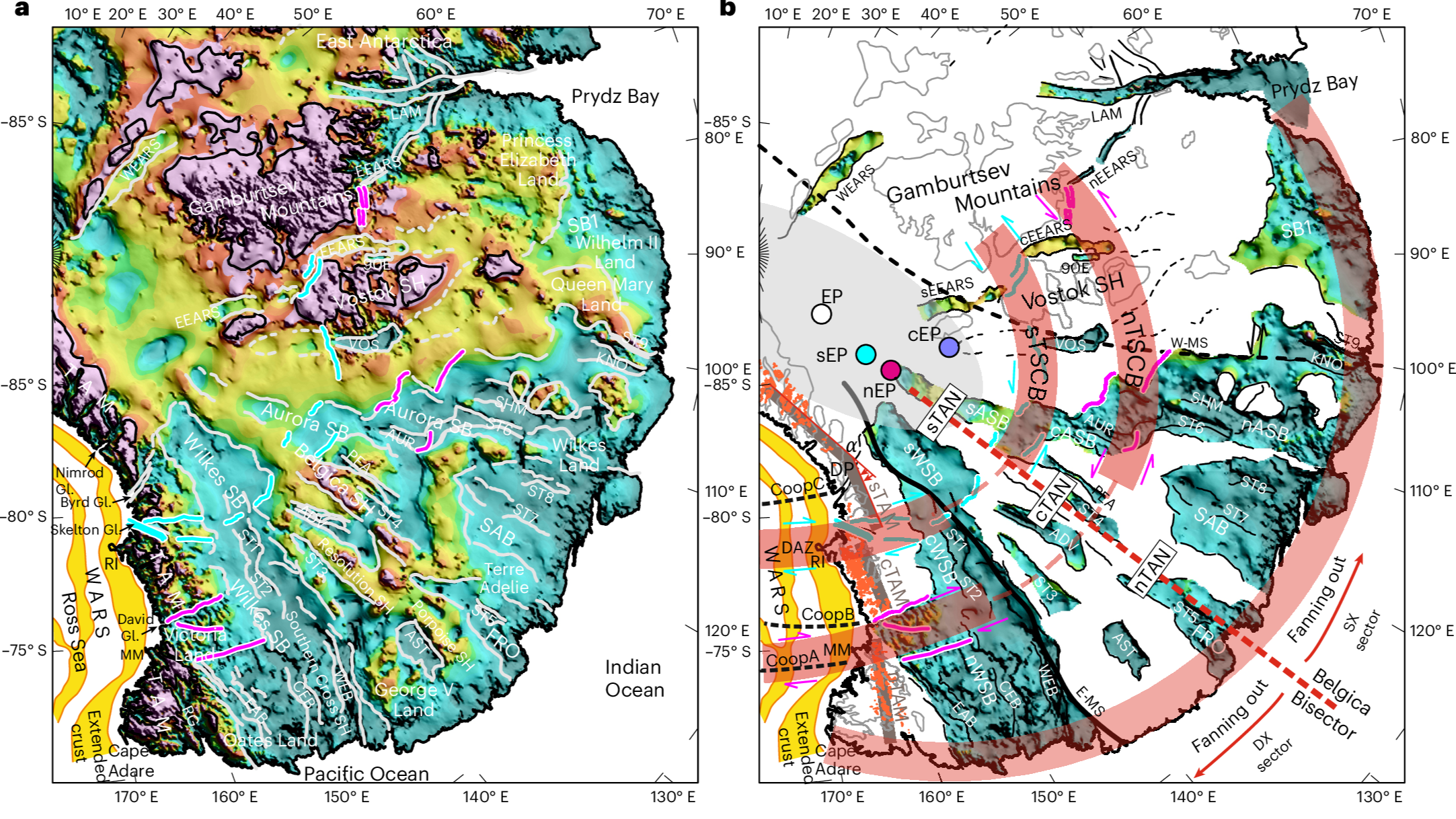
Geoscientists have identified a vast, fan-shaped subglacial basin province deep beneath the East Antarctic Ice Sheet, according to a study published in Nature. The structure formed through a process called rotational extension, providing new evidence regarding the tectonic evolution of the Antarctic continent and the potential stability of the ice sheets resting above it.
What is the fan-shaped structure beneath East Antarctica?
The discovery involves a massive subglacial basin characterized by a distinct fan-like geometry, located deep under the ice of East Antarctica. According to reports from Sci.News and Nature, this province is not a simple valley or a random depression but a systematic geological arrangement created by the stretching and sinking of the Earth’s crust.
This structure represents a significant departure from previously understood geological models of the region. While much of the East Antarctic Ice Sheet (EAIS) was long viewed as a relatively stable, high-altitude plateau, the presence of this basin indicates a more complex subterranean landscape. The “fan” shape describes how the basin widens and spreads from a central point of origin, suggesting a specific type of tectonic stress occurred during its formation.
Key characteristics of the structure include:
- Geometry: A radial, fan-shaped expansion of the basin floor.
- Mechanism: Formed via rotational extension, where the lithosphere pulls apart and rotates downward.
- Location: Deeply embedded within the East Antarctic Ice Sheet, obscured by kilometers of ice.
- Scale: Described as a “vast” province, impacting a significant portion of the regional subglacial topography.
How did this subglacial basin form?
The research published in Nature attributes the creation of this structure to “rotational extension.” This geological process occurs when the Earth’s crust is subjected to tensile forces that do not simply pull the land apart in a straight line, but instead cause blocks of the crust to tilt and rotate as they sink.
According to the geoscientists involved in the study, this rotational movement created a series of concentric or radial faults. As the crust stretched, it collapsed into the fan-shaped depression observed in the data. This is distinct from standard rifting, where the crust typically splits into linear grabens or valleys. The rotational aspect suggests that the forces acting on East Antarctica were more complex than a simple pull-apart motion.
The fan-shaped subglacial basin province in East Antarctica formed by rotational extension, revealing a complex tectonic history that differs from linear rifting patterns.
This process likely occurred millions of years ago, long before the current ice sheet fully encased the continent. By analyzing the shape and depth of the basin, researchers can reconstruct the direction and intensity of the tectonic forces that shaped the Antarctic landmass during the breakup of the supercontinent Gondwana.
What tools did scientists use to find the structure?
Because the structure is buried under miles of ice, researchers could not use traditional surface mapping. Instead, they relied on geophysical imaging and remote sensing data. As detailed in reports by Nautilus and Sci.News, the team utilized a combination of seismic surveys and gravity anomaly mapping.
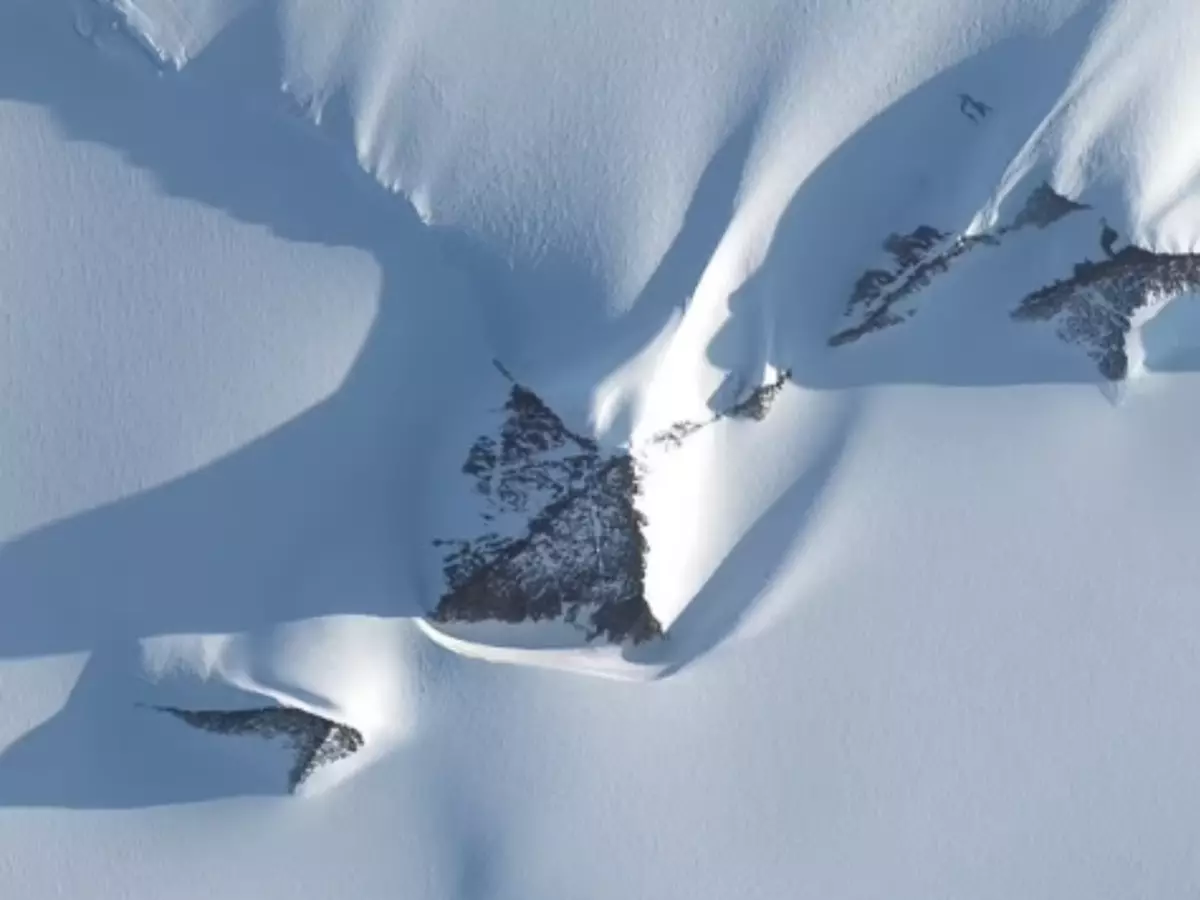
Seismic imaging involves sending sound waves deep into the ice and through the bedrock; the waves bounce back at different speeds depending on the density and shape of the material they hit. By processing these echoes, scientists can create a 3D map of the terrain beneath the ice. Gravity mapping complements this by detecting slight variations in the Earth’s gravitational pull, which indicate whether the underlying rock is dense or if there is a deep, low-density basin.
The data revealed that the bedrock was not a flat plain but dipped sharply into this fan-shaped province. The precision of these tools allowed the team to distinguish the rotational extension pattern from other types of geological depressions, such as glacial erosion or volcanic collapse.
Why does this discovery matter for climate science?
The shape and depth of the land beneath an ice sheet directly influence how that ice moves and how quickly it melts. The discovery of a giant basin in East Antarctica is critical because it changes the “map” that climate modelers use to predict sea-level rise.
According to the findings, basins can act as reservoirs for ice. If a basin is deep and sits below sea level, it may be more susceptible to “marine ice sheet instability.” This occurs when warm ocean currents penetrate the underside of the ice sheet, eating away at the grounding line—the point where the ice leaves the bedrock and starts to float.
While the East Antarctic Ice Sheet has traditionally been considered more stable than the West Antarctic Ice Sheet, the presence of deep, fan-shaped basins suggests that certain sectors of the EAIS could be more vulnerable to warming oceans than previously thought. If the ice in these basins begins to retreat, it could trigger a significant discharge of ice into the ocean, contributing to global sea-level rise.
The implications for ice dynamics are summarized in the following table:
| Feature | Previous Assumption | New Discovery Impact |
|---|---|---|
| Bedrock Topography | Relatively stable, high plateau | Complex basins with rotational extension |
| Ice Stability | Highly resistant to melting | Potential vulnerability in deep basin zones |
| Sea Level Risk | Lower priority than West Antarctica | Increased need to monitor East Antarctic basins |
| Ice Flow Path | Uniform movement | Channelized flow dictated by basin shape |
Comparing the reporting: Nature vs. General Science Media
There is a noticeable difference in how this discovery is framed across different publications. The original study in Nature focuses heavily on the tectonic mechanism—specifically the physics of rotational extension and the lithospheric response. The primary goal of the academic paper is to rewrite the geological history of the East Antarctic crust.
In contrast, outlets like Live Science and Yahoo emphasize the “hidden” and “giant” nature of the structure, framing the story as a discovery of a lost landscape. These reports lean more toward the implications for climate change and the mystery of what lies beneath the ice, making the technical geological findings accessible to a general audience.
Nautilus takes a more conceptual approach, linking the discovery to the broader narrative of Earth’s evolving surface. While Nature provides the raw evidence for rotational extension, the science news outlets translate that evidence into a warning about ice sheet stability. This contrast highlights a gap between purely geological research and the urgent application of that research to climate forecasting.
How does this fit into the history of Gondwana?
The fan-shaped structure is a piece of a much larger puzzle: the breakup of Gondwana. Hundreds of millions of years ago, Antarctica was connected to South America, Africa, India, and Australia. As these continents drifted apart, the crust was stretched and torn.
The discovery of rotational extension in East Antarctica suggests that the breakup was not a clean split. Instead, the crust twisted and warped. According to the research, these fan-shaped basins are evidence of “failed rifts” or complex extension zones where the continent tried to break apart but didn’t fully separate. This provides a roadmap for geologists to understand how other continents were formed and where similar hidden structures might exist beneath other ice sheets, such as in Greenland.
Researchers can now compare this Antarctic structure to similar basins found in other parts of the world to determine if rotational extension is a common feature of continental breakup or a unique characteristic of the Antarctic plate.
Common misconceptions about Antarctic geology
One common misconception is that Antarctica is a solid, unchanging block of granite. In reality, the continent is a patchwork of different geological terrains, including ancient volcanic arcs and sedimentary basins. The discovery of the fan-shaped structure proves that the “stable” East Antarctic craton is far more dynamic than once believed.
Another misconception is that the ice sheet is a uniform slab. Because the ice follows the contours of the land, the discovery of a deep basin means the ice is significantly thicker in some areas and thinner in others. This creates “ice streams”—fast-moving rivers of ice that carve through the basins and dump ice into the sea. The fan-shaped structure likely acts as a conduit or a barrier for these streams, depending on its exact orientation.
For more context on how ice interacts with the land, you may find a related explainer on subglacial lake systems useful, as these lakes often gather in the lowest points of basins like the one discovered here.
What to watch for in future research
The identification of the fan-shaped basin is a starting point rather than a conclusion. The next phase of research will likely involve higher-resolution mapping to determine the exact depth of the basin floor. If the floor is significantly below sea level, the risk of warm water intrusion increases.
Scientists are also looking for evidence of subglacial water or sediment within the basin. The presence of water can lubricate the base of the ice sheet, accelerating its slide toward the ocean. Future missions may involve drilling through the ice to take direct samples of the bedrock, which would confirm the “rotational extension” theory with physical evidence rather than relying solely on seismic data.
Additionally, this discovery will likely prompt a re-examination of other “stable” regions of the East Antarctic Ice Sheet. If one giant fan-shaped structure exists, others may be hidden nearby, potentially uncovering a network of basins that could fundamentally alter our understanding of the continent’s contribution to global sea levels.
Further exploration into the interaction between the crust and the ice may be detailed in a related report on Antarctic ice melt patterns.
Frequently Asked Questions
What exactly is a “fan-shaped structure” in this context?
It is a subglacial basin—a large depression in the bedrock—that widens as it moves away from a central point, resembling a handheld fan. This shape is a result of the Earth’s crust rotating and sinking during tectonic extension.

Where is this structure located?
The structure is located deep beneath the East Antarctic Ice Sheet, one of the largest and most stable ice masses on Earth.
Who discovered this structure and where was it published?
The discovery was made by a team of geoscientists, and the detailed findings were published in the scientific journal Nature.
Does this discovery mean the ice sheet will melt faster?
Not necessarily, but it identifies a potential vulnerability. Deep basins can allow warm ocean water to reach the ice from below, which could lead to faster melting in those specific areas compared to the surrounding high plateau.
What is “rotational extension”?
Rotational extension is a geological process where the crust is pulled apart and the resulting blocks of land tilt or rotate as they drop downward, creating a curved or fan-shaped depression rather than a straight valley.
How do scientists “see” through kilometers of ice?
They use geophysical tools such as seismic imaging (sending sound waves through the ice) and gravity anomaly mapping (measuring variations in the Earth’s gravity) to map the bedrock surface.
