
Belfast Attack Suspect Appears in Court as Victim Loses Eye – Australian Broadcasting Corporation Reports
A suspect has appeared in court following a violent stabbing attack in Belfast that left the victim with a permanent eye injury. The incident, which News.com.au described as an alleged beheading attempt, occurred against a backdrop of escalating racial tensions and wider unrest across the United Kingdom, according to reports from the Australian Broadcasting Corporation (ABC) and other major news outlets.
What happened during the Belfast attack?
The attack involved a targeted stabbing in Belfast that resulted in catastrophic injuries to the victim. According to reports from News.com.au, the assault was so severe it has been characterized as an alleged attempt at beheading. Medical outcomes confirmed that the victim lost an eye as a direct result of the violence.
The suspect in the case has since been apprehended and brought before a court to face charges. While the specific legal charges are processing through the Northern Ireland judicial system, the severity of the victim’s injuries underscores the brutality of the encounter. The incident didn’t happen in a vacuum; it coincided with a period of volatility across the UK, where localized clashes have become more frequent.
Key factual details regarding the incident include:
- Nature of attack: Stabbing with intent to cause grievous harm or kill.
- Primary injury: Permanent loss of an eye.
- Legal status: Suspect is currently in custody and has made an initial court appearance.
- Characterization: Described as an “alleged beheading attempt” by News.com.au.
How did the public respond to the stabbing?
Footage of the incident reveals that the attack was interrupted by bystanders. According to the Australian Broadcasting Corporation, video evidence shows members of the public intervening during the stabbing attack in Belfast to stop the assailant and protect the victim.
This civilian intervention is a critical detail in the timeline of the event. The ABC video highlights the chaotic nature of the scene, where strangers stepped in to neutralize the threat before police arrived. This spontaneous response by the public likely prevented further injury or the death of the victim, given the alleged nature of the attack as a beheading attempt.
The role of the public in these scenarios often becomes a point of legal scrutiny, as witnesses and interveners are called to provide testimony regarding the suspect’s actions and the sequence of events leading up to the arrest.
Why is the attack being described as a “race-based pogrom”?
The framing of the attack varies significantly across different news organizations, reflecting the broader social tensions in the UK. The Australian Financial Review (AFR) has characterized the situation as part of a “race-based pogrom,” suggesting that the violence is not an isolated criminal act but part of a systemic, targeted campaign of ethnic or racial violence.

This terminology indicates a belief that the attack was motivated by hate and designed to intimidate specific community groups. The AFR reports that the UK is bracing for fresh unrest as a result of this brutal attack, fearing that the incident could act as a catalyst for further riots. This perspective shifts the narrative from a simple assault case to a matter of national security and social cohesion.
The use of the word “pogrom”—historically referring to organized massacres of a particular ethnic group—suggests a high level of alarm regarding the current state of racial relations in the UK. It implies that the violence is coordinated or encouraged by a wider movement of hate rather than being the work of a lone actor.
How do different media outlets frame the Belfast violence?
The reporting on this incident reveals a distinct contrast in how different outlets prioritize the facts. While all agree on the brutality of the crime, the “why” and the “context” differ based on the publication’s focus.
| Outlet | Primary Focus | Key Terminology Used |
|---|---|---|
| Australian Broadcasting Corporation (ABC) | Event facts and citizen intervention | “Stabbing attack,” “members of the public intervene” |
| News.com.au | Severity of physical injury | “Alleged beheading attempt,” “loses eye” |
| Australian Financial Review (AFR) | Societal and political impact | “Race-based pogrom,” “fresh unrest” |
| SMH.com.au | Preventative lessons and causes | “Racist fearmongering,” “lessons for Australia” |
This divergence in framing is typical of high-tension news events. One outlet focuses on the visceral (the loss of an eye), another on the tactical (the public intervention), and others on the systemic (the racial nature of the unrest). For a reader, this means the “truth” of the event is found by synthesizing these different angles: it was a brutal attack, it was stopped by civilians, and it is occurring within a volatile racial climate.
What are the “lessons for Australia” regarding these riots?
The unrest in Belfast and the wider UK has prompted analysis in Australia about the country’s own vulnerability to similar violence. SMH.com.au reports that the Belfast riots were “whipped up by racist fearmongering,” suggesting a direct link between inflammatory rhetoric—often spread via social media—and real-world physical violence.
The analysis suggests that Australia should take note of how misinformation and targeted hate speech can mobilize groups to commit violent acts. The “lessons” involve identifying the early warning signs of social fragmentation and the role that digital platforms play in accelerating “fearmongering.”
According to the SMH, the danger lies in the ability of bad actors to use specific triggers to incite a population. In the UK case, the transition from online rhetoric to a “race-based pogrom” happened rapidly, creating a blueprint for instability that other multicultural societies, including Australia, may face if similar tensions are left unchecked.
To understand how this relates to domestic issues, readers may find a related explainer on social cohesion and misinformation useful.
What is the current state of unrest in the United Kingdom?
The attack in Belfast is not an isolated incident but a symptom of a broader trend of instability. The AFR reports that the UK is currently bracing for further unrest, as the brutal nature of the stabbing has increased tensions between different community groups.
The unrest is characterized by several factors:
- Digital Incitement: The use of social media to organize protests that frequently devolve into riots.
- Targeted Violence: A shift from general civil unrest to attacks targeting specific racial or ethnic groups.
- Police Strain: Law enforcement agencies struggling to contain multiple flashpoints of violence across different cities.
The situation in Belfast is particularly sensitive due to the city’s history of sectarian violence. Adding a racial dimension to the existing political and religious tensions creates a complex security environment for the Northern Ireland Police Service. The fact that a suspect has appeared in court is a step toward legal resolution, but it does not necessarily quell the street-level tension.
How does the legal process work for attacks of this nature?
When a suspect appears in court following an attack described as a “beheading attempt” or “race-based” violence, the legal proceedings typically follow a specific trajectory. First, the suspect is formally charged. If the attack is found to be motivated by racial or religious hatred, the prosecution may seek “hate crime” enhancements, which can lead to stiffer penalties under UK law.
The evidence presented in court will likely include:
- Medical Reports: Documentation of the victim’s loss of an eye and other injuries to prove the intent to cause grievous bodily harm.
- CCTV and Mobile Footage: The ABC-reported video of public intervention will be crucial in establishing the timeline and the suspect’s behavior.
- Digital Evidence: Police will likely examine the suspect’s phone and social media activity to determine if the attack was premeditated or inspired by the “racist fearmongering” mentioned by SMH.com.au.
The court’s primary focus in the initial stages is determining whether the suspect should be remanded in custody or granted bail. Given the severity of the injuries and the risk of further unrest, remand is highly probable in cases involving alleged beheading attempts.
Common misconceptions about the Belfast unrest
There are several oversimplifications often found in the reporting of these events that require correction based on the available evidence.
Misconception 1: The attack was a random act of violence.
While some initial reports may frame stabbings as random, the AFR’s characterization of a “race-based pogrom” and the SMH’s mention of “racist fearmongering” suggest a targeted, ideological motive. The violence is linked to a broader political and social movement.
Misconception 2: The police were the only ones to stop the attacker.
The ABC video evidence explicitly contradicts this, showing that members of the public were the first to intervene. This indicates a community-level reaction to the violence before official law enforcement arrived on the scene.
Misconception 3: This is a return to “The Troubles.”
While the location is Belfast, the current unrest is framed by outlets like the SMH and AFR as being driven by modern racial tensions and digital misinformation, which differs from the traditional sectarian/political divide of the 20th-century conflict in Northern Ireland.
Frequently Asked Questions
Who is the suspect in the Belfast attack?
The suspect has appeared in court, but specific identity details are often withheld during early legal proceedings in the UK to ensure a fair trial. The suspect is currently facing charges related to the stabbing attack that left a victim without an eye.
Was the Belfast attack a beheading attempt?
News.com.au reported the incident as an “alleged beheading attempt.” This suggests the nature of the wounds was concentrated around the neck and head, leading to the permanent loss of the victim’s eye.
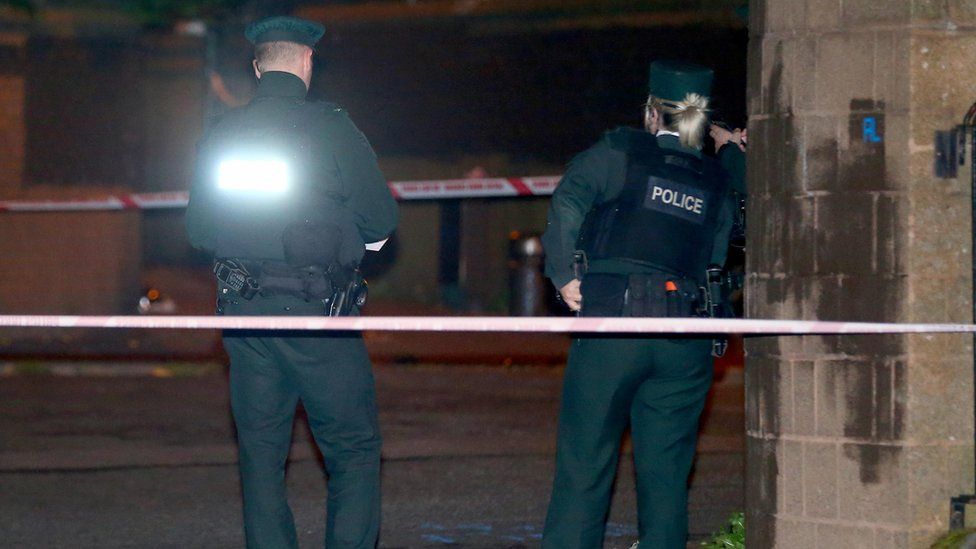
Did the police stop the attacker in Belfast?
According to the Australian Broadcasting Corporation, video evidence shows that members of the public intervened to stop the stabbing attack before the suspect was taken into custody.
Why is this news being reported in Australian outlets like ABC and SMH?
Australian media are covering the story because of the broader implications of the UK unrest. SMH.com.au, for example, highlighted “lessons for Australia,” noting how racist fearmongering can lead to real-world violence in multicultural societies.
What is a “race-based pogrom”?
As used by the Australian Financial Review, this term describes organized, violent attacks directed at a specific ethnic or racial group. It suggests the Belfast attack was part of a wider, targeted campaign of hatred rather than an isolated crime.
The legal proceedings against the suspect will continue to unfold in the Northern Ireland courts. Meanwhile, security forces remain on alert as the UK manages the fallout from these attacks and the ongoing risk of racially motivated unrest. For more on the intersection of technology and violence, see our analysis of social media’s role in civil unrest.
