Lunar Meteorite Preserves Evidence of Colossal Asteroid Strike – Sci.News
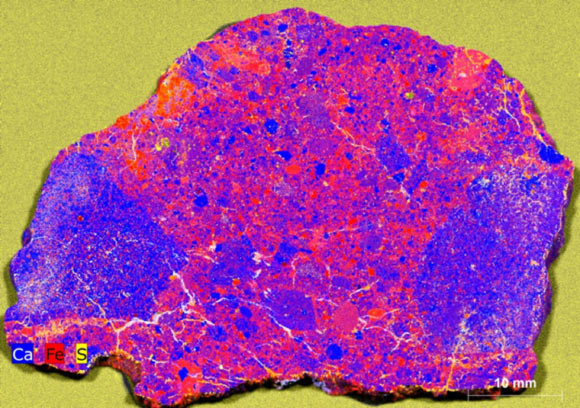
A lunar meteorite has provided evidence of a massive asteroid impact that occurred approximately 3.5 billion years ago, according to reports from Sci.News and Phys.org. The discovery reveals a period of extreme volatility in the inner solar system, offering a physical record of the Moon’s early geological history and the violent collisions that shaped it.
What evidence did the lunar meteorite reveal?
The meteorite contains physical and chemical markers indicating it was subjected to a high-energy impact event. According to Sci.News, the sample preserves a record of a colossal asteroid strike that took place 3.5 billion years ago. This evidence is typically found in the form of “shocked” minerals—crystals that have been structurally altered by the immense pressure and heat of a collision.
Phys.org reports that these findings highlight a violent chapter in the history of the inner solar system. When a large asteroid hits the lunar surface, it creates a shock wave that compresses minerals and can melt the surrounding rock. These changes remain frozen in the stone for billions of years because the Moon lacks the tectonic activity and atmospheric weathering that would erase such evidence on Earth.
Key indicators found in such meteorites include:
- Shock Metamorphism: The transformation of minerals into higher-pressure polymorphs.
- Impact Melt: Rock that was liquefied by the heat of the strike and subsequently cooled into glass.
- Isotopic Dating: Chemical signatures that allow scientists to pinpoint the timing of the event to 3.5 billion years ago.
Why was the asteroid impact 3.5 billion years ago significant?
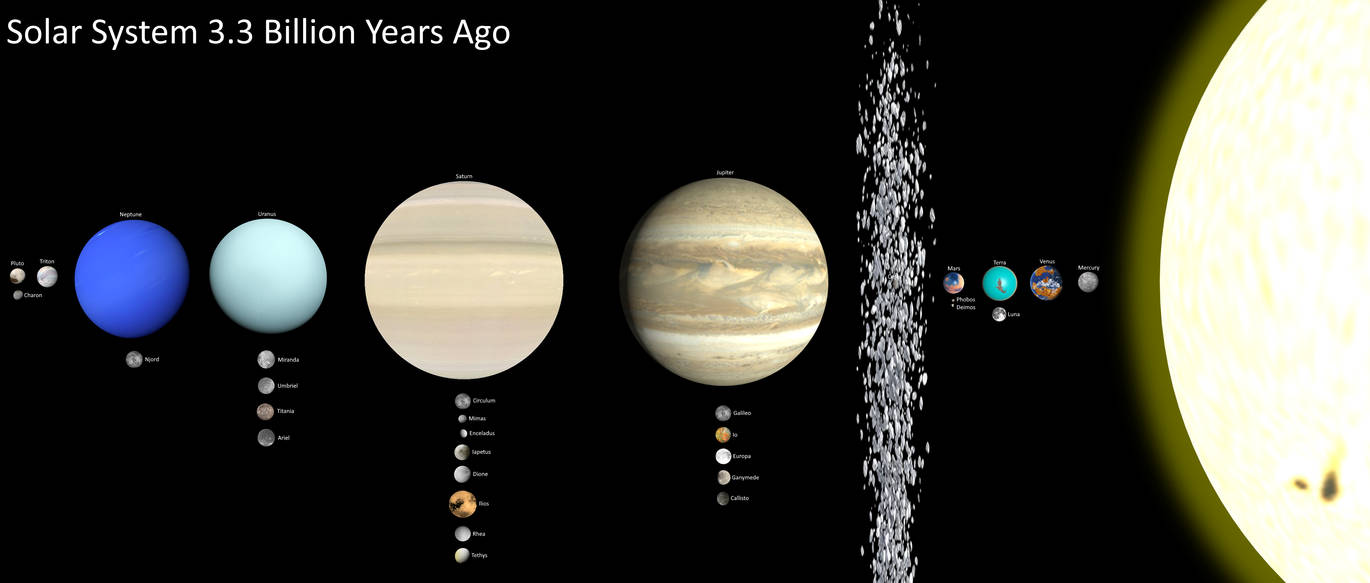
The timing of this strike is critical for planetary scientists. According to The Brighter Side of News, this event occurred during a period of widespread instability in the inner solar system. This era is often associated with the “Late Heavy Bombardment,” a hypothesized window where the orbits of giant planets shifted, sending a deluge of asteroids toward the inner planets, including Earth and the Moon.
By dating this specific impact, researchers can better map the frequency and intensity of collisions during this epoch. Understanding the 3.5-billion-year mark helps scientists determine if the Moon experienced a steady decline in impacts or if it suffered from sporadic, massive “spikes” of violence. This data is essential for reconstructing the early environment of the entire solar system.
“Lunar meteorite discovery reveals violent chapter in the inner solar system 3.5 billion years ago,” as reported by The Brighter Side of News.
How do lunar meteorites reach Earth?
Lunar meteorites are not launched by volcanic activity but by other asteroid strikes. When a large object hits the Moon, the energy of the collision is so great that it can eject lunar crust and mantle material into space at speeds exceeding the Moon’s escape velocity. According to astronomical data, these fragments drift through the vacuum of space for millions of years before being captured by Earth’s gravity.
The process follows a specific sequence:
- Primary Impact: A colossal asteroid strikes the lunar surface.
- Ejection: Debris is blasted into space.
- Transit: The fragment orbits the sun, occasionally intersecting Earth’s orbital path.
- Atmospheric Entry: The rock enters Earth’s atmosphere, heating up and forming a fusion crust.
- Recovery: The meteorite is discovered on Earth’s surface by researchers or collectors.
Because these rocks are delivered to Earth naturally, they provide a way for scientists to study lunar geology without the need for expensive manned missions. For those interested in how we categorize these finds, a related explainer on meteorite classification provides further detail.
Comparing Lunar Meteorites to Apollo Samples
While the Apollo missions brought back carefully curated samples from specific sites, lunar meteorites provide a more random, yet broader, sampling of the Moon’s surface. According to reports from Phys.org, meteorites can originate from various regions of the Moon, including the highlands and the lunar maria (the dark basaltic plains).
| Feature | Apollo Samples | Lunar Meteorites |
|---|---|---|
| Origin | Known, specific landing sites | Unknown, random surface locations |
| Collection | Controlled scientific sampling | Natural ejection and Earth-fall |
| Contamination | Minimal (vacuum-sealed) | Higher (terrestrial weathering) |
| Availability | Strictly controlled by NASA | Available in museums and private collections |
The meteorite mentioned in the Sci.News report is particularly valuable because it captures a specific moment in time—3.5 billion years ago—that may not be as well-represented in the limited Apollo sample set.
The role of radiometric dating in identifying the strike
To determine that the impact occurred exactly 3.5 billion years ago, scientists use radiometric dating. This process involves measuring the decay of unstable isotopes within the minerals of the meteorite. According to Phys.org, researchers look for “reset” clocks.
When an asteroid strikes a rock, the heat is often intense enough to melt the mineral or reset its isotopic composition. This effectively “zeros” the clock. By measuring the ratio of parent isotopes to daughter isotopes from that point forward, scientists can calculate exactly how much time has passed since the rock was shocked. In this case, the isotopic evidence points directly to the 3.5-billion-year mark.
This method is the gold standard for planetary chronology. Without it, scientists could only guess the age of the impact based on the size of the crater or the depth of the rock, neither of which is as precise as isotopic analysis.
Implications for Earth’s early history
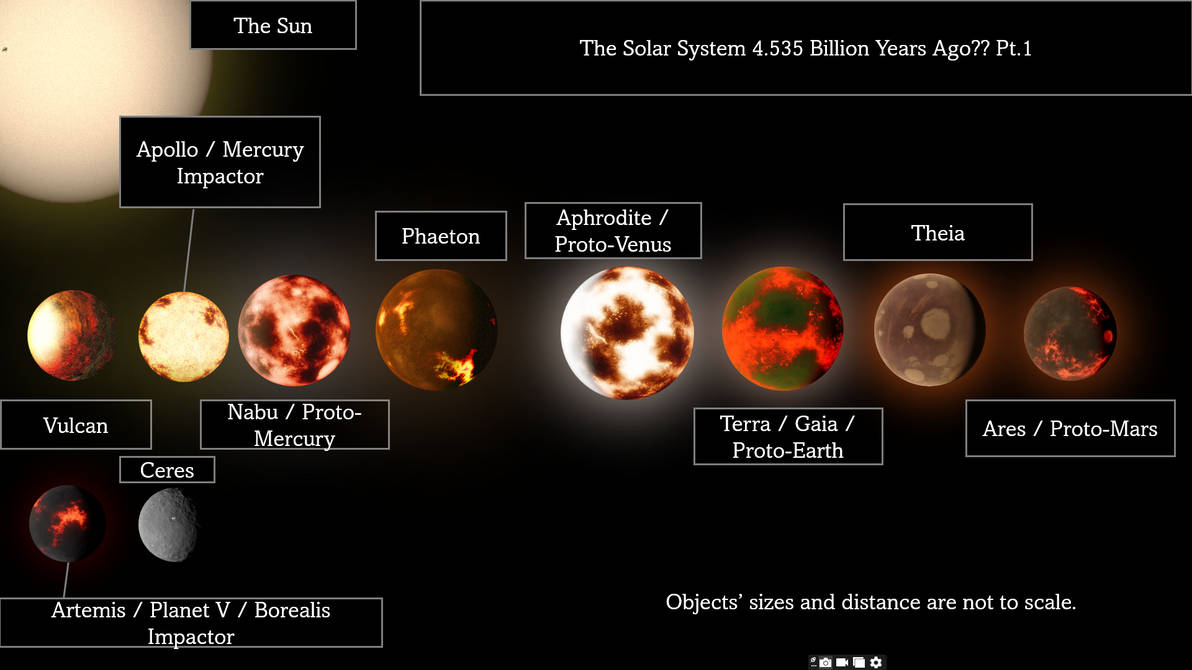
The Moon acts as a historical archive for Earth. Because Earth has plate tectonics, volcanoes, and water, its own record of early asteroid strikes has been largely erased. The discovery of a colossal strike 3.5 billion years ago on the Moon suggests that Earth likely faced similar bombardments during the same window. This period coincides with the emergence of the first single-celled life forms on Earth.
Scientists analyze these lunar events to answer critical questions:
- Sterilization: Did these impacts heat Earth’s surface enough to wipe out early life?
- Water Delivery: Did the asteroids that hit the Moon also bring water and organic molecules to Earth?
- Atmospheric Change: How did frequent colossal strikes affect the early atmospheres of both bodies?
By studying the “violent chapter” cited by The Brighter Side of News, researchers can infer the conditions that allowed life to survive or evolve on Earth despite a chaotic cosmic environment.
Common misconceptions about lunar meteorites
Many people assume that any rock found on Earth that looks like a moon rock must have been brought back by astronauts. However, as this story demonstrates, nature provides its own delivery system. Another common misconception is that lunar meteorites are rare; while rare compared to common Earth rocks, they are found more frequently than meteorites from Mars.
Additionally, some believe that a “colossal” strike would have destroyed the Moon. In reality, the Moon is a geologically dead world, meaning it can absorb an incredible amount of punishment. These impacts create the craters we see from Earth, but they do not threaten the Moon’s structural integrity. Instead, they serve as timestamps for the solar system’s evolution.
What this discovery means for future space exploration
The ability to extract high-fidelity data from a single meteorite reinforces the value of the Artemis program and other lunar missions. While meteorites are useful, they are “blind” samples—scientists don’t know exactly where on the Moon they came from. Returning to the Moon to find the specific craters associated with these 3.5-billion-year-old events would allow researchers to map the impact in situ.
Future missions may target “impact melt sheets”—the frozen seas of rock created by colossal strikes—to find more evidence of the inner solar system’s violent past. Understanding these events also informs our planetary defense strategies, as it provides a historical record of the size and frequency of asteroid strikes in our cosmic neighborhood.
Frequently Asked Questions
What is a lunar meteorite?
A lunar meteorite is a piece of the Moon’s crust or mantle that was blasted into space by an asteroid impact and eventually fell to Earth.
How do scientists know the meteorite is from the Moon?
Scientists analyze the oxygen isotope ratios and chemical composition of the rock. Lunar rocks have a distinct “fingerprint” that differs from Earth rocks and meteorites from other planets or asteroids.
Why is 3.5 billion years ago a significant date?
This date falls within a period of high asteroid activity in the inner solar system, potentially linked to the Late Heavy Bombardment, and overlaps with the early development of life on Earth.
Can we find these meteorites ourselves?
While possible, they are extremely rare and often look like ordinary stones. They are typically identified by specialists using laboratory equipment to verify their origin.
Did the asteroid strike destroy the Moon?
No. While the impact was “colossal” in terms of energy and local destruction, it only created a crater and ejected debris. The Moon’s overall mass and orbit remained unaffected.
For more information on the chemistry of space rocks, see our comprehensive guide to planetary isotopes.
