
Venus and Jupiter Align in NZ Night Sky: What to Look For in June 2026
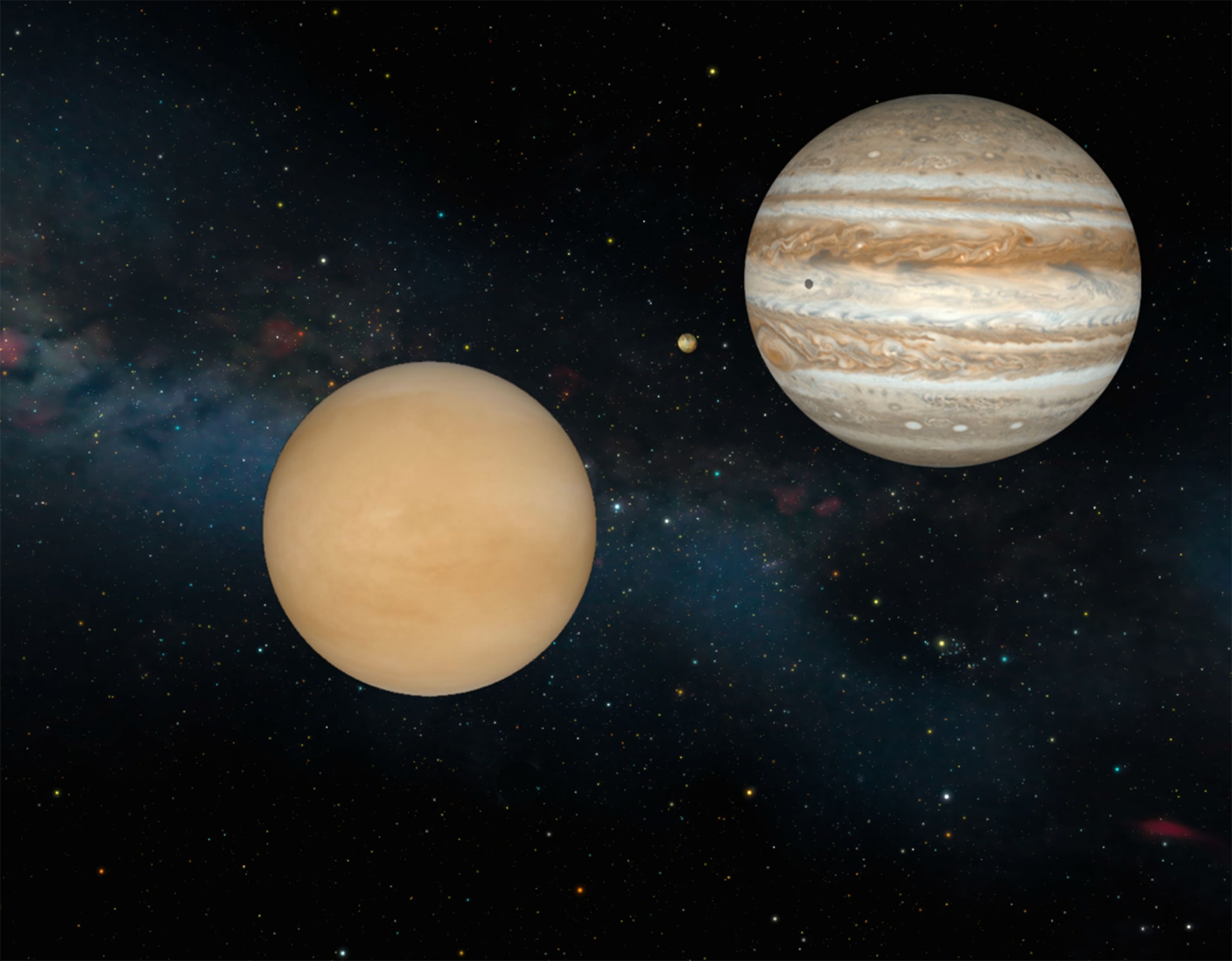
Venus and Jupiter will appear to align in the New Zealand night sky during June 2026, creating a rare visual pairing known as a conjunction. According to reports from NASA and Live Science, these two brightest planets will appear to almost touch, providing one of the most significant skywatching events of the year for observers in the Southern Hemisphere.
When and Where to See the Venus and Jupiter Alignment
The alignment, which occurs in June 2026, will be visible to the naked eye. According to Live Science, the two planets will move so close together from Earth’s perspective that they will appear to “almost touch.” This event is a conjunction, a term astronomers use when two celestial bodies share the same right ascension or ecliptic longitude.
For those searching for Venus and Jupiter align in NZ night sky – what to look for – 1News, the primary viewing window opens in the early evening. Observers in New Zealand should look toward the western horizon shortly after sunset. Because Venus is often referred to as the “Evening Star,” it will be one of the first bright objects to appear as the sun dips below the horizon, with Jupiter positioned immediately adjacent to it.
National Geographic describes this specific proximity as a “cosmic kiss,” noting that the visual closeness is an optical illusion. While the planets appear side-by-side, they remain millions of kilometers apart in space, orbiting the sun at vastly different distances.
| Event | Visual Appearance | Primary Source |
|---|---|---|
| Planetary Conjunction | Venus and Jupiter appear to “touch” | Live Science / National Geographic |
| Lunar Occultation | Venus disappears behind the Moon | ScienceDaily |
| June Skywatching | General planetary visibility | NASA Science |
How to Spot the ‘Cosmic Kiss’ in the Southern Hemisphere
Identifying the two planets is straightforward due to their extreme brightness. Venus is typically the brightest planet in the sky, while Jupiter follows closely behind. According to NASA Science, the lack of twinkling is the easiest way to distinguish these planets from distant stars, as planets reflect sunlight rather than emitting their own.
- Direction: Look west after sunset.
- Brightness: Look for the two most brilliant points of light in the twilight sky.
- Position: The planets will be located along the ecliptic, the imaginary line that marks the path the sun and planets follow across the sky.
National Geographic suggests that no specialized equipment is required to see the conjunction. However, using binoculars can reveal more detail, such as Jupiter’s four largest moons—Io, Europa, Ganymede, and Callisto—which will appear as tiny pinpricks of light flanking the larger planet.
The Rare June Occultation: Venus and the Moon
Beyond the alignment with Jupiter, June 2026 features another distinct celestial event. ScienceDaily reports that Venus will disappear behind the Moon in a rare event known as an occultation. This differs from an eclipse; an occultation occurs when one celestial body completely hides another from the viewer’s line of sight.
According to ScienceDaily, this event will see the Moon pass directly in front of Venus, causing the planet to vanish from view momentarily before reappearing on the other side of the lunar disk. This creates a high-contrast visual where the brilliant white light of Venus is abruptly cut off by the dark edge of the Moon.
This sequence of events—a conjunction with Jupiter followed by an occultation by the Moon—makes June 2026 a dense period for planetary activity. Astronomers note that while conjunctions happen relatively frequently, the precise timing of a lunar occultation adds a layer of rarity to the month’s sightings.
The Science of Planetary Conjunctions
A conjunction is not a physical meeting of planets but a perspective-based alignment. NASA Science explains that planets orbit the sun at different speeds and distances. Venus, the second planet from the sun, moves much faster in its orbit than Jupiter, the fifth planet. As Venus “overtakes” Jupiter from Earth’s point of view, they appear to merge.
This alignment is a result of the orbital planes of the planets being nearly aligned with the ecliptic. If the orbits were tilted at sharp angles, the planets would rarely appear this close together. The “cosmic kiss” described by National Geographic is the result of this near-perfect alignment along our line of sight.
Key Differences Between Conjunctions and Occultations
It is common for observers to confuse these two terms. Based on data from ScienceDaily and NASA, the distinctions are as follows:
- Conjunction: Two objects appear close together in the sky but do not necessarily overlap. They are simply in the same region of the sky.
- Occultation: A larger foreground object (like the Moon) completely blocks a smaller background object (like Venus).
- Appulse: The closest approach between two celestial bodies, which may or may not result in an occultation.
For a related explainer on planetary orbits, readers can explore how the differing speeds of the inner and outer planets create these recurring cycles of alignment.
Viewing Tips for New Zealand Residents
New Zealand’s geography offers some of the best viewing conditions in the world, provided the weather cooperates. To maximize the experience of the Venus and Jupiter alignment, experts suggest several practical steps.
First, find a location with a clear view of the western horizon. Coastal areas or elevated hills are ideal, as buildings and trees can block the planets shortly after they appear in the twilight. According to NASA Science, light pollution from cities can dim the stars, but Venus and Jupiter are usually bright enough to be seen even in urban environments.
Second, timing is critical. The “golden hour” immediately following sunset provides the best contrast. As the sky transitions from blue to dark, the planets will become more prominent. Observers should be aware that the window for viewing is relatively short, as both planets will set below the horizon shortly after the sun.
Recommended Equipment for Enhanced Viewing
While the naked eye is sufficient, different tools offer different perspectives:
- Naked Eye: Best for appreciating the overall “alignment” and the brightness of the two planets.
- Binoculars (7×50 or 10×50): Ideal for separating the two planets more clearly and seeing Jupiter’s moons.
- Telescope: Allows observers to see the phases of Venus (as it is an inner planet) and the atmospheric bands of Jupiter.
Common Misconceptions About Planetary Alignments
Many observers believe that a conjunction means the planets are physically closer to each other than usual. According to NASA, this is incorrect. The planets are following their standard orbits; they only appear close because of the observer’s position on Earth. The distance between Venus and Jupiter does not change significantly during a conjunction.
Another common myth is that such alignments signal catastrophic events. Astronomers from NASA and other scientific bodies clarify that planetary conjunctions are routine orbital mechanics and have no physical impact on Earth’s environment, weather, or geological stability.
Finally, some believe that the “cosmic kiss” will result in the two planets merging into one single point of light. Live Science clarifies that while they may look like they are touching, they generally remain distinct points of light unless a true occultation (one planet passing in front of the other) occurs, which is far rarer than a standard conjunction.
Comparing the Visual Impact of Venus and Jupiter
The visual contrast between the two planets is a key part of the attraction. Venus is the brightest object in the night sky after the Moon. Its brightness comes from its thick, reflective cloud layer, which bounces a huge amount of sunlight back toward Earth.
Jupiter, while also very bright, has a different quality of light. It is a gas giant with a massive surface area, but it is much further from the sun than Venus. According to NASA Science, Jupiter’s light is steady and creamy, whereas Venus often appears as a piercing, brilliant white.
When they align, this contrast is heightened. The pairing of the “brightest” and the “largest” planets creates a visual anchor in the sky that is easily identifiable even for those with no prior experience in astronomy.
Frequently Asked Questions
Do I need a telescope to see Venus and Jupiter align in the NZ night sky?
No. According to National Geographic and Live Science, both planets are bright enough to be seen with the naked eye. A telescope or binoculars are only necessary if you want to see Jupiter’s moons or the phase of Venus.
What is the best time of day to look for the alignment?
The best time is immediately after sunset in the early evening. Look toward the western horizon, as both planets will be visible in the twilight sky before they set.

What is the difference between a conjunction and an occultation?
A conjunction occurs when two objects appear close to each other in the sky. An occultation, such as the one involving Venus and the Moon reported by ScienceDaily, happens when one object completely blocks the view of another.
Will the alignment be visible from all parts of New Zealand?
Yes, provided there is a clear view of the western horizon and the weather is clear. The event is visible across the Southern Hemisphere, including all of New Zealand.
Why are they called the ‘Cosmic Kiss’?
This is a descriptive term used by outlets like National Geographic to describe how the two planets appear to touch or overlap from our perspective on Earth, though they remain millions of kilometers apart.
