.png;w=1200;h=800;mode=crop "2019-09-07-gatheringcircleceremony-ee-13(1).png;w=1200;h=800;mode=crop")
Labour Boss Lambastes Algoma Steel Executive Bonuses: Tension Rises Over Corporate Payouts
A United Steelworkers representative has condemned executive bonuses at Algoma Steel, citing a disconnect between corporate rewards and the economic realities of the workforce. The dispute arises as the company transitions to greener technology using significant public subsidies, sparking a debate over the ethics of high-level payouts during industrial upheaval.
Why the United Steelworkers are Criticizing Algoma Steel Bonuses
The United Steelworkers (USW) has publicly challenged the compensation packages awarded to top executives at Algoma Steel. According to union leadership, the timing and scale of these bonuses are inappropriate given the company’s current operational transition and its reliance on government financial support. The labour boss lambastes Algoma Steel executive bonuses – SooToday.com as a symbol of corporate greed that ignores the pressures placed on the rank-and-file employees.
The core of the grievance lies in the perceived disparity between the “rewards” given to the C-suite and the “sacrifices” requested from the workers. While the company undergoes a massive structural shift, the union argues that executive payouts should be tied more closely to the stability and well-being of the entire workforce, rather than short-term financial metrics or arbitrary corporate milestones.
Key points of the union’s contention include:
- Public Funding: The union points to the millions of dollars in government grants and loans provided to facilitate the company’s transition to cleaner technology.
- Job Security: Concerns that the shift to new technology may lead to workforce reductions or changes in job descriptions.
- Wage Gaps: The widening gap between executive compensation and the average worker’s salary during a period of high inflation.
“It is fundamentally wrong to reward the top brass with massive bonuses while the workers who actually produce the steel are dealing with the uncertainty of a total industrial overhaul,” a union representative stated regarding the current compensation climate.
The Transition to Electric Arc Furnaces (EAF)
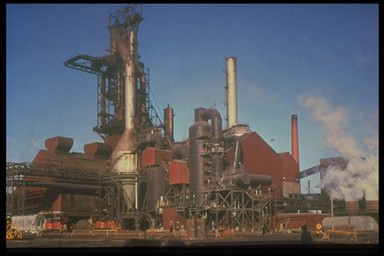
To understand why the labour boss lambastes Algoma Steel executive bonuses – SooToday.com, one must look at the technical and economic shift occurring at the Sault Ste. Marie facility. Algoma Steel is moving away from traditional blast furnaces toward Electric Arc Furnaces (EAF). This is not merely a change in equipment but a total transformation of the production process.

Blast furnaces rely on coking coal to smelt iron ore, a process that is energy-intensive and produces significant carbon dioxide emissions. In contrast, EAFs use electricity to melt recycled steel scrap or direct-reduced iron. This shift is designed to reduce the company’s carbon footprint and align with global “green steel” standards.
However, this transition comes with a high price tag and significant risk. The company has secured substantial backing from various levels of government to ensure the project’s viability. The USW argues that when a company accepts public money to modernize, it enters a social contract with the community and its workers, which should preclude excessive executive bonuses.
| Feature | Traditional Blast Furnace | Electric Arc Furnace (EAF) |
|---|---|---|
| Primary Fuel | Coking Coal / Coke | Electricity |
| Primary Input | Iron Ore | Steel Scrap / DRI |
| Carbon Emissions | High | Significantly Lower |
| Operational Cost | Higher Energy Input | Dependent on Electricity Rates |
The Role of Government Subsidies in Executive Pay
A central pillar of the union’s argument is the role of the taxpayer. Algoma Steel has received significant financial injections from the government to support its modernization efforts. The union contends that these funds are intended to preserve jobs and protect the regional economy, not to pad the pockets of executives.
According to labour advocates, government subsidies should come with “strings attached,” such as caps on executive bonuses or guaranteed employment levels. The current friction suggests a lack of such constraints in the agreements between the company and the state. This has led to a broader political discussion about how public funds are monitored once they enter the private sector.
The tension is compounded by the fact that the steel industry is highly volatile. Price fluctuations in the global market can lead to sudden profit spikes or deep losses. The USW argues that awarding bonuses during a “up” cycle—especially when that cycle is supported by public investment—is a short-sighted strategy that undermines long-term labour relations.
For more context on how these subsidies function, see this related explainer on green steel transition and government funding models.
Impact on the Sault Ste. Marie Workforce
The dispute over bonuses is not just about the money; it is about morale. For the workers in Sault Ste. Marie, the transition to EAF technology represents a period of profound uncertainty. While the company frames the move as a way to ensure the plant’s survival for another century, the workers face the reality of retraining and potential job losses.
When news of executive bonuses breaks, it creates a psychological divide. Workers who are asked to be “flexible” or “patient” during the transition feel betrayed when the leadership is rewarded regardless of the friction on the shop floor. This perceived lack of solidarity can lead to increased labour unrest and a breakdown in trust between management and the union.
Industry analysts note that the steel sector has a long history of such conflicts. The “us vs. them” mentality is often exacerbated during periods of technological change, where the gains of efficiency are seen as flowing upward to shareholders and executives while the risks are borne by the workers.
Common Misconceptions About Executive Bonuses
- “Bonuses are only for profit”: In many corporate structures, executive bonuses are tied to “performance targets” that may include things like completing a construction project on time, regardless of whether the company is actually profitable.
- “The union is just complaining”: The USW views this as a strategic issue. If the company can afford multi-million dollar bonuses, the union argues it can afford better safety equipment, higher wages, or more robust pension protections.
- “Subsidies don’t affect pay”: While subsidies are for capital expenditures (like the furnaces), they improve the company’s overall balance sheet, which in turn can be used to justify executive rewards.
Algoma Steel’s Position and Corporate Justification
While the union is vocal in its criticism, Algoma Steel and its supporters argue that executive compensation is a necessary tool for corporate governance. The company maintains that attracting and retaining top-tier talent is essential for managing a project as complex as the EAF transition.

From a corporate perspective, the transition to green steel is an existential necessity. If the company fails to modernize, it risks becoming obsolete in a market that increasingly demands low-carbon products. Management argues that the executives leading this charge are taking on immense responsibility and that their compensation reflects the market rate for such expertise.
Furthermore, the company often points to the fact that these bonuses are approved by a board of directors and are based on specific, pre-determined KPIs (Key Performance Indicators). If the executives hit their targets—such as meeting a deadline for the new furnace installation—the bonuses are triggered automatically. To the company, this is simply the fulfillment of a legal contract.
Comparative Analysis: Steel Industry Compensation Trends
The conflict at Algoma Steel is not an isolated incident. Across North America, the steel industry is grappling with the “Green Transition.” Companies like Stelco and various US-based mills are facing similar pressures to decarbonize while managing labour relations.
In many cases, the contrast between executive pay and worker pay has become a flashpoint for strikes and contract disputes. The trend toward “ESG” (Environmental, Social, and Governance) reporting has put more pressure on companies to justify their pay ratios. Investors are increasingly looking at “Social” metrics, which include how a company treats its workforce during transitions.
Compared to other industrial sectors, the steel industry often sees higher volatility in executive pay because of the cyclical nature of the commodity. However, the introduction of government subsidies into the mix adds a layer of public accountability that was not present in previous decades.
| Stakeholder | Primary Goal | Perspective on Bonuses |
|---|---|---|
| USW Union | Worker security & fair pay | Unjustifiable during transition/subsidization |
| Algoma Execs | Modernization & competitiveness | Necessary for talent retention & performance |
| Government | Economic stability & carbon reduction | Focused on project completion and job counts |
| Shareholders | Long-term value & dividends | Support rewards that drive efficiency |
Potential Long-Term Consequences of the Dispute
The ongoing tension regarding how the labour boss lambastes Algoma Steel executive bonuses – SooToday.com could have several long-term effects on the company and the region.
First, it may lead to more aggressive collective bargaining. If the union feels that the company has a “surplus” of cash to pay executives, they will likely push for higher wage increases or better benefits in the next contract cycle. This could increase the company’s operating costs just as they are trying to optimize their new EAF process.
Second, it may influence future government policy. If the public perceives that taxpayer money is indirectly funding executive bonuses, politicians may be forced to implement stricter “clawback” provisions in future grant agreements. This would mean that if a company receives a grant, it must agree to a cap on executive pay or a guarantee of no bonuses until certain worker-centric milestones are met.
Finally, there is the risk of decreased productivity. A workforce that feels undervalued is less likely to embrace the changes required by new technology. The EAF transition requires a cultural shift in the plant; if the workers are resentful of the leadership, the implementation of new processes could be slowed by friction and lack of cooperation.
Frequently Asked Questions
Why is the USW criticizing Algoma Steel’s executive bonuses?
The United Steelworkers (USW) argues that high executive bonuses are unethical and unjustified given the company’s transition to new technology, the uncertainty facing the workforce, and the significant amount of public funding the company has received from the government.
What is the “green steel” transition at Algoma Steel?
Algoma Steel is replacing its traditional blast furnaces with Electric Arc Furnaces (EAF). This process reduces carbon emissions by using electricity and recycled scrap instead of coking coal, helping the company meet environmental targets and remain competitive in a low-carbon economy.
Do government subsidies usually limit executive pay?
It varies by agreement. Some government grants include strict conditions on how funds are used, but others provide general support for capital projects without explicitly capping executive compensation. The USW is advocating for stricter limits on bonuses when public money is involved.
How does the EAF process differ from the blast furnace process?
Blast furnaces use coal to melt iron ore into liquid steel, releasing large amounts of CO2. EAFs use high-voltage electricity to melt steel scrap or direct-reduced iron, which is significantly cleaner and more energy-efficient.
What happens if the dispute between the union and management escalates?
Escalation could lead to strained labour relations, potential strikes, or more contentious contract negotiations. It may also lead to increased public and political scrutiny of the company’s use of government funds.
As Algoma Steel continues its multi-year transition to EAF technology, the balance between corporate rewards and worker security will remain a focal point of the regional economy. The clash over bonuses is a symptom of a larger struggle to define what “fairness” looks like in an era of industrial decarbonization.
