Labour ‘not looking to raise taxes to fund benefits’ as Mandelson messages suggest
The political landscape is currently grappling with a significant tension between official government narratives and leaked communications. At the heart of the controversy is the assertion that the Labour party is not looking to raise taxes to fund benefits, a claim that stands in direct opposition to suggestions found within leaked messages attributed to Peter Mandelson. This discrepancy has sparked a wider debate regarding fiscal transparency, the influence of key political strategists, and the internal communication habits of the highest levels of government.
The intersection of these revelations—ranging from tax policy disputes to the use of disappearing messages by the Prime Minister—paints a complex picture of a government attempting to balance economic stability with social commitments, all while navigating a storm of leaked documentation and public scrutiny.
The Fiscal Conflict: Tax Promises vs. Leaked Messages
One of the most volatile issues in contemporary politics is the balance between funding essential social benefits and maintaining a tax regime that does not stifle economic growth. The current friction stems from a clear contradiction: while official channels insist that Labour is not seeking tax increases to finance benefit payments, messages linked to Peter Mandelson suggest a different strategic direction.
This conflict is not merely about accounting; it is about the perceived reliability of government promises. When official denials clash with internal communications, it creates a narrative of “strategic ambiguity” that can alienate both the electorate and the markets. The core of the issue lies in how a government intends to close the gap between the rising cost of social support and the available treasury funds.
The Political Risk of Tax Hikes
Raising taxes to fund benefits is a classic political tightrope. On one hand, increasing social support is a cornerstone of Labour’s ideological commitment to the welfare state. Tax increases are often viewed unfavorably by the broader public and can be weaponized by political opponents to paint the government as fiscally irresponsible or overly burdensome to the taxpayer.
By denying the intent to raise taxes, the leadership attempts to maintain a profile of fiscal discipline. However, the “Mandelson messages” introduce a counter-narrative, suggesting that the internal calculations may be more aggressive than the public-facing rhetoric.
Key Points on the Fiscal Tension:
- Official Position: Firm denial of plans to increase taxes specifically for the purpose of funding benefits.
- The Leak: Messages associated with Peter Mandelson suggest a different approach to funding.
- The Implication: A potential gap between public commitment and private planning, leading to questions of trust.
The Impact of the Mandelson Files
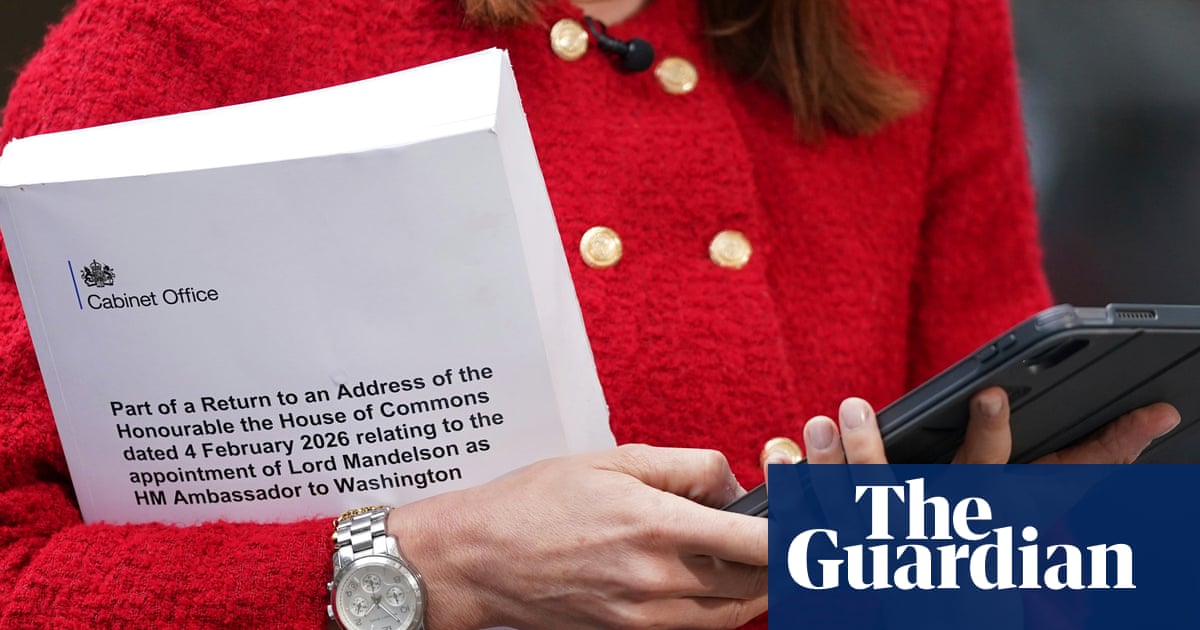
The emergence of the so-called “Mandelson files” has provided a window into the inner workings of political strategy and the influence of veteran power-brokers. These files have not only touched upon tax policy but have revealed broader insights into the machinery of government and the decision-making processes that occur behind closed doors.
The appointment of Peter Mandelson has itself become a point of contention. Analysis suggests that the decision to bring him into a position of influence continues to cause political damage, primarily because it evokes memories of past political eras and suggests a preference for “spin” over straightforward governance.
The “Damage” of Appointment
The perceived damage resulting from Mandelson’s involvement often centers on the image of the government. For many, the presence of a high-profile strategist associated with the “New Labour” era suggests a return to a style of politics characterized by carefully managed perceptions rather than transparent policy-making. This perception is exacerbated when leaked messages seem to contradict the official line on critical issues like taxation.
The files have reportedly revealed multiple key insights—some as significant as the tax debate—that challenge the government’s image of cohesion and transparency. When a single figure’s communications can create such significant political headwinds, it raises questions about the stability of the surrounding leadership structure.
| Aspect of Controversy | Official Narrative | Leak/Observation |
|---|---|---|
| Taxation Strategy | No tax hikes for benefits | Messages suggest otherwise |
| Governance Style | Transparent and modern | Reliance on veteran “spin” architects |
| Internal Cohesion | Unified leadership | Contradictions in leaked files |
Digital Governance and the ‘Disappearing Messages’ Scandal
Parallel to the policy disputes is a growing concern over how government business is conducted in the digital age. Number 10 has confirmed that Prime Minister Keir Starmer utilizes disappearing messages on his mobile device. While encrypted and self-destructing messaging is common in the private sector for security reasons, its use by a head of government raises profound questions about accountability and the public record.
The Tension Between Privacy and Transparency
The use of disappearing messages creates a “black hole” in the historical record of government decision-making. In a democratic system, the ability to retrospectively analyze the reasons behind a policy decision—often through Freedom of Information (FOI) requests or official inquiries—is paramount. When messages vanish, the trail of accountability vanishes with them.
The confirmation from Number 10 that such technology is in use by the Prime Minister suggests a preference for ephemeral communication over permanent documentation. This practice can be framed as a security necessity to prevent leaks, but it is equally viewed as a tool to avoid future scrutiny.
Implications for Public Trust
When a government is already facing accusations of contradictions—such as the tax debate sparked by the Mandelson messages—the revelation that the leader uses disappearing messages can compound the sense of secrecy. It suggests a culture where the “real” conversations happen in spaces that leave no trace, while the official record is carefully curated for public consumption.
The use of disappearing messages by the Prime Minister represents a fundamental shift in the nature of the official record, moving away from archival transparency toward a model of digital ephemerality.
Leadership Insulation: The ‘Not Present or Involved’ Defense
As the fallout from the Mandelson files and the tax contradictions grows, a recurring theme in the government’s defense is the insulation of the Prime Minister. Reports have emerged suggesting that Keir Starmer was not present or involved in the specific discussions or actions that have caused the most controversy.
The Strategy of Distance
By positioning the Prime Minister as distant from the problematic communications or appointments, the government attempts to create a “firewall” between the leadership and the controversy. The argument is that if the leader was not involved in the specific exchange or the specific decision, they cannot be held personally responsible for the resulting fallout.
However, this defense is a double-edged sword. While it may protect the Prime Minister from direct blame, it can also lead to perceptions of a leadership that is either out of touch with its own inner circle or unwilling to take responsibility for the people it appoints to positions of power.
Lessons for the Labour Party
The current crisis offers several critical lessons for the party’s future management:
- The Danger of Contradiction: In an era of leaks, the gap between private strategy and public promise is an inevitable point of failure.
- The Cost of Legacy Figures: Appointing figures with significant historical “baggage” can bring expertise but also brings an inherent risk of political damage.
- The Accountability Gap: The move toward disappearing messages may solve short-term security concerns but creates long-term trust deficits.
The central challenge for the leadership is to move beyond a defensive posture of “not involved” and instead provide a clear, consistent, and documented path forward on the issues of taxation and social spending.
Analyzing the Broader Political Context
To understand why the phrase “Labour ‘not looking to raise taxes to fund benefits’ as Mandelson messages suggest” has become such a flashpoint, one must look at the broader economic climate. Governments today are operating in an environment of high inflation, stagnant productivity, and aging populations that put immense pressure on benefit systems.
When a party campaigns on a platform of stability and “fiscal rules,” any hint of a tax increase—especially one hidden in leaked messages—is seen as a breach of a fundamental contract with the voter. The Mandelson files, are not just a collection of texts; they are a catalyst for a larger debate on whether the government’s public-facing fiscal discipline is a reality or a political facade.
the intersection of this policy debate with the “disappearing messages” confirmation suggests a systemic approach to communication. If policies are debated in disappearing chats and then announced via a separate, curated official channel, the public is left with a fragmented understanding of how their country is actually being run.
Comparing Communication Eras
In previous decades, political “spin” was managed through press secretaries and carefully timed leaks to friendly newspapers. In the current era, spin is complicated by the technical reality of digital forensics. The “Mandelson files” represent the modern version of the leaked memo, but the use of disappearing messages represents the government’s attempt to evolve past the possibility of such leaks entirely.
This creates a cat-and-mouse game between those seeking transparency and those seeking control. The more the government attempts to erase its digital footprint, the more valuable and damaging any remaining leaks become.
Common Misconceptions Regarding the Controversy
In the wake of these reports, several oversimplifications have entered the public discourse. It is important to clarify these points to maintain a nuanced understanding of the situation.
Misconception 1: The Mandelson files are a definitive policy document.
messages and files are often reflections of brainstorming, strategic theorizing, or internal debates. They do not always represent final, ratified government policy. However, they do reveal the intent and the options being considered, which is why they are politically explosive.
Misconception 2: Disappearing messages are illegal.
There is no law explicitly forbidding a Prime Minister from using encrypted messaging apps. However, there are strict laws and conventions regarding the preservation of official records. The controversy is not about legality, but about the spirit of transparency and the potential violation of archival norms.
Misconception 3: The tax denial is a simple lie.
Politics often involves “evolving” positions. The government may be denying current plans to raise taxes while simultaneously exploring the possibility in private. The conflict arises when the public expects a binary “yes or no” answer, while the internal machinery is operating in a state of contingency planning.
Frequently Asked Questions
What are the ‘Mandelson files’ and why are they controversial?
The Mandelson files refer to leaked communications and documents associated with Peter Mandelson. They are controversial because they suggest internal government discussions—particularly regarding tax policy and funding for benefits—that contradict the official public statements made by the Labour leadership.
Has Keir Starmer admitted to using disappearing messages?
Yes, Number 10 has confirmed that the Prime Minister uses disappearing messages on his phone. This has led to concerns regarding the transparency of government decision-making and the preservation of official records for future scrutiny.
Is Labour planning to raise taxes to fund social benefits?
Officially, the government has stated that it is not looking to raise taxes to fund benefits. However, this claim has been challenged by the contents of the leaked Mandelson messages, which suggest that such an option may have been discussed or considered.
Why is Peter Mandelson’s appointment seen as damaging?
Peter Mandelson is a veteran strategist associated with the New Labour era. His appointment is seen by some as a return to a style of politics focused on perception management and “spin,” which can clash with the current government’s image of transparency and modern governance.
What does ‘not present or involved’ mean in this context?
This is a defensive position taken by the government to suggest that the Prime Minister was not a participant in the specific conversations or decisions that led to the controversial leaks, thereby distancing the top leadership from the fallout.
The ongoing tension between the leaked Mandelson files and the official government line suggests a period of instability in how the administration communicates its core economic goals. As the public demands more transparency, the combination of contradictory tax narratives and the use of disappearing messages may create a persistent challenge for the government’s credibility. The resolution of this crisis will likely depend on whether the leadership can move from a strategy of denial and distance to one of open, documented accountability.
