
Strategic Realignment: How the Conflict with Iran is Driving Israeli Ties and Record Defense Exports in the Middle East
The geopolitical landscape of the Middle East is undergoing a profound transformation, driven by a paradoxical combination of escalating conflict and unprecedented strategic cooperation. Recent reports, including insights from Sources: Israeli ties with Middle East states likely to grow due to Iran war – The Jerusalem Post, suggest that the intensifying confrontation between Israel and Iran is acting as a catalyst, pushing Israel closer to several regional neighbors who share a common apprehension toward Tehran’s regional ambitions.
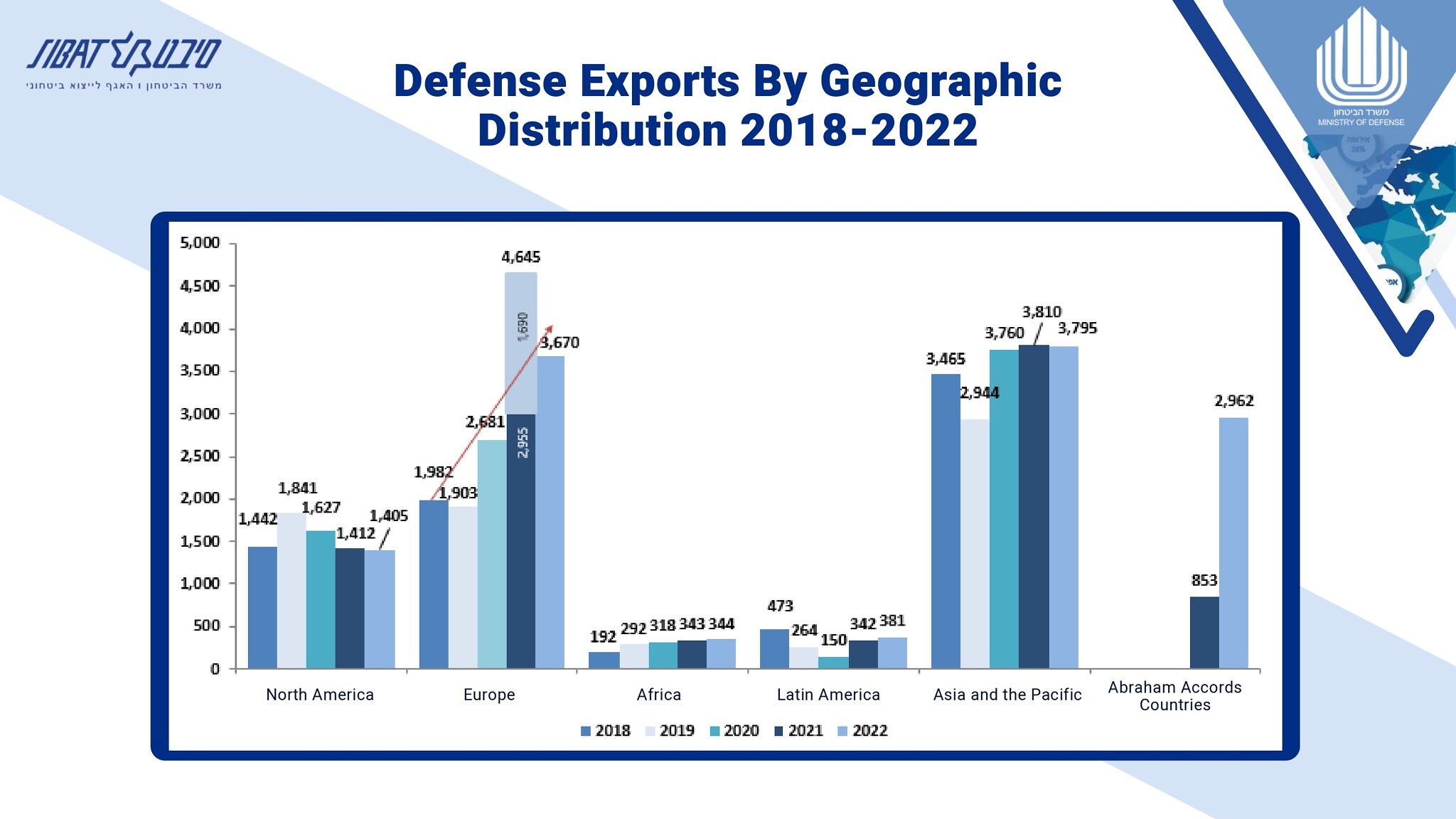
This diplomatic shift is not occurring in a vacuum. It is being mirrored—and reinforced—by a staggering surge in the Israeli defense industry. For five consecutive years, Israel has shattered its own records for arms exports, culminating in a landmark 2025 where sales reached approximately $19.2 billion. This economic boom in military hardware is more than just a financial victory; it is a tangible manifestation of a new security architecture in the region, where “battle-proven” technology is becoming the primary currency of diplomatic trust.
The Iranian Catalyst: From Shadow War to Strategic Alliance
For decades, the rivalry between Israel and Iran was largely a “shadow war,” fought through proxies, cyber-attacks and clandestine operations. However, as Iran’s influence has expanded through the “Axis of Resistance”—comprising groups like Hezbollah in Lebanon, the Houthis in Yemen, and various militias in Iraq and Syria—the threat has become too visible for neighboring states to ignore.
Many Gulf monarchies and other regional powers now view Iran’s pursuit of nuclear capabilities and its support for non-state actors as a direct threat to their own sovereign stability. This shared vulnerability has created a pragmatic bridge between these states and Israel. While ideological and political differences remain, the necessity of survival is overriding historical animosities.
“The regional security paradigm is shifting from one of ideological confrontation to one of pragmatic survival. The common denominator is the containment of Iranian hegemony.”
The Mechanics of Regional Convergence
The growth of these ties is manifesting in several key areas:
- Intelligence Sharing: An increase in the covert exchange of data regarding Iranian troop movements, drone shipments, and missile site developments.
- Joint Air Defense Coordination: The conceptualization of a regional “umbrella” to protect critical infrastructure from long-range missile threats.
- Cybersecurity Collaboration: Partnering to defend against state-sponsored hacking attempts targeting energy grids and financial systems.
This alignment suggests that the very conflict that threatens to destabilize the region is simultaneously forging a new, cohesive bloc of states committed to a balance of power that limits Tehran’s reach.
Analyzing the Record-Breaking Surge in Defense Exports
While diplomatic channels are opening, the most visible evidence of this realignment is found in the balance sheets of Israel’s defense contractors. The trajectory of Israeli arms sales is not merely a spike caused by current tensions, but a sustained upward climb. Over the last five years, exports have effectively doubled, reflecting a global and regional demand for specialized military technology.
The figure of $19.2 billion in 2025 represents a historic peak, marking the fifth straight year of record-breaking growth. To understand why this is happening, one must look at the specific nature of the products Israel provides.
The “Battle-Proven” Advantage
In the defense world, there is no higher endorsement than “battle-proven” status. Israel’s continuous engagement in high-intensity conflicts has allowed it to iterate and refine its technology in real-time. Foreign buyers are not just purchasing hardware; they are purchasing systems that have been tested against the exact threats—drones, precision missiles, and cyber-warfare—that they themselves fear.

| Export Category | Primary Demand Driver | Strategic Value |
|---|---|---|
| Missile Defense | Iranian ballistic missile threats | Protects urban centers and critical assets |
| UAVs & Loitering Munitions | Asymmetric warfare needs | Precision strikes with low risk to personnel |
| Cyber-Intelligence | State-sponsored espionage | Early warning and counter-intelligence |
| Border Security Tech | Infiltration by proxy militias | Automated surveillance and rapid response |
Key Drivers of the $19 Billion Milestone
Several factors have converged to push exports to this record level:
- The Drone Revolution: The proliferation of low-cost, high-impact drones has forced nations to upgrade their counter-UAS (Unmanned Aircraft Systems) capabilities. Israel is a global leader in this niche.
- Diversification of Suppliers: Many Middle Eastern states are seeking to reduce their total reliance on a single superpower (such as the U.S.) by diversifying their procurement portfolios with high-end Israeli alternatives.
- Integration Capabilities: Israeli systems are often designed to be compatible with Western hardware, making them an uncomplicated “plug-and-play” addition to existing military infrastructures.
The Intersection of Arms Sales and Diplomacy
It is a mistake to view the record arms sales and the growing diplomatic ties as separate phenomena. In the Middle East, defense procurement is often the first step toward normalization. When a state purchases an advanced missile defense system, it doesn’t just buy a product; it enters into a long-term relationship involving maintenance, training, and continuous software updates.
This creates a “security umbilical cord” between the provider and the buyer. The technical necessity of maintaining these systems requires ongoing communication and cooperation, which naturally bleeds into political and strategic alignment.
For Israel, exporting defense technology is a tool of “soft power” backed by “hard hardware.” By becoming an indispensable security partner, Israel secures its own borders by ensuring its neighbors are too well-defended to be easily coerced by Iran, and too invested in Israeli technology to risk a total diplomatic break.
For more on the broader geopolitical shifts, you might find a related explainer on the Abraham Accords useful to understand the foundation of these current trends.
Strategic Implications and the Balance of Power
The confluence of growing ties and record exports is fundamentally altering the balance of power in Western Asia. The “Iron Ring” of defense—a network of states equipped with advanced Israeli interception and surveillance tech—creates a significant deterrent against Iranian aggression.
Short-Term Impacts
In the immediate future, we can expect to see an increase in joint military exercises and the establishment of more formal security pacts. The urgency created by the Iran war is accelerating timelines that would have otherwise taken decades to materialize.
Long-Term Geopolitical Shifts
If this trend continues, the Middle East could move toward a bipolar structure: one bloc centered around Iran and its proxies, and another centered around a coalition of Arab states and Israel, heavily supported by U.S. Technology and strategy. This would effectively end the era of Israel’s strategic isolation in the region.
However, this shift is not without its risks. The reliance on military ties can be fragile if the political costs—such as public outcry over the Palestinian conflict—become too high for Arab leaders to bear. The challenge for Israel is to transition these “security-first” relationships into broader economic and social partnerships.
Addressing Common Misconceptions
When discussing the growth of Israeli ties and arms sales, several oversimplifications often arise. It is important to clarify these points to understand the full complexity of the situation.
Misconception 1: This is solely a result of U.S. Pressure.
While the United States encourages these ties, the current surge is driven by organic demand. Regional states are reacting to tangible threats on their own borders. The decision to buy Israeli tech is often a pragmatic choice based on performance and proximity, not just a directive from Washington.
Misconception 2: Arms sales mean total peace.
Security cooperation does not equal a comprehensive peace treaty. Many of these relationships remain transactional. A state may be happy to buy an Iron Dome battery while still officially maintaining a stance of non-recognition or criticism of Israeli government policies. The “security layer” of diplomacy often moves faster than the “political layer.”
Misconception 3: The growth is a temporary “war bubble.”
While the current conflict with Iran has accelerated sales, the five-year growth trend suggests a structural shift. The demand for cyber-defense and UAV technology is a permanent feature of modern warfare, not a temporary spike. Israel has positioned itself as a permanent hub for these innovations.
The Role of Innovation and the Defense Ecosystem
The record-breaking $19.2 billion figure is not just the result of a few large contracts. It is the product of a vast ecosystem that combines massive state-owned enterprises with agile, venture-backed startups.
Israel’s “Startup Nation” ethos has bled into its defense sector. Where traditional defense giants provide the heavy lifting (missile interceptors, fighter jet upgrades), smaller firms provide the “intelligence edge” (AI-driven target acquisition, encrypted communication tools). This hybrid model allows Israel to pivot its product offerings rapidly in response to new threats emerging from the Iranian proxy network.
This agility is a key reason why the exports have doubled in five years. When a new type of Iranian drone is deployed, Israeli firms can often develop and export a counter-measure within months, providing a speed-of-innovation that larger, more bureaucratic defense industries struggle to match.
Potential Risks and Volatility
Despite the optimistic numbers, the path forward is fraught with volatility. The very nature of the “Iran war” means that the region is one miscalculation away from a larger conflagration that could disrupt the very supply chains and diplomatic channels currently being built.
- Public Sentiment: In many Arab nations, there is a wide gap between the strategic interests of the ruling elite and the sentiments of the general population. High-profile conflicts can ignite domestic unrest, forcing leaders to distance themselves from Israel.
- US Political Shifts: Israeli defense exports often require US government approval, especially when they involve integrated American components. A shift in US foreign policy could potentially throttle these sales.
- The “Sunk Cost” of Proxies: Iran may respond to this growing coalition by doubling down on its proxy networks, increasing the intensity of attacks to prove that the “Israeli shield” is not impenetrable.
For a deeper dive into how these dynamics affect global markets, see our analysis of Middle East energy security.
Frequently Asked Questions
Why are Israeli arms exports reaching record highs now?
The surge is driven by a combination of the “battle-proven” nature of Israeli technology and a growing regional threat from Iran. Middle Eastern states are increasingly seeking advanced missile defense, drone technology, and cybersecurity tools to protect themselves from Iranian-backed proxies, leading to a five-year trend of doubling sales.
How does the conflict with Iran help Israel’s diplomatic ties?
The conflict creates a “common enemy” effect. States that may have ideological differences with Israel find they have a shared strategic interest in containing Iran’s nuclear ambitions and regional influence. This leads to increased intelligence sharing and security cooperation.
What is the significance of the $19.2 billion figure in 2025?
This figure represents a historic peak in Israel’s defense exports, signaling that the country has become a primary security provider for the region. It demonstrates that Israel’s defense industry is a major economic driver and a key tool of its foreign policy.
Are these ties purely military, or do they include other sectors?
While security is the primary driver, these ties often act as a “gateway.” Once security trust is established, it frequently opens doors for cooperation in water technology, agriculture, and healthcare, although the military aspect remains the most urgent and visible.
Does the US government control these arms sales?
To a significant extent, yes. Many Israeli defense systems utilize US components or are sold as part of broader US-led security packages. The growth in exports is generally aligned with US strategic goals for the region.
The trajectory of the Middle East is currently being rewritten in the laboratories of defense contractors and the secure rooms of intelligence agencies. As the tension with Iran persists, the bond between Israel and its neighbors is likely to deepen, not out of mutual affection, but out of a shared necessity for survival. The record-breaking defense exports are the physical evidence of this new reality—a region where security is the only currency that truly matters.
