
Subsidies Turn Desert Control Into Moneymaker: How Xinjiang’s Green Transformation Drives Profit
Government subsidies in China’s Xinjiang region have transformed desertification control from a state expense into a profitable enterprise, according to reports from China Daily. By incentivizing the planting of shrubs, roses, and lavender in the Taklimakan Desert, the state is combining environmental restoration with agricultural revenue and tourism.
How Subsidies Are Turning Desert Control Into a Moneymaker
The shift from traditional desert reclamation to a profit-driven model relies on a system of state-funded incentives. According to China Daily, these subsidies provide the financial cushion necessary for farmers and entrepreneurs to undertake the high-risk task of planting in arid zones. Instead of viewing sand control solely as a public works project, the current framework encourages a “green transformation” where environmental stability creates a foundation for commercial agriculture.
This economic model functions by reducing the initial capital burden on planters. Once shrubs or specialized crops are established, they stabilize the soil, allowing for the introduction of higher-value plants. This sequence turns previously barren land into an asset that generates income through crop sales, government payments for ecological services, and emerging agritourism.
Key drivers of the financial transition include:
- Direct State Payments: Financial incentives for the initial planting and maintenance of desert-stabilizing vegetation.
- Crop Diversification: Moving from basic grass to high-value florals like roses and lavender.
- Environmental Credits: Rewards for successfully reducing sandstorm frequency and increasing regional biomass.
Taming the Taklimakan: The Role of Shrub Planting
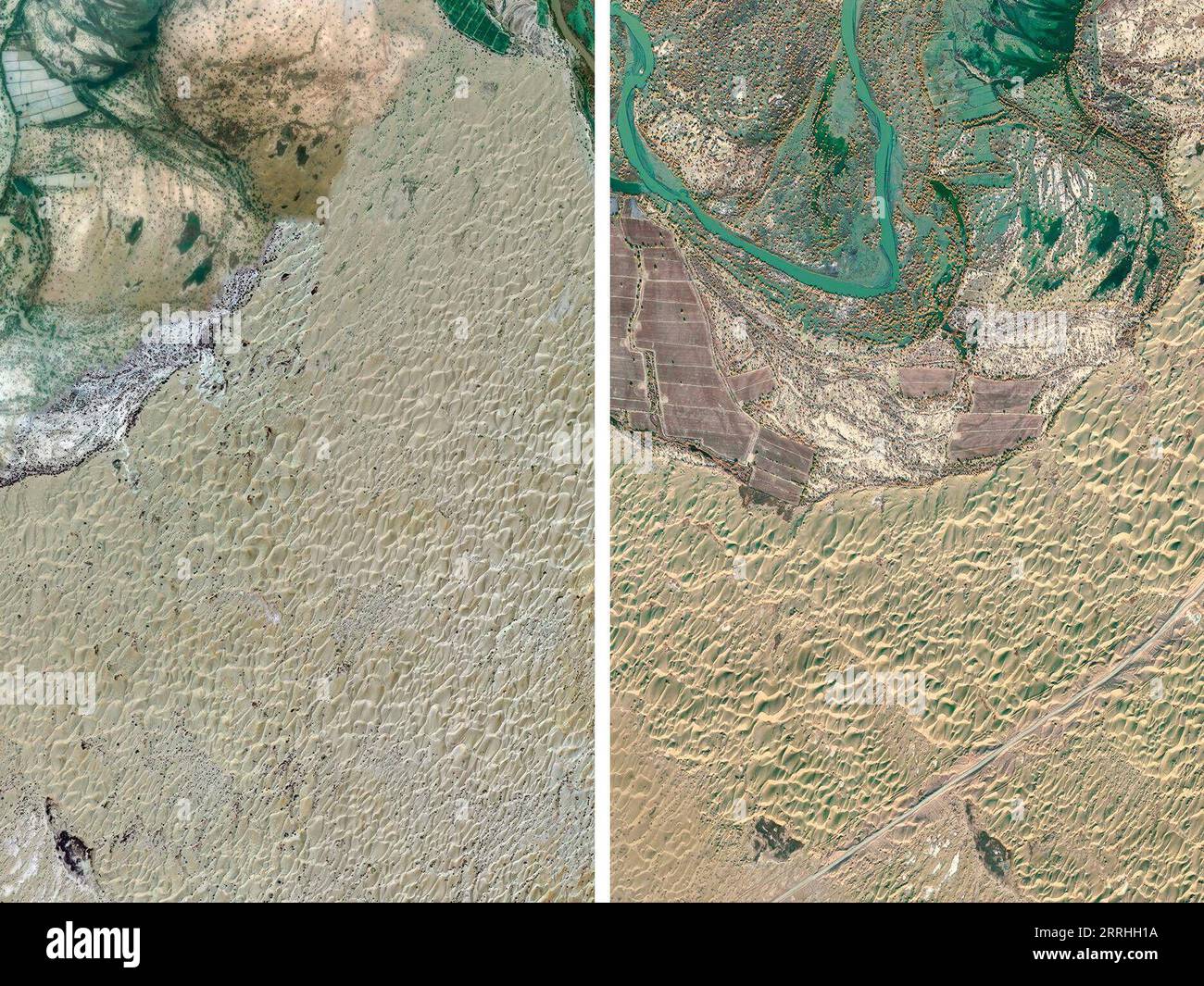
The Taklimakan, one of the world’s largest sandy deserts, has become a primary site for these efforts. China Daily highlights the work of individuals such as the “king of grass,” an intrepid planter who focuses on planting shrubs to tame the shifting sands. Unlike grass, which can be easily buried by dunes, shrubs provide deeper root systems that anchor the soil more effectively.

The process involves a strategic layering of vegetation. First, hardy shrubs are planted to break the wind and hold the sand in place. Once these shrubs create a micro-environment with slightly higher moisture retention and lower wind speeds, other plant species can survive. According to the reports, this methodical approach reduces the failure rate of new plantings, ensuring that government subsidies result in permanent green cover rather than temporary patches.
The transition from sand to shrubbery is not merely an environmental victory but a financial one, as the stability provided by these plants opens the door to commercial farming in regions previously deemed uninhabitable.
The Green Transformation: From Stabilization to Roses and Lavender
Once the desert floor is stabilized, the focus shifts toward “green transformation.” This involves introducing plants that offer both ecological benefits and market value. China Daily reports that roses are now driving a significant part of this transformation in Xinjiang. Rose planting serves a dual purpose: the plants help prevent soil erosion while producing petals and oils for the fragrance and cosmetic industries.
Similarly, lavender has become a cornerstone of the region’s new economy. According to reports from CGTN and the Bastille Post, lavender fields have expanded across Xinjiang, turning desolate landscapes into vibrant agricultural hubs. These fields do more than produce oil; they attract tourists, creating a secondary revenue stream for local landowners who were once dependent solely on government aid.
| Plant Type | Primary Ecological Function | Primary Economic Value | Source of Revenue |
|---|---|---|---|
| Shrubs | Sand fixation and windbreaks | Environmental stability | Government subsidies |
| Roses | Soil enrichment and erosion control | Essential oils and petals | Commercial sales/Cosmetics |
| Lavender | Ground cover and biomass increase | Oil production and tourism | Agricultural sales/Tourism |
Climate Shifts and the Early Lavender Season
While the economic outlook is positive, environmental changes are altering the timing of these harvests. CGTN and the Bastille Post report that rising temperatures have brought an early lavender season to Xinjiang. This shift in the blooming cycle is a direct result of warming trends in the region.
An early bloom can be a double-edged sword for the “moneymaker” model. On one hand, it may allow for earlier harvests and tourism peaks. On the other, it signals a volatile climate that could potentially stress plants if temperature swings become too extreme. Despite this, the current trend has seen lavender blooming sooner than in previous decades, reflecting the broader impact of global warming on the high-altitude and arid regions of western China.
The ability of these “green” zones to withstand temperature fluctuations is a critical component of their long-term viability. If the plants can adapt to the warming trend, the economic returns from lavender and roses are expected to grow as the region becomes more hospitable to a wider variety of flora.
Why This Model Matters for Regional Development
The transformation of desert control into a profitable venture has implications beyond simple agriculture. By making “green” work lucrative, the state ensures a higher level of commitment from local populations. When desert control is a chore, it requires constant oversight and enforcement; when it is a moneymaker, the planters themselves have a financial incentive to ensure the plants survive.

This approach addresses several goals simultaneously:
- Poverty Alleviation: Providing new income sources for rural populations in Xinjiang.
- Environmental Security: Reducing the frequency of sandstorms that affect urban centers and infrastructure.
- Climate Adaptation: Testing which high-value crops can survive and thrive in a warming, arid climate.
The success of the “king of grass” and the rose farmers suggests that the synergy between state subsidies and market demand is the most effective way to combat desertification. By treating the desert not as a wasteland to be fought, but as a canvas for a new kind of economy, Xinjiang is redefining the relationship between ecology and profit.
Common Misconceptions About Desert Greening
A frequent oversimplification is that desert control is simply about planting trees. In reality, as seen in the Taklimakan, the process is far more complex. Planting trees in a desert often requires more water than the environment can provide, leading to high failure rates. The Xinjiang model focuses on shrubs and drought-resistant florals like lavender and roses, which are better suited to the local hydrology.
Another misconception is that these projects are purely philanthropic. The reports from China Daily make it clear that the “moneymaker” aspect is intentional. The goal is to create a self-sustaining economic ecosystem where the environment pays for its own restoration through the sale of goods and services.
Frequently Asked Questions
How do subsidies make desert control profitable?
Subsidies lower the initial cost and risk of planting in harsh environments. Once the state-funded shrubs stabilize the soil, farmers can plant high-value crops like roses and lavender, which generate commercial income through oil production and tourism.
Which plants are most effective for taming the Taklimakan Desert?
According to China Daily, shrubs are particularly effective because they have deeper root systems than grass, allowing them to anchor sand dunes and withstand high winds more effectively.
How has climate change affected the lavender industry in Xinjiang?
Reports from CGTN and the Bastille Post indicate that rising temperatures have caused the lavender season to arrive earlier than usual, altering the traditional blooming and harvest cycles.
What is the “green transformation” in the context of Xinjiang?
The green transformation refers to the shift from basic sand-fixing measures to the cultivation of economically viable plants, such as roses, which provide both environmental protection and a source of revenue.
Is the desert control model sustainable without subsidies?
The goal of the current model is to use subsidies as a catalyst. By establishing profitable crops like lavender and roses, the region aims to create a market-driven economy where the environmental benefits are maintained by the profit motives of the farmers.
The evolution of Xinjiang’s landscape from shifting sands to purple lavender fields and red roses demonstrates a strategic pivot in environmental policy. By aligning ecological restoration with financial gain, the region is creating a blueprint for arid-land management that prioritizes both the planet and the pocketbook. The continued success of this model will likely depend on how these new agricultural zones adapt to the ongoing temperature rises reported across the region.
