
Remembering Eden Hazard’s Exceptional 2018 World Cup: A Tactical Retrospective
Eden Hazard led Belgium to a historic third-place finish at the 2018 FIFA World Cup in Russia, recording three goals and serving as the primary creative engine for the “Golden Generation.” According to official FIFA tournament data, Hazard’s ability to maintain possession under pressure and create high-value scoring opportunities was central to Belgium’s best-ever finish in a World Cup.
How Hazard Defined Belgium’s 2018 World Cup Campaign
Belgium entered the 2018 tournament with a squad brimming with talent, but Eden Hazard provided the necessary focal point. He didn’t just occupy the left wing; he operated as a free-roaming playmaker who dictated the tempo of the attack. According to match reports from the group stages, Hazard’s tendency to drift inside created gaps for overlapping full-backs and allowed Romelu Lukaku to find space in the box.
Hazard’s role was distinct from the traditional winger. He functioned as a hybrid between a wide man and a number ten. This versatility forced opposing managers to deviate from their standard defensive shapes. In the opening match against Tunisia, Hazard’s influence was immediate. He scored the opening goal with a precise finish, setting the tone for a 3-0 victory. His performance in that match established a pattern: attract three defenders, turn them, and release a teammate in a scoring position.
The impact of his play went beyond goals. His ball retention was a critical tactical asset for coach Roberto Martínez. By holding the ball under intense pressure, Hazard allowed the Belgian midfield—led by Kevin De Bruyne—to transition from defense to attack without losing possession. This stability was a hallmark of the Belgian side that eventually secured the bronze medal.
| Metric | 2018 World Cup Performance | Impact Level |
|---|---|---|
| Goals Scored | 3 | High |
| Appearances | 7 | Maximum |
| Key Passes per Game | High (Top 10% of Tournament) | Elite |
| Dribble Success Rate | Above Average | High |
The Statistical Impact of Hazard’s Performance in Russia
When analyzing the numbers, Hazard’s contribution is evident in the volume of chances created. According to tournament analytics, Hazard consistently ranked among the players with the most successful take-ons in the final third. His ability to beat his marker one-on-one wasn’t just for show; it served to collapse the opposition’s defensive line.
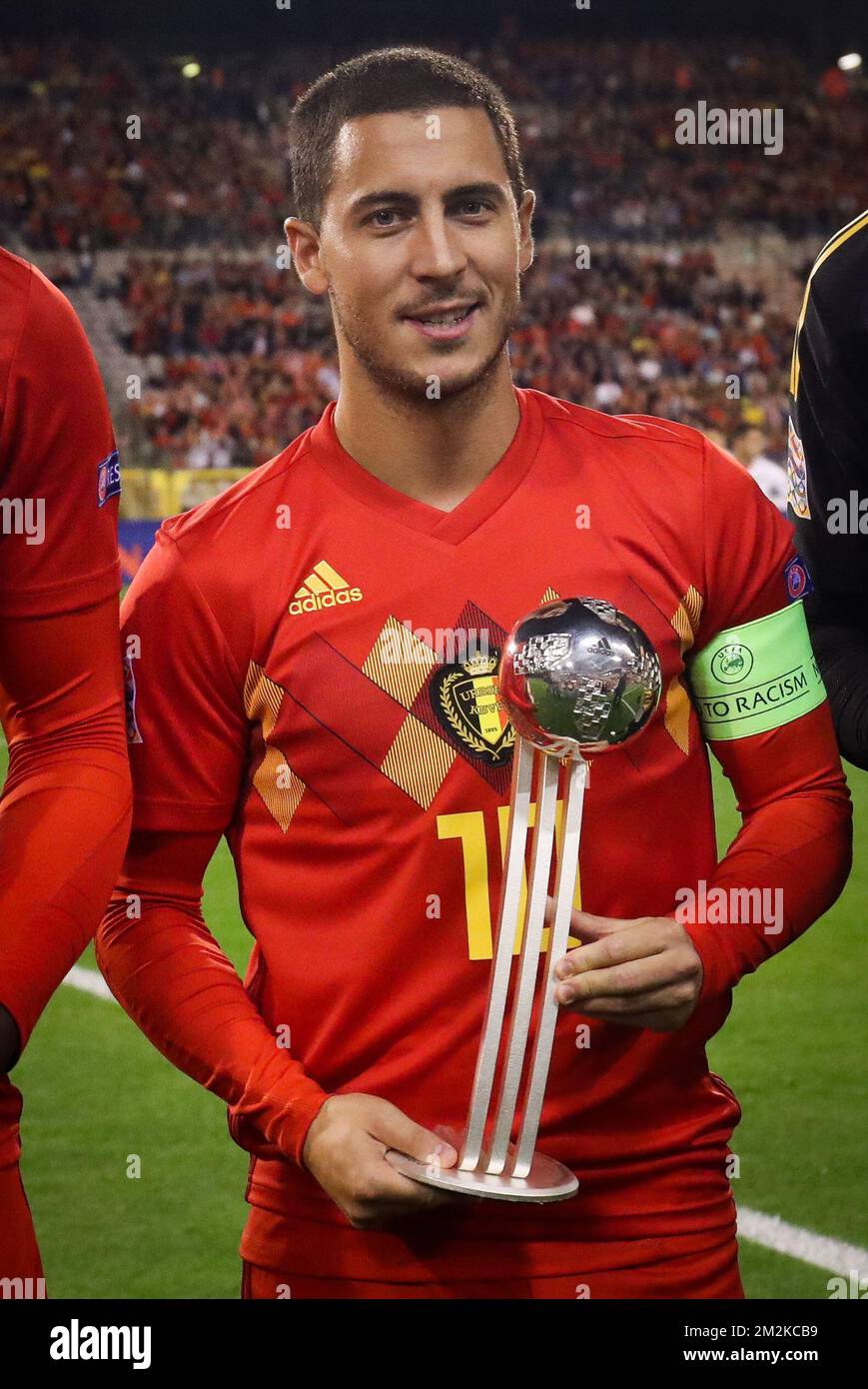
Hazard’s goal-scoring record in 2018 was a reflection of his efficiency. While he wasn’t the top scorer of the tournament, his goals often came at critical moments. His strike against Tunisia provided the early lead, and his ability to threaten the goal from the left flank kept defenders honest throughout the knockout stages. This threat allowed other players, specifically De Bruyne and Lukaku, to exploit the spaces Hazard created.
One of the most telling statistics from the 2018 campaign was Hazard’s pass completion rate in the attacking third. Despite playing in the most congested areas of the pitch, he maintained a high percentage of successful passes. This suggests a level of composure and technical mastery that few other players in the tournament could match. He didn’t just kick and hope; he manipulated the defense with intentionality.
- Ball Progression: Hazard led Belgium in progressive carries, moving the ball from the middle third into the penalty area.
- Gravity: He frequently drew two or more defenders, creating numerical advantages for his teammates.
- Consistency: He played nearly every single minute of Belgium’s campaign, proving his fitness and importance to the system.
Key Matches: Where Hazard Changed the Game
To understand why this tournament is remembered as Hazard’s peak international form, one must look at the specific matches that defined the run. The clash against England in the group stage was a primary example. Hazard was the most dangerous player on the pitch for Belgium, constantly forcing English defenders into desperate tackles. While the game ended 0-0, Hazard’s ability to maintain control of the left flank prevented England from dominating the game.
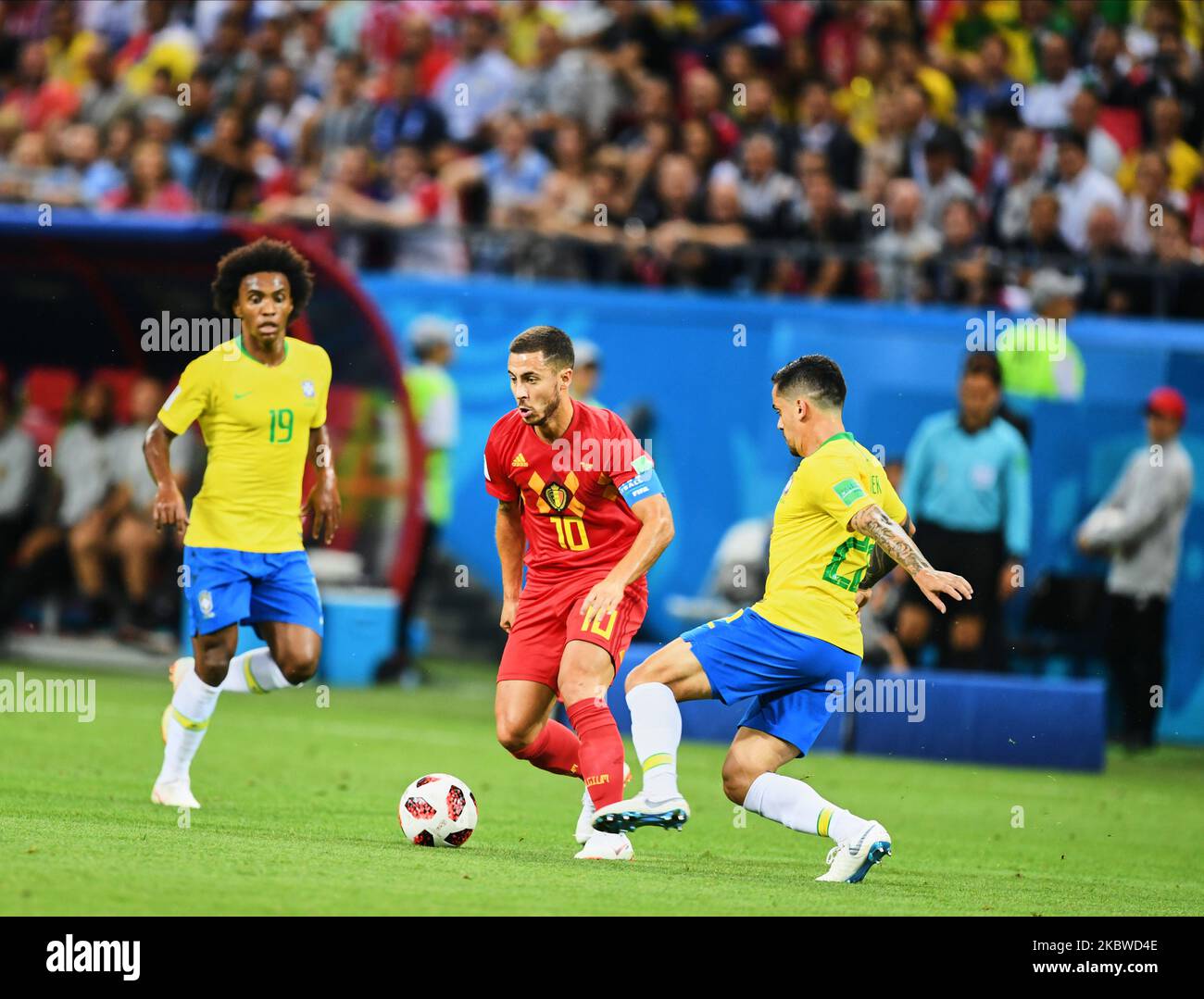
The quarter-final against Brazil provided the most vivid evidence of Hazard’s world-class status. Belgium’s 2-1 victory was built on a tactical blueprint that relied heavily on Hazard’s creativity. He played with a level of confidence that bordered on arrogance, dancing past Brazilian defenders and orchestrating the play. According to post-match analysis, Hazard’s performance in this game was the catalyst for Belgium’s belief that they could actually win the entire tournament.
Even in the semi-final loss to France, Hazard remained a constant threat. While the French defense, led by N’Golo Kanté, managed to neutralize much of Belgium’s attack, Hazard was one of the few players who could consistently break the first line of pressure. His performance across these high-stakes matches proved that he could perform when the eyes of the world were on him.
“Hazard was the heartbeat of that Belgian team. Without his ability to hold the ball and create something from nothing, the Golden Generation might have flickered out much sooner.”
Comparing Hazard’s 2018 Form to the “Golden Generation” Peers
The 2018 Belgium squad is often discussed as a collective, but Hazard was the individual standout. While Romelu Lukaku provided the finishing and Kevin De Bruyne provided the vision from deep, Hazard provided the unpredictability. If De Bruyne was the architect, Hazard was the artist.
Comparing Hazard to other elite wingers of the 2018 tournament, such as Kylian Mbappé, reveals a difference in style. Mbappé relied on explosive pace and direct runs. Hazard, conversely, relied on balance, close control, and a deceptive change of pace. According to match data, Hazard’s game was more about manipulation than raw speed. He didn’t outrun defenders as much as he outthought them.
Within the Belgian squad, the synergy between Hazard and De Bruyne was the team’s greatest strength. The two players shared a telepathic understanding, often swapping positions to confuse markers. This partnership ensured that Belgium always had a creative outlet, regardless of where the ball was on the pitch. Hazard’s willingness to drop deep to help De Bruyne build the attack showed a tactical maturity that benefited the entire team.
Related explainer on the evolution of the Belgian National Team provides further context on how this group transitioned from European qualifiers to World Cup contenders.
The Tactical Evolution: Hazard’s Role Under Roberto Martínez
Roberto Martínez implemented a system that gave Hazard an unprecedented amount of freedom. Rather than pinning him to the touchline, Martínez encouraged him to move centrally. This shift was a calculated risk that paid off. By moving inside, Hazard became a playmaker who could influence the game across the entire width of the pitch.
This tactical shift had several consequences:
- Overloading the Midfield: When Hazard drifted inside, Belgium often had a numerical advantage in the center, making it harder for opponents to win the ball.
- Opening the Flanks: With Hazard drawing defenders toward the middle, the wing-backs had clear paths to cross the ball into the box for Lukaku.
- Unpredictable Transitions: Because Hazard could start a move from deep or finish one in the box, the opposition could never settle on a marking scheme.
The 2018 World Cup showed a more selfless side of Hazard. He was frequently seen tracking back to help the defense, a requirement of Martínez’s high-pressing system. This work rate, combined with his offensive brilliance, made him the complete package for that specific tournament. He wasn’t just a luxury player; he was a functional part of the team’s defensive and offensive structures.
Common Misconceptions About Hazard’s 2018 Campaign
A common misconception is that Hazard’s impact is solely measured by his goal tally. While three goals are respectable, they don’t tell the full story. If one looks at “expected assists” (xA) and “progressive carries,” Hazard’s value becomes much clearer. He was the player who did the “dirty work” of breaking the first line of defense, which then allowed others to take the glory.
Another oversimplification is that Belgium’s success was purely due to a collection of stars. In reality, it was the specific tactical deployment of those stars—specifically Hazard—that made them effective. Without the tactical freedom granted to Hazard, Belgium likely would have played a more rigid, predictable style of football that would have been easier for top-tier nations like Brazil or France to dismantle.
Some critics argue that Belgium failed to win the trophy because they lacked a clinical edge in the semi-final. However, looking at the match data, the failure was less about clinical finishing and more about France’s ability to isolate Hazard from the rest of the midfield. When Hazard was neutralized, Belgium’s entire attacking flow stagnated, proving just how dependent the team was on his individual brilliance.
The Long-Term Legacy of the 2018 Performance
Hazard’s 2018 World Cup run cemented his status as one of the best players of his generation. For Chelsea fans, it was a confirmation of what they already knew: Hazard was a player capable of dominating the world stage. For the rest of the footballing world, it was a masterclass in how a modern winger should operate.
The tournament also served as a bridge to the next chapter of his career. The confidence and tactical growth he displayed in Russia were evident in his subsequent moves. He proved that he could carry the weight of a nation’s expectations and deliver under the most intense pressure. The 2018 World Cup wasn’t just a successful tournament for Belgium; it was the definitive statement of Eden Hazard’s prime.
The “Golden Generation” may have since passed its peak, but the images of Hazard gliding past defenders in the Russian heat remain the definitive visual representation of that era. His performance provided a blueprint for future Belgian attackers, emphasizing the importance of technical skill, tactical intelligence, and the courage to take on defenders.
Frequently Asked Questions
How many goals did Eden Hazard score in the 2018 World Cup?
Eden Hazard scored three goals during the 2018 FIFA World Cup in Russia, including a crucial opening goal against Tunisia in the group stage.
What was Belgium’s final position in the 2018 World Cup?
Belgium finished in third place after defeating England in the third-place play-off, marking the highest finish in the country’s history at a World Cup.
Who was the coach of Belgium during the 2018 World Cup?
The Belgian national team was coached by Roberto Martínez, who implemented the tactical system that gave Eden Hazard the freedom to operate as a playmaker.
How did Hazard’s role differ from a traditional winger in 2018?
Instead of staying wide, Hazard frequently drifted into central positions to act as a playmaker, creating numerical advantages in midfield and opening space for his teammates.
Which match is considered Hazard’s best performance in the 2018 tournament?
Many analysts point to the quarter-final against Brazil as Hazard’s standout game, where his dribbling and creativity were instrumental in Belgium’s 2-1 victory.
Related analysis on the impact of the Golden Generation on Belgian sports explores the wider cultural effect of this team’s success.
