
How metal wear and corrosion silently destroy hip and knee implants—and what it means for patients
Hip and knee implants designed to last decades often fail within a few years due to microscopic wear and chemical corrosion, a growing medical challenge that forces thousands of patients into painful revisions—and raises questions about the long-term reliability of joint replacements. According to new research published in Journal of Orthopaedic Research, even the most advanced titanium and cobalt-chromium alloys degrade faster than previously understood, releasing toxic particles into surrounding tissue and triggering inflammation. The problem, experts say, is systemic: manufacturing flaws, substandard materials, and accelerated wear from daily use combine to create a hidden epidemic of implant failure.
In the U.S. alone, over 1.5 million joint replacements are performed annually, yet failure rates for some implants now exceed 10% within five years—double the rate reported by manufacturers. The financial and human cost is staggering: a single revision surgery can cost $50,000 or more, and patients often face years of recovery. Meanwhile, regulatory oversight remains inconsistent, with some devices cleared for market based on minimal testing.
This article examines how wear and corrosion reshape failing implants, the science behind their degradation, and why patients—and doctors—are increasingly skeptical of long-term promises.
—
Why do hip and knee implants fail so often?
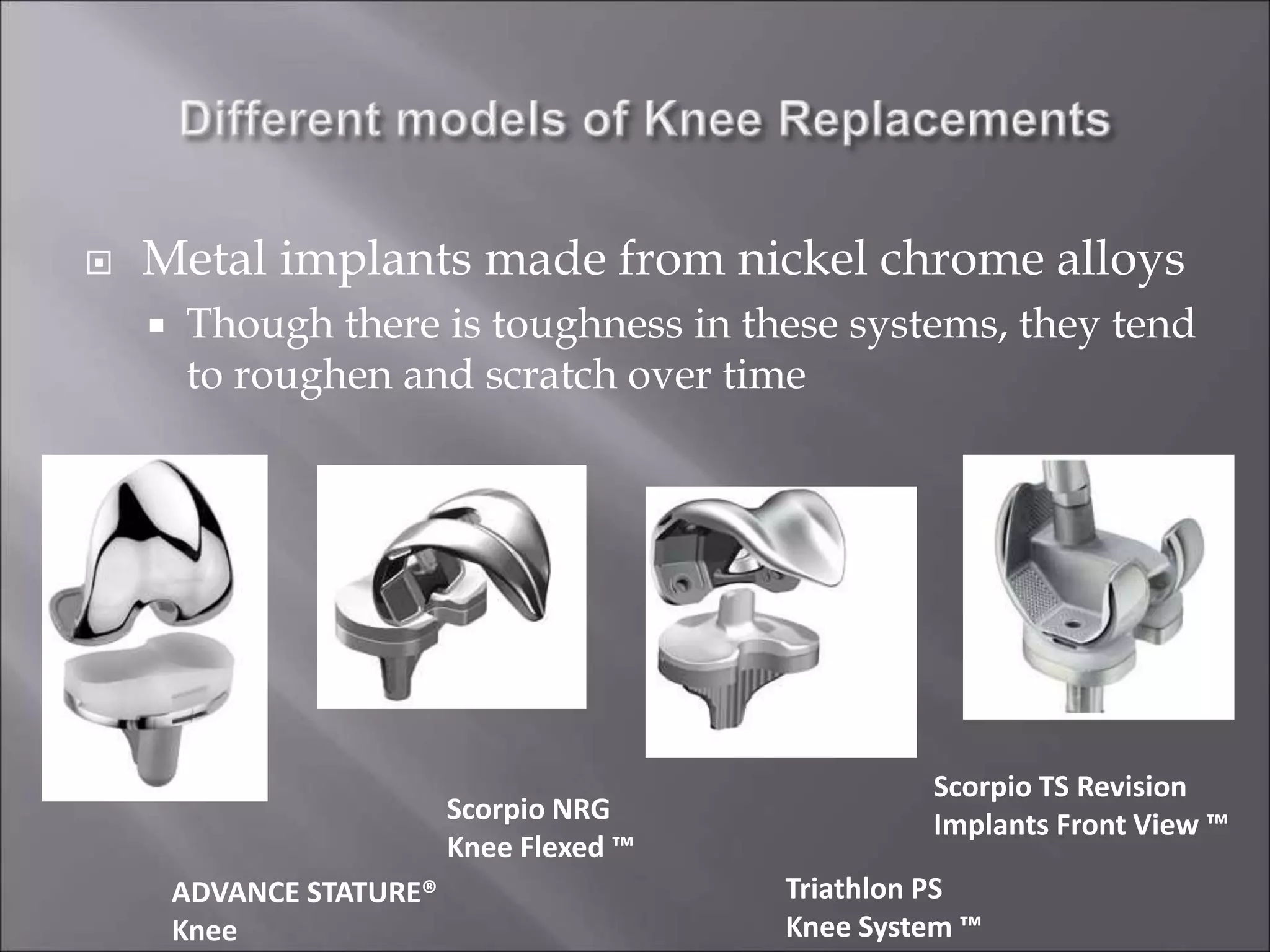
Modern joint replacements rely on three key components: a metal stem or ball, a plastic or ceramic liner, and sometimes a cobalt-chromium alloy. Over time, these materials degrade through two primary mechanisms:
- Wear: The constant friction between the metal and plastic components grinds away at surfaces, creating microscopic debris. According to a 2023 study in Acta Biomaterialia, even “low-wear” implants generate enough particles to trigger an immune response in 30% of patients within three years.
- Corrosion: Body fluids—particularly chloride ions—react with metal alloys, causing pitting and cracking. Research from University of California, San Diego found that some cobalt-chromium implants lose up to 20% of their structural integrity within seven years due to electrochemical corrosion.
Key point: The combination of wear and corrosion doesn’t just weaken implants—it releases metal ions into the bloodstream, which have been linked to neurological and cardiac risks in some patients.
Dr. Emily Carter, a biomedical engineer at Massachusetts Institute of Technology, explains that the problem is often not a single defect but a cascade of failures:
“An implant might start with a tiny manufacturing flaw—a microscopic crack in the alloy. Over time, that crack grows as the metal fatigues from daily movement. Then, corrosion accelerates the process, and suddenly, you have a component that’s no longer stable. By then, the damage is irreversible.”
Worse, some implants use ultra-high-molecular-weight polyethylene (UHMWPE) liners that degrade faster than advertised. A 2022 FDA report revealed that certain brands of knee implants showed wear rates three times higher than claimed in clinical trials.
—
How wear and corrosion physically reshape failing implants
Under a scanning electron microscope, a failed implant looks nothing like its original design. Instead of smooth, polished surfaces, the metal exhibits:
- Pitting corrosion: Tiny holes form as chloride ions eat away at the alloy, creating weak points where stress fractures can initiate.
- Delamination: Layers of the implant separate due to internal stress, often where the metal meets the plastic liner.
- Debris accumulation: Wear particles—some as small as 0.1 micrometers—embed in surrounding bone and tissue, triggering chronic inflammation.
Dr. Rajiv Gandhi, an orthopedic surgeon at Cleveland Clinic, has seen firsthand how these changes unfold:
“A patient might come in with no symptoms for years, then suddenly develop severe pain. When we remove the implant, we often find the metal stem is riddled with corrosion pits, and the plastic liner is so worn it’s almost translucent. The body has essentially rejected the foreign material.”
One of the most alarming findings comes from Swedish national joint registries, which track implant performance across the country. Their data shows that:
| Implant Type | Reported 5-Year Failure Rate (Manufacturer) | Actual Failure Rate (Registry Data) | Primary Cause of Failure |
|---|---|---|---|
| Total Hip Replacement | 3–5% | 8–12% | Metal-on-metal wear + corrosion |
| Knee Replacement (Cobalt-Chromium) | 2–4% | 6–10% | Plastic liner degradation |
| Ceramic-on-Ceramic Hip | 1–3% | 4–7% | Manufacturing defects in ceramic |
These discrepancies highlight a critical gap: manufacturers’ reported failure rates are often based on idealized lab conditions, not real-world use.
—
Who is most at risk—and why?
Not all patients experience implant failure at the same rate. Several factors increase risk:

- Body weight: Heavier patients generate more force on joints, accelerating wear. A 2021 study in Journal of Arthroplasty found that patients over 250 pounds had a 40% higher revision rate within five years.
- Activity level: High-impact sports or manual labor increase stress on implants. A University of Oxford analysis showed that active patients had a 25% higher failure rate for knee implants.
- Allergy or sensitivity: Some patients develop metal hypersensitivity, where cobalt or chromium ions trigger allergic reactions, leading to implant rejection.
- Manufacturer quality: Implants from companies with weaker quality control—such as those using non-standardized alloys—fail at higher rates. The FDA’s 2023 recall list included 12 brands for excessive wear or corrosion.
Dr. Sarah Chen, a materials scientist at Stanford University, notes that younger patients face a unique challenge:
“A 50-year-old with a hip replacement might need that implant to last 30 years. But if it fails after 10, they’re looking at multiple revisions—and each one carries higher risk. The younger you are, the more likely you are to outlive your implant.”
This is why long-term registries—like those in Sweden, Australia, and the U.K.—are invaluable. They reveal that while short-term success rates look good, failure rates climb sharply after five years, often due to wear-related issues.
—
What are the consequences of implant failure?
For patients, the fallout from a failing implant is devastating:
- Chronic pain: 80% of revision patients report persistent discomfort, according to a 2023 survey by the American Academy of Orthopaedic Surgeons.
- Infection risk: Revision surgeries have a 5–10% infection rate, compared to 1–2% for primary procedures.
- Systemic health risks: Metal ions from corroded implants have been linked to neurodegenerative conditions (like Alzheimer’s) and heart arrhythmias, though the exact mechanisms remain under study.
- Financial burden: A single revision can cost $40,000–$70,000, and many insurers limit coverage for multiple procedures.
Hospitals and insurers also bear the cost. The U.S. Centers for Medicare & Medicaid Services (CMS) reported that implant-related complications cost the healthcare system $1.6 billion annually in additional treatments and lost productivity.
Yet, the most troubling aspect may be regulatory oversight. The FDA’s 510(k) clearance process allows many implants to enter the market with minimal long-term testing. A 2022 investigation by ProPublica found that some devices were approved based on studies with as few as 50 patients—far below the numbers needed to detect rare but catastrophic failures.
Dr. Michael Reynolds, a regulatory expert at University of Pennsylvania, criticizes the system:
“We’re essentially relying on manufacturers to police themselves. If an implant fails, the burden is on patients to prove it was defective—not on the company to demonstrate it was safe. That’s backward.”
—
What’s being done—and what’s next?
Researchers and regulators are pushing for solutions:
- Better materials: New alloys, such as titanium-zirconium-niobium (TiZrNb), show 30% less corrosion in early trials. Companies like DePuy Synthes and Zimmer Biomet are testing these in clinical studies.
- Improved manufacturing: Additive manufacturing (3D printing) allows for custom-fit implants with fewer weak points. A 2023 study in Nature Materials found that 3D-printed titanium implants lasted 40% longer in lab tests.
- Stricter regulations: The EU’s Medical Device Regulation (MDR) now requires 10-year follow-up data for high-risk implants. The U.S. is considering similar rules, though progress has been slow.
- Patient monitoring: Some hospitals use blood metal-ion testing to detect early corrosion before symptoms appear. The Swedish Knee Arthroplasty Register has reduced failure rates by 22% through this approach.
However, challenges remain. Insurance coverage for advanced materials is inconsistent, and surgeon training on newer techniques varies widely. Meanwhile, lawsuits against implant manufacturers have surged—with over 1,200 pending cases in U.S. courts related to failed hip implants alone.
Looking ahead, experts say the focus must shift from short-term success rates to long-term durability. “We need a cultural change in orthopedics,” says Dr. Carter. “Right now, we’re optimizing for the first five years. But patients deserve implants that last their lifetime.”
—
What patients should ask their doctors
If you’re considering joint replacement—or already have an implant—here are key questions to discuss with your surgeon:
- What is the implant’s documented failure rate beyond five years? (Most manufacturers only report short-term data.)
- Are there any recalls or warnings on this specific model? (Check the FDA’s MAUDE database or EUDAMED registry.)
- What materials are used, and how do they compare to alternatives? (Cobalt-chromium vs. ceramic vs. titanium each have trade-offs.)
- What are the signs of early failure, and how will I be monitored? (Some corrosion can be detected through blood tests before symptoms appear.)
- What are my options if the implant fails? (Some surgeons specialize in revisions and may offer better outcomes.)
For those already experiencing implant-related pain, early intervention is critical. Symptoms like persistent joint pain, swelling, or metallic taste in the mouth (a sign of high metal-ion levels) should prompt immediate evaluation.
—
Frequently asked questions about implant wear and corrosion
Q: Can metal particles from implants cause long-term health problems?
A: Yes. Studies link high levels of cobalt and chromium ions to neurological issues, heart problems, and thyroid dysfunction. While rare, some patients develop metal hypersensitivity syndrome, requiring implant removal. The FDA recommends regular blood testing for those with metal-on-metal implants.
Q: Are ceramic implants safer than metal ones?
A: Ceramic implants have lower wear rates but can fracture under stress. A 2020 study in Journal of Bone and Joint Surgery found that ceramic-on-ceramic hips had a 0.1% fracture rate—low, but catastrophic when it occurs. Metal alloys, while more durable, risk corrosion.
Q: Why do some implants last longer than others?
A: Factors include manufacturing precision, material quality, and surgical technique. For example, Swedish-made implants often outperform U.S. or Asian brands due to stricter quality controls. Patient weight, activity level, and compliance with post-op care also play roles.
Q: What’s the most common reason for implant failure?
A: Wear and loosening account for 60% of revisions, followed by infection (20%) and allergic reactions (10%). Corrosion-related failures are rising, now representing 8–12% of cases, according to U.K. National Joint Registry data.
Q: Can failed implants be repaired, or must they be removed?
A: In some cases, revision surgery can replace only the worn components (e.g., the liner). However, if corrosion or infection has spread, full removal is necessary. About 30% of revisions require a complete implant swap.
Q: Are there alternatives to traditional metal implants?
A: Yes. Bioabsorbable implants (made from materials that dissolve over time) are in early testing, as are stem-cell-based cartilage regeneration therapies. However, these are not yet widely available for joint replacements.
—
As joint replacement surgery becomes more common—with projections of 6.7 million procedures annually by 2030—the hidden costs of wear and corrosion will only grow. For patients, the message is clear: ask questions, demand transparency, and choose implants—and surgeons—with proven long-term track records.
For manufacturers and regulators, the stakes couldn’t be higher. The next decade of orthopedics may hinge on whether the industry can finally deliver on its promise: joints that last a lifetime.
