Global childhood immunization coverage inches forward despite conflict
New WHO-UNICEF data shows global immunization rates are slowly recovering from pandemic-era setbacks, though millions of children remain unprotected.
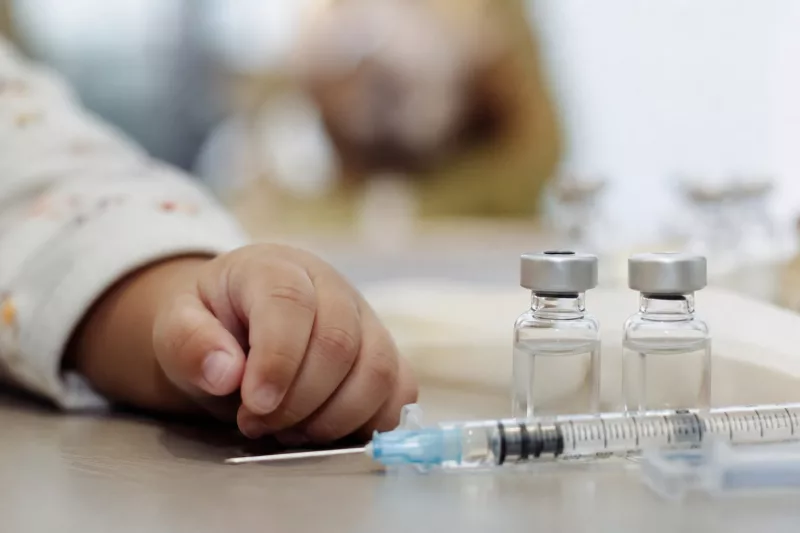
Global childhood immunization coverage experienced a marginal recovery in 2025, according to the annual WHO-UNICEF Estimates of National Immunization Coverage (WUENIC) released on 15 July 2026. While the data indicates a slow climb from the significant setbacks observed during the COVID-19 pandemic, health authorities warn that the progress remains fragile and unevenly distributed.
In 2025, 90% of infants globally — nearly 116 million — received at least one dose of a diphtheria, tetanus and pertussis (DTP) vaccine, and 85%, or 110 million, completed the full three-dose series. While both indicators rose by one percentage point from the previous year, global coverage remains one point below 2019 levels and has hovered within the same narrow range since 2009.
Related media

The "Zero-Dose" Challenge
An estimated 13.5 million infants, classified as “zero-dose” children, did not receive a single routine vaccine during their first year of life in 2025. Although this represents a reduction of nearly 750,000 children from the previous year, progress is offset by a rising number of children who initiate the vaccination schedule but fail to complete it. Over half of the global population of zero-dose children reside in fragile, conflict-affected or vulnerable (FCV) settings, despite these regions accounting for only about one-third of the world’s births. Most of these children live in countries supported by Gavi, the Vaccine Alliance.
Data from 195 countries indicate that 100 nations have maintained at least 90% coverage with three doses of DTP since 2019. However, 65 countries are currently stagnating or losing ground, including 13 identified as FCV settings. Regional performance varies significantly: the Americas and South-East Asia have fully recovered to or exceeded 2019 levels, while Africa, the Eastern Mediterranean, and Europe saw gains in 2025 but remain below pre-pandemic baselines. The Western Pacific region experienced a decline, leaving it furthest below its 2019 performance.
Conflict and Economic Disparities
Conflict remains a primary driver of immunization volatility. The impact is starkly illustrated by divergent trends in specific nations: while Sudan recorded the largest single-country gain globally last year, increasing DTP1 coverage by 35 percentage points and lifting MCV1 coverage by 22 points, Syria lost 6 percentage points on DTP1 coverage and 12 points on MCV1.
In middle- and high-income nations, where vaccines are generally accessible, coverage is slipping due to shifting political priorities, structural challenges, and rising vaccine hesitancy. For instance, South Africa’s DTP1 coverage has fallen 20 percentage points since 2019. Bosnia and Herzegovina recorded a 23-point drop in measles coverage over the past year.
Measles Outbreaks and Data Integrity
Global measles coverage remains stalled, with 84% of children receiving the first dose (MCV1) and 77% receiving the second dose (MCV2). Both metrics fall below the 95% threshold required to prevent outbreaks of the virus. Consequently, 57 countries reported large or disruptive measles outbreaks in 2025. Approximately 7.3 million infants received their first DTP dose but dropped out before reaching their first measles vaccination.
Health agencies have expressed concern regarding the weakening of surveillance systems. Only 18 national immunization surveys were submitted for the 2026 release, a decrease from 50 in 2024 and an average of 33 per year between 2015 and 2019. Officials warn that the lack of robust data hampers the ability to identify and reach vulnerable children, potentially leading to preventable deaths.
"Governments and health workers have helped global vaccination rates bounce back after dropping significantly during the COVID-19 pandemic," said Unicef Executive Director Catherine Russell. "But millions of vulnerable children are still being left unprotected due to conflict, displacement, and poverty. We must reach every child, and we must rebuild trust where it is fraying."
Dr. Tedros Adhanom Ghebreyesus, WHO Director-General, noted, “Every child, whether born into wealth or poverty, peace or conflict, deserves the lifegiving protection that vaccines provide.”
Archypedia is dedicated to independent, evidence-backed reporting. This briefing was synthesized from primary source reporting, corroborated across independent newsrooms, and verified against our Editorial Standards.
Transparency record
Evidence behind this report
This report synthesizes 7 distinct sources. Open the source ledger below to compare the underlying coverage.
Prepared under the Archypedia Editorial Policy by the Lina Park editorial desk profile. AI-assisted tools may support drafting and verification; public accountability remains with Archypedia. Report an error.