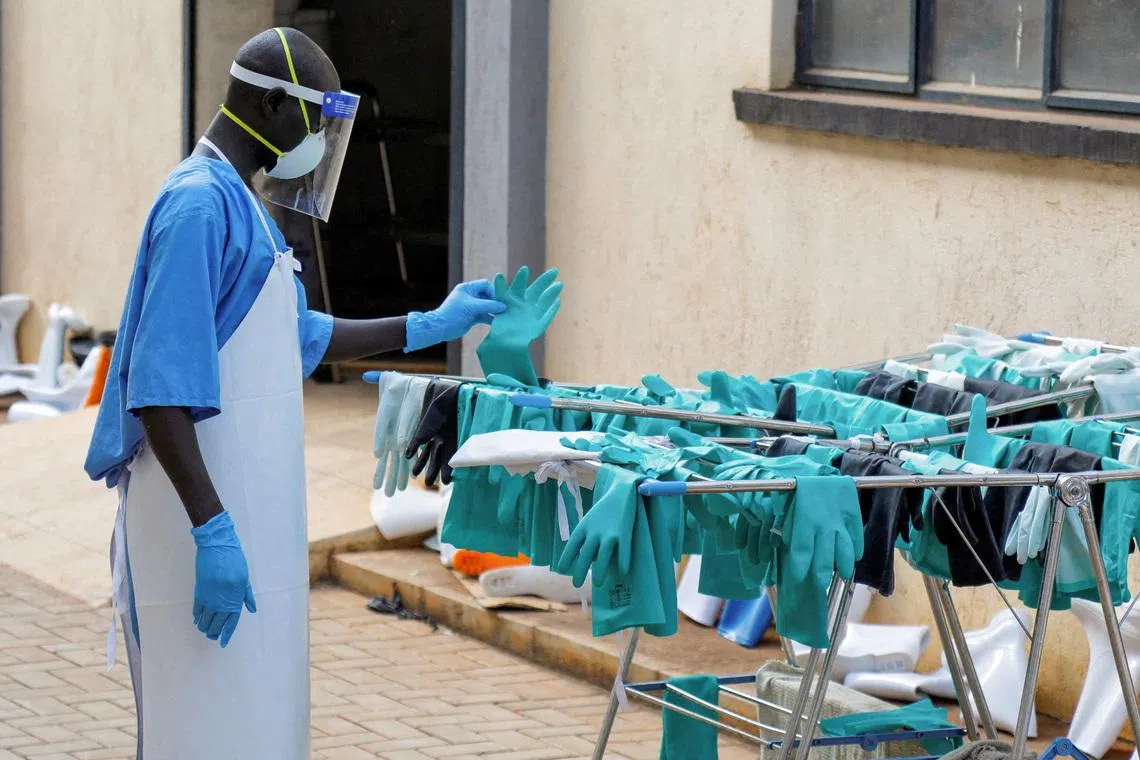
CDC elevates Ebola outbreak response to highest level
The CDC is mobilizing resources to contain the Bundibugyo Ebola virus following an increase in confirmed cases and deaths in the region. The agency is deploying additional staff and testing supplies to support local health efforts and address challenges in contact tracing.

The U.S. Centers for Disease Control and Prevention elevated its emergency response to the ongoing Ebola outbreak in the Democratic Republic of the Congo and Uganda to Level 1, its highest possible designation, on Friday, June 26. This activation, reserved for critical health crises, signals an urgent prioritization of the crisis and allows the agency to mobilize staff and operational resources with maximum efficiency.
The outbreak, which involves the rare Bundibugyo strain of the Ebola virus, has caused growing alarm due to its rapid spread. Unlike other common strains, the Bundibugyo variant currently lacks approved vaccines or specific therapeutics. Health officials report that the disease causes symptoms such as fever, vomiting, diarrhea, and internal or external bleeding, with an incubation period ranging from 2 to 21 days.
According to data reported as of late June, the outbreak has resulted in 1,155 confirmed cases and 304 deaths in the Democratic Republic of the Congo. Neighboring Uganda has recorded 20 confirmed cases and two deaths. Experts warn that the current contact tracing efforts in the affected areas are insufficient, reaching only 30% of contacts, well below the 80% threshold believed necessary to successfully control the transmission of the virus.
The response effort is complicated by the remote nature of the affected areas, regional insecurity, and frequent movement across borders for trade and family visits. Models indicate that neighboring countries, particularly South Sudan, face a significant risk of spillover due to these porous borders. In response, the Africa Centres for Disease Control and Prevention has convened regional officials to coordinate preparedness and operational readiness at border crossings and health facilities.
To assist with the containment, the U.S. Government is deploying 19 staff members to join over 125 personnel already stationed at CDC country offices in the region. These teams are conducting data analysis, training 25 local field epidemiologists, and supporting airport exit screenings. The agency is also dispatching doses of an experimental treatment for use in the region. Furthermore, the U.S. Is preparing to send 2,500 diagnostic test kits to facilitate the identification of strains in deceased victims.
Regarding the escalation of the response, Satish Pillai, the CDC’s incident manager for the Ebola response, stated:
"Elevating the response level reflects the urgency, scale and complexity of the outbreak, and allows CDC to bring additional resources to support the coordination and operational needs of our response."
Satish Pillai, Incident Manager, via CDC briefing
Despite the heightened activation level—which was previously utilized for the 2014–2016 Ebola epidemic, the 2016–2017 Zika virus outbreak, and the 2009–2010 swine flu outbreak—U.S. Health officials maintain that the risk to the domestic population remains low. No linked cases have been confirmed within the United States.
Looking ahead, the U.S. Administration is pursuing significant funding through Congress to bolster the international response. This request includes capital for a quarantine center in Kenya intended for Americans exposed to the virus. Meanwhile, regional health leaders emphasize that without a drastic improvement in contact tracing and case monitoring, the outbreak risks expanding further, potentially reaching the scale of historical epidemics.
How significant is this development?
Contribute your assessment to the aggregated reader intelligence ledger.
Archypedia is dedicated to independent, evidence-backed reporting. This briefing was synthesized from primary source reporting, corroborated across independent newsrooms, and verified against our Editorial Standards.
Transparency record
Evidence behind this report
This report synthesizes 5 distinct sources. Open the source ledger below to compare the underlying coverage.
Prepared under the Archypedia Editorial Policy by the Lina Park editorial desk profile. AI-assisted tools may support drafting and verification; public accountability remains with Archypedia. Report an error.