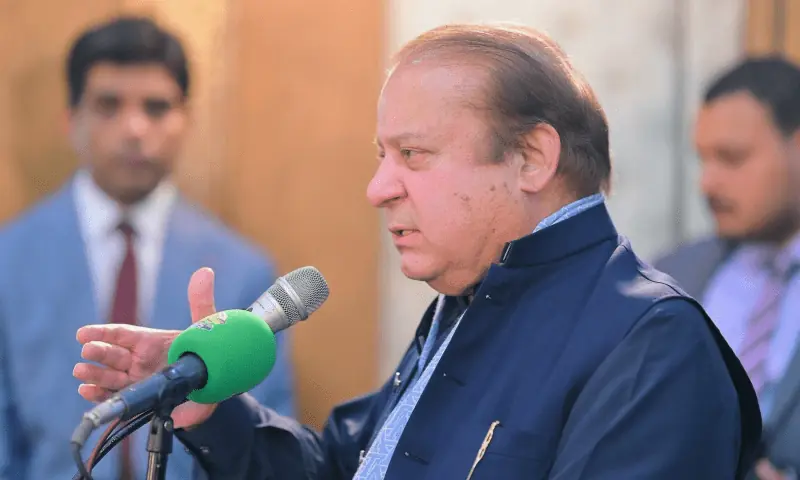
Nawaz Sharif’s High-Stakes Visit to Gilgit-Baltistan: What His Campaign Tour Means for June 7 Elections
Former Prime Minister and Pakistan Muslim League-Nawaz (PML-N) leader Nawaz Sharif is set to embark on a high-profile political campaign tour of Gilgit-Baltistan ahead of the region’s June 7 elections, marking a critical moment in the lead-up to one of Pakistan’s most closely watched subnational polls. The visit comes as political parties scramble to consolidate support in a region where electoral dynamics are shaped by both local aspirations and national political maneuvering.
The tour underscores the strategic importance of Gilgit-Baltistan—a territory with a unique constitutional status—as a potential swing region in Pakistan’s broader political calculus. With security concerns, logistical challenges, and allegations of irregularities already looming over the polls, Sharif’s campaign visit adds another layer of complexity to an already tense electoral environment.
This article examines the significance of Sharif’s visit, the political landscape of Gilgit-Baltistan, the challenges facing the June 7 elections, and what the outcome could mean for Pakistan’s political future.
Why Nawaz Sharif’s Visit to Gilgit-Baltistan Matters
Nawaz Sharif’s decision to campaign in Gilgit-Baltistan is not merely symbolic; it reflects the PML-N’s calculated effort to strengthen its foothold in a region where political representation has historically been contentious. Unlike other parts of Pakistan, Gilgit-Baltistan operates under a semi-autonomous governance structure, with its own legislative assembly and chief minister, but without full provincial status. This unique status has fueled demands for greater political rights and constitutional recognition, making the region a potential flashpoint for political activism.
For Sharif, whose political career has been defined by his dominance in Punjab, expanding influence into Gilgit-Baltistan could be a strategic move to counterbalance the PTI’s (Pakistan Tehreek-e-Insaf) stronghold in the region. The PML-N has long been viewed as a Punjab-centric party, and Sharif’s personal connection to the region—through his family’s business interests and his father’s historical ties to Gilgit-Baltistan—could help humanize his party’s image among local voters.
Key Points:
- Gilgit-Baltistan’s elections are the first since the region’s political structure was revised in 2018, raising expectations for meaningful reforms.
- Sharif’s visit is part of a broader PML-N strategy to challenge PTI’s dominance in northern Pakistan, where the party has historically struggled.
- The region’s unique constitutional status makes it a testing ground for Pakistan’s federalism, with implications for future political negotiations.
The Political Landscape of Gilgit-Baltistan: A Region at a Crossroads
Gilgit-Baltistan’s political landscape is defined by a mix of local grievances, national political rivalries, and unresolved constitutional questions. The region, which borders China and India, has long been a subject of strategic importance, but its residents have repeatedly demanded greater autonomy and representation. The upcoming elections are seen as a litmus test for whether Pakistan’s political establishment is willing to address these long-standing demands.
Historically, Gilgit-Baltistan has been dominated by two main political blocs: the Pakistan Muslim League-Nawaz (PML-N) and the Pakistan Tehreek-e-Insaf (PTI). However, the region’s political scene is also fragmented, with smaller parties and independent candidates often playing spoiler roles. The PTI, under Imran Khan, has made significant inroads in Gilgit-Baltistan, particularly in urban centers, while the PML-N has traditionally relied on rural and conservative voter bases.
This election cycle, however, introduces new variables. The Pakistan Peoples Party (PPP) and other regional parties are also vying for influence, and allegations of irregularities—including the participation of banned groups—have cast a shadow over the electoral process.
Constitutional Context:
- Gilgit-Baltistan was granted a legislative assembly in 2009 but remains under federal control, with no provincial status.
- The 2018 Gilgit-Baltistan Empowerment and Self-Governance Order (GBESGO) introduced limited autonomy but fell short of full provincial rights.
- Local activists argue that the region’s political representation remains insufficient, with demands for a separate Gilgit-Baltistan province gaining traction.
Security and Logistical Challenges: Ensuring Free and Fair Elections
One of the most significant hurdles facing the June 7 elections is ensuring a secure and transparent voting process. Gilgit-Baltistan’s remote geography, coupled with its strategic location near the Line of Control (LoC) with India, makes security a paramount concern. The Election Commission of Pakistan (ECP) has deployed an unprecedented 6,000 additional police personnel to the region to maintain order, but challenges remain.
Logistical issues, including limited transportation infrastructure and communication blackouts in some areas, have raised concerns about whether all eligible voters will be able to cast their ballots. Allegations of vote-rigging, intimidation, and the involvement of banned political groups have fueled skepticism about the fairness of the elections.

Opposition parties, including the PTI, have accused the ruling establishment of using state machinery to tilt the electoral playing field in favor of the PML-N. Meanwhile, local observers argue that the lack of a level playing field—particularly in terms of media access and campaign resources—could undermine the credibility of the results.
Security and Election Preparedness:
| Challenge | ECP Response | Potential Risks |
|---|---|---|
| Remote polling stations | Deployment of 6,000 police officers | Difficulty in monitoring and vote counting |
| Allegations of banned groups participating | ECP’s code of conduct enforcement | Undermining electoral legitimacy |
| Limited media access for opposition | No official restrictions announced | Asymmetrical campaigning advantages |
Nawaz Sharif’s Campaign Strategy: Balancing Local and National Politics
Nawaz Sharif’s campaign tour of Gilgit-Baltistan is part of a broader PML-N strategy to reposition itself as a national rather than a Punjab-centric party. Historically, the PML-N has struggled to make significant inroads in Pakistan’s northern regions, where the PTI has built a strong grassroots network. Sharif’s visit is an attempt to counter this narrative by directly engaging with local leaders and voters.
One of the key challenges for Sharif will be addressing the region’s specific demands for greater autonomy. While the PML-N has traditionally been cautious about granting full provincial status to Gilgit-Baltistan—fearing it could set a precedent for separatist movements in other regions—local activists argue that the current semi-autonomous status is insufficient. Sharif’s ability to articulate a clear and convincing vision for Gilgit-Baltistan’s future will be critical in determining whether his party can win over skeptical voters.
Sharif’s campaign will need to navigate the delicate balance between appealing to conservative religious voters and secular urban populations. Gilgit-Baltistan’s political landscape is diverse, with Shia and Sunni communities, as well as secular and nationalist factions, all vying for influence. The PML-N’s ability to craft a message that resonates across these divides will be a key determinant of its electoral success.
Sharif’s Campaign Focus:
- Economic Development: Promising infrastructure projects, including roads and energy initiatives, to address Gilgit-Baltistan’s isolation.
- Constitutional Reforms: While avoiding explicit commitments to provincial status, emphasizing greater local governance.
- Countering PTI’s Narrative: Positioning the PML-N as a stable alternative to Imran Khan’s populist rhetoric.
- Security Assurances: Highlighting the federal government’s commitment to protecting the region from external threats.
Opposition Allegations and the Credibility of the Elections
The PTI and other opposition parties have raised serious concerns about the fairness of the Gilgit-Baltistan elections, alleging that the process is being manipulated to favor the ruling establishment. Key grievances include:
- Unequal Campaign Resources: The PTI claims that the PML-N has disproportionate access to state resources, including media coverage and administrative support.
- Banned Groups in the Fray: Reports suggest that individuals with alleged ties to banned organizations are contesting elections, raising questions about the ECP’s ability to enforce its own code of conduct.
- Media Restrictions: Opposition leaders have accused the government of limiting their ability to campaign freely, particularly in remote areas.
- Voter Intimidation: There are unconfirmed reports of coercion and harassment of voters, particularly in areas where the PTI has strong support.
These allegations have led to calls for international election observers to monitor the process, though the ECP has so far resisted such requests, citing sovereignty concerns. The lack of independent oversight has further eroded public trust in the electoral process.
Expert Perspective:
“The Gilgit-Baltistan elections are being watched not just as a local contest but as a barometer for Pakistan’s democratic health. If these elections are seen as unfair, it could embolden separatist sentiments and further destabilize the region.”
—A political analyst based in Islamabad
What’s at Stake: Gilgit-Baltistan’s Role in Pakistan’s Future
The outcome of the Gilgit-Baltistan elections will have far-reaching implications for Pakistan’s political future. At stake is not just control of a regional assembly but the broader question of how Pakistan’s federal structure will evolve in the coming years. Gilgit-Baltistan’s demands for greater autonomy reflect a wider trend across Pakistan, where marginalized regions are increasingly asserting their rights.
For Nawaz Sharif, a strong showing in Gilgit-Baltistan could help revive his party’s fortunes ahead of the next general elections. However, failure to address local grievances could lead to long-term instability, particularly if the region’s political elite feels sidelined by Islamabad.
Meanwhile, the PTI’s performance in these elections will be closely watched by Imran Khan’s supporters, who see Gilgit-Baltistan as a potential testing ground for the party’s ability to regain power. If the PTI can consolidate its support in the region, it could shift the balance of power in Pakistan’s northern heartland.
Long-Term Implications:
- Federalism Debate: The elections could reignite discussions about Pakistan’s constitutional structure, with Gilgit-Baltistan serving as a case study for provincial autonomy.
- China-Pakistan Economic Corridor (CPEC): Gilgit-Baltistan’s role in CPEC means that political stability in the region is crucial for economic development projects.
- India-Pakistan Dynamics: Any instability in Gilgit-Baltistan could have strategic repercussions, given its proximity to the LoC.
- Youth and Activism: The region’s young population, many of whom are educated and tech-savvy, could drive demands for further political reforms if their expectations are not met.
Common Misconceptions About Gilgit-Baltistan’s Elections
Despite its strategic importance, Gilgit-Baltistan’s elections are often misunderstood by the broader Pakistani public. Here are some of the most persistent myths—and the realities behind them:
- Myth: “Gilgit-Baltistan is just another remote province like Balochistan.”
Reality: While both regions face challenges of underdevelopment and political marginalization, Gilgit-Baltistan’s strategic location near China and the LoC gives it a unique geopolitical significance. Unlike Balochistan, which has a history of separatist movements, Gilgit-Baltistan’s political demands are primarily focused on constitutional recognition rather than independence.
- Myth: “The elections are irrelevant because Gilgit-Baltistan has no real power.”
Reality: The region’s legislative assembly may lack full provincial status, but it plays a crucial role in shaping local governance, economic policies, and even national security decisions related to CPEC. The elections are a direct reflection of whether Pakistan’s political system can deliver on promises of autonomy.

Nawaz Sharif Gilgit-Baltistan - Myth: “The PML-N and PTI are the only parties that matter in Gilgit-Baltistan.”
Reality: While the PML-N and PTI dominate national politics, Gilgit-Baltistan’s electoral landscape is more fragmented. Smaller parties, independent candidates, and even regional factions can significantly influence outcomes, particularly in rural areas.
- Myth: “The elections will be free and fair because the ECP is overseeing them.”
Reality: The ECP has taken steps to enforce a code of conduct, but past elections in Gilgit-Baltistan have been marred by allegations of irregularities. The lack of international observers and limited media access raise concerns about transparency.
What to Watch in the Coming Weeks
As the June 7 elections approach, several developments will be critical in determining their outcome and long-term impact:
- Campaign Rhetoric: Will Nawaz Sharif’s promises on autonomy and development resonate with Gilgit-Baltistan’s voters, or will the PTI’s populist appeals prove more effective?
- Security Situation: Will the ECP’s deployment of additional police prevent disruptions, or will incidents of violence or intimidation escalate?
- Voter Turnout: Given the region’s remote geography, will turnout be high enough to validate the results, or will low participation undermine legitimacy?
- Post-Election Reforms: Regardless of the winner, will the elected government push for meaningful constitutional changes, or will Gilgit-Baltistan continue to be sidelined?
- National Political Fallout: How will the results in Gilgit-Baltistan affect the broader power dynamics between the PML-N, PTI, and other parties ahead of future elections?
The Gilgit-Baltistan elections are more than just a local contest—they are a microcosm of Pakistan’s broader political and constitutional challenges. Nawaz Sharif’s campaign visit is a reminder that the region’s future will shape not only its own destiny but also the trajectory of Pakistan’s democracy.
Frequently Asked Questions About Gilgit-Baltistan’s Elections
What is the significance of Gilgit-Baltistan’s elections?
Gilgit-Baltistan’s elections are significant because they determine the region’s political leadership at a time when demands for greater autonomy are at an all-time high. The outcome could influence Pakistan’s federal structure, particularly regarding the constitutional status of disputed territories.
Why is Nawaz Sharif visiting Gilgit-Baltistan now?
Sharif’s visit is a strategic move to strengthen the PML-N’s position in a region where the PTI has been gaining ground. It also allows him to directly engage with local leaders and voters ahead of the June 7 polls, countering PTI’s narrative in northern Pakistan.
Are the elections in Gilgit-Baltistan fair?
Fairness remains a contentious issue, with opposition parties alleging irregularities, including unequal campaign resources and the participation of banned groups. The ECP has pledged to enforce a code of conduct, but skepticism persists due to past incidents of electoral manipulation.
What constitutional changes could result from these elections?
While the elections themselves may not directly lead to constitutional reforms, a strong mandate for autonomy could pressure the federal government to revisit Gilgit-Baltistan’s political status. Local activists are pushing for full provincial rights, but the central government has been cautious about setting a precedent for other regions.
How does Gilgit-Baltistan’s political situation affect Pakistan’s relations with China?
Gilgit-Baltistan is a key node in the China-Pakistan Economic Corridor (CPEC), and political stability in the region is crucial for economic projects. Any instability could disrupt CPEC’s progress, affecting Pakistan’s economic ties with China.
What happens if voter turnout is low?
Low turnout could undermine the legitimacy of the elections, particularly if it is perceived as a result of coercion or lack of enthusiasm. It could also signal deeper disillusionment among Gilgit-Baltistan’s population with the political process.
