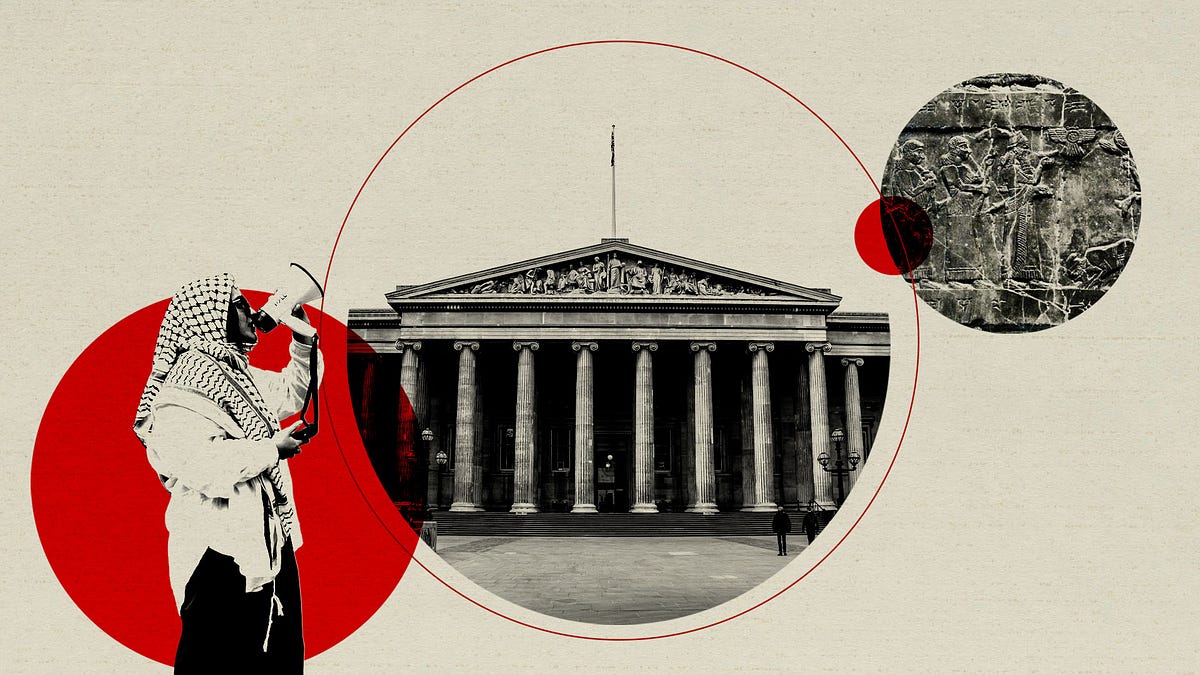
A Jewish History Heist at the British Museum – The Free Press: Analyzing the Controversy Over Postponed Cultural Programming
The intersection of cultural curation, institutional security, and political sensitivity has recently collided at one of the world’s most prominent cultural landmarks. The controversy surrounding A Jewish History Heist at the British Museum – The Free Press centers on the decision by museum leadership to postpone a high-profile event intended to celebrate Jewish Culture Month. This move has sparked a fierce debate over whether the institution is prioritizing safety or succumbing to external political pressures, effectively sidelining Jewish history during a critical period of global tension.
At the heart of the issue is a fundamental question: when does a security precaution become a form of institutional erasure? While the museum administration maintains that its decisions are rooted in the logistical and safety requirements of the venue, critics argue that the postponement of Jewish-centric programming constitutes a “heist” of cultural visibility. This incident is not occurring in a vacuum but is set against a backdrop of rising geopolitical instability and a series of security alerts at the museum, including a high-profile evacuation following the discovery of a suspicious device.
The Core of the Controversy: Postponement and Pushback
The dispute began when the British Museum announced the rescheduling of a lecture and associated programming intended to coincide with Jewish Culture Month. The event was designed to highlight the rich, multifaceted history of the Jewish people and their contributions to global civilization—a theme that aligns with the museum’s broader mission of documenting human history.
However, the decision to move the event led to immediate backlash from cultural advocates, historians, and the public. The primary grievance is not merely the change of date, but the timing and the justification provided. For many, the act of postponing a celebration of Jewish identity during a time of heightened antisemitism feels less like a logistical necessity and more like a strategic retreat from a controversial topic.
The tension arises from the perceived gap between the museum’s stated commitment to inclusivity and the practical application of that commitment when faced with political volatility.
The Institutional Defense
The Director of the British Museum has defended the decision, citing the need to ensure the safety of all attendees and staff. The administration’s stance is that the decision was made after a careful assessment of the current security climate. In a climate of heightened risk, the museum argues that postponing an event to a time when it can be hosted safely is a responsible act of stewardship.
Key arguments presented by the museum include:
- Risk Mitigation: The potential for protests or security breaches that could endanger the public.
- Operational Constraints: The ability of security personnel to adequately manage a potentially volatile crowd.
- Duty of Care: The legal and moral obligation to provide a safe environment for all visitors, regardless of the event’s theme.
The Counter-Argument: Erasure by Delay
Critics, however, view these justifications as a convenient shield. They argue that other cultural events are rarely postponed based on “security concerns” unless there is a direct, specific threat. By labeling the environment as “too volatile” for a Jewish history event, the museum is accused of implicitly suggesting that Jewish culture is inherently provocative or dangerous to display.
This is where the concept of a “history heist” comes into play. The argument is that by removing these narratives from the public square during a time of crisis, the institution is participating in the erasure of Jewish history. In this view, the “heist” is not the theft of a physical artifact, but the theft of a moment of cultural recognition and intellectual discourse.
Timeline of Events and Institutional Response
To understand the trajectory of this controversy, it is helpful to look at the sequence of events that led to the current impasse. The following table outlines the key milestones in the development of the story.
| Phase | Action/Event | Institutional Stance | Public/Critical Reaction |
|---|---|---|---|
| Planning | Scheduling of Jewish Culture Month lecture. | Commitment to cultural diversity. | General anticipation and support. |
| The Pivot | Announcement of event postponement. | Security and safety concerns. | Accusations of censorship and bias. |
| Defense | Director issues statements defending the move. | Pragmatic risk management. | Deep skepticism regarding the “safety” narrative. |
| Escalation | Reports of suspicious devices and evacuations. | Validation of security fears. | Concern that security is being used to justify erasure. |
The Security Context: A Double-Edged Sword
One of the most complex aspects of this story is the reality of the security threats facing the British Museum. The recent evacuation of the premises due to a “suspicious device” found in a restroom serves as a stark reminder that the museum is a high-profile target. From a management perspective, this event validates the Director’s caution. If the museum is already dealing with actual security threats, the decision to avoid potentially inflammatory events becomes a matter of operational survival.
However, from a sociopolitical perspective, this creates a “security paradox.” When an institution uses security as the primary reason for canceling a specific cultural event, it can inadvertently signal that the culture in question is the source of the instability. This leads to a dangerous cycle where the fear of antisemitism leads to the removal of Jewish programming, which in turn reinforces the idea that Jewish identity is “too contentious” for public spaces.
The Role of the “Suspicious Device” Narrative
The timing of the security alerts has complicated the narrative. Some observers suggest that the museum is using these incidents to retroactively justify the postponement of the Jewish Culture Month event. While the security threat was real, the question remains: why was the Jewish history event specifically targeted for postponement, and were other potentially contentious events handled with the same rigor?
To dive deeper into how institutions manage these risks, one might look for a related explainer on museum security protocols to see if these measures are applied consistently across different cultural exhibits.
Broader Implications for National Museums
The British Museum is not just a building; it is a symbol of global history and intellectual authority. When it makes a decision to postpone a cultural event, that decision carries weight far beyond the walls of the museum. This incident highlights several broader trends in the curation of national history.
1. The Politicization of Curation
Museums are increasingly becoming battlegrounds for contemporary political struggles. The pressure to remain “neutral” often leads to a state of paralysis where institutions avoid any topic that might provoke a vocal minority. This “neutrality” is rarely neutral; it often manifests as the avoidance of marginalized or contested histories, which effectively serves the interests of those who wish to see those histories suppressed.
2. The Definition of “Safety”
There is a growing debate over how “safety” is defined in public institutions. Is safety merely the absence of physical violence, or does it include the psychological safety of all visitors? By postponing a Jewish history event, the museum may be ensuring physical safety, but it is arguably compromising the psychological safety and inclusion of the Jewish community by signaling that their history is a liability.
3. The Responsibility of Global Institutions
As a “universal museum,” the British Museum has a responsibility to represent the entirety of human experience. When it fails to do so—or does so inconsistently—it undermines its own claim to universality. The controversy surrounding A Jewish History Heist at the British Museum – The Free Press suggests that the museum is struggling to balance its role as a sanctuary of knowledge with its role as a managed public space.
Common Misconceptions Regarding the Incident
In the wake of this controversy, several narratives have emerged that simplify a complex issue. It is important to distinguish between factual occurrences and interpretive framing.
- Misconception: The event was canceled entirely.
Correction: The event was postponed, not canceled. However, critics argue that a postponement without a firm, immediate new date is effectively a cancellation. - Misconception: The museum is actively antisemitic.
Correction: There is no evidence of an institutional policy of antisemitism. The debate is rather about institutional cowardice—the tendency to avoid conflict at the expense of cultural representation. - Misconception: Security threats are fabricated.
Correction: The security alerts, including the suspicious device, were real events. The point of contention is whether these threats are being applied selectively to justify the postponement of specific cultural programming.
Comparing Institutional Responses
To put this event in perspective, it is useful to compare how other major cultural institutions have handled similar tensions. In many cases, museums have opted for increased security to ensure that a controversial or targeted event can proceed, rather than canceling the event altogether.
For example, during periods of high tension, some galleries have implemented “hardened” security perimeters and increased police presence to protect speakers and attendees. This approach treats security as a means to enable cultural expression rather than a reason to suppress it. The British Museum’s decision to postpone, rather than protect, is what has drawn the most significant criticism.
Key Points of Comparison
- Enablement Model: Increase security $rightarrow$ Proceed with event $rightarrow$ Uphold cultural commitment.
- Avoidance Model: Identify risk $rightarrow$ Postpone event $rightarrow$ Prioritize institutional stability over cultural commitment.
The Long-Term Impact on Cultural Trust
The most lasting damage from the A Jewish History Heist at the British Museum – The Free Press controversy may be the erosion of trust. When a community feels that their history is being treated as a “risk factor,” the bond between the public and the institution is severed.
For the Jewish community and others who see their history marginalized, this incident serves as a warning. It suggests that in the modern era, the visibility of one’s heritage is contingent upon the current political wind. If the “cost” of hosting a Jewish history event is deemed too high by an administrator, the history itself is tucked away in the archives until a “safer” time arrives.
This creates a precedent where the curation of history is dictated not by scholarly merit or cultural importance, but by the perceived volatility of the public. If this trend continues, museums risk becoming sanitized spaces that reflect only the most uncontroversial aspects of human existence, stripping away the tension and struggle that actually define history.
Frequently Asked Questions
Why is the postponement of the event being called a “heist”?
The term “heist” is used metaphorically. While no physical objects were stolen, critics argue that the museum “stole” the opportunity for Jewish history to be visible and celebrated during a designated cultural month. It refers to the theft of representation and the erasure of a cultural narrative from the public sphere.
Did the British Museum provide a new date for the Jewish Culture Month event?
The museum stated that the event would be rescheduled, but the lack of a concrete, immediate alternative date has led many to believe the postponement was a strategic move to avoid the event entirely during the current political climate.
How does the “suspicious device” incident relate to this story?
The discovery of a suspicious device led to a full evacuation of the museum. The administration uses such incidents to justify their heightened security concerns. Critics, however, argue that these security issues should lead to better protection of events, not the removal of specific cultural programming.
Is this part of a larger trend in museums?
Yes. Many global museums are currently struggling to balance “decolonization” efforts, political neutrality, and the safety of their visitors. This often results in a tension between the desire to be inclusive and the fear of provoking protests or security threats.
What are the primary demands of the critics?
Critics are generally calling for a commitment to cultural programming regardless of political tension, provided that adequate security is in place. They argue that museums should be spaces of courage and intellectual bravery, not institutional avoidance.
The ongoing dialogue surrounding the British Museum’s decisions reflects a larger societal struggle over who gets to define history and under what conditions it is allowed to be seen. As the museum continues to navigate its security challenges and its cultural obligations, the resolution of this controversy will likely set a precedent for how national institutions handle the intersection of identity, history, and safety in an increasingly polarized world.
