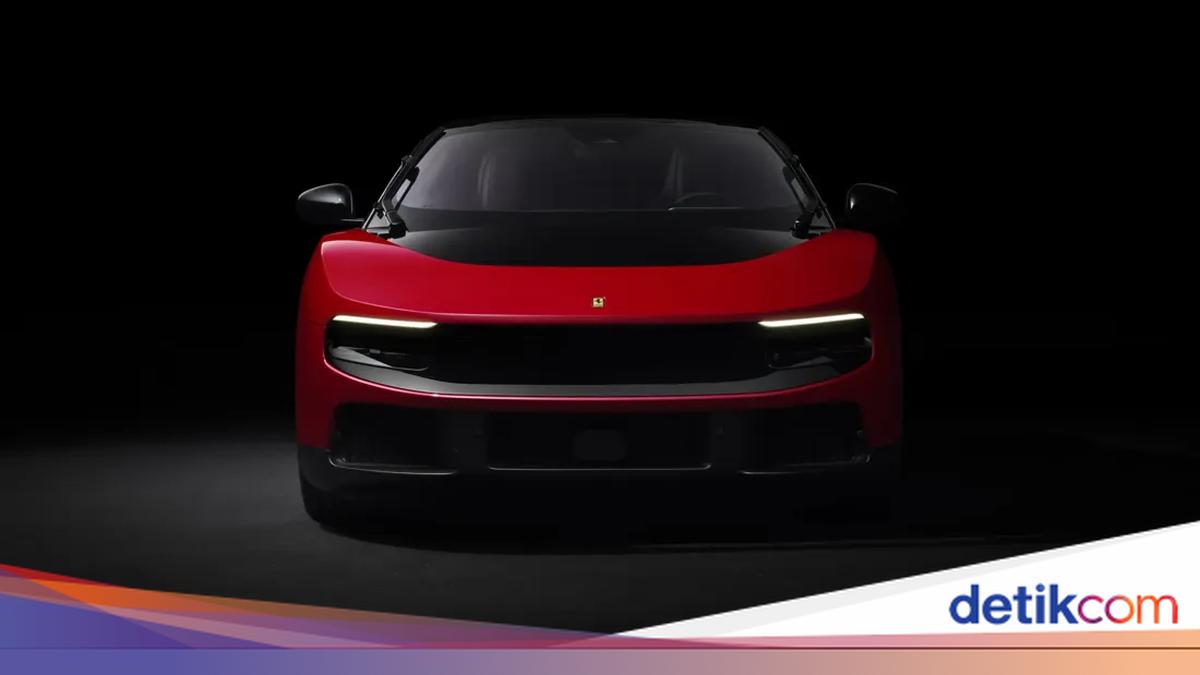
Ferrari’s latest electric sedan, the Luce, is breaking new ground—not just as a luxury vehicle, but as a statement on the future of high-performance electrification. Unlike competitors scrambling to electrify their lineups, Ferrari is taking a measured approach, insisting that its first all-electric model must first prove itself as a true Ferrari before scaling production. The message from the company’s leadership is clear: “Test it first. It’s different from anything else.”
Announced as the most expensive electric vehicle in Australia and designed by legendary industrial designer Jony Ive—known for his work on Apple’s iPhone—the Luce blends cutting-edge technology with Ferrari’s signature craftsmanship. Its dimensions alone set it apart: the sedan is nearly 19.7 feet long, equivalent to the length of four standard compact cars, redefining the segment’s boundaries. While competitors like Lamborghini have abandoned their own electric projects, Ferrari is doubling down, positioning the Luce as a blueprint for what a premium electric sports sedan should be.
The Tech Behind the Hype: Ferrari’s Hybrid Philosophy
The Luce doesn’t just rely on battery power. it incorporates Ferrari’s hybrid expertise, a nod to the brand’s 296 GTB and SF90 Stradale models. While specifics remain under wraps, the vehicle is expected to feature a high-voltage battery paired with an electric motor—likely delivering instant torque and a silent, effortless drive. The challenge for Ferrari isn’t just engineering the powertrain but ensuring it delivers the emotional connection that defines a Ferrari: the roar of a V-12 replaced by the hum of electric motors, yet still evoking the same thrill.

Ferrari’s insistence on a “test-first” approach reflects a broader industry tension: how to balance innovation with heritage. While Tesla and luxury brands rush to electrify, Ferrari is prioritizing performance validation over mass production. The Luce’s development timeline—delayed and refined—suggests Ferrari is treating this as a proof-of-concept rather than a rushed commercial launch.
Why This Matters: A Shift in the Luxury EV Market
The Luce’s arrival coincides with a pivot in the electric vehicle landscape. Traditional automakers are abandoning electric projects (as seen with Lamborghini’s Terzo Millennio cancellation), while Ferrari is betting that high-performance EVs require a different playbook. The Luce’s hybrid philosophy, combined with its unprecedented size and design, signals Ferrari’s belief that electric luxury cars must earn their place—not just mimic internal combustion engines.
For consumers, the Luce raises critical questions: Can an electric Ferrari deliver the same driver engagement as its gas-powered predecessors? Will its price—expected to exceed $500,000—be justified by its technology? And perhaps most importantly, will it change perceptions of electric vehicles as only practical, rather than exhilarating?
What’s Next: Ferrari’s Electric Roadmap
Ferrari has not disclosed a global launch date for the Luce, but its phased approach suggests a focus on limited production runs before scaling. The company’s recent financial reports indicate strong revenue growth ($6.677 billion in 2024) and profitability, reinforcing its ability to invest in long-term R&D. While competitors may be pulling back, Ferrari’s strategy—“test it first”—could redefine how luxury brands approach electrification.

One thing is certain: The Luce isn’t just another electric car. It’s Ferrari’s bold experiment in reimagining what a high-performance vehicle can be—without compromise.
