
Do Sharks Eat People? Getting a Shark Bite vs. Being Shark Food
Sharks rarely eat humans because people are not a natural part of their prey spectrum. According to marine biologists and historical attack data, the vast majority of shark-human encounters result in “test bites” rather than predatory consumption. Humans lack the high-fat blubber found in seals or sea lions, making them nutritionally unattractive to most shark species.
The Critical Distinction: Shark Bite vs. Predatory Consumption
Most shark encounters involving humans are categorized as exploratory or “test bites” rather than attempts to feed. Marine researchers explain that sharks lack hands or tactile appendages to investigate their environment, leaving the mouth as their primary tool for sensory exploration. When a shark bites a human and then swims away, it is typically a result of the shark realizing the target is not its intended prey.
Predatory consumption, or “being shark food,” occurs when a shark identifies a target as a viable food source and commits to a sustained attack. This behavior is rare with humans because our caloric value is low compared to the energy required to hunt us. According to biological data, sharks prefer prey with high lipid content, such as pinnipeds (seals and sea lions), which provide the dense energy reserves necessary for the shark’s survival.
Key differences between a test bite and a predatory attack include:
- Duration: Test bites are typically “hit-and-run” events; predatory attacks involve sustained biting and shaking.
- Intent: Exploratory bites are driven by curiosity or mistaken identity; predatory attacks are driven by hunger and caloric need.
- Outcome: Most test bites result in lacerations; predatory attacks often result in significant tissue loss or fatality.
Which Shark Species Pose the Greatest Risk?
While there are over 500 species of sharks, only a small fraction are responsible for the majority of unprovoked attacks on humans. Marine biologists generally point to three species as the most likely to encounter and bite humans: the Great White, the Tiger shark, and the Bull shark.
The Great White shark is an ambush predator that often mistakes humans for seals, particularly when viewing them from below against the surface of the water. Tiger sharks are known as “wastebaskets of the sea” due to their opportunistic diet, making them more likely to bite unusual objects or animals. Bull sharks are uniquely adapted to thrive in both saltwater and freshwater, bringing them into closer proximity to human populations in estuaries and rivers.
| Shark Species | Primary Driver of Attack | Typical Habitat | Dietary Preference |
|---|---|---|---|
| Great White | Mistaken Identity | Coastal/Open Ocean | High-fat marine mammals |
| Tiger Shark | Opportunistic Curiosity | Tropical/Subtropical | Generalist/Scavenger |
| Bull Shark | Territoriality/Aggression | Coastal/Freshwater | Fish and small mammals |
Why Sharks Attack: The Role of Mistaken Identity
The phenomenon of “mistaken identity” is the leading cause of shark bites. This occurs primarily because of the shark’s visual perspective. From beneath the surface, a human on a surfboard or swimming with a companion closely resembles the silhouette of a seal or a sea lion. According to marine behavioral studies, the splashing of a swimmer or the shape of a surfboard can trigger a predatory strike response before the shark can visually confirm the species of the target.
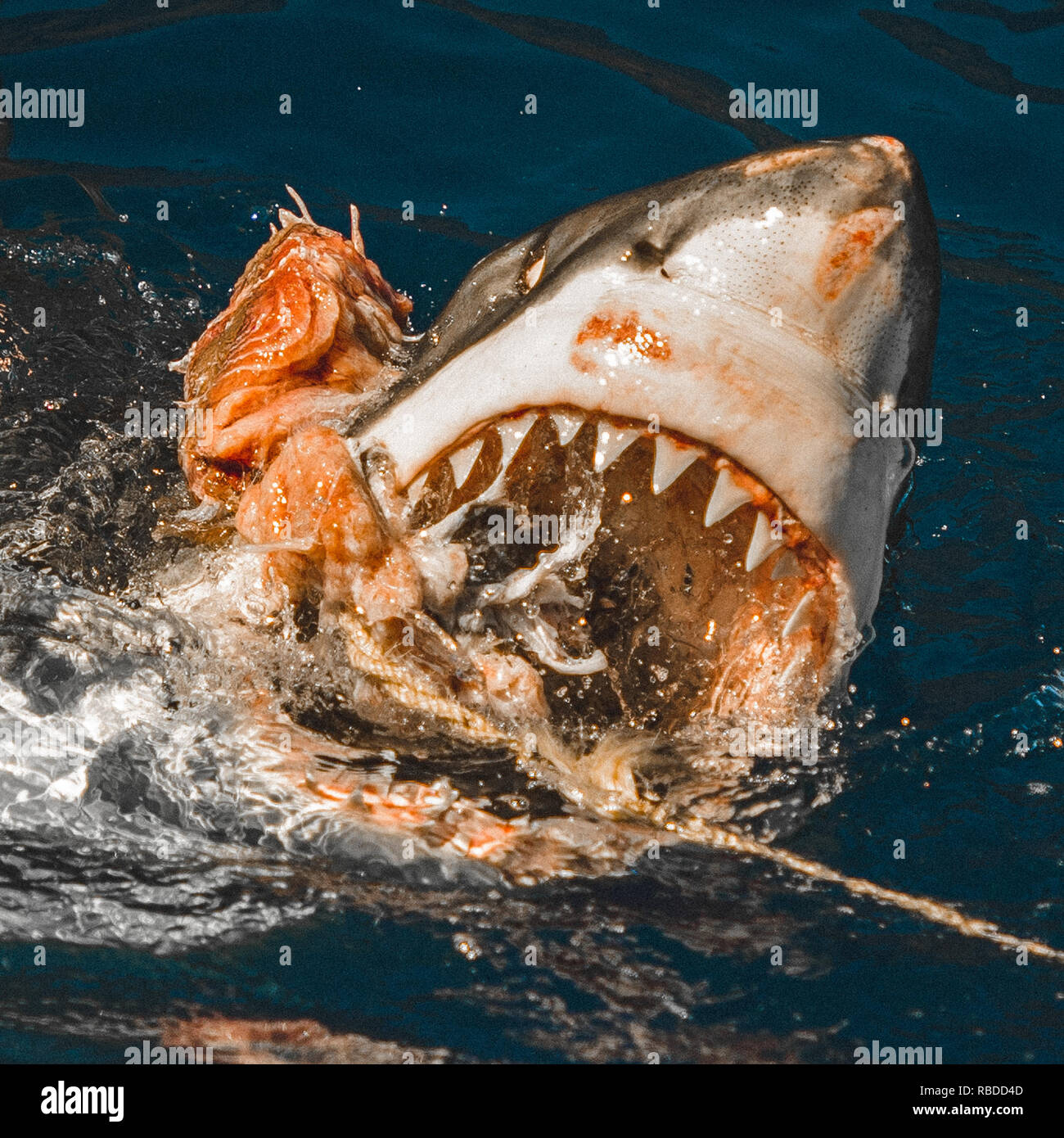
Once the shark bites, the “taste test” begins. Human flesh is lean and lacks the oily, fatty consistency of a seal. This sensory mismatch often leads the shark to abandon the attack immediately. Researchers note that this is why many shark attack victims survive with a single, deep wound rather than being consumed entirely.
Other factors contributing to attacks include:
- Territoriality: Some species, particularly Bull sharks, may bite to defend a specific area of shallow water.
- Feeding Frenzies: When multiple sharks are feeding on a school of fish, the high level of excitement can lead to accidental bites of nearby swimmers.
- Curiosity: Younger, less experienced sharks may bite out of a desire to investigate an unfamiliar object.
“The vast majority of shark encounters are not predatory. The shark is not hunting a human; it is investigating a silhouette that looks like food, only to find that the caloric payoff is not worth the effort.”
The Biology of the Shark Bite
The physical mechanism of a shark bite varies by species, which determines the severity of the injury. Great Whites possess serrated, triangular teeth designed for shearing through thick blubber and bone. A single bite from a Great White can cause massive trauma due to the sheer force of the jaw and the sawing motion the shark employs by shaking its head.
Tiger sharks have shorter, stouter teeth capable of crushing harder shells, such as sea turtles. Their bites are often characterized by deep punctures and crushing injuries. Bull sharks have wide, flat teeth that are highly efficient at gripping and tearing. Because Bull sharks often inhabit murky waters, their attacks are more likely to be sudden and aggressive.
From a medical perspective, shark bites are dangerous not only because of the initial trauma but because of the risk of secondary infection. Shark mouths contain a variety of bacteria that can lead to rapid tissue degradation if not treated with aggressive antibiotics and surgical cleaning.
For those interested in the physiological impact of these encounters, a related explainer on marine trauma provides further detail on how saltwater environments affect wound healing.
Analyzing the Statistics: Risk vs. Perception
Public perception of sharks as “man-eaters” is largely driven by media coverage rather than statistical reality. Data from the International Shark Attack File (ISAF) indicates that the number of unprovoked shark attacks is remarkably low compared to the number of people who enter the ocean annually.
Statistically, humans are more likely to be killed by lightning strikes, vending machines, or falling coconuts than by a shark. The “fear factor” is amplified by the nature of the injury; a shark attack is a visceral, bloody event that generates significant news coverage, whereas a vending machine accident is a private tragedy.
Comparing the mortality rates shows a stark contrast:
- Shark Attacks: Most result in non-fatal injuries; deaths are rare.
- Human Impact on Sharks: Millions of sharks are killed annually through commercial fishing and finning, making humans a far greater threat to sharks than vice versa.
Environmental Triggers and High-Risk Scenarios
Certain conditions increase the likelihood of a shark encounter. Water turbidity (cloudiness) is a primary factor, as it increases the probability of mistaken identity. In murky water, a shark cannot clearly see its target, making it more likely to strike based on scent or silhouette alone.
Time of day also plays a role. Many shark species are crepuscular, meaning they are most active during dawn and dusk. During these windows, the light filtering through the water creates silhouettes that are harder to distinguish, increasing the risk for swimmers and surfers.
Geographic “hotspots” also exist. Areas where seals congregate or where river mouths meet the ocean often have higher shark densities. According to coastal safety reports, swimming near fishing piers or in areas where fish are being cleaned can attract sharks via their highly developed olfactory systems, which can detect blood in the water from miles away.
How to Reduce the Risk of an Encounter
While it is impossible to eliminate risk entirely, marine safety experts suggest several behavioral changes to reduce the probability of a shark bite.
Avoid swimming during dawn and dusk when predatory activity peaks. Additionally, avoid swimming in areas with high concentrations of seals or sea lions. Avoiding shiny jewelry is also recommended, as the reflection of light off metal can mimic the glimmer of fish scales, attracting a shark’s attention.
If a shark is spotted, experts advise the following:
- Maintain Eye Contact: Sharks are ambush predators; letting them know they have been spotted removes the element of surprise.
- Stay Calm: Avoid splashing violently, which can mimic the movements of a distressed fish.
- Back Away Slowly: Move toward the shore or a boat while keeping the animal in sight.
- Fight Back: In the event of an actual attack, targeting the shark’s sensitive areas—the gills, eyes, and snout—is the most effective way to force a release.
For more information on ocean safety, see this guide on rip currents and coastal hazards.
Common Misconceptions About Shark Behavior
One of the most persistent myths is that sharks “hunt” humans. In reality, humans are not a preferred prey item. Another misconception is that sharks can “smell a single drop of blood from miles away.” While sharks have an incredible sense of smell, the “single drop” narrative is an exaggeration. They can detect blood in the water, but the concentration must be sufficient to create a scent trail they can follow.

There is also a common belief that sharks are mindless killing machines. On the contrary, sharks are complex animals with distinct social structures and hunting strategies. Many species exhibit curiosity and can even be trained or habituated to human presence without becoming aggressive.
Finally, the idea that “if you pee in the water, sharks will attack” is unsupported by evidence. Sharks are attracted to amino acids and blood, not the chemicals found in human urine.
Frequently Asked Questions
Do sharks intentionally target humans for food?
No. According to marine biologists, humans are not a natural prey source for sharks. Most attacks are the result of mistaken identity, curiosity, or territorial defense rather than a desire to consume a human.
What is the difference between a shark bite and being eaten?
A shark bite is often a “test” to determine if the object is food. Because humans lack the high-fat blubber of seals, sharks usually realize we are not suitable prey and swim away. “Being eaten” (predatory consumption) is extremely rare and typically only happens with opportunistic species like the Tiger shark.

Which shark is the most dangerous to humans?
The Great White, Tiger, and Bull sharks are responsible for the most unprovoked attacks. The Great White is often the most feared due to its size and power, but the Bull shark is often considered more dangerous due to its aggression and ability to enter shallow freshwater areas.
Can you prevent a shark attack?
You cannot prevent them entirely, but you can lower the risk by avoiding swimming at dawn or dusk, staying away from seal colonies, and avoiding shiny jewelry that might look like fish scales.
Why don’t sharks just eat the person if they’ve already bitten them?
Sharks are energy-efficient hunters. Once they bite and realize the prey is bony and lean (like a human) rather than fatty (like a seal), they determine that the energy required to kill and eat the human outweighs the nutritional reward.
Understanding the behavior of sharks reveals that the threat to humans is significantly lower than popular culture suggests. By distinguishing between an exploratory bite and a predatory attack, it becomes clear that humans are simply not on the shark’s menu. The focus for ocean-goers should remain on respect for the marine environment and adherence to basic safety protocols to ensure a peaceful coexistence with these apex predators.
