Colombia’s presidential race is hurtling toward its most polarized runoff in decades, with the June 29 first-round results leaving the country divided between a populist outsider and a political establishment still reeling from the collapse of its most powerful figure. The victory of far-right candidate Rodolfo Hernández—who campaigned on anti-corruption rhetoric and a hardline stance against Venezuela—has reshaped the political landscape, forcing a showdown against Gustavo Petro, the leftist former guerrilla leader now seeking to become Latin America’s first elected socialist president.
Hernández’s unexpected triumph underscores a seismic shift in Colombian politics, where traditional parties have struggled to regain trust after the 2022 assassination of former president Álvaro Uribe, whose political machine dominated the country for nearly two decades. Uribe’s sudden death in a helicopter crash—widely seen as a blow to his Democratic Center party—left a power vacuum that Hernández exploited with a grassroots campaign blending populist appeals and conservative values. His 28.1% share of the vote, the highest for any candidate, reflected deep public frustration with corruption and crime, even as Petro’s 25.9% demonstrated enduring support for progressive change.
Fast Facts
- Key Candidates: Rodolfo Hernández (far-right, self-described “anti-establishment”) vs. Gustavo Petro (leftist, former guerrilla turned politician).
- First-Round Results: Hernández led with 28.1%, Petro followed at 25.9%. Third-place finisher Federico Gutiérrez (center-right) dropped out, throwing his support behind Hernández.
- Uribe’s Legacy: The late president’s Democratic Center party, once dominant, now faces irrelevance after his death and internal divisions.
- Runoff Date: June 29 results triggered a June 16 runoff, Colombia’s second election in three months.
- Regional Stakes: Petro’s victory would align Colombia with progressive Latin American governments; Hernández’s win could deepen ties with the U.S. And hardline regional blocs.
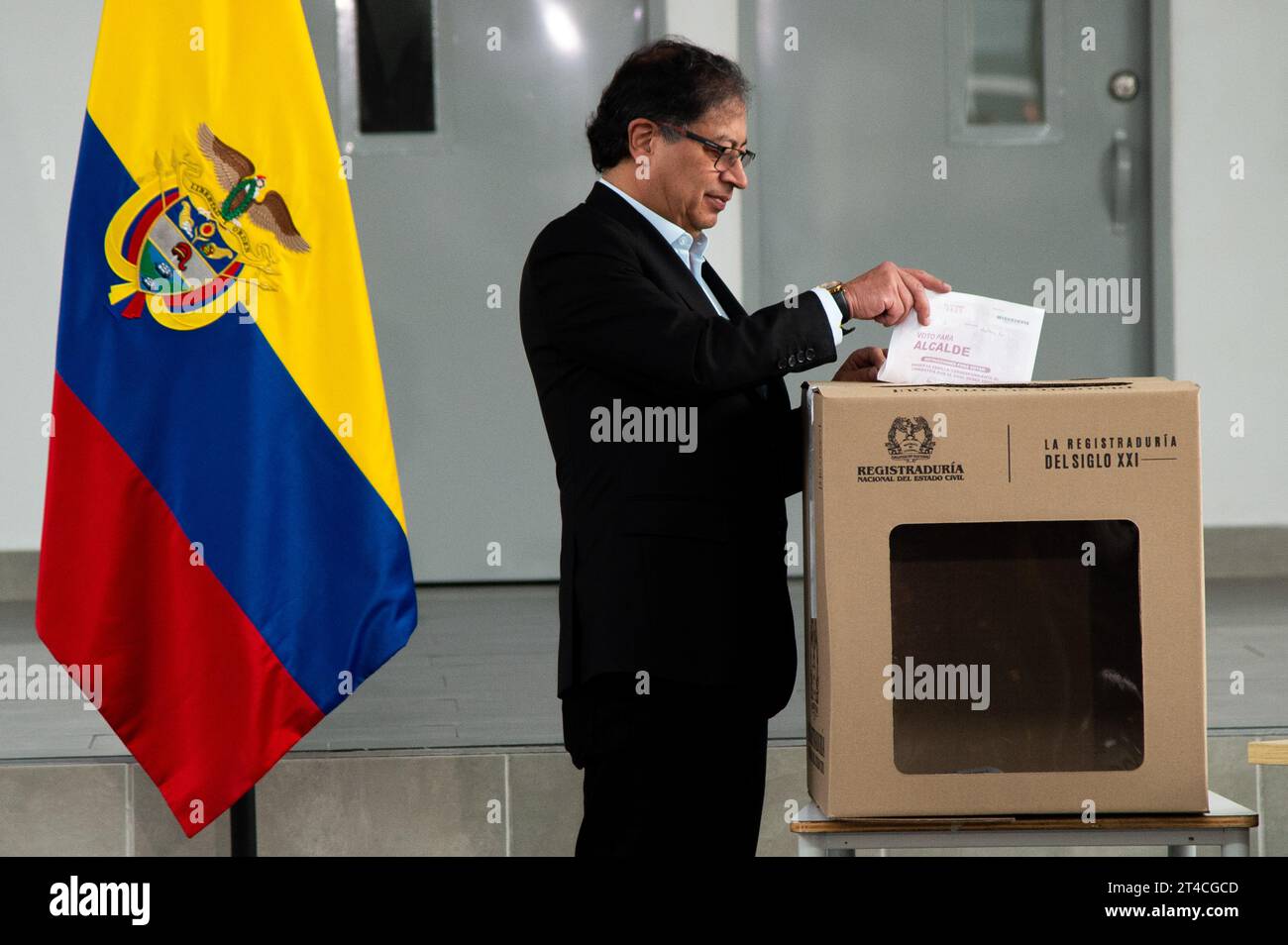
A runoff like no other looms ahead, with Hernández’s campaign already framing Petro as a radical threat to Colombia’s stability. The far-right candidate has vowed to crack down on crime, reverse Petro’s environmental policies, and sever ties with Venezuela’s Nicolás Maduro—policies that resonate in a country where 60% of voters cite insecurity as their top concern, according to recent polls. Petro, meanwhile, has doubled down on his promises to end the armed conflict, legalize coca production for medical use, and pursue a regional integration agenda that includes dialogue with Maduro.
Analysts warn the runoff could deepen divisions already exposed by Uribe’s death. The former president’s charismatic leadership had united conservative voters behind a single candidate; his absence has fractured the right, with Hernández’s victory coming at the expense of more moderate figures like Gutiérrez. “This is a moment of reckoning for Colombian politics,” said María Victoria Llorente, a political scientist at the Universidad de los Andes. “The country is choosing between a return to the past or a leap into the unknown.”

International observers are watching closely, particularly the U.S., which has historically favored Colombia’s conservative governments. Hernández’s victory has already prompted speculation about a shift in Washington’s approach, with his rhetoric on Venezuela aligning with hardline policies under former President Donald Trump. Petro, by contrast, has sought to distance himself from Maduro while maintaining diplomatic channels—a balancing act that could determine Colombia’s role in a region increasingly polarized between leftist and right-wing governments.
The runoff itself may offer few surprises in terms of campaign tactics, but the stakes could not be higher. With Colombia’s economy stagnating and social unrest simmering, the outcome will shape not only the country’s domestic trajectory but also its position in a Latin America where ideological battles are increasingly defined by the clash between populism and progressive reform.
