Planning a trip abroad? Ireland’s MMR vaccination rules could block your entry—here’s what you need to know
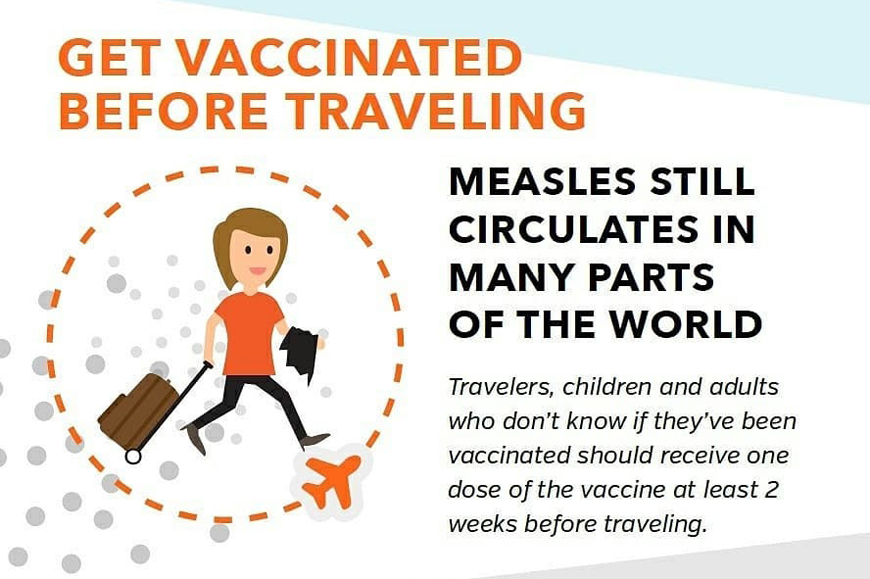
Travelers to Ireland may soon face stricter vaccination checks for measles, mumps, and rubella (MMR) before boarding flights, trains, or ferries, according to updated public health guidance. The Health Protection Surveillance Centre (HPSC) has confirmed that proof of MMR immunization will become a requirement for international arrivals, aligning with EU-wide efforts to curb vaccine-preventable outbreaks. With cases rising in Europe and global travel surging, experts warn unvaccinated travelers could face quarantine or denial of entry—leaving thousands scrambling to comply before summer departures.
Here’s what travelers need to know about the new rules, who they affect, and how to avoid last-minute disruptions.
—
### What’s changing? Ireland’s new MMR vaccination rules for travelers
The HPSC has announced that Ireland will soon require proof of MMR vaccination for all international arrivals aged 12 months and older, effective from June 1, 2024. The move follows similar measures introduced in France, Italy, and Germany, where unvaccinated travelers have faced fines or mandatory quarantine upon arrival.
According to the HPSC’s latest travel health advisory, the rule applies to:
- Passengers arriving by air, sea, or land from non-EU countries
- EU travelers without proof of vaccination (unless exempt)
- Children under 12 months (exempt due to vaccine age restrictions)
Key point: The requirement does not apply to domestic travel within Ireland, but public health officials emphasize that the measure is part of a broader EU strategy to eliminate measles by 2025.
Dr. Kevin Kelleher, director of the HPSC, stated in a recent briefing: *“Measles remains a serious public health threat, and vaccination is the most effective way to prevent outbreaks. We’re seeing clusters in parts of Europe, and Ireland is not immune to this risk.”*
—
### Why is Ireland introducing these rules now?
The decision comes amid rising measles cases across Europe. The World Health Organization (WHO) reported a 43% increase in measles cases globally in 2023, with outbreaks in France, Romania, and Greece linked to low vaccination rates among young adults and travelers.
In Ireland, measles cases have tripled since 2022, with the HPSC confirming 12 outbreaks in 2023, including clusters in Dublin and Cork. Public health officials cite:
- Declining MMR uptake: Ireland’s vaccination rate dropped to 88% in 2022 (below the 95% threshold needed for herd immunity), according to the Health Service Executive (HSE).
- Global travel risks: Measles is highly contagious and can spread rapidly in airports, cruise ships, and tourist hotspots.
- EU coordination: Ireland is aligning with 18 EU member states that already require proof of vaccination for certain travelers.
Expert view: *“This is a preemptive strike,”* said Prof. Mary Ramsay, head of immunisation at the UK Health Security Agency (UKHSA). *“Countries with low vaccination rates are becoming hotspots, and travelers unknowingly carry the virus across borders. The data shows that mandatory checks work—France saw a 60% drop in measles cases after introducing similar rules in 2022.”*
—
### Who is affected? Breaking down the new requirements
The rules will impact three main groups:
#### 1. International travelers arriving in Ireland
All passengers 12 months and older must provide one of the following:
- Proof of two MMR doses (separated by at least 28 days)
- A valid medical exemption (signed by a GP or specialist)
- Proof of immunity (blood test confirming measles antibodies)
What counts as valid proof?
| Document Type | Accepted? | Notes |
|---|---|---|
| EU Yellow Fever Certificate (if MMR recorded) | ✅ Yes | Only if vaccination details are clearly listed. |
| Irish Child Health Record (Green Book) | ✅ Yes | Must show both MMR doses. |
| GP letter or vaccination card | ✅ Yes | Must be in English or accompanied by a certified translation. |
| Digital health records (e.g., MyHealthRecord.ie) | ✅ Yes | Airport officials may request a printed copy. |
Key point: Travelers without proof may be denied boarding or face quarantine upon arrival, though Ireland has not yet confirmed fines for non-compliance (unlike France, where unvaccinated travelers can be fined up to €1,500).
#### 2. Irish residents returning from abroad
Citizens and legal residents returning to Ireland will also need to comply, though enforcement at domestic airports (e.g., Dublin, Cork) is expected to be less strict initially. The HPSC advises checking vaccination status before departure to avoid delays.
#### 3. Exemptions and special cases
Not everyone will need to show proof. Exemptions include:
- Children under 12 months (too young for MMR vaccine)
- Medical contraindications (e.g., severe allergy to vaccine components)
- Recent vaccination (within 28 days of arrival)
- Temporary visitors staying less than 72 hours (though this may vary by transport mode)
How to claim an exemption:
Travelers must carry a signed letter from a GP or consultant stating why vaccination is not advisable. The HPSC recommends applying for an exemption at least 4 weeks before travel.
—
### What happens if you don’t comply? Enforcement and real-world examples
While Ireland has not yet announced penalties, other EU countries provide a clear picture of what to expect:
| Country | Penalty for Non-Compliance | Enforcement Method |
France | Fines up to €1,500 | Random checks at airports/ports |
| Italy | Denial of entry or quarantine | Border police inspections |
| Germany | Mandatory quarantine (up to 21 days) | Health screenings on arrival |
| Spain | Fines up to €6,000 | Police checks at major airports |
Case study: France’s 2022 crackdown
When France introduced MMR requirements in January 2022, 1,200 travelers were turned back at Paris airports in the first month. The government reported a 40% drop in measles cases by mid-year, though critics argued the measure disproportionately affected low-income families.
In Ireland, officials emphasize that border checks will be conducted randomly, but travelers should not assume they will slip through. “We’re not looking to punish people,” said a spokesperson for the HPSC. “But measles spreads in days, and we can’t afford to take risks.”
—
### How to prepare: A step-by-step guide for travelers
With the deadline approaching, here’s how to ensure you’re compliant:
#### 1. Check your vaccination status
Most Irish residents have records in:
- The Green Book (Child Health Record)
- MyHealthRecord.ie (digital health portal)
- A GP vaccination card
If you’re unsure, contact your GP surgery or the HSE Immunisation Team at +353 1 882 2400.
#### 2. Get vaccinated (if needed)
MMR vaccines are free in Ireland for:
- Children (given at 12 months and 4–5 years)
- Adults born after 1970 (unless previously vaccinated)
Walk-in clinics are available at:
- HSE Vaccination Centres (e.g., Dublin, Cork, Galway)
- Pharmacies (some offer MMR vaccines by appointment)
- Travel clinics (for last-minute vaccinations before trips)
Cost: Free for eligible groups; private clinics charge €30–€50 for adults outside the scheme.
#### 3. Gather proof of vaccination
If you’ve been vaccinated, ensure you have:
- A printed or digital copy of your vaccination record
- A translated version if traveling from outside the EU
- A GP letter if you’ve had doses outside Ireland
Pro tip: Take a photo of your vaccination proof and save it in your phone’s travel folder—some airlines and ferry operators may request digital copies.
#### 4. Plan for exemptions (if applicable)
If you qualify for an exemption:
- Get a signed letter from your GP (template available on the HPSC website)
- Carry the letter with you while traveling
- Check if your destination country also requires vaccination proof
—
### What about other EU countries? A comparison of vaccination rules
Ireland’s move follows a patchwork of EU-wide policies. Here’s how other destinations handle MMR requirements:
| Country | MMR Requirement for Travelers? | Penalties for Non-Compliance | Notes |
France | ✅ Yes (since 2022) | Fines up to €1,500 | Random checks at airports |
| Italy | ✅ Yes (since 2017) | Quarantine or denial of entry | Strict for unvaccinated children |
| Germany | ❌ No (but recommended) | None | Encourages vaccination but no legal requirement |
| Spain | ✅ Yes (regional rules) | Fines up to €6,000 | Some regions (e.g., Catalonia) enforce checks |
| Portugal | ❌ No (but advised) | None | No legal requirement, but health screenings possible |
| Netherlands | ✅ Yes (for some groups) | Quarantine possible | Targets high-risk areas |
Key takeaway: If you’re traveling within the EU, assume MMR checks are likely—even if the destination doesn’t have formal rules. Airlines and ferry operators may enforce EU-wide health protocols.
—
### Common mistakes travelers make (and how to avoid them)
Experts warn that many travelers underestimate the complexity of vaccination rules. Here are the most frequent errors:
1. Assuming a single dose is enough
– Myth: “I had one MMR shot as a kid—that’s enough.”
– Reality: Two doses are required for full immunity. If you’re unsure, check your records.
2. Ignoring digital records
– Myth: “I’ll remember my vaccination date.”
– Reality: Border officials won’t accept verbal confirmation. Always carry proof.
3. Last-minute vaccination attempts
– Myth: “I’ll get vaccinated the day before my flight.”
– Reality: Some vaccines require 2–4 weeks to build immunity. The MMR vaccine is fast-acting (protection starts within 2–3 weeks), but delays can still cause issues.
4. Overlooking exemption paperwork
– Myth: “My GP will sort it out if I’m stopped.”
– Reality: You must carry a signed exemption letter—no verbal assurances will suffice.
5. Assuming children are exempt
– Myth: “My toddler doesn’t need proof.”
– Reality: Children 12 months and older must have records. Babies under 12 months are exempt but may face extra health checks.
—
### What’s next? Watching for updates and broader EU trends
The HPSC has confirmed that Ireland’s MMR rules will be phased in gradually, with full enforcement expected by June 1, 2024. However, travelers should prepare now, as:
- Summer travel begins in May—last-minute vaccination appointments may be limited.
- Other EU countries may tighten rules—Poland and Belgium are considering similar measures.
- Global health trends suggest more restrictions—the WHO has warned of a “resurgence of vaccine-preventable diseases” due to pandemic-era vaccination gaps.
What to watch for:
- Announcements from Airport authorities (Dublin, Cork, Shannon) on check procedures.
- Updates from the EU Digital COVID Certificate (DCC) system—MMR proof may be integrated into travel passes.
- Possible expansion to other vaccines (e.g., polio, hepatitis B) as EU health policies evolve.
—
### Frequently asked questions about Ireland’s MMR travel rules
Q: Do I need MMR proof if I’m just transiting through Ireland?
A: Currently, Ireland’s rules apply to arrivals, not transiting passengers. However, if you leave the airport and re-enter (e.g., for a layover stay), you may need to comply. Check with your airline for specific advice.
Q: What if my vaccination record is in another language?
A: You must provide a certified English translation. Some pharmacies and translation services offer same-day translations for travel documents.
Q: Can I get vaccinated at the airport before my flight?
A: No Irish airport offers MMR vaccinations on-site. However, some travel clinics near major airports (e.g., Dublin’s TravelVax) provide same-day appointments. Book in advance.
Q: Will my pet need MMR vaccination to travel?
A: No. The MMR rule applies only to human travelers. However, pets entering Ireland may require other health certificates (e.g., rabies vaccination for dogs).
Q: What if I’m allergic to the MMR vaccine?
A: You may qualify for a medical exemption. Consult your GP or an allergist for a signed exemption letter. Common allergies (e.g., egg allergy) do not automatically exempt you—individual assessment is required.
Q: Are there any countries where MMR vaccination is not required?
A: Most non-EU countries (e.g., USA, Canada, Australia) do not enforce MMR checks for travelers. However, if you’re returning to Ireland, you’ll still need proof. Always verify entry requirements for your final destination.
—
