OGRA announces new petrol and diesel prices for today
Pakistan's Oil and Gas Regulatory Authority implemented daily ex-depot price revisions for petrol and diesel to manage extreme market volatility resulting from global energy disruptions.
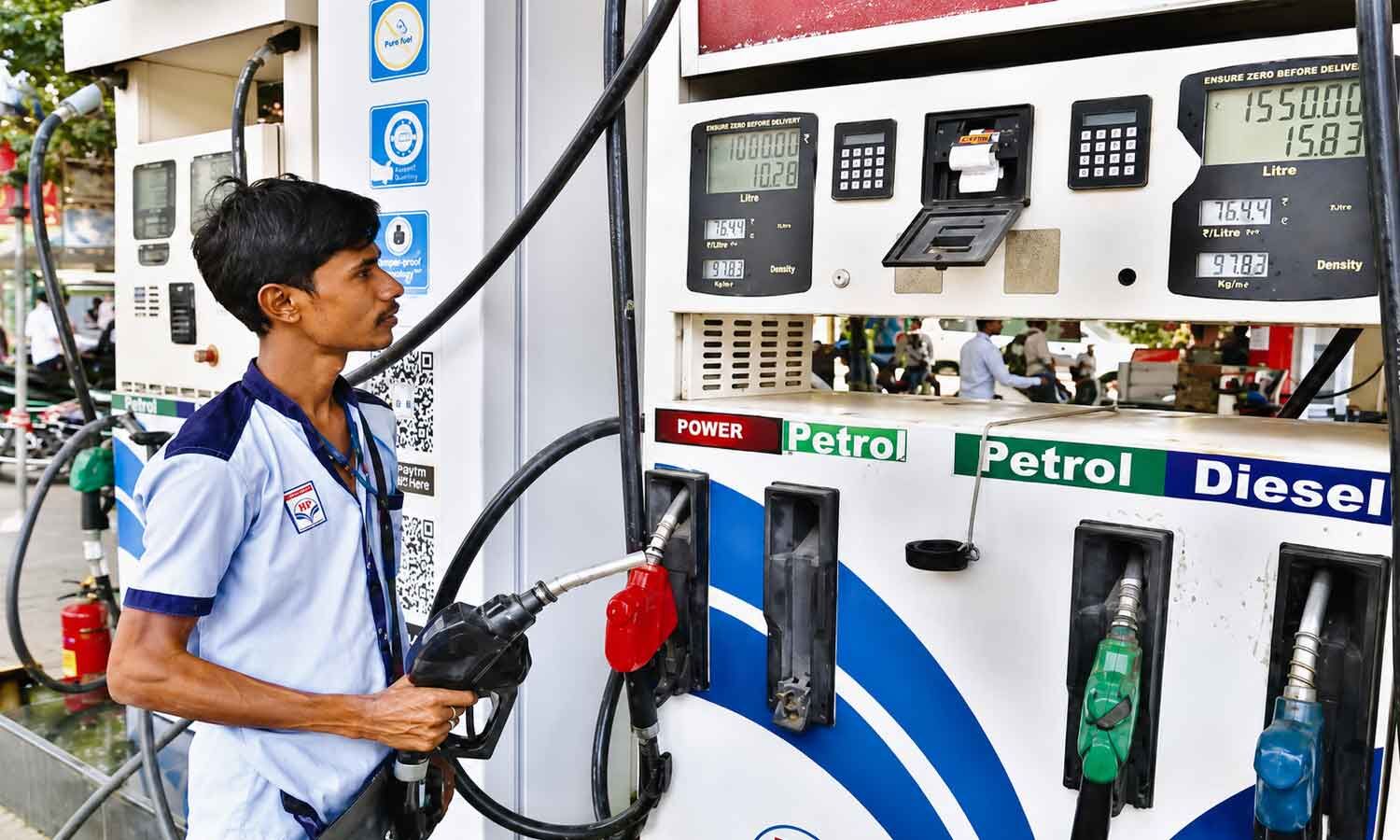
Global energy supply chains are experiencing severe disruption driven by a 2026 conflict involving the US, Israel, and Iran, which has constricted oil shipments through the Strait of Hormuz, a critical maritime chokepoint that previously handled about 25% of the world’s seborne oil trade, according to Techjuice.
The geopolitical instability stems from a sequence of blockades and military actions. After Iran blocked shipping traffic in late February, the United States responded with an extensive naval blockade of Iranian ports. Although a June ceasefire briefly restored hope, the truce collapsed on July 8 following renewed strikes on commercial vessels. Iran subsequently closed the strait again, prompting the US military to launch consecutive rounds of airstrikes to force it open.
Related YouTube video

Regulatory Emergency Responses to Global Volatility
Importing nations are employing vastly different strategies to insulate their economies from the shock of Brent crude. In Pakistan, the federal government transitioned to a strategy of adjusting fuel prices every 24 hours. According to Techjuice, the Oil and Gas Regulatory Authority (OGRA) began revising ex-depot prices for High Speed Diesel (HSD) and Motor Spirit (petrol) on July 17, 2026.
These daily adjustments are intended to shield the local economy from extreme volatility, though OGRA keeps rates unchanged during public holidays and weekends. Recent revisions have shown an upward trend, with OGRA announcing significant hikes for both petrol and diesel.
In contrast, retail markets in India have remained largely static. Moneycontrol reports that fuel prices have remained flat across several states despite benchmark crude costs hitting $97 a barrel.
Metropolitan Pump Rates and Regional Disparities
While national trends in India suggest stability, localized pricing reveals minor fluctuations based on regional demand and state-level factors. According to Thehansindia, prices in major hubs remained stable as of September 8, 2026.
| City | Petrol Price (per litre) | Diesel Price (per litre) |
|---|---|---|
| Delhi | Rs. 102.12 | Rs. 95.20 |
| Mumbai | Rs. 111.21 | Rs. 97.83 |
| Hyderabad | Rs. 115.69 | Rs. 103.82 |
| Chennai | Rs. 107,76 | Rs. 99.55 |
| Bangalore | Rs. 110.82 | Rs. 98.78 |
Other regions have seen slight increases. Kalingatv notes that in Bhubaneswar, petrol rose to ₹109.33 from ₹108.97, and diesel increased to ₹101.02 from ₹100.68. Over a ten-day window, Bhubaneswar petrol fluctuated between ₹108.85 and ₹109.33, while diesel ranged from ₹100.56 to ₹101.03.
In Cuttack, prices remained unchanged day-over-day at ₹109.33 for petrol and ₹101.02 for diesel. However, ten-day data for Cuttack showed wider fluctuations, with petrol reaching up to ₹109.78 and diesel hitting ₹101.46 per litre.
Structural Domestic Drivers and Manufacturing Shifts
The disconnect between international crude prices and domestic pump rates is driven by several internal variables. Thehansindia explains that while India depends heavily on crude imports, domestic prices are further influenced by government taxes, refinery concept ratios, rupee-dollar depreciation, and rising local demand.
This volatility is pushing automotive manufacturers to diversify propulsion options. Indiatoday reports that Kia is expanding its electrified portfolio in India, with President and CEO Ho Sung Song targeting eight electrified models by 2030.
The Carens Clavis is positioned to become the first car in India to offer five powertrain options: petrol, turbo-petrol, diesel, electric, and hybrid. Kia is also introducing factory-fitted CNG versions for the Carens and Carens Clavis. These models use a 1.5-litre naturally aspirated four-cylinder engine producing 96hp and 123Nm. To accommodate a 60-litre boot-floor CNG tank, Kia has retuned the suspension, upgraded front disc brakes, and accepted a reduction in boot capacity from 216 litres to 116 litres.
Frequently Asked Questions
Why did OGRA implement daily price revisions?
According to Techjuice, the Oil and Gas Regulatory Authority moved to 24-hour ex-depot price adjustments on July 17, 2026, to protect the local economy from extreme market volatility caused by the global fuel crisis and the blockade of the Strait of Hormuz.
How are Indian city prices reacting to Brent crude?
Reports from Moneycontrol and Thehansindia indicate that rates in major cities like Delhi and Mumbai have remained flat, although Kalingatv identified slight increases in Bhubaneswar.
Upcoming Vehicle Powertrains and Market Adaptations
The shift toward alternative fuels is accelerating as a hedge against fossil fuel instability. While the Tata Nexon currently offers four options—petrol, diesel, CNG, and electric—it lacks a hybrid variant. Kia intends to surpass this by introducing hybrid technology to the Sonet, Carens, and Seltos starting in 2027, according to Indiatoday.
The Seltos hybrid is expected in 2027, potentially using a 1.5-litre naturally aspirated petrol engine. The Carens Clavis is slated to receive its hybrid powertrain around 2029, completing its five-powertrain portfolio.
With maritime hostilities continuing to dictate the flow of global crude, published fuel prices remain subject to change at any moment, as noted by Thehansindia. The immediate market focus turns to late September and early October 2026, when pricing for Kia's factory-fitted CNG multi-purpose vehicles is expected to be officially announced.
Archypedia is dedicated to independent, evidence-backed reporting. This briefing was synthesized from primary source reporting, corroborated across independent newsrooms, and verified against our Editorial Standards.
Transparency record
Evidence behind this report
This report synthesizes 5 distinct sources. Open the source ledger below to compare the underlying coverage.
Prepared under the Archypedia Editorial Policy by the Elena Voss editorial desk profile. AI-assisted tools may support drafting and verification; public accountability remains with Archypedia. Report an error.