ECB raises key interest rate to 2.5% amid Middle East energy shocks
Rising Brent crude prices above $100 per barrel have prompted the European Central Bank to hike rates to combat a potential wage-price spiral.
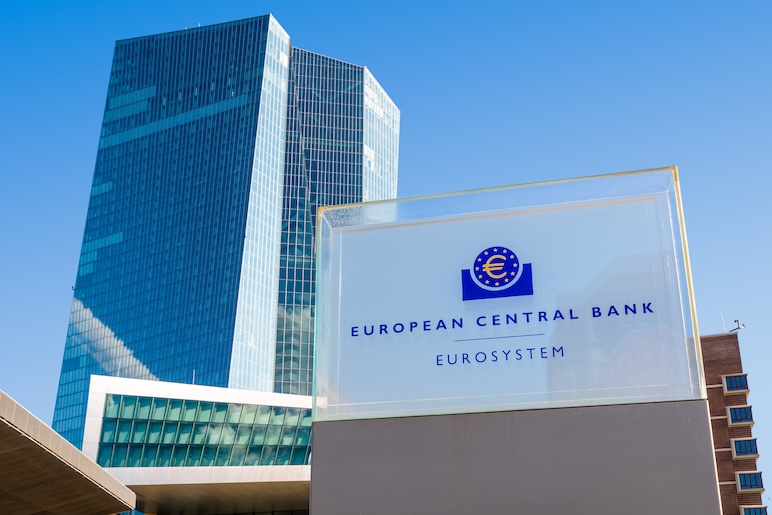
BERLIN — Households and businesses across the Eurozone face immediate increases in borrowing costs following a decision by the European Central Bank (ECB) to raise its primary deposit rate by 0.25 percentage points. The move brings the rate to 2.5%, the highest level since March 2025, directly increasing the cost of mortgages, corporate loans, and public financing.
The decision, announced Thursday, after a monetary policy meeting held in Berlin, marks the second rate hike this year. The ECB is acting to counter a resurgence of inflation driven by energy price shocks in the Middle East, despite acknowledging that the move creates downside risks for economic growth.
Related YouTube video


Energy Shocks and the $100 Barrel
The ECB's policy shift follows a period of volatility where a June hike was followed by a pause in July. The current return to tightening is tied to geopolitical instability in the Middle East, specifically hostilities between Washington and Tehran and the ongoing conflict between Saudi Arabia and Houthi rebels in Yemen.
These tensions have targeted critical energy choke points, specifically the Straits of Hormuz and Bab el-Mandeb. According to reporting by Le Soir and La Provence, Brent crude oil crossed the $100 per barrel threshold on Wednesday, for the first time since late July.
Because the Eurozone is heavily dependent on energy imports, these price spikes have a rapid transmission effect on the general economy. Inflation hit 3.3% in August, the highest level in three years, which is well above the ECB's 2% target.
The Mechanism of Second-Round Effects
The ECB is not merely reacting to the current cost of oil, but attempting to prevent a systemic cycle known as second-round effects. While core inflation — which excludes volatile energy and food prices, slowed slightly to 2.4% on an annual basis, the bank fears the energy shock will bleed into other sectors.
The mechanism is two-fold:
- Wage Demands: Workers, facing a loss of purchasing power due to energy costs, demand higher salaries.
- Price Pass-through: Companies, facing higher operational and energy costs, raise the prices of their goods and services to maintain margins.
By raising interest rates, the ECB intends to cool overall demand and restrict the ability of companies to continue increasing prices.
Growth Projections vs. Recession Warnings
The institution in Frankfurt believes the European economy has enough resilience to absorb these higher costs. This confidence is based on updated economic forecasts published Thursday.
| Metric | 2026 Forecast | 2027 Forecast | 2028 Forecast |
|---|---|---|---|
| GDP Growth | 0.9% (up from 0.8%) | 1.4% | 1.5% |
| Inflation | 3.0% | 2.5% (up from 2.3%) | Not specified |
The slight improvement in the growth forecast is attributed to the German economy, which performed better than expected in the first half of the year, according to Les Affaires and Le Dauphiné Libéré.
However, this outlook is contested by political figures. In France, Jean-Luc Mélenchon, a candidate for the 2027 presidency, stated via X that France is au bord de la récession économique
(on the edge of economic recession). He claimed the ECB is nous conduit dans le mur
(leading us into the wall) and has called for the cancellation of the portion of French debt held by the Banque de France.
Prospects for Further Tightening
The ECB's official communiqué states that:
"Les perspectives demeurent hautement incertaines et comportent des risques orientés à la hausse pour l’inflation et à la baisse pour la croissance économique"
ECB Communiqué, via Le Soir
This phrasing indicates that the bank has not finished its tightening cycle. Kamil Kovar of Moody’s Analytics noted that the probability of further monetary tightening has "increased significantly," even if energy prices stabilize from their current levels.
Frequently Asked Questions
Why does a conflict in the Middle East lead to higher mortgage rates in Europe?
Conflict in regions like the Straits of Hormuz drives up the price of Brent crude oil. This increases overall inflation. To stop this inflation from becoming permanent via wage-price spirals, the ECB raises interest rates, which increases the cost for banks to borrow, a cost that is then passed to consumers through higher mortgage and loan rates.
What is the difference between headline and core inflation in this context?
Headline inflation (3.3%) includes everything, including volatile energy and food prices. Core inflation (2.4%) strips those out. The ECB monitors core inflation to see if the energy shock is spreading into the broader economy.
The tension between the bank's mandate and national political pressure remains acute. The ECB maintains that its mandate is exercised independently of national political debates. President Christine Lagarde is expected to address the press on Thursday, where she may react to political attacks regarding the bank's independence and its impact on member states facing recessionary risks.
The Governing Council remains open to additional measures. As noted by Sud Ouest, the ECB believes that further rate increases will not excessively compromise economic activity. The immediate priority remains the press engagement with President Lagarde to defend the bank's independence amidst the ongoing political friction in member states.
Archypedia is dedicated to independent, evidence-backed reporting. This briefing was synthesized from primary source reporting, corroborated across independent newsrooms, and verified against our Editorial Standards.
Transparency record
Evidence behind this report
This report synthesizes 7 distinct sources. Open the source ledger below to compare the underlying coverage.
Prepared under the Archypedia Editorial Policy by the Elena Voss editorial desk profile. AI-assisted tools may support drafting and verification; public accountability remains with Archypedia. Report an error.