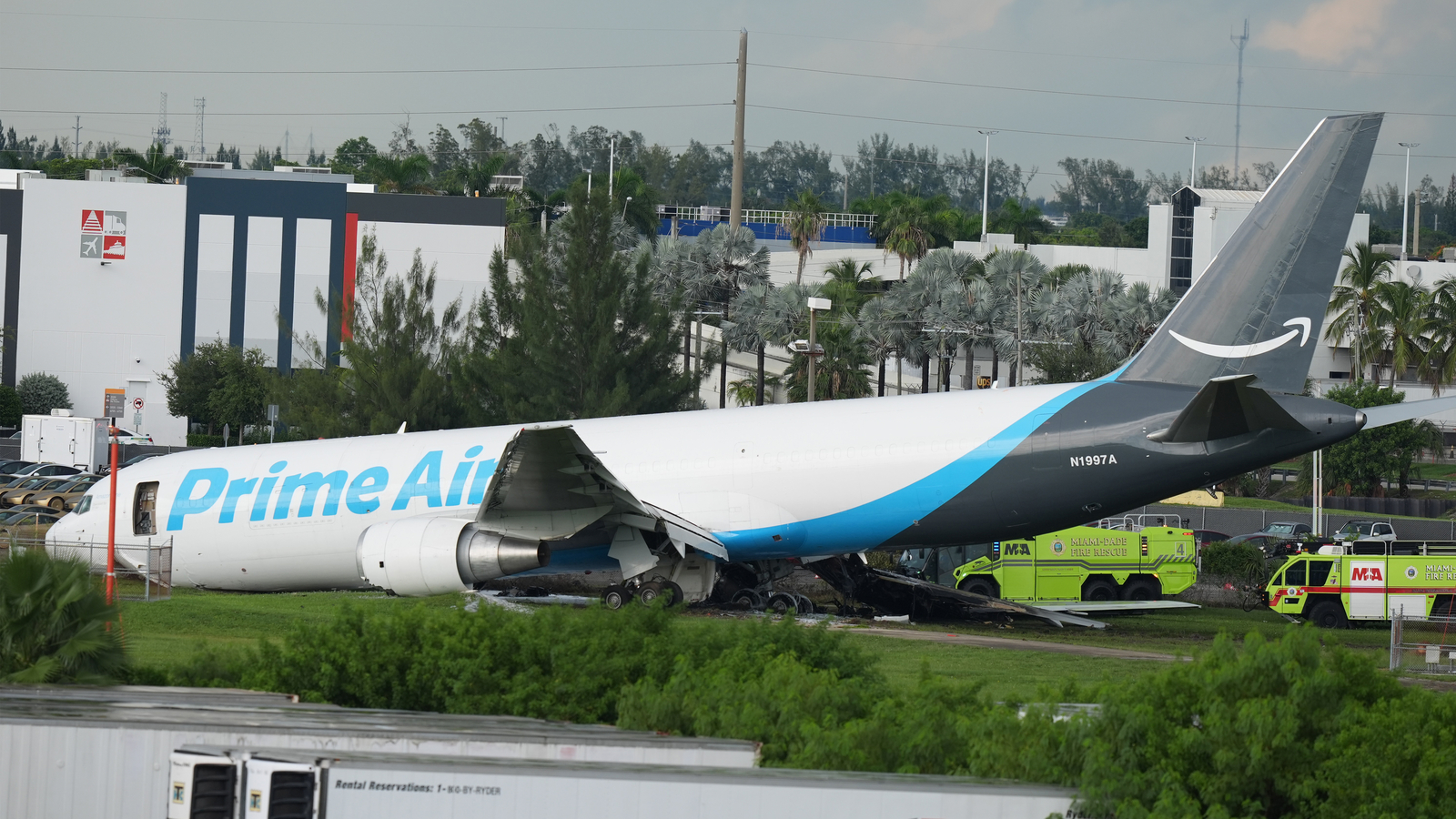
Amazon cargo plane crash at Miami airport kills five people
The Boeing 767-300F overran the runway and struck vehicles on Northwest 42nd Avenue, triggering a full FAA ground stop and over 160 flight cancellations.
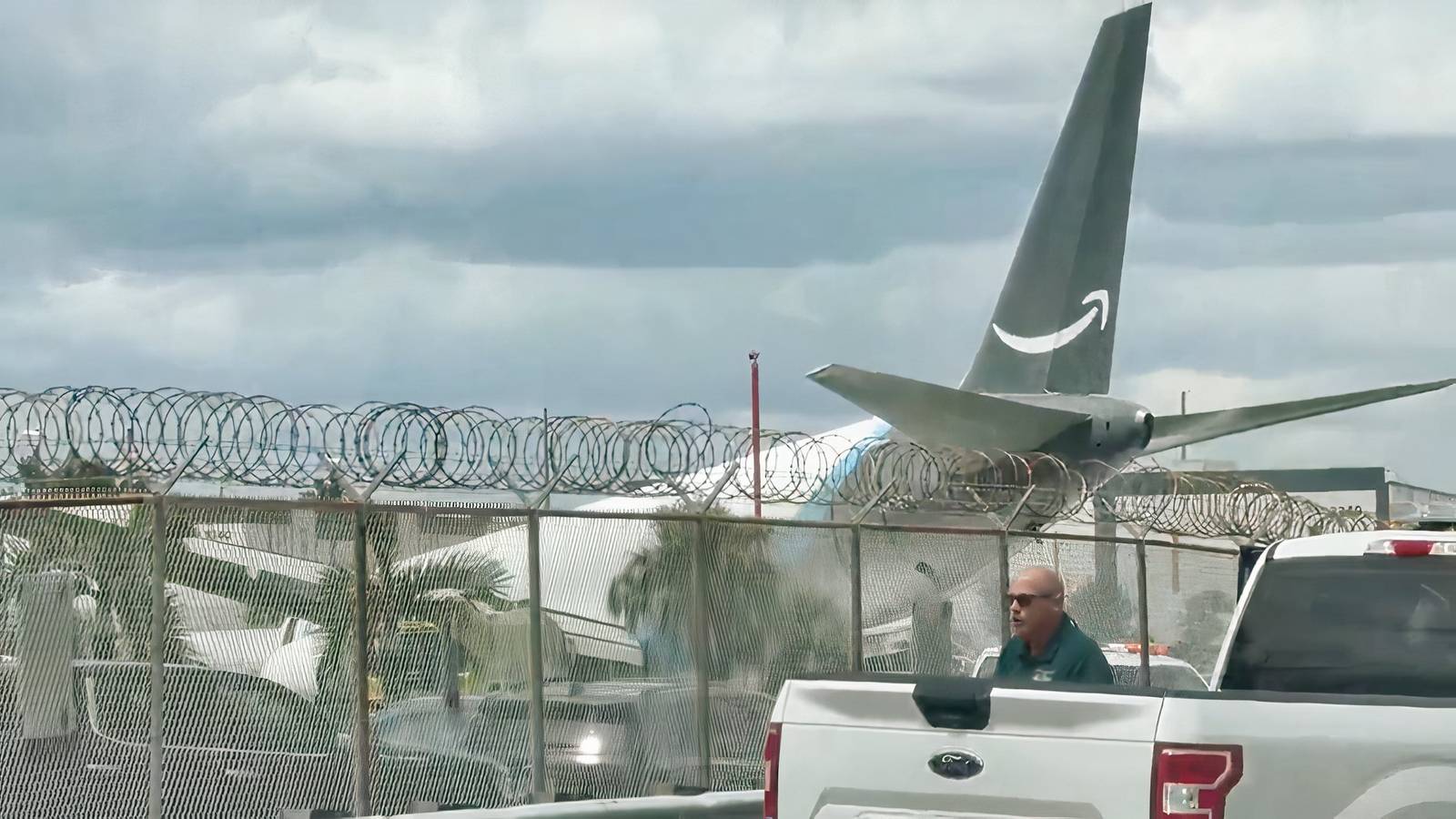
The Physics of the Overrun
Flight 7598 touched down on Runway 30 at 1:54 p.m. Local time, but preliminary data suggests the approach was dangerously fast. According to Simple Flying, the aircraft made contact with the runway at 196 mph (170 knots). For a Boeing 767-300F, normal landing speeds typically range between 135 and 140 knots. The aircraft maintained excessive momentum throughout the landing roll, traveling at approximately 130 mph (112 knots) as it overran the runway. Despite the high speed, air traffic control audio obtained by CNN reveals that the pilots declared no emergencies or aircraft issues before landing. The plane exited the airport perimeter and plowed across a road in the 2100 block of Northwest 42nd Avenue. Miami-Dade Fire Rescue reported that the aircraft struck multiple vehicles before coming to a rest on its belly in an adjacent field.Aircraft Profile and Operational Structure
The aircraft, registered as N1997A, represents a common but aging segment of the cargo fleet. Its history reflects a transition from commercial passenger service to specialized logistics.| Specification/Status | Detail |
|---|---|
| Aircraft Type | Boeing 767-300F |
| Airframe Age | 32 years |
| Conversion Date | 2015 (Passenger to Cargo) |
| Current Operator | 21 Air (Leased) |
| Branding | Amazon Prime Air |
Emergency Response and Hub Disruption
The crash triggered an immediate and massive emergency mobilization. More than 60 Miami-Dade Fire Rescue units responded to acomplexengine compartment fire that sent thick black smoke billowing into the sky. Firefighters used specialized airport foam units to suppress the flames and hazardous materials (HazMat) teams to mitigate an active fuel leak. Search and rescue efforts were divided between the cockpit, where the pilot and co-pilot were trapped, and the perimeter road, where motorists were pinned in their vehicles. The operational fallout for Miami International Airport was severe. The FAA implemented a full ground stop, a measure ibtimes reports is more typically reserved for severe weather than single-aircraft incidents.
| Disruption Metric | Number (as of Sunday evening) |
|---|---|
| Canceled Flights | 160+ |
| Delayed Flights | 324 (per FlightAware) / 250 (per Yahoo) |
| Emergency Personnel | ~200 |
Expert Interrogation: The 'Go-Around' Question
The central tension for investigators is why the crew attempted to land at 196 mph. Steve Arroyo, a retired United Airlines pilot, questioned via AP News why the pilots did not perform a "go-around", a standard global practice where a pilot aborts a landing if the aircraft is not positioned to touch down within the first 3,000 feet of the runway. Whether the high speed was caused by a mechanical failure, such as a problem with the flaps, or human error remains unverified. At the time of the crash, the National Weather Service recorded thunderstorms and wind gusts up to 30 mph in the area, adding a potential environmental variable to the inquiry. Amazon spokesperson Kelly Nantel stated the company isworking closely with local authorities and officials to understand exactly what happenedand expressed sympathy for the families of the five deceased. The National Transportation Safety Board has deployed a team led by Chairwoman Jennifer Homendy. The investigation now centers on the recovery and analysis of the cockpit voice recorder and flight data recorder to determine if the cause was mechanical, weather-related, or human error.
Casualty Assessment and Flight Path
The aircraft, identified as 21 Air Flight 7598, had departed Luis Muñoz Marín International Airport in San Juan, Puerto Rico, at 11:42 AST on Sunday, September 6, 2026. After approximately two hours of flight time, the jet touched down in Miami. While the final death toll reached five, officials initially struggled to categorize the victims. During a Sunday news conference, Miami officials stated it was too early to determine if those killed were on board the aircraft or inside the vehicles it struck. Of the five injured survivors, three were transported to a local trauma center in critical condition, according to reports from USA TODAY and AP News. The aftermath saw the aircraft resting on its belly near two semi-trucks. Despite the "complex" engine compartment fire, images show the fuselage remained largely intact. The scale of the disruption extended beyond Miami; the FAA ground stop affected departures at key hubs including Houston, Atlanta, and Washington. The investigation now moves toward technical forensics. Federal teams are tasked with examining the aircraft's braking systems, thrust reversers, and the specific decision-making process of the crew. According to Simple Flying, the next step involves the recovery and analysis of the cockpit voice recorder and flight data recorder to pinpoint whether the cause was mechanical failure or human error.
Editorial Standards & Verification
Archypedia is dedicated to independent, evidence-backed reporting. This briefing was synthesized from primary source reporting, corroborated across independent newsrooms, and verified against our Editorial Standards.
Sources analyzed:
apnews.com
cbsnews.com
usatoday.com
simpleflying.com
ibtimes.co.uk
southfloridareporter.com
yahoo.com
Transparency record
Evidence behind this report
This report synthesizes 7 distinct sources. Open the source ledger below to compare the underlying coverage.
- apnews.com
- cbsnews.com
- usatoday.com
- simpleflying.com
- ibtimes.co.uk
- southfloridareporter.com
- yahoo.com
Prepared under the Archypedia Editorial Policy by the Elena Voss editorial desk profile. AI-assisted tools may support drafting and verification; public accountability remains with Archypedia. Report an error.