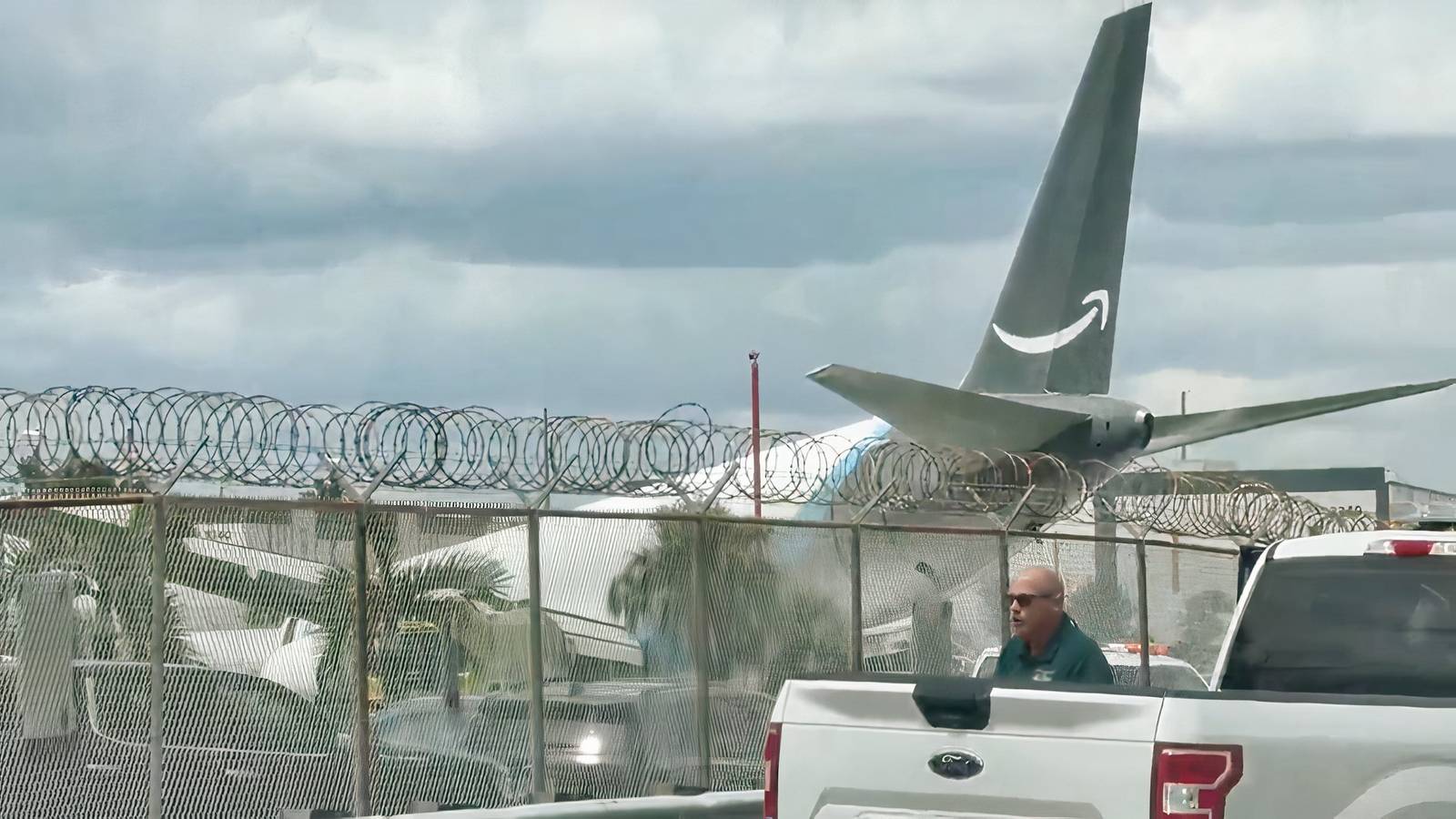
Federal investigators probe Amazon cargo jet's runway crash that killed 5 in Miami
A Boeing 767 operated by 21 Air plowed 1,300 feet past the runway end, striking a cleaning crew van and an SUV on a public road. Investigators are examining pilot performance and the airport's lack of an Engineered Materials Arrestor System.
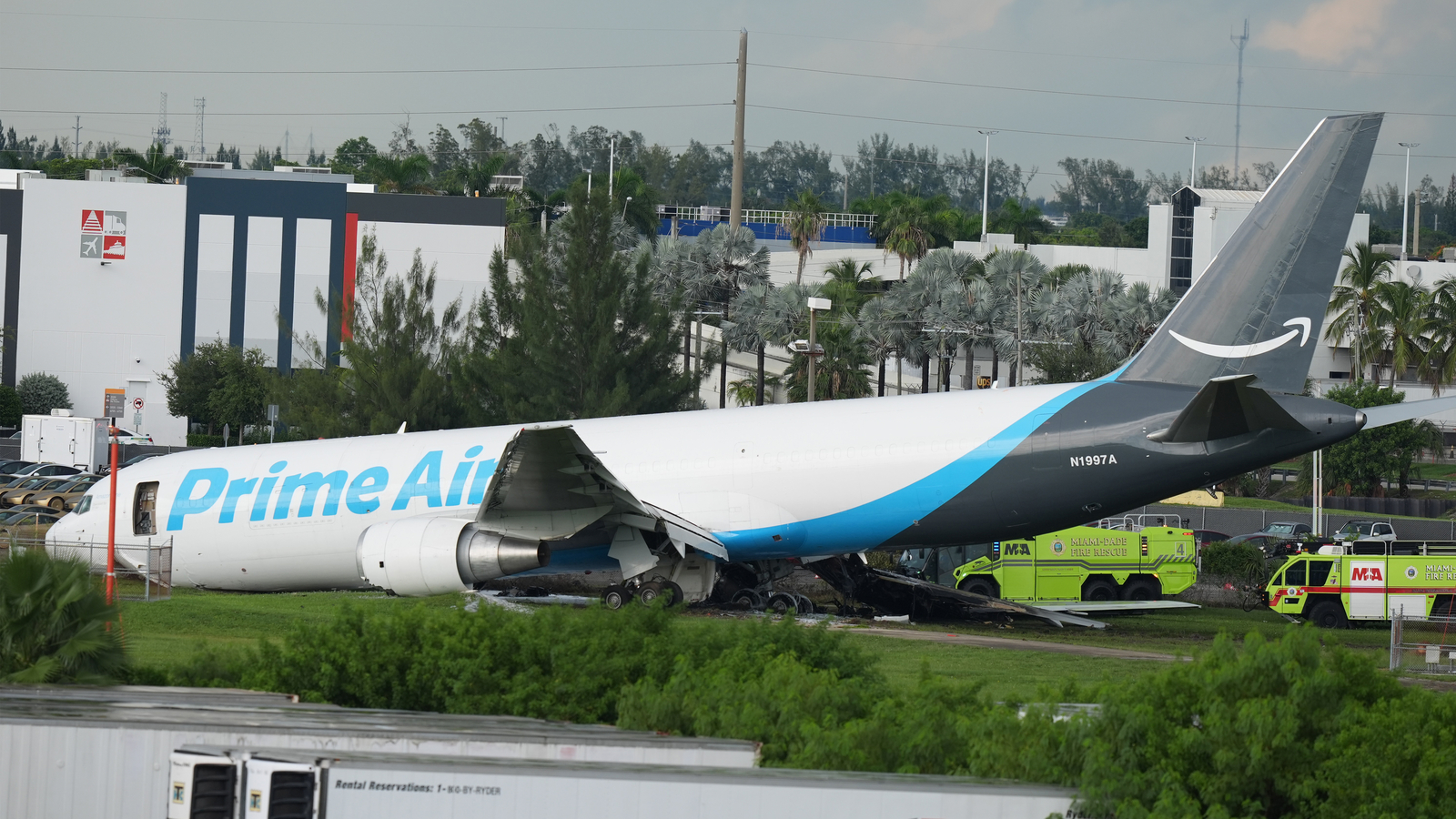
Regulatory Compliance vs. Physical Devastation
The scale of the overrun has sparked a debate over whether current safety buffers are sufficient for one of the world's busiest travel hubs. National Transportation Safety Board Chairwoman Jennifer Homendy described the scene asutter devastation, noting debris from navigational aids, vehicle airbags, and
fencing everywherealong the path of the aircraft. The crash highlights a specific infrastructure void: the absence of an Engineered Materials Arrestor System (EMAS). These beds of lightweight, crushable concrete are designed to safely stop aircraft that overshoot a runway. While the FAA reports that EMAS has been installed at more than 120 airports nationwide and has helped save at least 497 lives, MIA does not have the system. Former FAA director of airport safety and accident investigations Mike O'Donnell stated that MIA appears to be in compliance with current regulations because it maintains a 1,000-foot safety buffer at the end of its runways. However, Homendy indicated that the NTSB will investigate whether EMAS could have minimized the damage and if such systems should be required at every airport.
Flight Path and Pilot Performance
The Boeing 767-300 converted freighter was on its third leg of the day. The aircraft originated in Cincinnati, flew to Miami, proceeded to San Juan, Puerto Rico, and was returning to Miami when it overran Runway 30 around 2 p.m. On Sunday. Investigators are now focusing on whether the crew touched down too late to stop safely. Aviation safety expert Steve Arroyo noted that the typical landing zone is within the first 3,000 feet of a runway; if a plane exceeds that zone, pilots are expected to abort the landing and "go around." Mary Schiavo, a pilot and former Inspector General of the Transportation Department, observed that online video shows the plane floating above the runway for an extended period without flaring the nose upward. Schiavo suggested that strong winds or a tail wind may have contributed to this behavior, which would have depleted the available runway length.| Metric/Detail | Boeing 767 Incident Data |
|---|---|
| Overrun Distance | Approx. 1,300 feet (396 meters) |
| Aircraft Age | 32 years |
| Cargo Conversion Year | 2015 |
| Operator | 21 Air (on behalf of Amazon) |
| Fatalities | 5 |
Operational Paralysis and Chain of Responsibility
The crash caused immediate and lingering disruption to air travel in South Florida. Miami International Airport reported 160 cancellations and more than 300 delayed flights on Sunday, followed by another 69 cancellations by mid-afternoon Monday. Two of the airport's four runways remained closed as of Monday, as investigators required time to remediate fuel spills and safely access the aircraft. The NTSB is examining a wide chain of responsibility, including the contractual relationship between Amazon and 21 Air, as well as FAA oversight of cargo operators. A specific point of scrutiny will be the aircraft's maintenance history. Schiavo highlighted the plane's history of foreign ownership, including by a Russian company, as a factor for the NTSB to examine. Amazon stated it would cooperate with the investigation, adding that the company isheartbrokenby the loss of life.
Frequently Asked Questions
Who were the victims of the crash?
The five people killed were inside a van owned by Professional Ocean Service Corp., a contracted airline cleaning company, and a Toyota Corolla Cross SUV located outside airport property.
Related YouTube video


What is an EMAS and why is it relevant here?
An Engineered Materials Arrestor System is a bed of crushable material at the end of a runway designed to stop overshooting planes. MIA lacks this system, relying instead on a 1,000-foot safety buffer.
Was there a mechanical failure?
Investigators have not yet determined the cause, but they are reviewing flight data, voice recorders, and the aircraft's mechanical condition, alongside pilot performance and weather conditions.
Recovery and Forensic Timeline
The NTSB deployed a team of 32 people to the crash site on Monday, September 7, to collect evidence in an operation expected to last approximately one week. Beyond the recovery of flight recorders, investigators are documenting tire marks that extend from the pavement into the grass, as well as analyzing debris consisting of vehicle airbags and navigational equipment. According to Chairwoman Jennifer Homendy, access to the aircraft remained restricted on Monday because the site was not yet safe. Recovery teams must first remediate fuel spills across the area and remove remaining fuel from the aircraft itself. Homendy noted that while the NTSB aims to move swiftly to restore flight operations, the agency's priority is allowing families to be reunited with their loved ones. The investigation seeks to determine why the crew did not abandon the landing if the aircraft was beyond the normal touchdown zone. This inquiry follows other recent aviation tragedies, such as a UPS plane crash at Louisville’s Muhammad Ali International Airport last year, where an engine failure during acceleration killed 15 people, including three pilots. The NTSB will now analyze the recovered cockpit voice and flight data recorders at its Washington, D.C. Headquarters. This analysis represents the next step in the process, as the agency intends to publish a preliminary report on the aircraft's speed and flight data within 30 days.Archypedia is dedicated to independent, evidence-backed reporting. This briefing was synthesized from primary source reporting, corroborated across independent newsrooms, and verified against our Editorial Standards.
Transparency record
Evidence behind this report
This report synthesizes 4 distinct sources. Open the source ledger below to compare the underlying coverage.
Prepared under the Archypedia Editorial Policy by the Elena Voss editorial desk profile. AI-assisted tools may support drafting and verification; public accountability remains with Archypedia. Report an error.