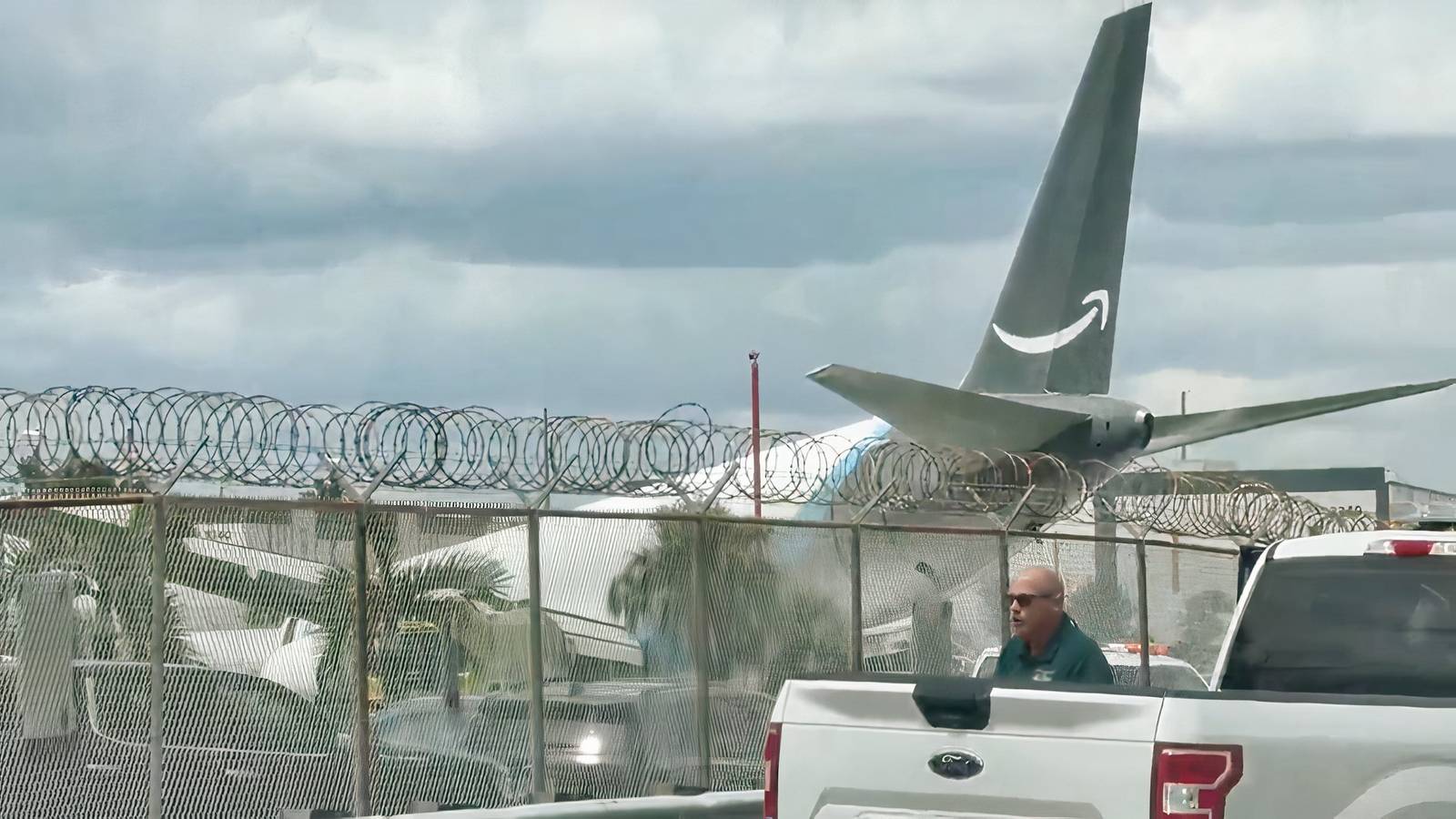
Amazon cargo jet crash: Voice, flight recorders recovered as investigation continues
The NTSB is analyzing flight recorders and the absence of an Engineered Materials Arresting System (EMAS) after a Boeing 767 plowed into vehicles on a public road.

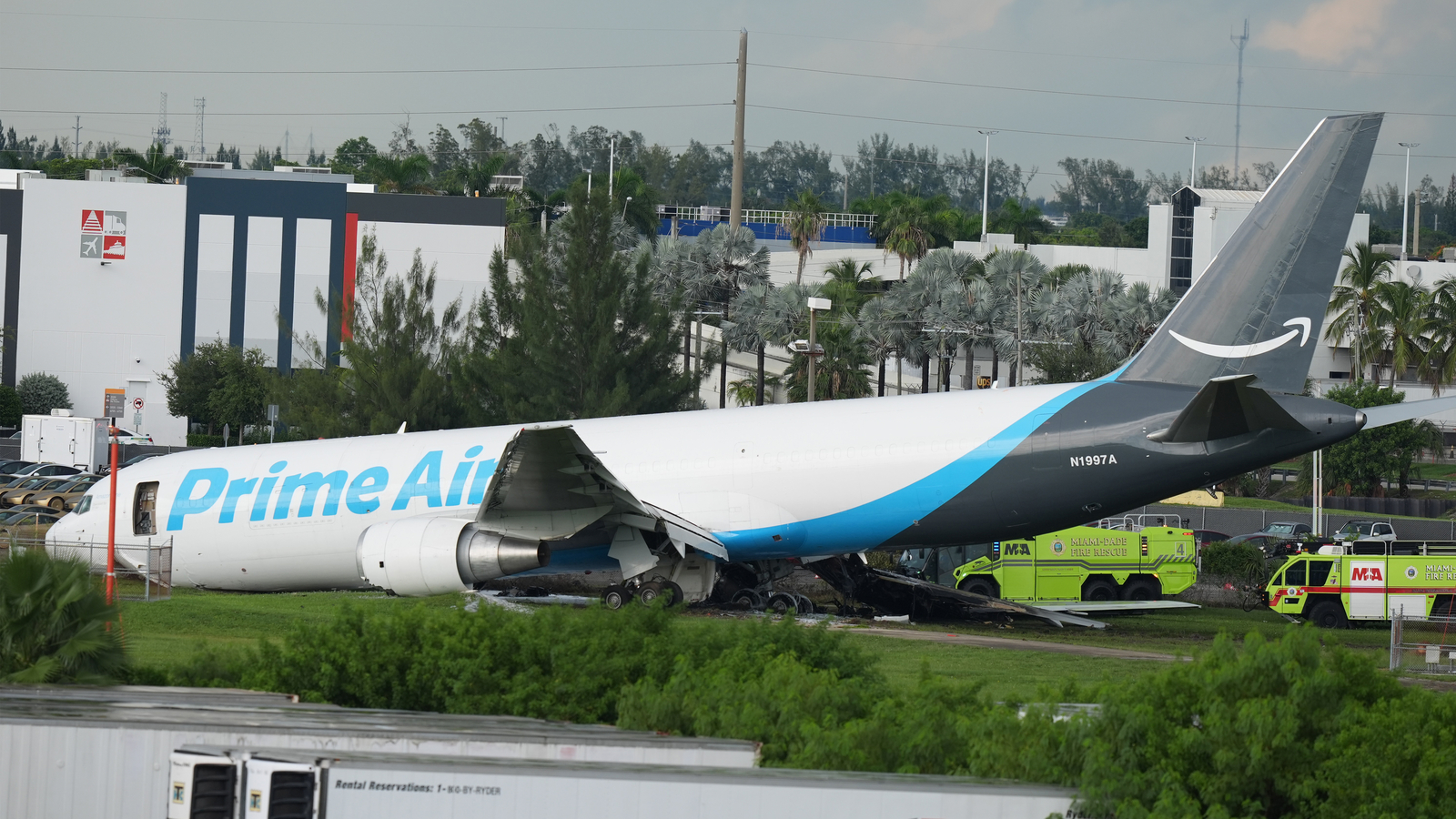
torn apartaccording to NTSB Chairwoman Jennifer Homendy. The crash killed five people, all of whom were inside the two struck vehicles. The Ford van was owned by Professional Ocean Service Corp., an airline cleaning contractor, and was carrying seven people at the time of the impact. The aircraft eventually came to rest on its belly beside a roadway near two semitrucks, having also breached a second fence line separating the site from a parking area for robotaxis.
The Infrastructure Debate: FAA Compliance vs. EMAS
A central focus of the NTSB investigation is whether the absence of an Engineered Materials Arresting System (EMAS) contributed to the death toll. EMAS consists of beds of lightweight, crushable material designed to decelerate aircraft that overshoot a runway. According to the FAA, these systems have been installed at more than 120 airports nationwide and are credited with saving at least 497 lives. Miami International Airport is not equipped with this system. Mike O'Donnell, former FAA director of airport safety and accident investigations, stated that the airport appears to be in compliance because it maintains a 1,000-foot (304-meter) safety buffer. This safety standard was established following the 1999 crash of American Airlines Flight 1420 in Arkansas, which killed nine people. However, Jennifer Homendy has identified the determination of whether EMAS should be required at every airport as akeypart of the current probe.
Technical Analysis of the Landing
Investigators are scrutinizing why the crew did not abort the landing. Aviation experts note that the typical touchdown zone ends at 3,000 feet (914 meters). If a plane exceeds this mark, safety expert Steve Arroyo said pilots should have gone around for another attempt. Mary Schiavo, a pilot and former Inspector General of the Transportation Department, observed that online video shows the aircraft floating above the runway for an extended period without flaring the nose upward to force the landing gear down. She noted that while it was not raining, strong winds were present. BBC Verify identified an active thunderstorm near the airport shortly before the crash, with wind gusts reaching 26 knots. Schiavo stated a tailwind could have increased the distance the plane floated down the runway. The aircraft's history is also under review. The 32-year-old Boeing 767, operated by North Carolina-based 21 Air LLC, was built in 1994 for passenger service and converted to cargo in 2015. Schiavo indicated that the NTSB will examine its maintenance records, specifically noting a history of foreign ownership, including a Russian company.| Metric/Detail | Data |
|---|---|
| Overshoot Distance | ~1,300 feet (396 meters) |
| Typical Touchdown Zone | First 3,000 feet (914 meters) |
| Aircraft Age | 32 years (Built 1994) |
| Flight Itinerary | Cincinnati → Miami → San Juan → Miami |
| Wind Gusts | Up to 26 knots |
Operational and Human Fallout
The crash occurred around 2 p.m. On Sunday, coinciding with the Labor Day holiday weekend. The resulting fire trapped the pilot and copilot in the cockpit and forced Miami-Dade Fire Rescue to extricate a person trapped under a vehicle. The disruption to business operations at the airport was immediate. Two of the four runways remained closed through Monday.- Sunday: 160 cancellations and more than 300 delayed flights.
- Monday: An additional 69 flights canceled through mid-afternoon.
Frequently Asked Questions
Who were the victims of the crash?
Five people were killed, all of whom were passengers in a cleaning contractor's van and an SUV struck outside airport property. Five others were seriously injured.
Related YouTube video


What is EMAS and why does it matter here?
Engineered Materials Arresting Systems are crushable materials at runway ends that stop overrunning planes. While Miami meets FAA standards with a 1,000-foot buffer, the NTSB is investigating if EMAS could have prevented the plane from reaching public roads.
What is the history of the aircraft?
The Boeing 767 was built in 1994, operated by 21 Air LLC for Amazon, and was converted from a passenger plane to a cargo jet in 2015. It has a history of foreign ownership, including by a Russian firm.
Archypedia is dedicated to independent, evidence-backed reporting. This briefing was synthesized from primary source reporting, corroborated across independent newsrooms, and verified against our Editorial Standards.
Transparency record
Evidence behind this report
This report synthesizes 7 distinct sources. Open the source ledger below to compare the underlying coverage.
Prepared under the Archypedia Editorial Policy by the Elena Voss editorial desk profile. AI-assisted tools may support drafting and verification; public accountability remains with Archypedia. Report an error.