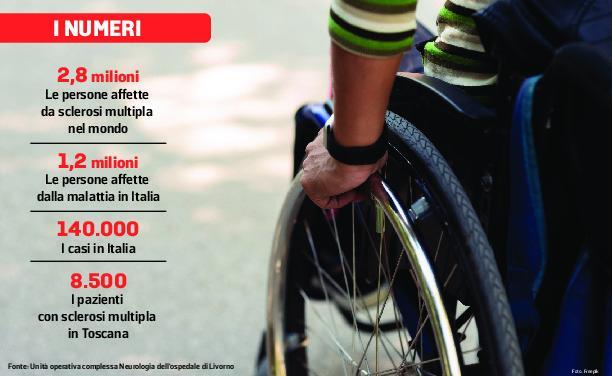
Nearly 150,000 people in Italy live with multiple sclerosis, a chronic autoimmune disease that attacks the central nervous system and disrupts communication between the brain, and body. Yet despite its prevalence, the disease remains poorly understood by the public—and its impact on daily life often underestimated. That’s changing, however, as new research and advocacy efforts in Italy are shifting the conversation from diagnosis to management, from stigma to support, and from uncertainty to action.
In the city of Livorno, for example, neurologists are diagnosing three new cases of multiple sclerosis every month—a rate that reflects a broader national trend. Meanwhile, the Italian Multiple Sclerosis Association (AISM) is pushing for greater awareness in Parliament, while researchers in Verona are investigating how fatigue, a near-universal symptom, may be silently eroding cognitive function in patients. These developments come as Italy marks World MS Day, a moment to reflect on progress and the challenges that remain.
The Growing Burden of Multiple Sclerosis in Italy
Multiple sclerosis affects roughly 1 in 1,000 people worldwide, but Italy’s rate is slightly higher, with an estimated 150,000 individuals diagnosed—a figure that has remained stable for years, though experts believe underdiagnosis persists, particularly in rural areas. The disease typically emerges between ages 20 and 40, and women are nearly twice as likely as men to develop it.
In Livorno, where three new diagnoses are confirmed monthly, neurologists say early detection is critical. “Today, You can monitor multiple sclerosis more effectively than ever before,” said one local specialist. “But the key is catching it early, before symptoms like vision problems, numbness, or fatigue become debilitating.” Advances in MRI technology and blood tests have improved diagnostic accuracy, though access to these tools varies across Italy’s regions.
Fatigue—a symptom reported by up to 90% of patients—is now the focus of a new research project led by Dr. Mohamed Aoui at the University of Verona. His team will analyze how chronic exhaustion may impair cognitive functions such as memory, attention, and problem-solving. Early findings suggest fatigue isn’t just a side effect but may actively accelerate neurological decline, though the exact mechanisms remain unclear.
Advocacy and Awareness: From the Clinic to the Capitol
The Italian Multiple Sclerosis Association (AISM) has taken its fight for better care and resources directly to the nation’s political leaders. At a recent briefing in Rome, AISM representatives met with lawmakers to discuss funding gaps, rehabilitation services, and the need for standardized treatment protocols across Italy’s fragmented healthcare system.
“We’re not just asking for more money,” said a spokesperson for AISM. “We’re asking for a system where every person with MS, regardless of where they live, has access to the same level of care.” The association is also pushing for greater public awareness, noting that many Italians still associate the disease with irreversible paralysis—a perception that delays diagnosis and treatment.
Public visibility campaigns, like the illumination of a Biella police station in blue (the color of MS awareness), aim to humanize the disease. “When people see the faces and hear the stories of those living with MS, they understand it’s not just a medical issue—it’s a social one,” the spokesperson added.
What’s Known—and What’s Still Uncertain
While Italy has made strides in MS research, significant gaps remain. Current treatments can slow disease progression and manage symptoms, but there is no cure. The role of fatigue in cognitive decline is one area where more data is needed. “We know fatigue is devastating, but we don’t yet know if targeting it can change the course of the disease,” said Dr. Aoui. His study, funded by a national research grant, will follow 200 patients over two years, tracking cognitive function alongside fatigue levels.
Other unanswered questions include why MS incidence appears to be rising in some regions, whether environmental factors like diet or pollution play a role, and how best to support patients as they age. “The goal isn’t just to extend life but to improve it,” said a neurologist involved in the Livorno clinic. “That means better access to physical therapy, mental health support, and workplace accommodations.”
A Call for Systemic Change
For now, Italy’s MS community is focused on three priorities: earlier diagnosis, more research funding, and equitable care. The Livorno clinic’s monthly diagnoses highlight the importance of local neurologists, while AISM’s advocacy efforts underscore the need for national policy changes. As Dr. Aoui’s study progresses, it may offer new insights into how fatigue—often dismissed as a minor symptom—could be a critical factor in MS progression.
One thing is clear: the conversation around multiple sclerosis in Italy is evolving. From the clinics of Livorno to the halls of Parliament, the message is the same: this disease can be managed, but only with better resources, research, and understanding.
