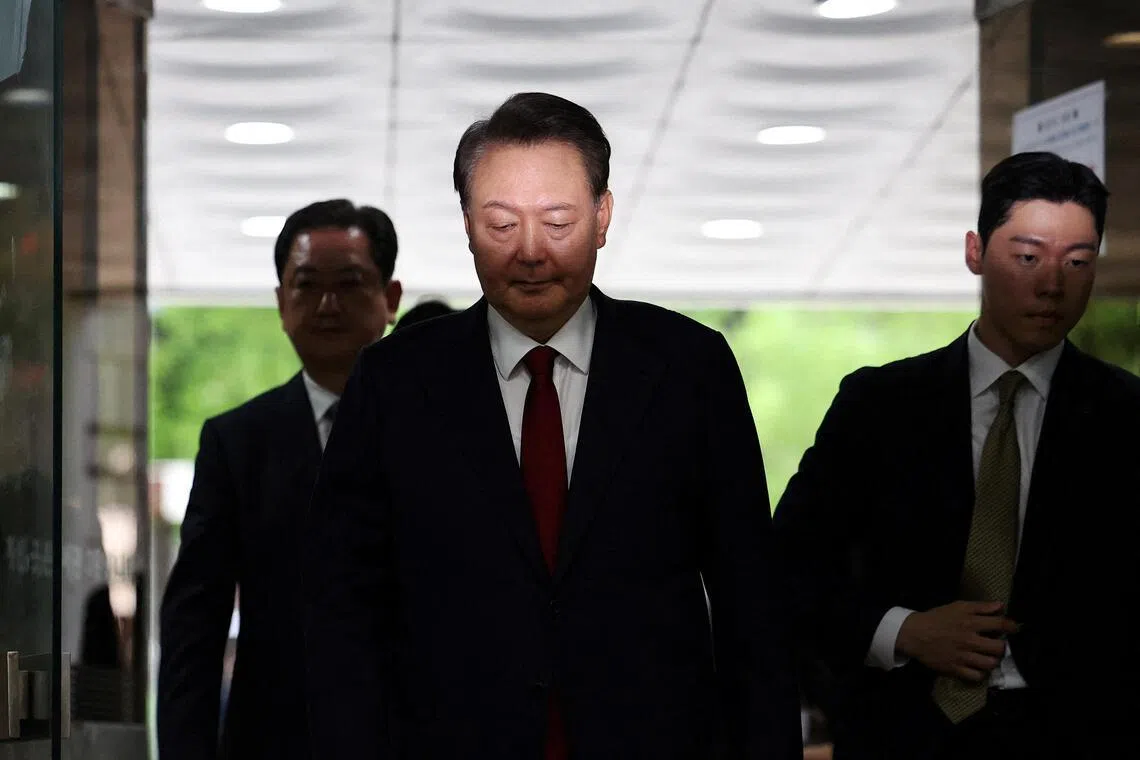
S. Korea ex-president jailed for North Korea drone incident – The Straits Times
A South Korean court sentenced former President Yoon Suk Yeol to 30 years in prison for orchestrating a drone incursion into North Korea. According to reports from Reuters, CNN, and the BBC, the sentencing follows a plot to send drones into Pyongyang. The New York Times reports that these incursions were not isolated provocations but part of a broader strategy to justify the imposition of martial law within South Korea.
Why was the former South Korean president sentenced to 30 years?
The court imposed a 30-year prison term on former President Yoon Suk Yeol specifically for his role in the Pyongyang drone plot. According to Reuters, the sentencing centers on the illegal authorization and execution of drone flights into North Korean airspace. CNN reports that the court found the former president responsible for the planning and deployment of these unmanned aerial vehicles (UAVs) into the capital of the North.
The legal proceedings focused on the breach of national security protocols and the risk of inciting a full-scale military conflict. The BBC notes that this 30-year term adds to the former leader’s existing legal troubles, characterizing the sentence as “30 more years” in the context of his ongoing incarceration. The court’s decision reflects the severity of using state assets to conduct unauthorized incursions into a hostile neighbor’s territory.
Key legal findings cited in the reports include:
- Unauthorized Incursion: The intentional flight of drones into Pyongyang without proper diplomatic or military clearance.
- Abuse of Power: The use of presidential authority to bypass standard chains of command.
- Endangerment of National Security: The creation of a high-risk environment that could have triggered a North Korean retaliatory strike.
How does the drone incident link to a martial law plot?
While the sentencing focuses on the drone incursions, The New York Times provides a critical layer of context regarding the motivation behind the flights. According to the report, the drones flown over North Korea were part of a calculated “martial law plot” designed to destabilize the domestic political environment in the South.
The theory presented in the reporting suggests that by creating a perceived security crisis or provoking a response from Pyongyang, the administration could justify the suspension of civil liberties and the imposition of martial law. This would have allowed the executive branch to seize greater control over the legislature and the judiciary, effectively bypassing democratic checks and balances.
“Drones Flown Over North Korea Were Part of Martial Law Plot in the South,” reports The New York Times.
This distinction is vital for understanding the case. It transforms the event from a failed intelligence operation or a military provocation into an attempted domestic coup. The drones were not merely tools for espionage; they were intended as catalysts for a political shift toward authoritarianism. By manufacturing an external threat, the administration sought to create the “emergency” conditions required under South Korean law to declare martial law.
What is the history of drone incursions between North and South Korea?
The incident involving the former president fits into a long-standing pattern of “drone warfare” on the peninsula. Both nations have frequently accused the other of using UAVs for surveillance and psychological warfare. Understanding this context helps explain why the court viewed the former president’s actions as so dangerous.
Historically, drones have been used for several purposes in the region:
- Intelligence Gathering: High-resolution photography of military installations and leadership compounds.
- Propaganda Distribution: Dropping leaflets or broadcasting messages over the border.
- Testing Defenses: Probing the radar and anti-aircraft capabilities of the opponent.
However, the case of S. Korea ex-president jailed for North Korea drone incident – The Straits Times is unique because the operation was allegedly designed to serve internal political goals rather than traditional national security objectives. In previous incursions, the South Korean government typically denied involvement or framed the flights as those of private civilian activists. In this instance, the court found a direct line of command leading back to the presidency.
Comparison of Outlets’ Framing
Different international news organizations have framed the sentencing with varying degrees of focus. A comparison of the reporting reveals a shift from the “act” to the “intent.”
| News Outlet | Primary Focus | Key Narrative Angle |
|---|---|---|
| Reuters / CNN | The Sentence | Focuses on the 30-year jail term and the legality of the drone incursion. |
| BBC | Cumulative Punishment | Highlights the “additional” nature of the sentence for the former president. |
| The New York Times | Political Motivation | Links the drones to a domestic plot to establish martial law. |
What are the legal implications for former South Korean presidents?
The sentencing of Yoon Suk Yeol continues a recurring trend in South Korean politics where former heads of state face imprisonment after leaving office. The South Korean judiciary has a history of prosecuting former presidents for corruption, abuse of power, and treason.
This pattern suggests a strong institutional commitment to the rule of law, regardless of the defendant’s former rank. However, the nature of the charges in this case—linking a military operation to a martial law plot—is significantly more severe than the financial corruption charges seen in previous administrations.
Legal analysts suggest that the 30-year sentence serves as a deterrent against the “weaponization” of national security. By punishing the former president so severely, the court is signaling that the use of military provocations to achieve domestic political power is a crime against the state itself.
For more on the legal framework of the region, see a related explainer on South Korean constitutional law.
Timeline of the Drone Incursion and Sentencing
The progression from the initial drone flights to the final court ruling followed a path of escalating investigations. While specific dates for every flight are often classified, the sequence of events is as follows:
- The Incursions: Drones are launched and detected in the airspace over Pyongyang.
- The Discovery: Intelligence agencies identify the drones as originating from the South, with evidence linking them to official state channels.
- The Investigation: Prosecutors uncover communications and orders that connect the flights to the president’s office.
- The Martial Law Link: Evidence emerges suggesting the incursions were timed to coincide with a plan to declare a state of emergency.
- The Trial: The former president is charged with abuse of power and endangering national security.
- The Sentencing: The court hands down a 30-year prison sentence.
How does this affect inter-Korean relations?
The revelation that a former South Korean president used drones to provoke the North for domestic political gain has complicated diplomatic efforts. Pyongyang has historically used any sign of South Korean aggression to justify its own military buildup and missile tests.

This incident provides North Korea with a narrative that the South is inherently aggressive and unstable. According to the context provided by the various reports, the plot potentially undermined the trust of international allies, including the United States, who rely on stability in the region to prevent a nuclear escalation.
The implications include:
- Increased Tension: North Korea may increase its own drone activity or artillery threats in response to the “plot.”
- Diplomatic Strain: The South Korean government must now distance itself from the former president’s actions to maintain credibility with Pyongyang.
- Internal Scrutiny: The South Korean military and intelligence services are likely facing internal audits to determine who followed the illegal orders.
Frequently Asked Questions
Why was former President Yoon Suk Yeol sentenced to 30 years?
According to Reuters and CNN, he was sentenced for orchestrating a plot to send drones into Pyongyang, North Korea, which the court ruled was an illegal incursion that endangered national security.
Was the drone incident related to anything other than North Korea?
Yes. The New York Times reports that the drone incursions were part of a larger plan to justify the imposition of martial law within South Korea, aiming to consolidate domestic power.
Is this a new sentence or an additional one?
The BBC reports that the former president received “30 more years,” indicating that this sentence is added to existing jail time he was already serving.
What was the purpose of the drones in Pyongyang?
While the drones performed incursions into North Korean airspace, the reporting from The New York Times suggests the primary goal was to create a security crisis that would allow the administration to declare martial law in the South.
Which news agencies reported on this case?
The story has been covered by major international outlets including Reuters, CNN, the BBC, The New York Times, and The Straits Times.
The broader impact on South Korean democracy
The intersection of military action and domestic political ambition in this case highlights a fragile point in democratic governance. The attempt to use an external enemy as a pretext for internal control is a tactic seen in various authoritarian transitions globally. By prosecuting the former president, the South Korean judicial system is attempting to close a loophole where “national security” can be used as a shield for illegal power grabs.
The 30-year sentence is not just a punishment for a drone flight; it is a rejection of the logic that a manufactured crisis justifies the suspension of the constitution. As the legal process concludes, the focus shifts to how the South Korean state will reform its command-and-control structures to ensure that the military cannot be used for the personal political gain of a sitting president.
For further context on regional stability, consider a related explainer on the DMZ security protocols.
