
Beneath a Burning Sky: Everyone Feels Heat, but Informal Workers Pay the Highest Price
When the mercury climbs to oppressive levels across Bangladesh, the heat is a universal experience, but it is far from a universal burden. While the affluent retreat into the sterile chill of air-conditioned offices and homes, a vast segment of the population remains exposed to the elements. For the millions of informal workers who fuel the economy—the rickshaw pullers, street vendors, construction laborers, and day laborers—extreme heat is not merely an inconvenience; it is a direct threat to their health and their primary source of income.
The phenomenon of the “burning sky” describes a growing climatic trend where heatwaves are becoming more frequent, intense, and prolonged. In urban centers like Dhaka, this is exacerbated by the urban heat island effect, where concrete jungles trap heat, leaving the city streets shimmering with warmth long after the sun has set. While the entire population feels the temperature rise, the economic and physical toll is distributed unevenly, creating a stark “cooling divide” that mirrors the country’s socio-economic disparities.
The Economic Toll of Extreme Heat on Daily Wage Earners
For those in the informal sector, the ability to earn is inextricably linked to the ability to endure. Unlike salaried employees who can work in climate-controlled environments, daily wage workers are tethered to the outdoors. When temperatures reach critical thresholds, the streets of Dhaka often fall unnervingly quiet. This silence is not a sign of peace, but of economic paralysis.
Extreme heat forces a brutal calculation upon the urban poor: risk heatstroke and dehydration to earn a meager daily wage, or stay indoors to survive, thereby sacrificing the money needed for food and shelter. For a rickshaw puller, a midday peak in temperature can lead to a significant drop in passengers, as commuters opt for air-conditioned ride-sharing services or simply avoid traveling. For construction workers, the physical exertion required for their labor becomes dangerous under a relentless sun, leading to reduced productivity or forced breaks that cut into their take-home pay.
| Worker Category | Primary Heat Exposure | Economic Impact of Heatwaves |
|---|---|---|
| Rickshaw Pullers | Direct sun, asphalt radiation | Reduced passenger demand; physical exhaustion |
| Street Vendors | Open-air stalls, lack of shade | Perishable goods spoil faster; lower foot traffic |
| Construction Labor | Concrete surfaces, heavy lifting | Reduced working hours; increased health risks |
| Day Laborers | Variable outdoor sites | Loss of daily wages during peak heat hours |
This loss of income creates a vicious cycle. As earnings drop, these workers are less able to afford the incredibly things that could mitigate the heat—such as nutritious food, clean drinking water, and better quality clothing—making them even more vulnerable to the next heatwave.
Too Hot to Learn: The Impact on Childhood and Education
The crisis of the burning sky extends beyond the workforce, casting a long shadow over the next generation. Children are biologically more susceptible to heat stress than adults, yet they are often expected to navigate the same oppressive environments. In many parts of Bangladesh, the infrastructure of childhood—schools, playgrounds, and homes—is not equipped to handle extreme temperature spikes.
When classrooms become ovens, the capacity for learning evaporates. High temperatures are linked to decreased cognitive function and reduced concentration, making it nearly impossible for students to focus on lessons. In many cases, the heat becomes so unbearable that attendance drops, or schools are forced to adjust their timings, disrupting the academic calendar.
Beyond the classroom, the simple act of play—essential for physical and social development—is being reshaped. Parks and open spaces, once the domain of childhood energy, become hazardous during peak hours. This restriction of movement and activity can lead to a sedentary lifestyle and a loss of the developmental benefits associated with outdoor play, effectively trapping children indoors in homes that may lack adequate ventilation.
“Extreme heat does not just affect the body; it reshapes the rhythm of life. When the environment becomes hostile, the most basic activities—learning, playing, and earning—become acts of endurance.”
The Cooling Divide: From Ceiling Fans to Air Conditioning
As heatwaves transition from occasional anomalies to seasonal certainties, cooling has shifted from a luxury to a necessity. However, the means of achieving this cooling are sharply divided along class lines. This “cooling divide” illustrates the gap between those who can buy their way out of the heat and those who must simply endure it.
The Struggle for Basic Ventilation
For the majority of the urban poor, a ceiling fan is the primary defense against the heat. However, during extreme heatwaves, fans often simply circulate hot air, providing little relief. The increased reliance on fans leads to higher electricity bills and puts a strain on an already fragile power grid, leading to frequent load-shedding. When the power goes out during a heatwave, the impact is felt most acutely in crowded tenements and tin-roofed shacks where ventilation is minimal.
The Rise of Air Conditioning
Conversely, there is a growing trend toward air conditioning (AC) among the middle and upper classes. While ACs provide immediate relief, they create a paradoxical effect. AC units expel heat into the street, contributing to the warming of the surrounding urban environment. This means that the cooling of a private interior often comes at the cost of increasing the temperature for the workers standing just outside the window.
The transition from fans to ACs also signals a shift in societal expectations. What was once considered an extravagance is now seen as a requirement for productivity and health. Yet, the high cost of purchase and the ongoing electricity expense ensure that this protection remains out of reach for those who need it most.
Urban Heat Islands and the Geography of Vulnerability
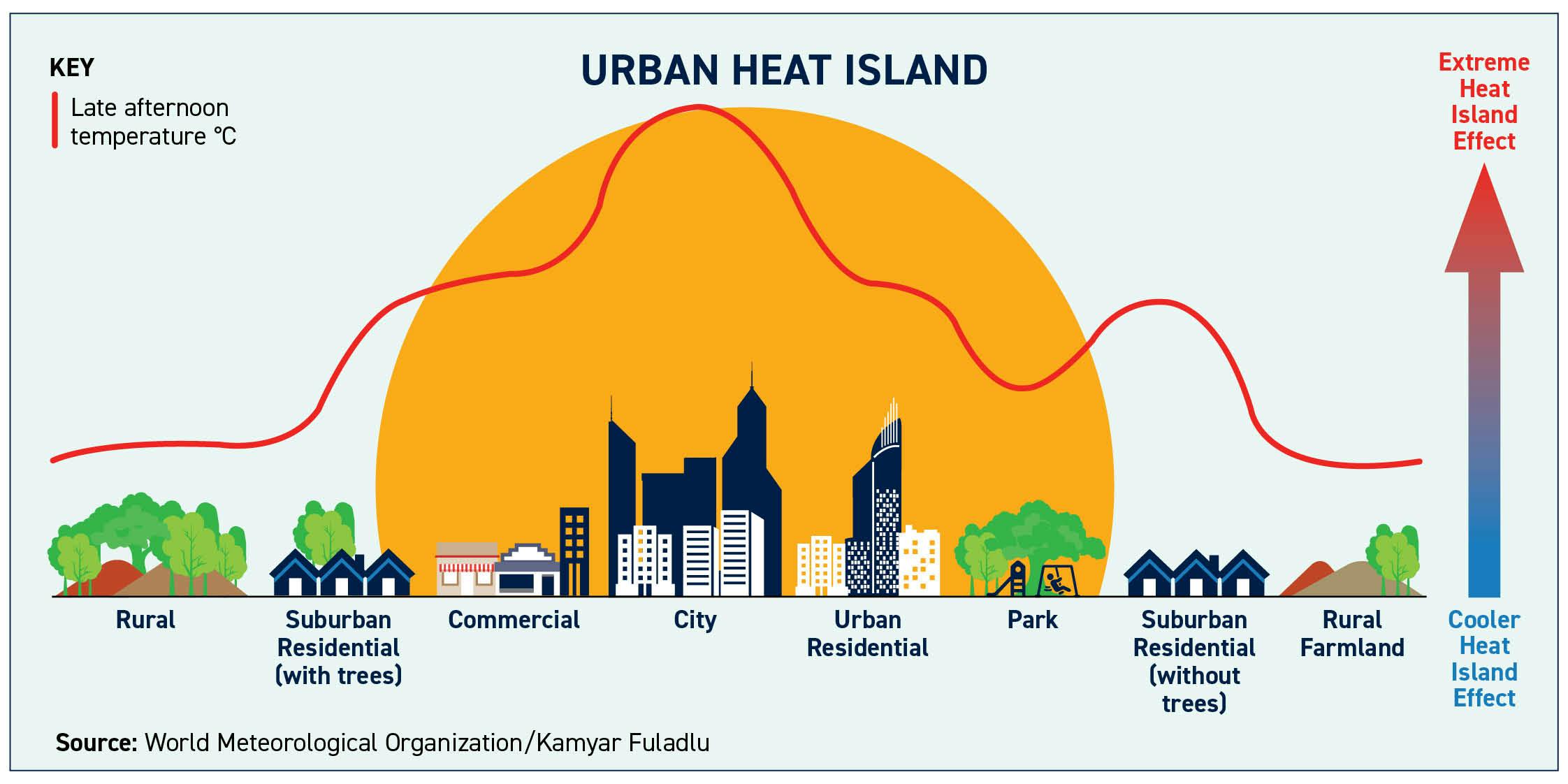
The intensity of the heat is not uniform across the city. The “Urban Heat Island” (UHI) effect describes how urban areas experience higher temperatures than surrounding rural areas. In Dhaka, this is driven by several factors:
- Loss of Green Space: The rapid conversion of wetlands and forests into residential and commercial blocks has removed the natural cooling effect of transpiration.
- Concrete and Asphalt: These materials absorb solar radiation during the day and release it slowly at night, preventing the city from cooling down.
- High Population Density: The sheer concentration of people, vehicles, and electronics generates significant anthropogenic heat.
The geography of vulnerability means that the poorest residents often live in the “hottest” parts of the city. Slums and informal settlements are frequently characterized by high-density housing with tin roofs, which act as heat traps. These areas often lack the tree cover found in wealthier neighborhoods, leaving residents with no natural shade and no way to escape the radiating heat of their own homes.
For a deeper understanding of how urban planning affects climate resilience, see our related explainer on sustainable urban development.
Systemic Risks and the Need for Adaptation
The current approach to heatwaves is largely reactive—treating heatstroke in hospitals or announcing school closures after the temperature has already peaked. However, the recurring nature of these events suggests a need for systemic, structural adaptation.
Health Implications
Heat-related illnesses are not limited to heatstroke. Prolonged exposure to extreme heat leads to chronic dehydration, kidney stress, and the exacerbation of cardiovascular conditions. For informal workers, these health issues are often ignored until they become debilitating, as seeking medical help often means losing a day’s pay.
The Lack of a Social Safety Net
One of the most critical gaps in the response to extreme heat is the absence of a social safety net for outdoor workers. There are currently few institutional protections that guarantee a minimum income or provide “heat breaks” for those in the informal sector. Without a mechanism to compensate for lost earnings during extreme weather, the most vulnerable are forced to choose between their health and their survival.
To address this, experts suggest several interventions:
- Urban Greening: Massive reforestation and the creation of “cool roofs” (using reflective paint) to reduce the UHI effect.
- Public Cooling Centers: Establishing accessible, free cooling stations in high-traffic areas for workers and pedestrians.
- Labor Protections: Implementing guidelines that mandate breaks and hydration for outdoor laborers during peak heat hours.
- Infrastructure Reform: Improving the ventilation and building materials of low-income housing to reduce indoor heat trapping.
Addressing Common Misconceptions
There is a common misconception that heatwaves are simply “part of the summer” and that the population is naturally adapted to the climate. While it is true that Bangladesh is a tropical country, the intensity and duration of recent heatwaves exceed historical norms. The human body has limits to its thermoregulation, and those limits are being pushed further every year.
Another oversimplification is the belief that providing more fans will solve the problem. As mentioned, in extreme humidity and high temperatures, fans can actually increase heat stress by blowing hot air across the skin without allowing for effective evaporative cooling (sweating). The solution requires a transition toward passive cooling architecture and systemic urban changes, not just more electronic appliances.
For more on how climate change is altering weather patterns in South Asia, explore our analysis of regional climate shifts.
Frequently Asked Questions
Who is most affected by extreme heatwaves in Bangladesh?
While everyone feels the heat, informal workers—such as rickshaw pullers, construction laborers, and street vendors—are the most affected. They lack access to climate-controlled environments and rely on outdoor labor for their daily income, making them vulnerable to both health risks and economic loss.
How does extreme heat impact the earnings of daily wage workers?
Extreme heat often leads to a decrease in demand for outdoor services (like rickshaws) and forces laborers to take frequent breaks or stop working entirely during peak hours to avoid heatstroke. Since they are paid by the day or by the task, any reduction in working hours results in a direct loss of income.
Why is the heat more intense in cities like Dhaka?
This is due to the Urban Heat Island effect. The prevalence of concrete, asphalt, and high-density buildings traps heat, while the lack of trees and water bodies removes natural cooling mechanisms. This makes urban centers significantly hotter than surrounding rural areas.
How does extreme heat affect children’s education?
Extreme heat can lead to decreased concentration and cognitive fatigue in students. In severe cases, it leads to higher absenteeism and the disruption of school schedules, as classrooms without proper cooling become unsuitable for learning.
What is the “cooling divide”?
The cooling divide refers to the socio-economic gap in access to temperature control. Wealthier individuals can afford air conditioning to escape the heat, while the poor rely on inadequate ventilation or fans, often living in housing that traps heat, thereby deepening the inequality of climate impact.
