
Balenciaga Resort 2027: ‘Unsize’ Fits All – WWD
Balenciaga has introduced an “Unsize” approach for its Resort 2027 collection, according to WWD. The initiative moves away from conventional sizing labels to create garments designed for a wider spectrum of body types, challenging the luxury industry’s reliance on standardized measurements and traditional fit categories.
What is the “Unsize” concept in Balenciaga Resort 2027?
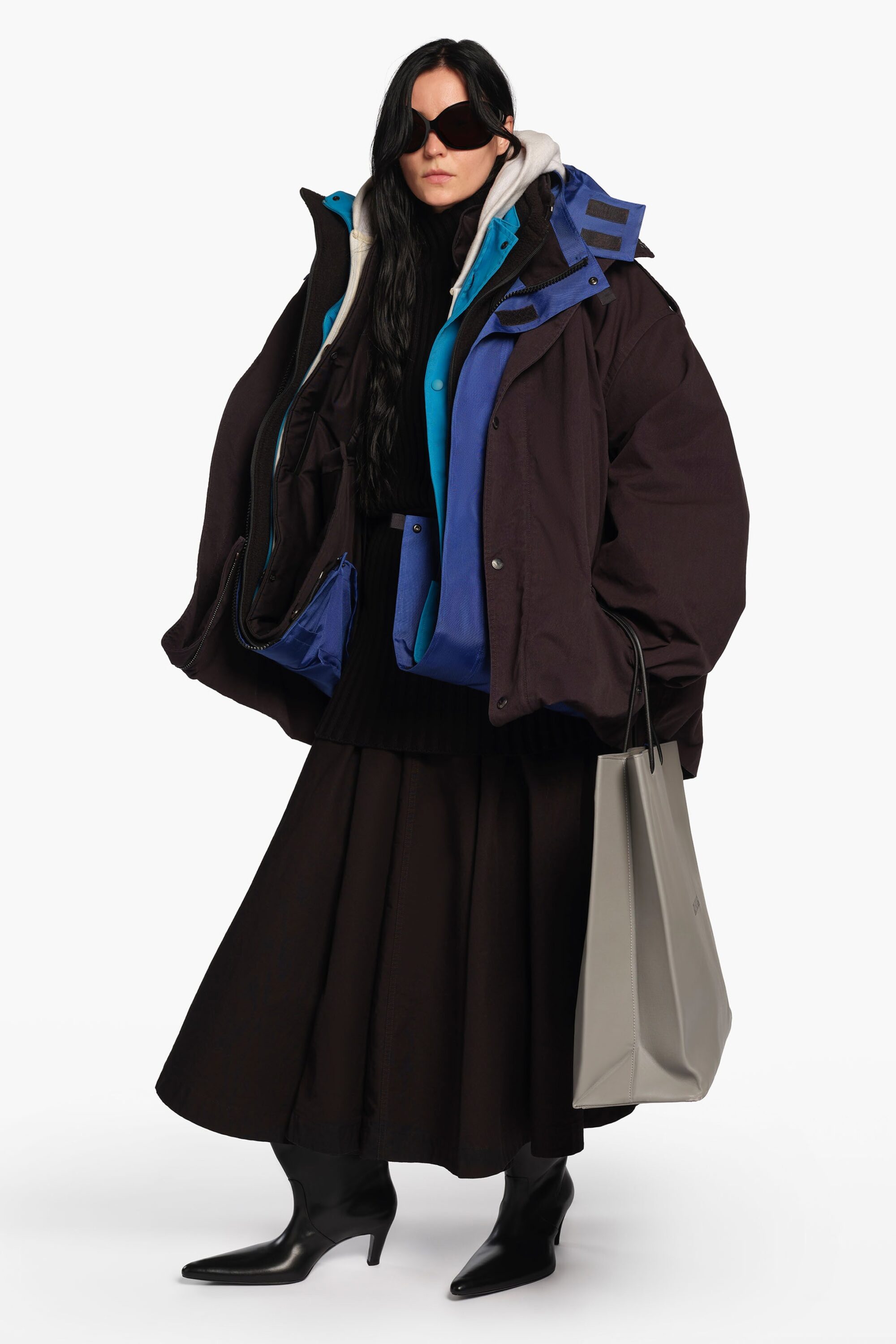
The “Unsize” philosophy, as detailed in reports regarding the Balenciaga Resort 2027 collection, represents a departure from the traditional S/M/L/XL sizing grid. Rather than fitting a garment to a specific numerical size, the brand is designing pieces that accommodate a variety of proportions through architectural volume and adaptive tailoring. According to WWD, this move seeks to decouple the garment from the restrictive nature of standard size charts.
This is not the same as “oversized” fashion, a trend Balenciaga has championed for years. While oversized clothing uses a larger-than-average cut for a specific size, “Unsize” aims to eliminate the size category itself. The goal is to create a silhouette that maintains its intended aesthetic regardless of the wearer’s specific measurements.
Key technical elements of the “Unsize” approach include:
- Adaptive Volume: Using fabric draping and structural folds that expand or contract based on the body.
- Adjustable Hardware: Incorporating hidden ties, oversized buttons, and versatile closures.
- Proportional Scaling: Designing garments that prioritize the overall silhouette over precise anatomical fit.
Why is Balenciaga moving away from traditional sizing?
The decision to implement “Unsize” fits into a broader industry conversation about inclusivity and sustainability. Standardized sizing is a relic of industrial mass production that often excludes bodies that do not fit a narrow mathematical average. By removing these labels, Balenciaga is attempting to remove the psychological and physical barriers associated with luxury clothing.
According to industry analysis, the move addresses several systemic issues in high fashion:
The Psychology of the Label
Size labels often carry social weight. By removing them, the brand shifts the focus from the consumer’s body size to the garment’s design. This aligns with a growing consumer demand for “body neutrality,” where the focus is on what the body can do or how it feels in clothing, rather than how it fits into a predefined category.
Reducing Inventory Waste
From a commercial standpoint, traditional sizing creates immense waste. Brands must produce multiple versions of the same garment (SKUs) to cover all size ranges. If a “Small” sells out but “Extra Large” remains in stock, the unsold inventory often ends up in warehouses or landfills. An “Unsize” model potentially reduces the number of unique SKUs required per style, streamlining production and reducing overstock.
Improving the E-commerce Experience
Fit is the primary reason for returns in online luxury shopping. When a customer orders a size 42 that doesn’t fit, the return process creates a significant carbon footprint and operational cost. Garments designed to fit a broader range of bodies inherently lower the risk of size-related returns.
How does “Unsize” differ from “One Size Fits All”?
While “One Size Fits All” (OSFA) is a common retail term, the “Unsize” concept is a more sophisticated architectural approach to clothing. OSFA typically relies on stretchy fabrics (like spandex or jersey) or very loose, shapeless cuts that often fit no one perfectly. “Unsize,” according to the design direction of Resort 2027, relies on tailoring and structure.
| Feature | One Size Fits All (OSFA) | Balenciaga “Unsize” |
|---|---|---|
| Mechanism | Elasticity or extreme looseness. | Architectural volume and adaptive tailoring. |
| Aesthetic | Often shapeless or generic. | Intentional, high-fashion silhouettes. |
| Fit Logic | Stretches to fit the body. | Body inhabits the garment’s structure. |
| Industry Use | Fast fashion, basics, accessories. | Avant-garde luxury, couture-inspired. |
The role of Demna in reshaping luxury silhouettes
Creative Director Demna has a documented history of challenging the “ideal” body in fashion. Since taking the helm at Balenciaga, he has consistently played with proportions, introducing extreme shoulder pads, cocoon coats, and exaggerated footwear. The “Unsize” initiative is a logical progression of this trajectory.
Demna’s work often draws from “non-fashion” sources—workwear, sportswear, and utilitarian clothing. These categories already utilize a degree of adjustable fitting (such as drawstring waists or oversized cargo pockets). By applying these utilitarian concepts to luxury fabrics and couture techniques, Demna is questioning why luxury must be synonymous with restrictive, precise fitting.
Critics and fashion historians note that this approach mirrors the work of Cristóbal Balenciaga, the house’s founder. The original Balenciaga was famous for creating “volume” that stood away from the body, such as the sack dress and the balloon jacket. Demna is essentially updating the founder’s obsession with volume for a modern era focused on inclusivity.
Potential challenges and industry reactions
Despite the ideological appeal of “Unsize,” the transition presents significant hurdles. Luxury consumers often pay a premium for the “perfect fit,” which has historically been the hallmark of high-end tailoring. Removing the size guide may alienate traditionalists who view precision as the essence of luxury.
The Fit Paradox
A garment that fits “everyone” may risk fitting “no one” specifically. There is a tension between the desire for inclusivity and the desire for a tailored look. If a jacket is designed to fit a range of sizes, it may lack the sharp lines required for certain formal aesthetics. The success of the Resort 2027 collection depends on whether Balenciaga can maintain its high-fashion edge while sacrificing precise measurements.
Manufacturing Complexity
Creating a garment that looks intentional on both a size 2 and a size 22 requires more complex pattern-making than traditional grading. Grading is the process of scaling a pattern up or down. “Unsize” requires a “universal pattern” that accounts for different body distributions (e.g., different waist-to-hip ratios) without looking baggy or ill-fitting.
Industry insiders suggest that this could lead to a new form of “modular luxury,” where garments are sold with adjustable components that allow the wearer to customize the fit at home, blending the line between ready-to-wear and made-to-measure.
Broader implications for the fashion economy
If Balenciaga’s “Unsize” model proves commercially viable, it could trigger a shift in how other luxury houses approach production. The current fashion cycle is built on the assumption of a “standard” body, which leads to significant inefficiency.
Potential long-term impacts include:
- Shift in Retail Space: Stores may require fewer racks for the same style, allowing for more curated, gallery-like displays.
- New Sizing Standards: The industry might move toward “Fit Profiles” (e.g., Volume-Heavy, Linear, Curved) rather than numerical sizes.
- Sustainable Scaling: A reduction in the total number of garments produced due to a decrease in size-specific overproduction.
For more context on how luxury brands are evolving, see this related explainer on sustainable luxury manufacturing.
Common misconceptions about the “Unsize” movement
There are several misunderstandings regarding what Balenciaga is attempting with the Resort 2027 collection. Clarifying these is essential for understanding the news.
Misconception 1: It is just “oversized” clothing.
Oversized clothing is a style choice where a garment is intentionally too big. “Unsize” is a systemic change in how clothing is categorized and sold. One is about the look; the other is about the logic of the fit.
Misconception 2: It means all clothes are the same size.
The collection likely still includes different “volumes” or “shapes,” but it removes the traditional labeling system that tells a consumer they “are” a certain size. It is about removing the label, not necessarily removing all variation in garment dimensions.
Misconception 3: It is a move toward “fast fashion” simplicity.
On the contrary, creating a garment that fits a wide range of bodies while remaining high-fashion requires more advanced engineering and higher-quality materials than standard mass-market sizing.
What to monitor in the coming months
The true test of the “Unsize” concept will occur during the retail rollout of the Resort 2027 collection. Analysts will be watching several key metrics to determine if this is a lasting shift or a conceptual stunt.
First, the return rate for “Unsize” pieces compared to traditional sized pieces will provide data on whether the adaptive fit actually works for the consumer. Second, the reaction from luxury buyers—who are often the most demanding regarding fit—will indicate if the market is ready to abandon the security of a size label.
Additionally, the impact on the secondary market (resale) will be telling. Resale platforms like Vestiaire Collective or The RealReal rely heavily on size filters. If Balenciaga removes sizes, it forces these platforms to rethink how they categorize and search for luxury goods.
For a deeper look at the creative direction, read this analysis of Demna’s influence on streetwear.
Frequently Asked Questions
What does “Unsize” mean in the Balenciaga Resort 2027 collection?
According to WWD, “Unsize” is a design philosophy that removes traditional size labels (like S, M, L) and replaces them with garments designed to fit a wide variety of body types through architectural volume and adaptive tailoring.
Is “Unsize” the same as “One Size Fits All”?
No. While “One Size Fits All” usually relies on stretchy fabrics or shapeless cuts, “Unsize” uses high-fashion construction, draping, and structural elements to ensure the garment looks intentional on different body proportions.
Why is Balenciaga removing size labels?
The move is intended to promote body inclusivity by removing the psychological pressure of sizing and to improve sustainability by reducing the number of unique size-based SKUs and the subsequent rate of returns.
Will “Unsize” clothing still have a specific fit?
Yes, but the fit is based on the garment’s intended silhouette rather than the wearer’s measurements. The clothing is designed so that the wearer’s body inhabits the structure of the piece, regardless of their traditional size.
How does this affect the luxury shopping experience?
It shifts the focus from finding a “size that fits” to choosing a “silhouette that appeals.” This may reduce the frustration of inconsistent sizing across different luxury brands but may challenge those who prefer traditional, precision tailoring.
