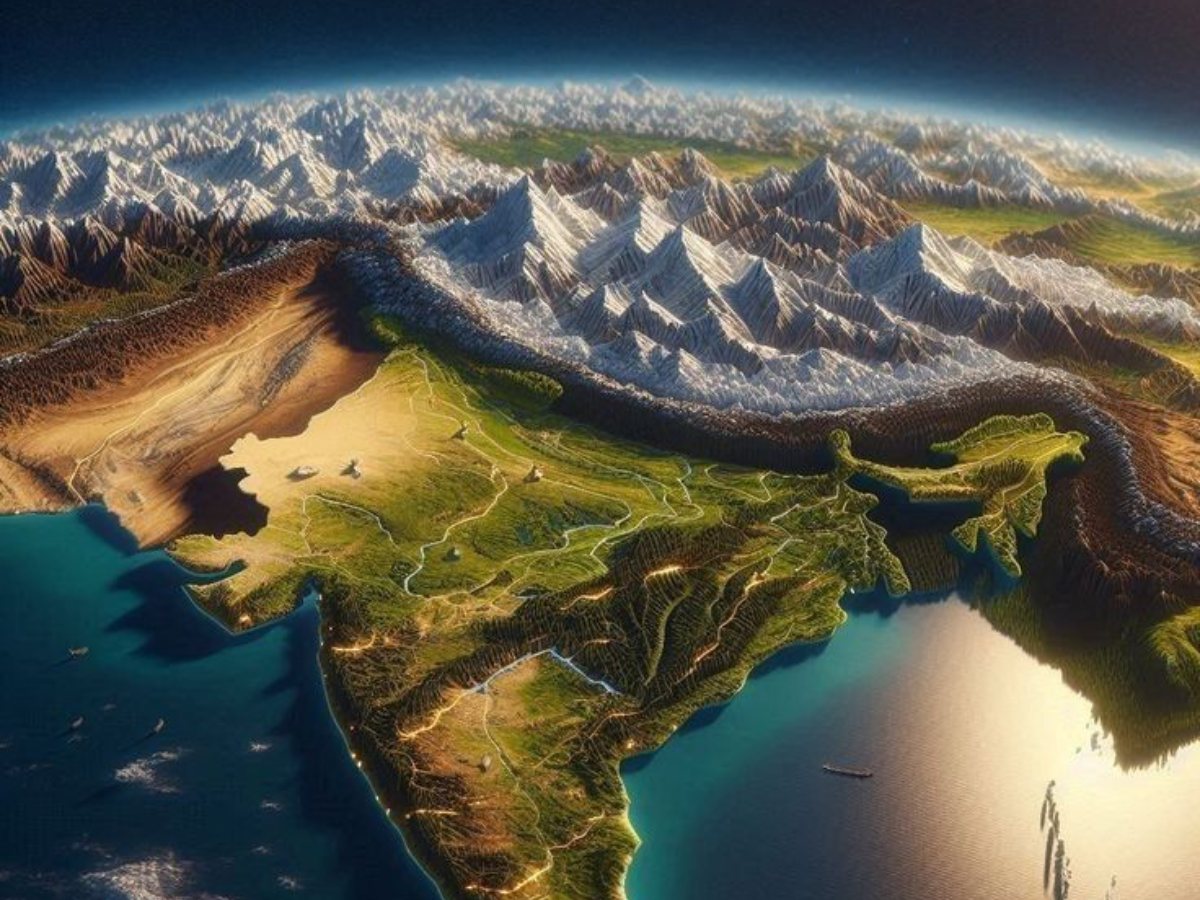
Scientists Discover Indian Plate is Tearing Beneath the Himalayas, Challenging Long-Held Geological Models
The Indian tectonic plate is splitting beneath the Himalayan mountain range, according to recent geological findings reported by Moneycontrol and NewsBytes. This “tearing” process, which involves the lower layer of the plate peeling away, contradicts established scientific theories regarding the collision between the Indian and Eurasian plates and suggests a more complex subterranean dynamic than previously recorded.
What is happening to the Indian tectonic plate?
Recent geological data indicates that the Indian plate is not simply sliding under the Eurasian plate in a uniform motion. Instead, scientists have discovered that the plate is splitting, creating a major geological rift. According to reports from The Brighter Side of News, this discovery reveals a “tearing” effect that is effectively dividing the plate’s structure beneath the Himalayas.
The process is specifically described by NewsBytes as a “peeling” of the lower layer. In standard tectonic models, a plate is often viewed as a single, rigid slab of lithosphere. However, these new findings suggest the Indian plate is behaving more like a layered material where the bottom section is separating from the top. This internal rupture suggests that the stresses produced by the collision with Asia are so extreme that the plate is failing internally rather than moving as one cohesive unit.
Key details of the discovery include:
- Structural Failure: The plate is experiencing a vertical or diagonal split rather than a simple horizontal slide.
- Layered Separation: The lower crustal layers are peeling away from the upper sections.
- Rift Formation: A significant geological rift is forming, which challenges the “rigid plate” assumption in tectonic science.
How this discovery challenges long-held geological theories
For decades, the prevailing scientific consensus held that the Himalayas were formed by the steady, relentless subduction of the Indian plate beneath the Eurasian plate. This “continental collision” model suggested that the Indian plate acted as a solid wedge, pushing upward to create the world’s highest peaks. However, the report that scientists discover Indian plate is tearing beneath the himalayas, challenging long-held geological models, indicates that this process is far more volatile.
The traditional model assumed the plate remained largely intact as it descended. The discovery of a “tear” suggests a phenomenon known as slab tearing or lithospheric dripping. According to the reporting, this means the plate is breaking apart under the pressure, which changes how geologists calculate the amount of stress accumulating in the region.

“The discovery of a major geological rift tearing India in two beneath the surface suggests that the tectonic interactions in the Himalayas are significantly more complex than the standard subduction models suggest,” as noted in reports from The Brighter Side of News.
This shift in understanding means that the “collision” is not just a meeting of two plates, but a destructive process where one plate is being dismantled from the inside out. This has immediate implications for how scientists map the depths of the Earth’s mantle and the behavior of the lithosphere.
The mechanics of the “peeling” effect
To understand the “peeling” mentioned by NewsBytes, one must look at the composition of the tectonic plate. The lithosphere consists of the crust and the uppermost part of the mantle. When the Indian plate collided with the Eurasian plate approximately 50 million years ago, it began to dive beneath it.
The new evidence suggests that the lower portion of this diving slab is separating. This could be caused by several factors:
- Viscosity Differences: The lower part of the plate may be hotter or more ductile than the upper part, making it prone to stretching and tearing.
- Tectonic Drag: As the top of the plate is held up by the massive weight of the Himalayas, the bottom may be pulled deeper into the mantle by gravity, creating a vertical tension that rips the plate.
- Differential Speed: Different sections of the Indian plate may be moving at slightly different velocities, causing the plate to shear.
This peeling effect creates a “gap” or a zone of weakness in the Earth’s crust. This is not a surface-level crack that would split the geography of India into two separate islands, but a deep-seated structural failure occurring dozens of kilometers below the surface.
Why this discovery matters for seismic activity
The primary concern regarding a tearing tectonic plate is the potential for increased or unpredictable seismic activity. Most earthquake models for the Himalayan region are based on the “Main Himalayan Thrust,” the boundary where the two plates meet. If the Indian plate is tearing internally, there are new sources of stress and potential rupture points that were not previously accounted for.
Geological rifts often act as conduits for magma or as zones where pressure can build up and release suddenly. While the reports do not explicitly predict a specific disaster, the existence of a “major geological rift” suggests that the region’s seismic risk profile may need to be re-evaluated.
Comparing the reporting across different outlets shows a slight variation in the perceived urgency of the discovery:
| Source | Core Focus | Characterization of Event |
|---|---|---|
| Moneycontrol | Scientific Challenge | Challenging long-held geological models. |
| NewsBytes | Physical Mechanism | Lower layer “peeling” beneath the range. |
| The Brighter Side of News | Structural Impact | A “major geological rift” tearing the plate. |
Regional implications and environmental impact
The tearing of the Indian plate does more than just change textbooks; it affects the physical evolution of the Asian continent. The Himalayas are still growing, and the rate of this growth is tied to the movement of the Indian plate. If the plate is splitting, the uplift of the mountains may become uneven.

This could lead to several long-term outcomes:
- Variable Uplift: Some parts of the Himalayas may rise faster than others, altering the drainage patterns of major rivers like the Indus and the Ganges.
- Volcanic Potential: While the Himalayas are not typically volcanic, deep tears in the lithosphere can sometimes allow magma from the mantle to reach closer to the surface.
- Landslide Risks: While the tear is deep, the resulting instability in the crust can contribute to the overall fragility of the mountain slopes.
For those interested in the broader geological context, a related explainer on tectonic plate boundaries provides further detail on how subduction zones typically function compared to these newly discovered rifts.
Common misconceptions about the “splitting” of India
The phrasing “tearing India in two” used by some reports can be misleading to a general audience. It is critical to distinguish between surface geography and deep-earth geology.
Misconception 1: The landmass of India is physically splitting.
The “tear” is occurring in the tectonic plate deep beneath the surface, specifically under the Himalayan region. This is not a surface rift like the East African Rift, where the earth is visibly pulling apart. The map of India is not changing in real-time.
Misconception 2: This will cause an immediate, catastrophic earthquake.
Tectonic movements happen over millions of years. While a tear creates a zone of weakness, it does not automatically trigger a quake. It simply changes the “map” of where future quakes are likely to occur.
Misconception 3: The Himalayas will stop growing.
The tearing of the plate doesn’t stop the collision; it changes the way the collision happens. The Indian plate is still pushing north, meaning the mountains will likely continue to rise, albeit perhaps with different structural dynamics.
Comparing the “Tear” to other Global Geological Events
To put this discovery in perspective, geologists often look at other “slab tears” around the world. For instance, similar phenomena have been observed in the Mediterranean region and near the Andes. In those cases, the tearing of a subducting plate often leads to “slab windows,” where hot mantle material flows through the gap created by the tear.
If a similar “window” opens beneath the Himalayas, it could lead to localized heating of the crust. This would be a significant departure from the current understanding of the region, which is dominated by cold subduction and compressive forces. The report that scientists discover Indian plate is tearing beneath the himalayas, challenging long-held geological models, essentially suggests that the Himalayas may be entering a new phase of geological evolution.
Technical Summary of the Discovery
For a clearer understanding of the evidence, the following points summarize the technical shift in the geological narrative:
- Previous View: Indian Plate $\rightarrow$ Solid Slab $\rightarrow$ Subduction $\rightarrow$ Mountain Uplift.
- Current View: Indian Plate $\rightarrow$ Layered Structure $\rightarrow$ Lower Layer Peels/Tears $\rightarrow$ Internal Rift $\rightarrow$ Complex Uplift.
The use of seismic tomography—a process similar to a CT scan for the Earth—has likely allowed scientists to see these deep structures. By measuring the speed of seismic waves, researchers can identify areas where the rock is denser (the plate) or where there are gaps and ruptures (the tear).
Frequently Asked Questions
Is the Indian plate actually splitting the country in half?
No. The splitting is occurring in the tectonic plate deep underground, specifically beneath the Himalayan range. It is a geological event involving the lithosphere, not a surface event that would divide the landmass of India.
Will this lead to more earthquakes in India and Nepal?
The discovery suggests that the internal structure of the plate is more complex than previously thought. While it doesn’t guarantee more earthquakes, it means that the stress distribution is different, which may change how scientists predict and prepare for seismic events in the region.

What does “peeling” mean in a geological sense?
In this context, “peeling” refers to the separation of the lower part of the tectonic plate from the upper part. Instead of the whole plate moving as one piece, the bottom layer is detaching or tearing away as it is pushed under the Eurasian plate.
Why was this not discovered sooner?
Deep-earth imaging technology, such as seismic tomography, has improved significantly. Scientists can now “see” deeper into the mantle with higher resolution, allowing them to identify structural failures like tears that were invisible to older instruments.
Does this mean the Himalayas will collapse?
No. The mountains are the result of the collision of two massive plates. A tear in the lower part of the plate does not remove the compressive force pushing the mountains upward; it only changes the internal mechanics of the plate providing that force.
The realization that the Indian plate is undergoing a structural failure beneath the Himalayas forces a rewrite of the regional geological history. As researchers continue to map the extent of this rift, the focus will shift toward how this “peeling” effect influences the long-term stability of the world’s most volatile mountain range. Future monitoring will likely prioritize the depth and width of the tear to determine if it is a localized anomaly or a systemic failure of the Indian plate.
