
The Swedish National Food Agency (Livsmedelsverket) has released updated dietary guidelines that prioritize plant-based foods and a significant reduction in red and processed meats to improve public health and environmental sustainability. The new recommendations emphasize a diet rich in vegetables, fruits, berries, whole grains, and legumes to lower the risk of chronic diseases.
- Increase: Consumption of vegetables, fruit, berries, and whole grains.
- Shift: Protein intake toward fish and legumes.
- Decrease: Intake of red meat, particularly processed varieties.
- Limit: Added sugars and salt.
- Prefer: Unsaturated fats over saturated fats.
What are the primary dietary changes?
The updated guidelines shift the focus of the Swedish “food pyramid” toward a more plant-centric approach. According to the Swedish National Food Agency, individuals should increase their daily intake of vegetables, fruit, and berries. Whole grains are also highlighted as a critical component of a healthy diet to ensure adequate fiber and nutrient intake.
These changes are designed to align nutritional needs with long-term health outcomes, focusing on the prevention of non-communicable diseases. The agency notes that a higher intake of these plant-based foods is associated with a lower risk of cardiovascular disease and certain types of cancer.
How should protein sources shift?
The agency recommends a transition in how protein is sourced, urging a move away from red meat. According to the guidelines, red meat—especially processed meats like sausages and deli meats—should be consumed in smaller quantities.
In their place, the Swedish National Food Agency suggests increasing the consumption of:
- Legumes: Beans, lentils, and peas are promoted as sustainable, high-protein alternatives.
- Fish: The guidelines continue to support fish as a primary protein source due to its omega-3 fatty acid content.
What limits are placed on fats and sugars?
The guidelines specify a preference for unsaturated fats, which are typically found in plant oils, nuts, and seeds, over saturated fats found in animal products. This distinction is intended to support heart health and maintain healthy cholesterol levels.
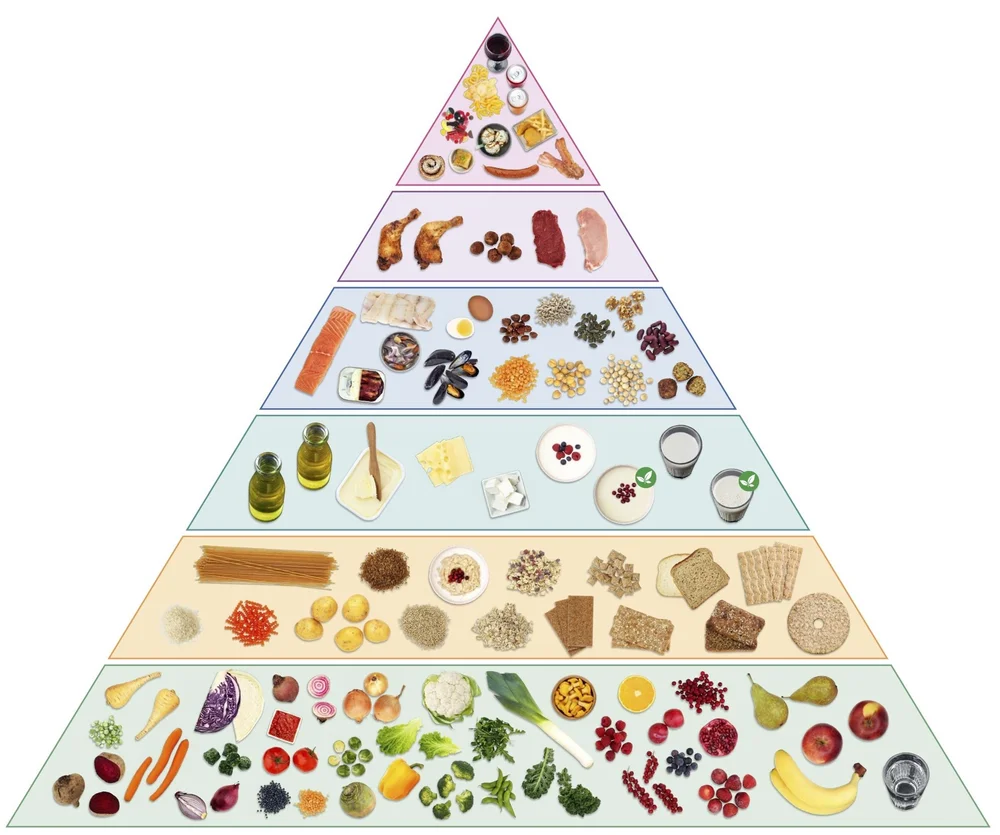
Regarding additives, the Swedish National Food Agency advises a strict limitation on added sugars and salt. Reducing salt intake is specifically linked to the prevention of hypertension and other cardiovascular issues, while limiting sugar helps regulate blood glucose levels and reduce the risk of obesity.
Why was the food pyramid updated?
The revisions were driven by a dual objective: improving human health and reducing the environmental footprint of food production. According to the agency, the updated guidelines reflect current scientific evidence regarding the link between diet and chronic illness, while also acknowledging the necessity of a more sustainable food system.
By promoting legumes and plant-based fats over red meat, the agency aims to reduce the greenhouse gas emissions and land use associated with livestock farming. This approach integrates public health goals with global environmental targets.
