
Avid and Google Cloud Announce AI Integration for Media Editing Tools
Avid Technology and Google Cloud have unveiled a strategic partnership to embed artificial intelligence capabilities directly into media editing workflows, marking a significant step in the evolution of post-production technology. The collaboration focuses on integrating Google’s generative AI models with Avid’s industry-standard Media Composer and Content Core platforms, aiming to streamline repetitive tasks and enhance creative decision-making for editors, colorists, and media managers. Announced through official channels and confirmed by both companies, the initiative introduces agentic AI features designed to operate within secure, cloud-based environments although maintaining compatibility with existing on-premise and hybrid setups. This development reflects broader industry trends where AI is being leveraged to address growing content demands without compromising creative control or data security.
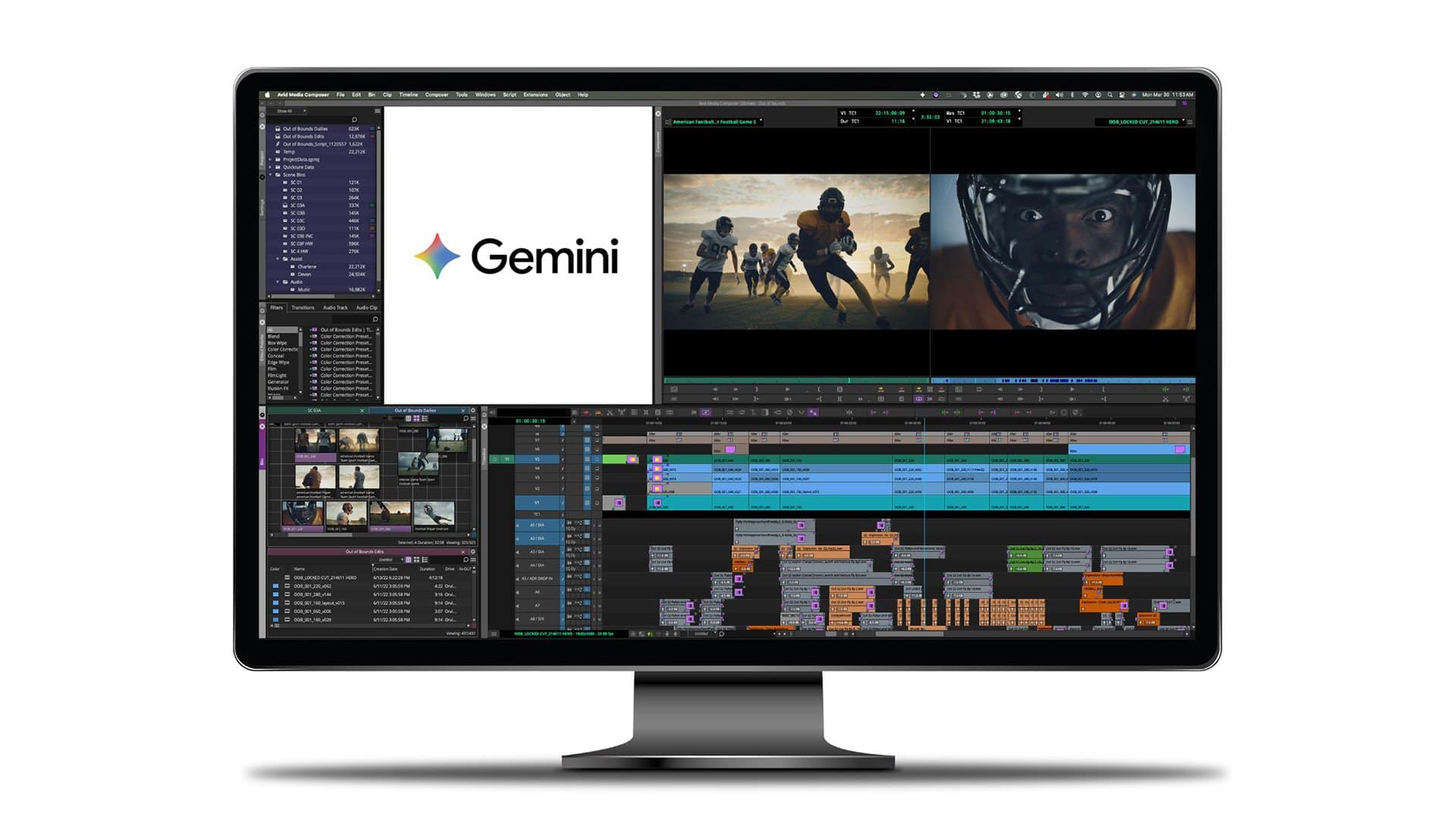
The partnership builds on Avid’s longstanding role in broadcast, film, and television production, where its tools have been used for decades in everything from news gathering to feature film editing. Google Cloud brings its expertise in large-scale AI infrastructure, including Vertex AI and generative models trained on diverse datasets relevant to media workflows. Rather than replacing human editors, the integrated AI is positioned as a collaborative assistant—capable of suggesting edits, organizing media assets, generating transcription-based search functions, and automating routine processes like metadata tagging and sequence assembly. Early demonstrations highlighted functions such as AI-powered scene detection, voice-to-text synchronization, and intelligent bin organization, all accessible through familiar Avid interfaces.
Technical Foundations of the AI Integration
At the core of the Avid and Google Cloud collaboration is the employ of Google’s Vertex AI platform, which enables the deployment and management of machine learning models at scale. Avid has adapted its Media Composer and Content Core software to interface securely with these cloud-based AI services through APIs, allowing editors to invoke AI-driven functions without leaving their primary workspace. The integration does not require users to migrate entirely to the cloud; instead, it supports hybrid workflows where AI processing occurs in Google Cloud while project files and user data remain under local or private cloud control.
One of the key technical aspects involves the use of foundation models fine-tuned for media-specific tasks. These include models capable of understanding video timelines, interpreting audio waveforms for speech recognition, and analyzing visual content for object or scene identification. For example, an editor could use natural language commands to search through hours of footage for specific moments—such as “indicate me all outdoor scenes with dialogue”—and the AI would return relevant clips based on semantic understanding rather than just keyword matching. Similarly, AI-assisted transcription can generate searchable text overlays in real time, reducing the time spent on manual logging.
Security and data governance are central to the design. Avid emphasizes that no customer content is used to train Google’s AI models without explicit consent, and all data processed through the AI features remains encrypted in transit and at rest. Users retain full control over which AI features are enabled and can opt out of cloud-based processing entirely. This approach addresses common concerns in the media industry about intellectual property protection and compliance with regulations such as GDPR and CCPA.
Industry Context and Motivations Behind the Partnership
The media and entertainment sector has faced increasing pressure to produce more content faster, driven by the proliferation of streaming platforms, shorter audience attention spans, and the global demand for localized versions of films and shows. Traditional editing workflows, while robust, often involve time-consuming manual steps that can create bottlenecks—particularly in large-scale productions handling terabytes of raw footage daily. AI integration offers a potential solution by automating predictable, rules-based tasks, freeing creative professionals to focus on narrative development, pacing, and artistic expression.
Avid’s decision to partner with Google Cloud reflects a broader shift among established technology vendors toward embracing AI not as a disruptive force, but as an incremental enhancer of existing tools. Rather than building AI capabilities from scratch—a costly and time-intensive endeavor—Avid leverages Google’s pre-existing infrastructure and model training pipelines. This allows for faster deployment and access to cutting-edge advancements in AI research without requiring Avid to develop equivalent expertise in-house.
From Google’s perspective, the partnership expands the reach of its AI technologies into a highly specialized, high-value vertical market. Media editing represents a niche where precision, reliability, and domain-specific understanding are paramount—qualities that align with Google Cloud’s enterprise-focused AI offerings. By working with Avid, Google gains insights into real-world media workflows that can inform future model improvements and help tailor its AI solutions to industry-specific needs.
Features and Capabilities Introduced Through the Collaboration
The initial rollout of AI features centers on three primary areas: media asset management, editing assistance, and workflow automation. In asset management, AI-powered tools analyze incoming footage to automatically generate descriptive metadata—such as identifying people, locations, objects, or emotional tone—based on visual and audio analysis. This metadata integrates directly into Avid’s bin system, making it easier for editors to locate specific clips using natural language queries.
In the editing environment, AI functions include smart trim suggestions, where the system analyzes cut points and recommends adjustments based on pacing, continuity, or established editing conventions. Another feature generates rough assembly sequences from script inputs or storyboards, creating a preliminary timeline that editors can then refine. These tools are designed to accelerate the early stages of editing without imposing creative decisions; editors retain final approval over all changes.
Workflow automation capabilities include intelligent rendering optimization, where AI predicts which segments of a project are likely to undergo frequent revisions and prioritizes rendering those sections in the background. AI-driven quality control checks can detect common issues such as audio clipping, frame drops, or color inconsistencies, flagging them for review before final export. These functions aim to reduce rework and improve delivery reliability, especially in high-volume environments like newsrooms or broadcast operations.
Reactions from Creative Professionals and Industry Analysts
Initial responses from editors and post-production supervisors have been cautiously optimistic, particularly among those managing large volumes of content under tight deadlines. Many acknowledge the potential time savings in tasks like logging, syncing, and basic assembly—activities that, while necessary, often consume significant portions of an editor’s day. One freelance editor working in documentary production noted that reducing manual metadata entry by even 30% could free up several hours per week for more creative perform.

Industry analysts tracking the post-production technology market have highlighted the partnership as a logical evolution rather than a radical disruption. They point out that Avid has historically been conservative in adopting recent technologies, prioritizing stability and backward compatibility—traits that have contributed to its enduring presence in professional environments. The integration of AI through a trusted cloud partner like Google Cloud is seen as a way to modernize the toolset without alienating long-time users who may be wary of abrupt changes.
Some experts caution that the true value of AI in editing will depend on how well the technology adapts to the nuanced, iterative nature of creative work. Unlike fully automated processes, editing involves constant revision, experimentation, and subjective judgment—areas where AI currently excels less. The most successful implementations will likely be those that position AI as a supportive tool rather than an autonomous decision-maker, aligning with Avid’s stated goal of keeping the editor “in the loop.”
Comparisons to Other AI Initiatives in Media Technology
Avid and Google Cloud’s effort is not the first attempt to apply AI to media editing, but it distinguishes itself through its focus on deep integration with established professional tools. Other companies have introduced AI-powered features in consumer-facing or semi-professional applications—such as automatic video highlights in social media platforms or AI-assisted cutting in mobile editing apps. However, these often prioritize speed and simplicity over precision and control, making them less suitable for broadcast, film, or high-end corporate production.
In contrast, professional-grade AI integrations have emerged from companies like Adobe (with Sensei in Premiere Pro and After Effects) and Blackmagic Design (through DaVinci Neural Engine). These systems offer capabilities such as facial recognition, auto-reframing, and upscaling, but are typically tightly coupled to their respective ecosystems. Avid’s approach, by leveraging Google Cloud’s external AI infrastructure, allows for greater flexibility in model updates and access to a broader range of AI research—potentially enabling faster innovation cycles.
The partnership similarly differs from purely cloud-native editing platforms that require full migration to online environments. By maintaining compatibility with local and hybrid workflows, Avid and Google Cloud aim to serve users who cannot or choose not to move entirely to the cloud due to latency concerns, data sovereignty rules, or existing infrastructure investments.
Challenges and Considerations for Adoption
Despite the promising capabilities, several challenges could affect the adoption and effectiveness of AI in media editing workflows. One concern is the learning curve associated with new AI-driven interfaces. Even well-designed tools require time for users to understand their strengths, limitations, and optimal use cases. Training and documentation will be essential to help editors move beyond basic experimentation to meaningful integration into daily workflows.
Another consideration is the variability of AI performance across different types of content. Models trained on general datasets may struggle with niche genres, low-light footage, heavy accents in speech, or non-Western visual styles—issues that could lead to inaccurate transcriptions, misidentified objects, or irrelevant search results. Ongoing model refinement and user feedback loops will be critical to improving accuracy and reducing frustration.
Cost is also a factor. While Avid has not disclosed pricing details for the AI features, accessing Google Cloud’s AI services typically involves usage-based fees. Studios and freelancers will need to evaluate whether the time saved justifies the additional expense, particularly if their current workflows are already efficient. Avid may offer tiered access or bundled packages to accommodate different user segments, from individual creators to large enterprises.
Finally, ethical and creative concerns persist around the role of AI in artistic processes. Some editors worry that over-reliance on AI suggestions could lead to homogenized editing styles or diminish opportunities for serendipitous discovery during manual review. Avid and Google Cloud emphasize that the AI is designed to assist, not replace, and that all creative authority remains with the user. Transparency about how AI-generated suggestions are produced—such as showing confidence scores or source references—can help build trust and encourage informed use.
Broader Implications for the Post-Production Landscape
The Avid and Google Cloud partnership signals a maturing phase in the application of AI to professional media workflows. Rather than treating AI as a experimental add-on, the collaboration treats it as a core component of modern editing infrastructure—comparable to the way color management or audio normalization became standard features over time. This shift could influence how other technology vendors approach AI integration, encouraging more partnerships between specialized media companies and large cloud providers.
In the longer term, widespread adoption of AI-assisted editing could reshape job roles within post-production departments. While fears of widespread job displacement appear overstated—given the continued need for human judgment and creativity—there may be a growing emphasis on skills like AI prompt engineering, workflow optimization, and hybrid cloud management. Educational institutions and training programs may start incorporating these competencies into curricula for aspiring editors and media technologists.
The collaboration also underscores the increasing importance of interoperability and open standards in media technology. As AI features turn into more common, the ability to share metadata, project states, and AI-generated insights across different platforms will grow in value. Initiatives like the Advanced Media Workflow Association (AMWA) specifications or the Media Entertainment Services Alliance (MESA) frameworks could play a role in ensuring that AI-driven enhancements remain accessible and compatible across diverse systems.
What In other words for the Future of Editing Tools
Looking ahead, the Avid and Google Cloud initiative may serve as a foundation for more advanced AI applications in media creation. Potential future developments include deeper integration with generative AI for tasks like virtual set extension, AI-driven dubbing and lip-syncing, or real-time language translation during editing. As models improve and become more efficient, some of these functions could shift from the cloud to local execution via edge computing or optimized software, reducing latency and dependency on constant connectivity.
Another avenue involves using AI to analyze audience engagement data and inform editing decisions—such as identifying which scenes retain viewer attention or where emotional peaks occur. While still emerging, this area raises important questions about balancing creative intuition with data-driven insights, particularly in commercial or advertising contexts where engagement metrics are already influential.
the success of this partnership will be measured not by the sophistication of the AI technology itself, but by how effectively it empowers editors to tell better stories, faster. By reducing friction in technical workflows and expanding the range of what’s possible within familiar tools, Avid and Google Cloud aim to reinforce the editor’s role as a creative leader—supported, not supplanted, by intelligent technology.
Frequently Asked Questions
- What specific AI features are included in the Avid and Google Cloud partnership?
- Do I need to move my editing workflow to the cloud to use these AI features?
- Is my media content used to train Google’s AI models?
- How does this compare to AI features in other editing software like Adobe Premiere Pro or DaVinci Resolve?
- Will these AI features replace human editors?
- When will these AI features be available, and how much will they cost?
The initial release includes AI-powered media asset tagging, natural language search within footage, automated transcription, smart edit suggestions, sequence assembly assistance, and workflow optimization tools such as predictive rendering and quality control checks. These features are accessible through Media Composer and Content Core interfaces.
No. The AI processing occurs in Google Cloud, but users can keep their project files and media stored locally or in private cloud environments. The integration supports hybrid workflows, allowing customers to adopt AI capabilities without requiring a full migration to cloud-based editing.
Avid states that customer content is not used to train Google’s AI models without explicit permission. Data processed through the AI features is handled under strict security protocols, and users retain control over which features are enabled and how their data is used.
While Adobe and Blackmagic offer AI capabilities built directly into their software (such as Sensei and Neural Engine), Avid’s approach leverages external cloud AI infrastructure via Google Cloud. This allows for access to a broader range of Google’s AI research and model updates, while maintaining deep integration with Avid’s professional editing tools. The choice between platforms often depends on existing workflows, team preferences, and specific feature needs.
No. The AI is designed as an assistive tool to handle repetitive or time-consuming tasks—such as logging, searching, and basic assembly—so editors can focus more on creative decisions like pacing, storytelling, and emotional impact. All final editorial control remains with the user.
Avid has not announced a specific public release date or pricing structure for the AI features. Availability and pricing details are expected to be shared through official Avid channels, including product updates, partner announcements, and customer communications. Interested users are advised to monitor Avid’s website and contact their sales representatives for the most accurate information.
