Acidic Nanoparticles Target Parkinson’s at Cellular Source: A New Approach to Neurodegeneration
Researchers have developed acidic nanoparticles designed to target the cellular source of Parkinson’s disease by neutralizing toxic protein aggregates. According to reports via Phys.org, these engineered particles aim to clear alpha-synuclein accumulations—the primary component of Lewy bodies—to prevent the progressive death of dopamine-producing neurons in the brain.
How Acidic Nanoparticles Target Parkinson’s at the Cellular Source
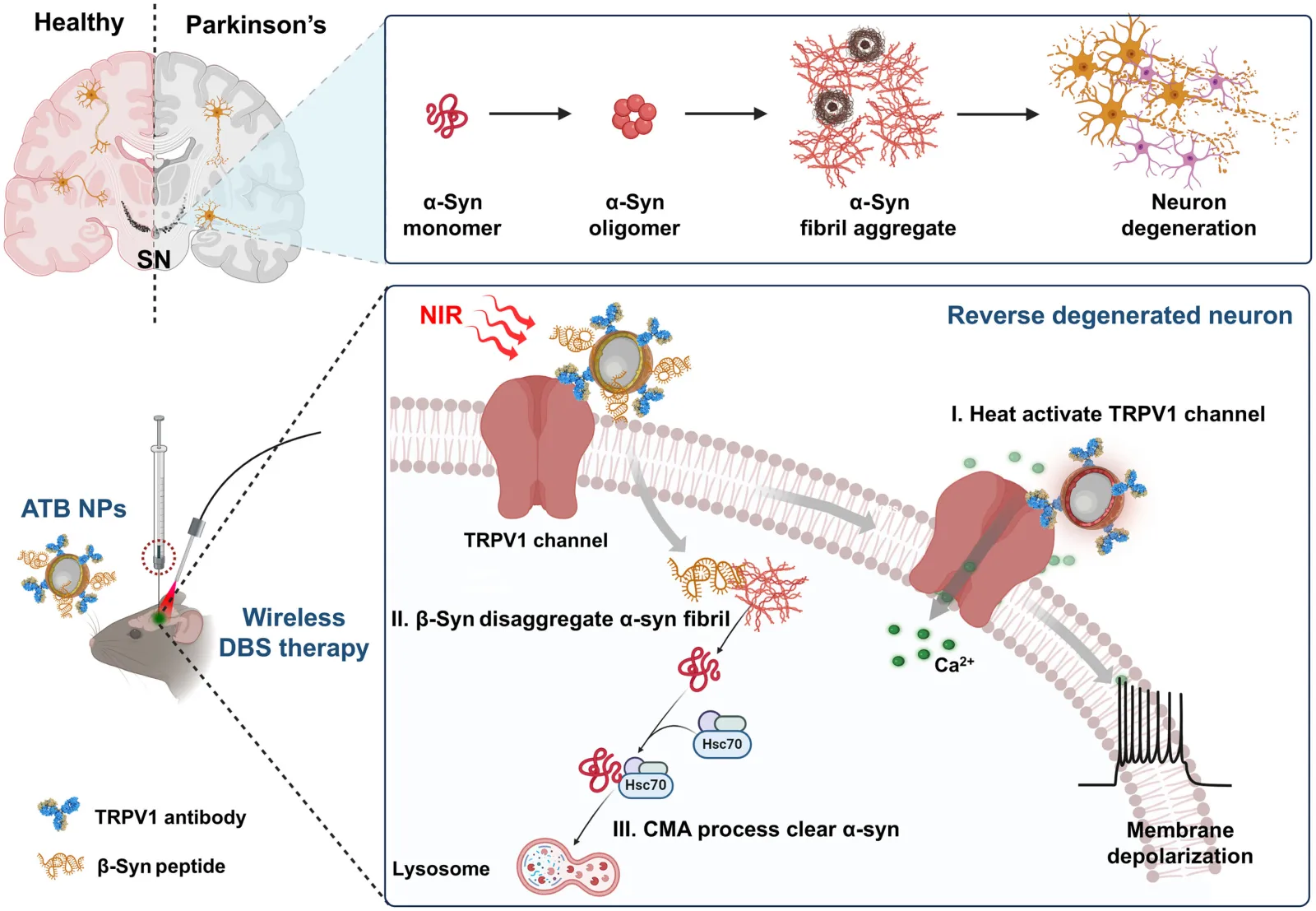
The core of this therapeutic approach lies in the ability of nanoparticles to manipulate the internal environment of a cell. In Parkinson’s disease, the protein alpha-synuclein misfolds and clumps together. These aggregates disrupt cellular function and eventually kill the neuron. According to the research highlighted by Phys.org, acidic nanoparticles are engineered to enter these cells and target the specific compartments where these proteins accumulate.
Most protein degradation in the brain occurs within lysosomes, which are the cell’s “recycling centers.” These organelles require a highly acidic environment to activate the enzymes that break down waste. In many Parkinson’s patients, the pH balance within these lysosomes is disrupted, rendering them unable to clear the alpha-synuclein buildup. The acidic nanoparticles act as a corrective mechanism, restoring or simulating the necessary acidity to trigger the degradation of toxic proteins.
Key mechanisms of these nanoparticles include:
- Targeted Delivery: The particles are designed to bypass the blood-brain barrier, a primary obstacle in neurology.
- pH Modulation: Once inside the neuron, they release acidic components to lower the pH of the lysosomal compartment.
- Protein Solubilization: The acidic environment helps break down the rigid structure of alpha-synuclein aggregates, making them easier for the cell to expel or digest.
The objective is to move beyond treating the symptoms of Parkinson’s and instead address the biological failure that causes the disease to progress.
The Role of Alpha-Synuclein and Lewy Bodies
To understand why acidic nanoparticles are necessary, one must understand the role of alpha-synuclein. In a healthy brain, this protein helps regulate the release of neurotransmitters. However, in Parkinson’s, the protein undergoes a conformational change, shifting from a soluble form to an insoluble fibril. These fibrils clump together to form Lewy bodies.
According to scientific data reported by Phys.org, these Lewy bodies are not just markers of the disease; they are actively toxic. They choke the cell’s transport systems and trigger inflammatory responses. When the cell’s natural waste-clearance system—the autophagy-lysosome pathway—fails, the brain loses its ability to “clean” itself. This failure is the “cellular source” that the new nanoparticle therapy targets.
The process of neurodegeneration typically follows a specific sequence:
- Protein misfolding occurs due to genetic or environmental triggers.
- Small aggregates (oligomers) form and begin to disrupt cell membranes.
- Large Lewy bodies develop, overwhelming the lysosomal system.
- The neuron, unable to clear the waste, undergoes apoptosis (programmed cell death).
Comparing Current Treatments vs. Nanoparticle Therapy
Current gold-standard treatments for Parkinson’s, such as Levodopa (L-Dopa), focus on replacing missing dopamine. While effective for motor symptoms, they do nothing to stop the death of neurons. The acidic nanoparticle approach represents a shift toward disease-modifying therapy.

| Feature | Symptomatic Treatment (e.g., L-Dopa) | Acidic Nanoparticle Therapy |
|---|---|---|
| Primary Goal | Restore dopamine levels | Clear toxic protein aggregates |
| Effect on Disease | Manages symptoms; does not stop progression | Potentially slows or stops neurodegeneration |
| Target | Synaptic receptors/Neurotransmitter levels | Lysosomes and cellular waste systems |
| Long-term Outcome | Diminishing returns as more neurons die | Preservation of existing neuronal health |
By focusing on the cellular source, this method attempts to preserve the neurons that are still functional. This is a critical distinction because once a dopamine-producing neuron is dead, current medicine cannot bring it back. Related explainer on dopamine replacement therapy provides more context on why symptom management eventually fails.
Overcoming the Blood-Brain Barrier (BBB)
One of the most significant hurdles in treating any brain disorder is the blood-brain barrier. This semi-permeable membrane protects the brain from toxins in the blood, but it also blocks 98% of small-molecule drugs and nearly all large-molecule biologics. According to the technical details surrounding the research, the nanoparticles used in this study are engineered with specific surface ligands.
These ligands act as “keys” that trick the BBB into allowing the particles through. By mimicking molecules that the brain naturally wants—such as certain nutrients or hormones—the nanoparticles can hitch a ride across the barrier via receptor-mediated transcytosis. Once across, they are programmed to seek out neurons showing signs of protein stress.
The precision of this delivery system reduces the risk of systemic side effects. Instead of flooding the entire body with an acidic agent, which would be dangerous, the nanoparticles encapsulate the acidic payload, releasing it only upon entering the target cell’s environment.
Broader Implications for Other Proteinopathies
While the current focus is on Parkinson’s, the success of acidic nanoparticles targeting the cellular source could have implications for a wide range of neurodegenerative diseases. Many of these conditions are categorized as “proteinopathies” because they involve the accumulation of misfolded proteins.
For example, Alzheimer’s disease is characterized by the buildup of amyloid-beta plaques and tau tangles. Similarly, Frontotemporal Dementia (FTD) involves the accumulation of tau or TDP-43 proteins. According to the logic of the Phys.org report, if a nanoparticle can restore lysosomal acidity to clear alpha-synuclein, a similar mechanism might be adapted to clear amyloid-beta or tau.
This suggests a potential “platform technology” where the delivery vehicle (the nanoparticle) remains the same, but the specific targeting ligand and the internal payload are adjusted based on the protein being targeted. This could accelerate the development of treatments for several forms of dementia simultaneously.
Challenges and Clinical Hurdles
Despite the promising results in laboratory settings, moving from “bench to bedside” involves significant challenges. One primary concern is the long-term biocompatibility of the nanoparticles. The brain is an extremely sensitive environment; any foreign material must be fully biodegradable to avoid triggering an immune response or causing “nanotoxicity.”
Researchers must also determine the optimal dosage. Too little acidity will fail to clear the proteins, while too much could damage the healthy parts of the cell or trigger premature cell death. Furthermore, the timing of the intervention is critical. Because Parkinson’s is often diagnosed only after a significant percentage of dopamine neurons have already perished, the therapy may be most effective as a preventative measure for those with genetic predispositions.
Current obstacles include:
- Scaling Production: Manufacturing nanoparticles with consistent size and payload is complex.
- Delivery Frequency: Determining whether a single dose is sufficient or if repeated administration is required.
- Patient Variability: Differences in the blood-brain barrier permeability between patients of different ages.
Correcting Common Misconceptions
There is often a misunderstanding that “nanoparticles” refer to tiny robots or electronic devices. In the context of Parkinson’s research, nanoparticles are chemical structures—often lipids or polymers—that are simply very small. They are biological tools, not mechanical ones.
Another common misconception is that this therapy is a “cure.” In medical terms, a cure implies the total reversal of the disease. Because neurons do not regenerate easily, this therapy is more accurately described as a disease-modifying treatment. It aims to stop the clock on progression rather than rewind it. If a patient has already lost 70% of their substantia nigra neurons, clearing the remaining protein aggregates will stop further loss but will not restore the lost motor functions.
The Future of Cellular Waste Management in Neurology
The shift toward targeting the “cellular source” marks a new era in neurology. For decades, the focus was on the result of the disease (lack of dopamine). Now, the focus is on the cause (lysosomal failure). This approach treats the neuron as a biological system that has simply lost its ability to clean itself.
Future iterations of this technology may include “smart” nanoparticles that only activate when they detect a specific concentration of alpha-synuclein. This would create a self-regulating system where the drug only works when and where the disease is active, further reducing the risk of side effects. Related explainer on the blood-brain barrier explores how these delivery systems are evolving.
Frequently Asked Questions
What exactly are acidic nanoparticles in the context of Parkinson’s?
They are microscopic, engineered particles designed to enter brain cells and lower the pH level inside lysosomes. This acidity is necessary to activate enzymes that break down toxic alpha-synuclein protein clumps.
How is this different from current Parkinson’s medications?
Most current drugs, like Levodopa, treat the symptoms by increasing dopamine levels. Acidic nanoparticles target the underlying cause by attempting to remove the toxic proteins that kill neurons in the first place.
Can this treatment restore lost motor functions?
Likely not. Because neurons in the brain do not regenerate significantly, the therapy is designed to protect existing neurons and stop further decline rather than replacing cells that have already died.
Is this treatment available to the public?
No. According to the reports, this research is currently in the experimental stages. It must undergo rigorous safety and efficacy testing in clinical trials before it can be approved for human use.
Could this work for Alzheimer’s disease?
Potentially. Since Alzheimer’s also involves the buildup of toxic proteins (amyloid-beta and tau), the same nanoparticle delivery method could theoretically be adapted to target those specific proteins.
