The Strongest El Nino in More Than a Century May Be Coming – DW
The World Meteorological Organization (WMO) and other meteorological reports indicate that the planet may be facing one of the strongest El Niño events in over 100 years, potentially triggering severe disruptions to global food security, water availability, and weather patterns. This “super” El Niño is characterized by abnormal warming of surface waters in the central and eastern tropical Pacific Ocean, which alters atmospheric circulation on a global scale.
What is a “Super” El Niño and Why is it Occurring Now?
An El Niño event occurs as part of the El Niño-Southern Oscillation (ENSO) cycle, a naturally occurring phenomenon where the trade winds that normally push warm surface water toward Asia and Australia weaken. According to the World Meteorological Organization (WMO), when these winds fail or reverse, warm water surges back toward the Americas. This shifts the heat source of the atmosphere, changing where storms form and where rain falls.
A “super” El Niño is a term used to describe events that exceed the typical temperature thresholds of standard El Niño years. Reports from DW suggest that the current trajectory could lead to a peak in intensity not seen in more than a century. This extreme warming is not an isolated incident but is monitored through sea-surface temperature (SST) anomalies. When these anomalies reach a certain threshold across the Niño 3.4 region of the Pacific, the event is classified as strong or “super.”
The causes are rooted in the interaction between the ocean and the atmosphere. Normally, the “Walker Circulation” keeps the western Pacific warm and the eastern Pacific cool. During a super El Niño, this circulation collapses. This allows a deep layer of warm water to move eastward, suppressing the upwelling of cold, nutrient-rich water along the coast of South America.
- Primary Driver: Weakening or reversal of Pacific trade winds.
- Physical Indicator: Significant rise in sea-surface temperatures in the central and eastern tropical Pacific.
- Atmospheric Result: Displacement of the jet stream, altering global precipitation and temperature patterns.
How Will the Strongest El Nino in More Than a Century Impact Global Weather?
The meteorological shifts associated with a super El Niño are not uniform; they create a see-saw effect of extremes. The Guardian identifies several critical ways this event could impact the planet, ranging from catastrophic flooding in some regions to prolonged droughts in others.
Increased Precipitation and Flooding
Regions that are typically arid often experience torrential rains during strong El Niño years. The west coast of South America, particularly Peru and Ecuador, is highly susceptible to flash floods and landslides. The shift in warm water brings moisture-laden air to these coasts, leading to precipitation levels that can overwhelm local infrastructure.
In the United States, a strong El Niño typically pushes the jet stream further south. This often results in wetter-than-average winters across the Southern U.S., from California to Florida. While this can alleviate some drought conditions in the Southwest, it increases the risk of severe flooding and mudslides in mountainous regions.
Severe Drought and Wildfire Risks
Conversely, the western Pacific experiences a deficit of rainfall. Southeast Asia, Australia, and parts of Indonesia often face extreme drought. According to the WMO, these conditions create a feedback loop: dry vegetation becomes fuel for massive wildfires, which then release more carbon into the atmosphere, further complicating the climate picture.
The “super” nature of this event suggests that these droughts could be more prolonged and intense than those seen in recent decades. In Australia, this often manifests as a failure of the monsoon rains, leading to water shortages for both urban populations and agricultural sectors.
| Region | Typical Super El Niño Impact | Primary Risk |
|---|---|---|
| Southeast Asia / Australia | Severe lack of rainfall | Crop failure and wildfires |
| South America (West Coast) | Excessive precipitation | Flooding and infrastructure collapse |
| Southern United States | Increased storm activity | Flash floods and landslides |
| Horn of Africa | Variable (often wetter) | Disease outbreaks (e.g., Rift Valley Fever) |
Impacts on Global Food Security and Water Access
The most immediate human cost of the strongest El Nino in more than a century may be felt in the global food supply chain. The Citizen reports that forecasts for a super El Niño have already raised alarms regarding food prices and water security. Because El Niño disrupts the rainfall patterns essential for staple crops, the risk of systemic harvest failure is high.
Agricultural Disruptions
Many of the world’s “breadbasket” regions are sensitive to ENSO shifts. In Southeast Asia, rice production is heavily dependent on predictable monsoon rains. A super El Niño can delay or weaken these rains, leading to stunted crop growth or total loss. Similarly, the production of coffee, cocoa, and palm oil in Indonesia and Malaysia is often compromised by drought.
In the Americas, while some regions may benefit from increased rain, others face extreme heat. Brazil, a leading producer of soybeans and corn, can experience severe drought in the north and northeast, which pressures global commodity prices. When multiple major producing regions suffer simultaneous losses, the result is a spike in global food inflation.
Water Security and Sanitation
Water scarcity is a primary concern for the WMO. In regions like Australia and Indonesia, the lack of rain depletes reservoirs and lowers groundwater levels. This affects not only drinking water but also the ability to irrigate crops, creating a secondary blow to food security.
On the opposite end of the spectrum, flooding in South America and the Southern U.S. can contaminate freshwater sources. Floodwaters often carry sewage and agricultural runoff into drinking water supplies, increasing the prevalence of waterborne diseases such as cholera. The Citizen notes that the intersection of water scarcity and contamination makes vulnerable populations particularly susceptible to health crises.
“The forecast for a super El Niño raises critical concerns over food prices and water security, as the disruption of rainfall patterns directly impacts the ability of nations to maintain stable agricultural outputs.” — Analysis based on reporting from The Citizen.
Economic Implications: Inflation and Commodity Markets
The economic ripple effects of a century-scale El Niño extend far beyond the farms. Market analysts track ENSO patterns because they serve as a leading indicator for commodity price volatility. When a super El Niño is predicted, speculators and governments often adjust their strategies, which can lead to preemptive price hikes.
The “Agflation” Effect
Agricultural inflation, or “agflation,” occurs when the cost of raw food commodities rises sharply. Because staples like rice and corn are fundamental to the diets of billions, price spikes can lead to social unrest, particularly in import-dependent nations in Africa and Asia. According to data patterns noted by The Citizen, the correlation between El Niño-induced crop failure and food price volatility is strong.
Energy and Infrastructure Costs
The energy sector is also vulnerable. Hydroelectric power plants in regions like Brazil and Southeast Asia rely on consistent rainfall to maintain reservoir levels. During a severe drought, power generation drops, forcing countries to rely on more expensive and polluting fossil fuel alternatives. This increases the cost of electricity for both industrial and residential consumers.
Furthermore, the cost of disaster recovery from “super” events is immense. The Guardian highlights that the scale of flooding and wildfire damage associated with a century-level event can strain national budgets, requiring massive investments in emergency relief and infrastructure repair.
For more detailed information on how climate patterns affect global trade, see a related explainer on commodity market volatility.
Timeline and Monitoring: The Path to 2026
Monitoring a super El Niño is a continuous process involving thousands of ocean buoys, satellite observations, and atmospheric models. The World Meteorological Organization (WMO) provides regular updates to help nations prepare. A recent update from the WMO, extending into May 2026, indicates that the transition between El Niño and La Niña (the cooling phase) can be erratic.
The lifecycle of a super El Niño typically follows this progression:
- Onset: Trade winds weaken, and warm water begins to migrate east. Sea-surface temperatures rise.
- Peak: The warming reaches its maximum extent. This is when the most extreme weather anomalies—such as the “strongest in a century” peaks—are observed.
- Decay: The warm water begins to dissipate or move back west.
- Transition: The system may swing violently in the opposite direction, leading to a La Niña event, which brings its own set of opposite weather extremes.
The WMO emphasizes that the window for preparation is narrow. Once a super El Niño reaches its peak, the atmospheric response is almost immediate. Governments are urged to implement “anticipatory action,” such as stockpiling grain and reinforcing flood defenses, before the peak occurs.
Common Misconceptions About El Niño
There is often confusion regarding the relationship between El Niño and broader climate trends. It is important to distinguish between a natural cycle and long-term climatic shifts.
El Niño vs. Global Warming
A common misconception is that El Niño causes global warming. In reality, El Niño is a natural cycle that has existed for millennia. However, according to the WMO, global warming acts as a “force multiplier.” Because the baseline temperature of the ocean is already higher due to climate change, an El Niño event starts from a higher temperature floor. This makes the resulting “super” event more intense and its impacts more destructive.
The “Predictability” Myth
While scientists can predict the likelihood of an El Niño, predicting the exact location and intensity of every storm or drought is more difficult. A “super” El Niño does not mean every single region will experience a record-breaking event, but rather that the probability of extreme anomalies is significantly higher across the globe.
Comparing Current Forecasts with Historical Events
To understand why the claim that “the strongest El Nino in more than a century may be coming – DW” is significant, it must be compared to previous major events, such as those in 1982-83 and 1997-98.
The 1997-98 event is often cited as one of the strongest on record, causing billions of dollars in damage and massive coral bleaching. The current concern, as highlighted by DW and the WMO, is that current ocean heat content is higher than it was during those years. This means that even if the atmospheric pressure patterns are similar to 1997, the actual thermal energy available to fuel storms and alter weather is greater.
While the 1982-83 event was devastating for fisheries in Peru, the current threat is more systemic. The Guardian points out that the global population is larger and the food supply chain is more interconnected than it was 40 years ago. A failure in one region now has a more immediate effect on global prices than it did in the 1980s.
For a deeper look at how these cycles differ, you may find a related explainer on the ENSO cycle useful.
Frequently Asked Questions
What is the difference between a regular El Niño and a “super” El Niño?
A regular El Niño involves a moderate increase in sea-surface temperatures in the Pacific. A “super” El Niño occurs when these temperatures rise far beyond the average, creating more extreme shifts in the jet stream and leading to more severe weather anomalies, such as record-breaking droughts or floods.
How does El Niño affect food prices?
According to The Citizen, El Niño disrupts rainfall in major agricultural hubs. Droughts in Southeast Asia or Brazil can reduce the yields of staples like rice, corn, and soybeans. This decrease in supply, coupled with increased demand, drives up global commodity prices, leading to food inflation.
Will El Niño cause more hurricanes?
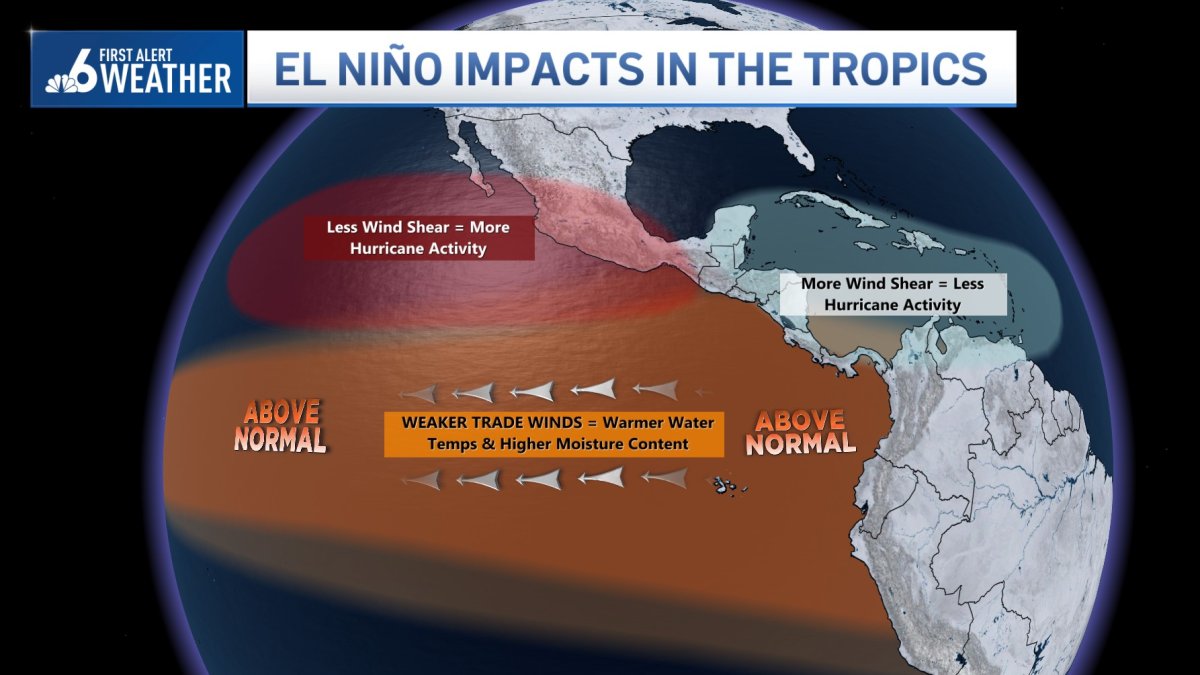
The impact on hurricanes is regional. Typically, El Niño reduces hurricane activity in the Atlantic basin due to increased vertical wind shear, which rips storms apart. However, it often increases storm activity and rainfall in the central and eastern Pacific.
Can we stop a super El Niño from happening?
No. El Niño is a natural atmospheric and oceanic cycle. While humans cannot stop the cycle itself, the WMO notes that human-induced climate change can intensify the effects, making the resulting weather extremes more severe.
Which countries are most at risk?
Countries in Southeast Asia (like Indonesia and Vietnam) and Australia are at high risk for drought and fire. Countries on the west coast of South America (like Peru and Ecuador) are at high risk for extreme flooding. The Southern United States also faces increased flood risks.
The ongoing monitoring by the WMO and reports from outlets like DW suggest that the coming months are critical for global preparedness. The synergy between natural cycles and rising global temperatures means that the capacity for these events to disrupt human civilization is higher than at any point in the last century.
