
Trump Administration Scraps $1.8 Billion ‘Anti-Weaponization’ Fund After Legal and Political Backlash
The Trump administration has abandoned plans to allocate $1.8 billion to a controversial anti-weaponization fund, marking a rare reversal in its approach to countering the proliferation of military-grade technology. The decision comes after mounting legal challenges, bipartisan criticism in Congress, and growing unease among lawmakers who questioned the fund’s transparency and potential misuse. While the administration framed the initiative as a counterterrorism measure, opponents argued it lacked clear oversight and risked entangling the U.S. In foreign conflicts under dubious legal authority.
This abrupt shift underscores the fragility of executive branch initiatives when faced with coordinated resistance from both parties—and the growing scrutiny over how the U.S. Government deploys emergency funding in the name of national security. For businesses, defense contractors, and allies monitoring U.S. Foreign policy, the reversal raises new questions about the stability of Trump-era defense strategies and whether future funding proposals will face similar hurdles.
Below, we break down what the fund was meant to do, why it sparked such fierce opposition, and what its collapse reveals about the broader challenges of implementing rapid-response security measures in today’s polarized political climate.
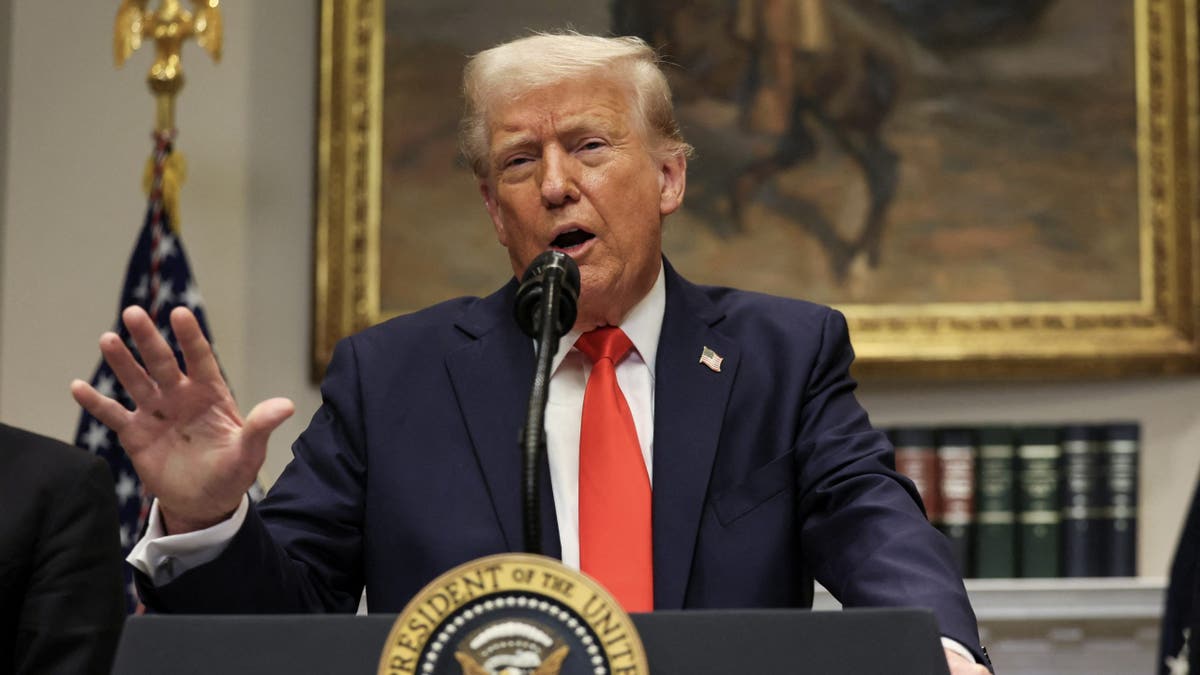
— ### What Was the $1.8 Billion Anti-Weaponization Fund? At its core, the fund was designed to disrupt the global trade in weapons-grade materials, including drones, missiles, and chemical precursors that could be repurposed for terrorist or state-sponsored attacks. The Trump administration positioned it as a proactive tool to interdict shipments before they reached hostile actors, rather than waiting for conflicts to escalate. However, critics—including some within the Republican Party—raised serious concerns: – Lack of Congressional Oversight: The fund was initially proposed under emergency authorities, bypassing traditional budgetary review processes. This raised alarms about unchecked executive power and the potential for political favoritism in disbursements. – Vague Definition of “Weaponization”: The term itself is broad, leaving room for interpretation. Was the fund targeting military-grade drones used by insurgents, or could it be applied to dual-use technologies like commercial satellites or even cybersecurity tools? – Risk of Escalation: Some lawmakers warned that aggressive measures—such as seizing cargo or imposing sanctions on neutral parties—could provoke unintended diplomatic fallout, particularly in regions like the Middle East and Africa where U.S. Interests are already strained.
“This wasn’t just about stopping terrible actors—it was about setting a precedent for how the U.S. Can act unilaterally in global supply chains. That’s a slippery slope.” — Defense analyst at the Center for Strategic and International Studies (CSIS)
The fund’s structure also drew comparisons to previous Trump-era initiatives, such as the 2020 Iran sanctions enforcement and COVID-era Operation Warp Speed, which faced similar scrutiny over transparency and accountability. — ### The Timeline: How a $1.8 Billion Initiative Unraveled in Weeks The fund’s collapse followed a high-stakes political and legal battle, with key moments shaping its downfall: | Date | Event | Key Players Involved | Early 2024 | Trump administration announces the fund under emergency national security authorities, citing threats from Iran, Russia, and non-state actors. | White House, Treasury Department, National Security Council (NSC) | | March 2024 | House Republicans introduce a resolution to block the fund, arguing it lacks proper congressional approval. Senate Democrats join in opposition, citing due process concerns. | Rep. Mike Gallagher (R-WI), Sen. Elizabeth Warren (D-MA), Freedom Caucus members | | April 2024 | A federal district court rules that the fund’s funding mechanism violates the Impoundment Control Act of 1974, which requires Congress to approve emergency spending. | U.S. District Judge for the District of Columbia, DOJ lawyers | | May 2024 | White House withdraws the fund’s proposal, citing “operational adjustments” but acknowledging legal and political pressure. | National Security Advisor, Treasury Secretary, GOP leadership | | June 2024 | Trump signals to Republican lawmakers that he will pivot to alternative funding mechanisms, including traditional defense appropriations. | Closed-door meetings with Senate Majority Leader Mitch McConnell (R-KY) | Key Point: The reversal wasn’t just about the money—it was about preserving executive flexibility while avoiding a constitutional showdown. Legal experts note that the administration could have pushed harder, but the bipartisan coalition against the fund made resistance politically toxic. — ### Who Opposed the Fund—and Why? The fund’s opponents spanned the political spectrum, but their arguments fell into three broad categories: 1. Conservative Critics (GOP) – Argument: The fund was an overreach by the executive branch, setting a dangerous precedent for future presidents to bypass Congress. – Example: Rep. Thomas Massie (R-KY) called it a “power grab” that undermines the Constitution, while others warned it could be used to target U.S. Allies under the guise of counterterrorism. – Quote: *”If the president can unilaterally spend billions on ‘weaponization,’ what’s next? A ‘disinformation fund’ or a ‘social media censorship fund’?”* — Rep. Matt Gaetz (R-FL) 2. Progressive Critics (Democrats) – Argument: The fund lacked clear humanitarian safeguards and risked disproportionately affecting developing nations with weaker legal systems. – Example: Sen. Bernie Sanders (I-VT) questioned whether the fund would accidentally strangle legitimate trade, citing past cases where U.S. Sanctions harmed civilians in countries like Venezuela and Yemen. – Quote: *”This isn’t about stopping weapons—it’s about giving the White House a blank check to interfere in global markets.”* — Sen. Chris Van Hollen (D-MD) 3. Legal and Academic Experts – Argument: The fund’s legal foundation was shaky, with scholars pointing to precedents like the 2001 AUMF (Authorization for Use of Military Force), which has been stretched beyond its original intent. – Example: The Cato Institute published an analysis arguing that the fund’s definition of “weaponization” was too broad to withstand judicial review. – Quote: *”The problem isn’t just the money—it’s the lack of a coherent strategy. You can’t just declare something a ‘weapon’ and expect courts or allies to go along.”* — Law professor at Georgetown University — ### What Does This Mean for U.S. Foreign Policy and Defense Spending? The fund’s demise has broader implications for how the U.S. Approaches global security challenges, particularly in three areas: #### 1. The Future of Emergency Funding – The Trump administration’s retreat reinforces Congress’s role in national security spending, even in crises. – Future initiatives may need to secure bipartisan support upfront** to avoid legal challenges. – Example: The 2021 Afghanistan withdrawal faced similar pushback over funding mechanisms, suggesting a pattern of executive overreach facing legislative resistance**. #### 2. Counterterrorism and Proliferation Strategies – Without the fund, the U.S. May rely more on traditional diplomatic pressure and sanctions** rather than rapid financial interventions. – Risk: Delays in intercepting shipments could allow terrorist groups or rogue states to strengthen their capabilities**. – Opportunity: The failure could push the U.S. To seek multilateral solutions**, such as partnerships with the EU or UN, to address weaponization. #### 3. Trust in U.S. Alliances – Allies may view the fund’s collapse as a sign of U.S. Inconsistency** in enforcing global norms. – Example: The European Union had already signaled discomfort with unilateral U.S. Actions in trade and security, and the fund’s failure could weaken transatlantic cooperation on proliferation issues. — ### What Happens Now? Alternative Paths Forward With the anti-weaponization fund scrapped, the Trump administration is exploring three potential routes: 1. Traditional Defense Appropriations – Redirecting funds through the annual National Defense Authorization Act (NDAA), which requires congressional approval but offers more transparency. – Challenge: The process is slower, and political gridlock could delay action. 2. Expanded Sanctions and Export Controls – Using existing authorities, such as the International Emergency Economic Powers Act (IEEPA)**, to target specific entities involved in weapon proliferation. – Example: The U.S. Has already imposed sanctions on Iranian drone manufacturers and Russian arms dealers, but critics argue these measures are reactive, not preventive**. 3. Public-Private Partnerships – Collaborating with tech companies (e.g., Microsoft, Palantir) and logistics firms to monitor and disrupt suspicious shipments. – Risk: Legal and ethical concerns about corporate involvement in national security operations**. — ### Common Misconceptions About the Fund—and Why They Matter Despite the fund’s collapse, several myths persist about its purpose and impact: | Misconception | Reality | *”The fund was just about stopping ISIS.”* | While counterterrorism was a stated goal, the fund’s broad language could have applied to state actors like Iran or North Korea, as well as non-state groups. | | *”It was a slush fund for Trump allies.”* | While transparency concerns were valid, no evidence emerged of direct political favoritism**. The real issue was the lack of oversight structure, not corruption. | | *”The fund would have worked.”* | Legal experts argue that without clear definitions and judicial safeguards, the fund risked arbitrary enforcement and unintended consequences** (e.g., harming humanitarian aid). | | *”Democrats opposed it for political reasons.”* | While partisan dynamics played a role, progressive concerns about humanitarian impact** were genuine and widely shared among legal scholars. | — ### What to Watch in the Coming Months As the dust settles, several developments could reshape the debate: – Will Congress Propose a New Framework? – Lawmakers may introduce a bipartisan bill to create a structured, accountable fund for counterproliferation efforts, avoiding the legal pitfalls of the Trump proposal. – Will the U.S. Shift to Multilateral Approaches? – Expect increased discussions about UN-led initiatives or NATO partnerships to address weaponization, particularly in Europe and the Middle East. – Could a Future Administration Revive the Idea? – If a new president takes office, they may attempt a similar fund—but with stricter legal and congressional safeguards to prevent backlash. – Impact on Defense Contractors – Companies like Lockheed Martin, Raytheon, and Boeing may see shifts in government contracts as funding priorities realign, with potential opportunities in cybersecurity and AI-driven surveillance**. — ### Key Questions Answered #### What was the $1.8 billion anti-weaponization fund supposed to do? The fund aimed to disrupt the global trade in weapons-grade materials, including drones, missiles, and chemical precursors, by intercepting shipments before they reached hostile actors. It was framed as a proactive counterterrorism tool, but critics argued its broad definition of “weaponization” could lead to unintended consequences**, such as targeting neutral parties or stifling legitimate trade. #### Why did Congress oppose it? Lawmakers from both parties raised concerns over: – Lack of oversight: The fund was proposed under emergency authorities, bypassing traditional budgetary review. – Legal risks: A federal court ruled that the funding mechanism violated the Impoundment Control Act of 1974**. – Diplomatic fallout: Some feared aggressive measures could provoke retaliation** from countries like Iran or Russia. #### Will the U.S. Still try to stop weapon proliferation without the fund? Yes, but through alternative methods**, including: – Traditional defense appropriations (slower but more transparent). – Expanded sanctions and export controls (using existing legal authorities). – Public-private partnerships (collaborating with tech and logistics firms). #### Could this fund be revived under a different administration? Possibly, but any future version would likely include stricter legal and congressional safeguards to avoid the same backlash. A bipartisan commission could also be formed to define clearer guidelines for what constitutes a “weaponization” threat. #### How might this affect U.S. Allies and trade partners? Allies may view the fund’s collapse as a sign of U.S. Inconsistency in enforcing global norms, potentially weakening cooperation on proliferation issues. Meanwhile, trade partners could see it as a warning about unilateral U.S. Actions in economic and security policy. #### What industries are most affected by this decision? – Defense contractors: May face shifts in government funding priorities. – Tech and logistics firms: Could see new opportunities in AI-driven surveillance and supply chain monitoring**. – Humanitarian organizations: May push for greater safeguards** to prevent unintended harm to aid efforts. —
