The Moon’s New Frontier: How Robots, Rovers, and Lunar Dust Are Redefining Humanity’s Next Giant Leap
The lunar surface is about to become humanity’s most ambitious construction site. Over the next decade, a fleet of autonomous robots, high-tech rovers, and cutting-edge lunar landers will transform the Moon from a distant rock into a staging ground for permanent human settlement. But the real story isn’t just about astronauts—it’s about the machines, the moon dust (regolith), and the engineering breakthroughs that will make this vision possible. With NASA’s accelerated timeline, private companies racing to deliver payloads, and international partners contributing critical technology, the stage is set for a lunar industrial revolution. Here’s how it’s unfolding—and why it matters far beyond Earth’s orbit.
Why Now? The Race to Turn the Moon Into a Second Home
The Moon isn’t just a scientific curiosity anymore. After decades of robotic exploration, NASA’s Artemis program and a wave of commercial lunar missions are turning the idea of a sustainable Moon base from science fiction into a near-term reality. The key difference this time? Instead of relying solely on astronauts, the heavy lifting will be done by a swarm of robotic systems—rovers that mine resources, robots that 3D-print habitats, and automated landers that deliver supplies.
Why the sudden urgency? Three major factors are converging:
- Geopolitical competition: The U.S. And China are locked in a de facto space race, with both nations treating the Moon as a strategic asset for future deep-space missions—especially Mars.
- Economic incentives: The Moon’s regolith contains rare minerals like helium-3 (a potential fusion fuel), water ice (critical for life support and rocket propellant), and metals like titanium and aluminum.
- Technological readiness: Advances in AI, autonomous navigation, and in-situ resource utilization (ISRU) mean robots can now perform tasks once thought impossible without human intervention.
NASA’s latest roadmap, unveiled in early 2024, outlines a phased approach to establishing a lunar outpost near the Moon’s south pole by the late 2020s, with the goal of supporting long-term human presence by the 2030s. But the real innovation lies in the robotic workforce that will pave the way.
The Lunar Workforce: How Robots and Rovers Will Build the Moon Base
Forget the image of astronauts swinging hammers. The Moon’s first structures will be assembled by a coordinated fleet of machines, each designed for a specific role in the construction and resource-extraction pipeline. Here’s how they’ll work together:
The Pioneers: Autonomous Landers and Delivery Systems
The first wave of machines won’t be building anything—they’ll be delivering the tools. Companies like SpaceX, Blue Origin, and ispace are developing uncrewed lunar landers capable of carrying payloads weighing several tons. These landers will be the logistical backbone of the Moon base, ferrying:
- Habitat modules (inflatable or 3D-printed structures)
- Power systems (nuclear reactors and solar arrays)
- Life-support equipment (oxygen generators, water recyclers)
- Construction robots (excavators, printers, and assembly drones)
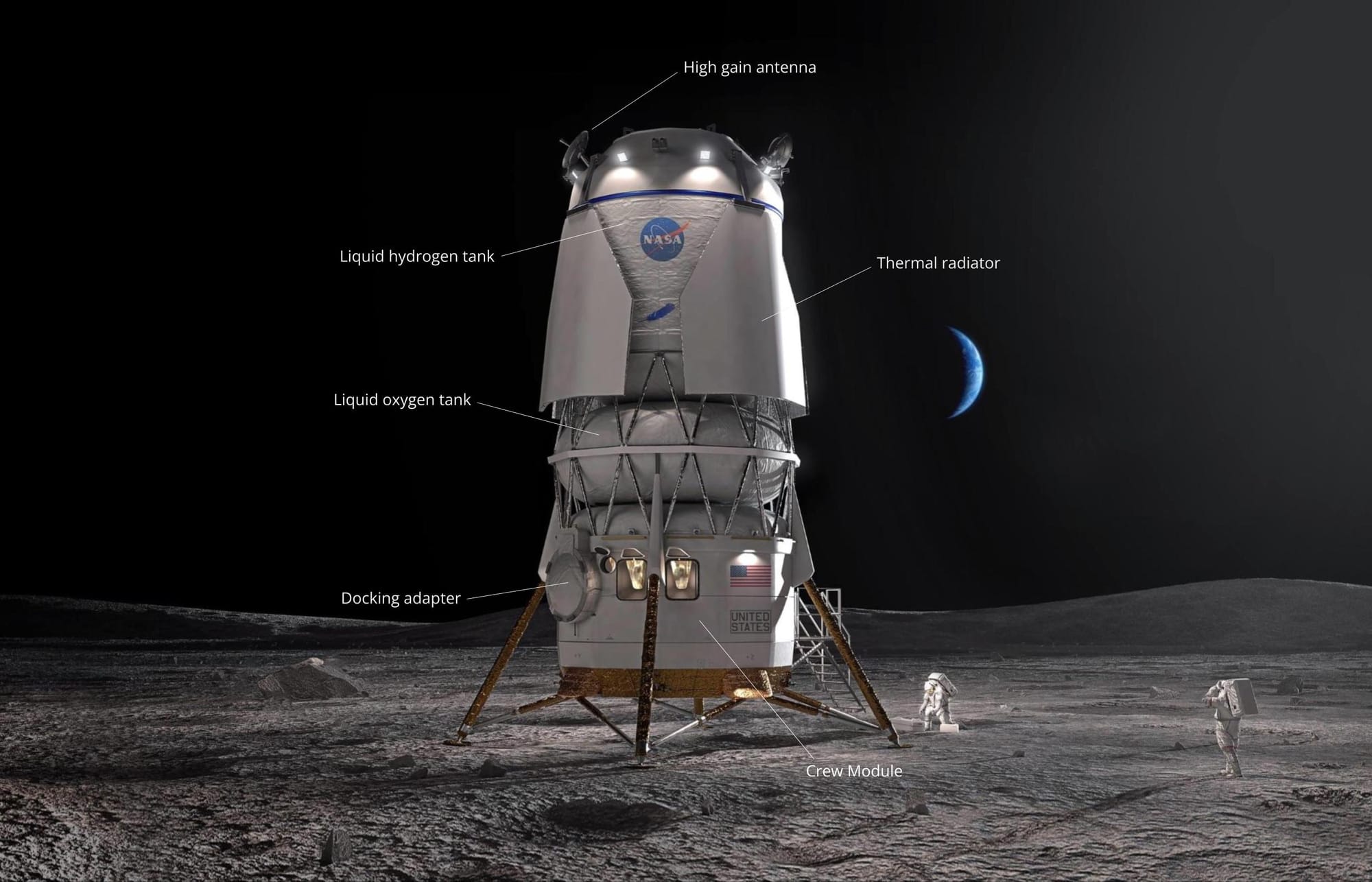
One of the most critical recent developments? NASA’s selection of Blue Origin’s Blue Moon lander for the first of three uncrewed cargo missions under the Commercial Lunar Payload Services (CLPS) program. These missions, set to begin in 2025, will test how well robots can operate in the Moon’s harsh environment—where temperatures swing from -250°F to 250°F, radiation is intense, and the low-gravity terrain makes movement unpredictable.
Key challenge: Landing precisely on the Moon is far harder than on Mars. The Moon’s lack of atmosphere means no parachutes—only precision thrusters and AI-driven navigation can ensure a soft touchdown. Even a slight miscalculation can send a lander crashing into the surface.
The Builders: Robotic Excavators and 3D Printers
Once the basic infrastructure is in place, the real construction begins. The Moon’s regolith—its fine, powdery soil—is both a resource and a challenge. It’s sharp enough to damage equipment, electrostatic enough to cling to surfaces, and rich enough in metals and water ice to be worth mining. But turning it into usable materials requires specialized robots:
- Regolith excavators (like NASA’s RASSOR prototype) will dig trenches and collect samples, testing methods for large-scale mining.
- 3D printers (such as ICON’s Olympus system) will mix regolith with a binding agent to create bricks or even entire structures layer by layer.
- Autonomous bulldozers (like those being developed by Astrobotic) will grade surfaces for landing pads and roads.
One of the most exciting experiments? NASA’s Moon to Mars Planetary Autonomous Construction Technologies (MMPACT) project, which is testing how robots can self-assemble structures using local materials. Early prototypes have shown that a single robotic arm can build a slight habitat in under a week—a game-changer for reducing the need to launch heavy pre-fabricated parts from Earth.
Why regolith matters: Every kilogram launched from Earth costs $10,000–$50,000. If robots can mine and process lunar soil for construction, the cost of building on the Moon could drop by 90%.
The Scouts: Rovers with a Purpose
While construction robots work underground, lunar rovers will map the terrain, scout for resources, and even repair damaged equipment. The next generation of rovers won’t just be mobile cameras—they’ll be multi-tool workhorses:
- Resource-prospecting rovers (like VIPER, NASA’s upcoming Volatiles Investigating Polar Exploration Rover) will hunt for water ice in permanently shadowed craters.
- Construction-support rovers (such as RAVEN, a NASA/JPL concept) will carry tools, sensors, and even miniature cranes to assist human crews.
- Autonomous repair bots (like those being tested by MIT and ETH Zurich) could one day fix broken landers or rovers using onboard 3D printers.
The biggest leap forward? AI-driven autonomy. Rovers like NASA’s upcoming Volatiles Mobile Autonomous Robot (V-MAR) will use machine learning to navigate complex terrain, avoid hazards, and even make real-time decisions about where to dig or drill.
Real-world test: In 2023, Astrobotic’s Peregrine lander (though it failed due to a propulsion leak) was designed to carry five NASA payloads, including a regolith sample return experiment. Future missions will build on these lessons to perfect the art of lunar operations.
Who’s Building the Blueprint? The Players Shaping the Moon’s Future
The Moon base won’t be built by one agency or company—it’s a collaboration between governments, private firms, and international partners. Here’s who’s leading the charge:
NASA: The Architect of Artemis
NASA’s Artemis program is the centerpiece of U.S. Lunar ambitions, with a two-pronged approach:
- Human exploration: The Artemis III mission (2026) will land the first woman and next man near the lunar south pole, followed by Artemis IV (2028), which will deliver the first elements of the Lunar Gateway—a small space station orbiting the Moon.
- Robotic precursor missions: Through CLPS, NASA is contracting private companies to fly science and tech demonstrations to the Moon before astronauts arrive.
Key NASA initiatives:
- Lunar Surface Innovation Consortium (LSIC): A public-private partnership to develop next-gen lunar tech, including robots and ISRU systems.
- Moon to Mars Planetary Autonomous Construction Technologies (MMPACT): Testing autonomous construction robots in simulated lunar environments.
- VIPER rover (2024 launch): A mobile lab to map water ice deposits critical for future bases.
Controversy: Some critics argue NASA’s $93 billion Artemis budget could be better spent on Mars missions, while others warn that delays in lander development (like SpaceX’s Starship setbacks) risk pushing timelines back.
China: The Silent Competitor
While the U.S. Focuses on Artemis, China’s Chang’e program is quietly making strides:
- Chang’e 5 (2020): Successfully returned 1.7 kg of lunar samples to Earth, proving China’s ability to land and retrieve payloads.
- Chang’e 6 (2024): A sample-return mission to the far side of the Moon, a first for any nation.
- International Lunar Research Station (ILRS): A planned China-Russia joint base near the Moon’s south pole, explicitly excluding U.S. Participation.
Why it matters: China’s no-exclusion policy could attract European, Middle Eastern, or Asian partners—creating a rival lunar alliance outside NASA’s influence.
Private Sector: The New Lunar Economy
Companies aren’t just supporting NASA—they’re driving the lunar economy. Key players include:
- SpaceX: Developing Starship, a fully reusable lander capable of carrying 100+ tons to the Moon—critical for large-scale construction.
- Blue Origin: Its Blue Moon lander is designed for heavy payloads and long-term lunar operations.
- ispace (Japan): A commercial lander provider aiming to establish a lunar data relay network by 2025.
- ICON (3D printing): Partnering with NASA to develop lunar construction systems using regolith.
- Astrobotic (Pittsburgh): Building small, frequent landers for science and commercial payloads.
Business model shift: Companies like Masten Space Systems and Moon Express are positioning themselves as lunar logistics providers, offering data services, sample returns, and even tourism—turning the Moon into a commercial frontier.
The Biggest Challenges: Dust, Radiation, and the Unknown
Building on the Moon isn’t just about engineering—it’s about surviving an alien world. Three challenges stand out:
1. Regolith: The Moon’s Most Dangerous Resource
Lunar dust isn’t just gritty—it’s electrically charged, abrasive, and toxic. It:
- Damages equipment by clogging seals and degrading solar panels.
- Threatens human health—astronauts on Apollo missions reported lung irritation from dust inhalation.
- Sticks to everything due to its electrostatic properties, making it nearly impossible to remove.
Solutions in development:
- Electrostatic dust mitigators (like NASA’s Lunar Dust Mitigation System) to repel particles.
- Sealed habitats with airlocks to prevent dust ingress.
- Regolith-processing robots that bind dust into bricks before it becomes a hazard.
2. Radiation: A Silent Killer
The Moon has no atmosphere or magnetic field, leaving it exposed to solar radiation and cosmic rays. Over time, this could cause:
- Cancer risk for astronauts.
- Electronic failures in unshielded equipment.
- Material degradation in habitats and suits.
Solutions:
- Lunar lava tubes (natural underground caves) as radiation shelters.
- Regolith shielding—burying habitats under several meters of Moon dirt.
- Active shielding (experimental tech using magnetic fields to deflect radiation).
3. The Unknown: What We Don’t Know Yet
Despite decades of study, the Moon still holds surprises:
- Water ice distribution—VIPER’s 2024 mission will map where it’s easy to extract vs. locked in deep craters.
- Seismic activity—the Moon isn’t geologically dead; moonquakes could destabilize structures.
- Long-term regolith behavior—will it settle unpredictably under repeated robot traffic?
Expert warning: “We’re designing systems based on limited data,” says Dr. Bethany Ehlmann, a planetary scientist at Caltech. “The Moon will test our assumptions in ways we can’t yet predict.”
What’s Next? The Roadmap to a Lunar Outpost
The next five years will be make or break for the Moon base vision. Here’s the critical timeline:
| Year | Mission/Event | Key Objective |
|---|---|---|
| 2024 | NASA’s VIPER rover launch | Map water ice at the south pole. |
| 2025 | Blue Origin’s Blue Moon lander (CLPS mission) | Test autonomous cargo delivery and regolith processing. |
| 2026 | Artemis III (first crewed Moon landing since 1972) | Establish initial human presence; test life-support systems. |
| 2027–2028 | Lunar Gateway construction begins | Orbital hub for crew rotations and robotic operations. |
| 2029+ | Permanent lunar outpost (Artemis Base Camp) | Sustainable habitat with ISRU, power, and research labs. |
Wildcard factors:
- Private investment—Will companies like SpaceX or Blue Origin accelerate timelines with their own Moon missions?
- International partnerships—Could India, Japan, or the UAE contribute critical tech?
- Budget approvals—U.S. Congress must reauthorize NASA’s Artemis funding beyond 2024.
One thing is certain: The Moon isn’t just a destination anymore. It’s becoming a construction site, a resource hub, and a proving ground for the next era of space exploration. And the robots leading the charge are just the beginning.
Frequently Asked Questions About the Moon Base and Lunar Robots
How will robots build structures on the Moon without human help?
Advanced robots like NASA’s MMPACT prototypes use AI and autonomous navigation to assemble habitats layer by layer, mixing regolith with a binding agent. Some systems can even self-correct errors if a part malfunctions.
Why is the Moon’s south pole the best place for a base?
The south pole has permanently shadowed craters where water ice is believed to be trapped, providing water for drinking, oxygen for breathing, and hydrogen for rocket fuel. It also offers near-constant sunlight for solar power in some areas.
Could lunar dust be used for construction?
Yes—but it must be processed first. Robots will mix regolith with a binder (like sulfur or polymers) to create lunar concrete. NASA’s OLYMPUS printer has already demonstrated this in tests.
What’s the biggest risk to the Moon base project?
Regolith electrostatic charging and radiation exposure are top concerns. Dust can disable equipment, while prolonged radiation could threaten astronaut health. Solutions like lava tube shelters and active shielding are still in development.
Will the Moon base be open to tourists?
Not initially—early outposts will focus on research and resource extraction. However, companies like SpaceX and Blue Origin have expressed interest in lunar tourism missions by the 2030s, once infrastructure is in place.
How will the Moon base support itself without constant Earth resupply?
In-situ resource utilization (ISRU) is key. Robots will mine water ice for fuel and oxygen, extract metals from regolith, and 3D-print spare parts. The goal is to achieve 90% self-sufficiency within a decade.
The Moon is no longer a distant dream—it’s a construction site with a deadline. From the first autonomous landers touching down in 2025 to the first permanent habitats by the late 2020s, the next chapter of space exploration is being written by robots, rovers, and the dust beneath our feet. The question isn’t if humanity will settle the Moon—it’s how soon, and at what cost.
