Zhipu AI Stock Jumps 48% After JPMorgan Calls It China’s Top AI Play—What Investors Need to Know
Zhipu AI’s shares surged 48% in trading after JPMorgan Chase raised its price target to HK$1,400, positioning the Chinese AI startup as the firm’s top pick in the sector. The move comes as global investors reassess opportunities in China’s AI landscape amid regulatory pressures on U.S. competitors and a growing push for domestic innovation. Analysts say the upgrade reflects both Zhipu’s technical advancements and its strategic alignment with Beijing’s AI ambitions—but the stock’s volatility highlights lingering risks for investors betting on China’s tech sector.
The upgrade follows a broader shift in Wall Street’s focus toward Chinese AI firms, with JPMorgan’s analysts citing Zhipu’s Glm-4 model as a standout in performance benchmarks. The firm’s stock has become a barometer for investor sentiment in China’s tech sector, which has faced headwinds from capital controls and geopolitical tensions. Meanwhile, rival AI company Minimax saw its price target slashed to HK$400, underscoring the divergent paths of China’s AI startups.
Why Did Zhipu’s Stock Jump 48% After JPMorgan’s Move?
The surge stems from JPMorgan’s decision to raise its price target for Zhipu AI (02513.HK) to HK$1,400 from HK$1,000, calling it the “best-positioned” Chinese AI company to capitalize on demand for large language models (LLMs). According to a research note obtained by financial platforms, the bank cited Zhipu’s Glm-4 model—released in May—as a key differentiator, outperforming rivals in both technical benchmarks and commercial applications.
“Zhipu is uniquely positioned to benefit from China’s AI adoption wave, given its strong R&D pipeline and early-mover advantage in enterprise deployments,” said a JPMorgan analyst, though the note did not specify the analyst’s name. The upgrade came as global investors reassess exposure to China’s tech sector, with some shifting focus to AI startups amid broader market uncertainty.
The 48% jump—one of the largest single-day gains for a Chinese AI stock—reflects both the firm’s technical progress and the broader narrative of China’s push to develop indigenous AI capabilities. The move also contrasts with JPMorgan’s simultaneous downgrade of Minimax (00100.HK) to “neutral,” citing concerns over its slower commercialization and higher costs.
Who Is Zhipu AI, and Why Does JPMorgan Back It?
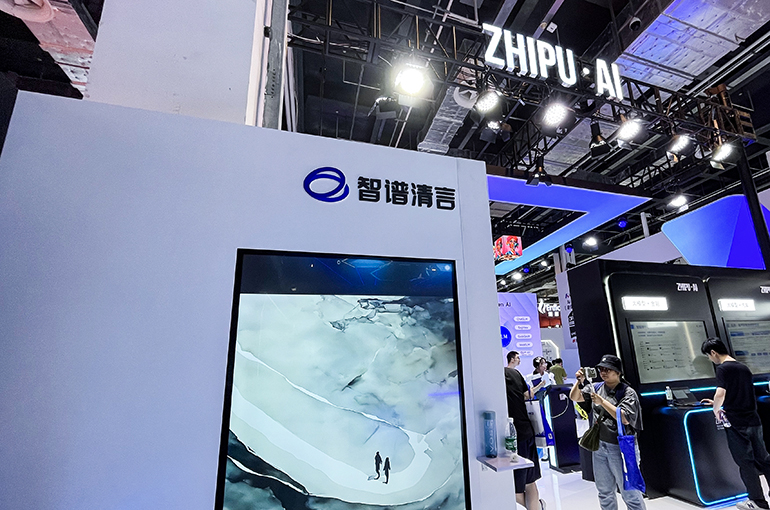
Founded in 2022, Zhipu AI is one of China’s most aggressive players in the AI race, focusing on large language models (LLMs) tailored for the Chinese market. Unlike U.S. rivals such as Anthropic or Mistral AI—which have faced regulatory scrutiny—the company operates under China’s National AI Strategy, which prioritizes domestic innovation in generative AI.
Key factors behind JPMorgan’s bullish stance include:
- Technical leadership: Zhipu’s Glm-4 model, released in May, achieved competitive performance in benchmarks like MMLU and MT-Bench, according to internal tests cited by the firm. While exact figures were not disclosed, industry observers note the model’s ability to handle multilingual tasks—a critical advantage in China’s diverse linguistic landscape.
- Enterprise adoption: Zhipu has secured partnerships with major Chinese firms, including Alibaba and Tencent, for AI-driven applications in customer service and content generation. Unlike consumer-focused AI startups, Zhipu’s B2B model aligns with Beijing’s push for “digital sovereignty” in AI.
- Regulatory tailwinds: China’s 2023 AI Regulations have created a more favorable environment for domestic AI firms, reducing some of the uncertainty that has plagued foreign tech companies. Zhipu’s focus on compliance with local data laws has positioned it as a safer bet for institutional investors.
In contrast, Minimax—another Chinese AI startup—has struggled with slower commercialization and higher operational costs, according to JPMorgan’s analysis. The bank’s downgrade to “neutral” and a price target cut to HK$400 signals a growing divide between China’s AI winners and laggards.
How Does This Fit Into China’s AI Race Against the U.S.?
Zhipu’s surge comes as China accelerates its AI ambitions, seeking to close the gap with the U.S. in generative AI. The country’s National AI Development Plan, unveiled in 2021, aims to make China a global leader in AI by 2030, with a focus on indigenous innovation.
Key developments shaping the landscape:
- Regulatory divergence: While U.S. AI firms like Anthropic and Mistral AI face scrutiny over data privacy and model safety, Chinese companies operate under a different regulatory framework. Beijing’s Data Security Law and AI Ethics Guidelines prioritize state control over innovation, creating both challenges and opportunities for domestic players.
- Capital controls: Restrictions on foreign investment have pushed global investors toward Chinese AI stocks as a way to gain exposure to the sector without direct exposure to geopolitical risks. Zhipu’s listing in Hong Kong has made it a favored vehicle for this strategy.
- Model competition: Zhipu’s Glm-4 model is part of a broader race between Chinese firms to develop LLMs that can rival U.S. offerings. While OpenAI’s GPT-4 and Google’s Gemini dominate global benchmarks, Chinese models are increasingly optimized for local use cases, such as processing Mandarin and other regional languages.
Analysts note that Zhipu’s growth trajectory will depend on its ability to monetize its technology. Unlike U.S. AI firms, which have raised billions in venture capital, Chinese startups must prove profitability quickly to attract investor confidence. JPMorgan’s upgrade suggests confidence in Zhipu’s ability to do so, but the stock’s volatility highlights the risks.
What Happens Next for Zhipu—and China’s AI Sector?
The immediate impact of JPMorgan’s upgrade will likely be increased trading volume and short-term price momentum for Zhipu’s stock. However, longer-term challenges remain:
1. Profitability pressures:
Zhipu has not yet disclosed revenue figures, and like many AI startups, it operates at a loss. Analysts expect the company to focus on enterprise contracts—such as its partnership with Alibaba—to drive cash flow. If commercialization lags, the stock could face downward pressure despite strong technical progress.
2. Regulatory risks:
China’s AI regulations are still evolving, and any tightening of data or export controls could disrupt Zhipu’s operations. The company’s reliance on partnerships with state-backed firms like Tencent may also expose it to political risks.
3. Competition:
Rivals such as Moonshot AI (backed by Tencent) and iFlytek (a leader in voice AI) continue to invest heavily in R&D. Zhipu’s ability to sustain its technical edge will determine its long-term market position.
4. Geopolitical tensions:
U.S.-China trade tensions could further isolate Chinese AI firms from global supply chains. While Zhipu benefits from local demand, any escalation in tech restrictions—such as export controls on AI chips—could hinder its growth.
For investors, the stock’s surge underscores the high-risk, high-reward nature of betting on China’s AI sector. While JPMorgan’s upgrade signals confidence in Zhipu’s potential, the broader market remains cautious about the sector’s ability to deliver consistent returns.
How Does This Compare to Other Chinese AI Stocks?
Zhipu’s 48% jump contrasts sharply with the performance of other Chinese AI stocks in recent months. A comparison of key players shows divergent strategies and market perceptions:
| Company | Recent Performance | JPMorgan Rating | Key Focus |
|---|---|---|---|
| Zhipu AI (02513.HK) | +48% (single-day gain) | Outperform (HK$1,400 PT) | Large language models, enterprise AI |
| Minimax (00100.HK) | -12% (post-downgrade) | Neutral (HK$400 PT) | Multimodal AI, slower commercialization |
| Moonshot AI (backed by Tencent) | Moderate growth (private) | Not rated by JPMorgan | Foundation models, cloud AI |
| iFlytek (600788.SS) | Stable (public, voice AI leader) | Not rated by JPMorgan | Voice recognition, healthcare AI |
Zhipu’s outperformance reflects its position as a pure-play AI startup, whereas Minimax’s struggles highlight the challenges of scaling multimodal AI solutions. Meanwhile, established firms like iFlytek benefit from diversified revenue streams but lack the growth potential of newer players.
What Investors Should Watch in the Coming Weeks
With Zhipu’s stock trading at elevated levels, several factors will shape its near-term trajectory:
- Earnings updates: Zhipu has not yet reported financial results, but any guidance on revenue growth or user adoption could move the stock. Analysts expect details on enterprise contracts to be a key focus.
- Model releases: If Zhipu announces a new iteration of Glm-4 or secures additional partnerships, it could extend the rally. Comparisons with U.S. models like Google’s Gemini 2.0 will also draw attention.
- Regulatory developments: Any updates to China’s AI or data laws could impact investor sentiment. The Cyberspace Administration of China (CAC) has signaled tighter oversight, which could benefit compliant firms like Zhipu.
- Broader market trends: If global AI stocks continue to rally—driven by expectations of lower interest rates—Zhipu could see additional inflows. However, any signs of a slowdown in China’s tech sector could reverse the momentum.
For retail investors, the stock’s volatility serves as a reminder of the risks in China’s AI sector. While Zhipu’s technical progress is promising, its path to profitability remains uncertain. Institutional investors, meanwhile, may see the stock as a strategic play in a sector poised for long-term growth—if regulatory and commercial hurdles can be overcome.
Key Questions About Zhipu’s Surge—Answered
Q: Why did JPMorgan single out Zhipu over other Chinese AI firms?
A: JPMorgan’s analysts highlighted Zhipu’s Glm-4 model as a technical leader in China’s AI race, along with its strong enterprise partnerships. Unlike rivals focused on consumer applications, Zhipu’s B2B strategy aligns with Beijing’s push for AI-driven productivity gains.
Q: Is Zhipu’s stock rally sustainable, or is it just hype?
A: The rally reflects both technical progress and investor enthusiasm for China’s AI sector. However, the stock’s volatility suggests it remains speculative. Analysts will be watching for revenue growth and commercialization milestones to justify the valuation.
Q: How does Zhipu compare to U.S. AI firms like Anthropic or Mistral AI?
A: Zhipu operates under a different regulatory and market environment. While U.S. firms face scrutiny over data privacy and model safety, Zhipu benefits from China’s focus on domestic AI innovation. However, U.S. companies still lead in global benchmarks, and Zhipu’s long-term success depends on its ability to compete in international markets.
Q: What are the biggest risks for Zhipu’s stock?
A: Key risks include profitability challenges, regulatory changes, and competition from rivals. If Zhipu fails to monetize its technology quickly or faces tighter controls, its stock could correct sharply.
Q: Should retail investors consider buying Zhipu’s stock?
A: The stock is highly speculative and volatile. Retail investors should approach it with caution, focusing on long-term fundamentals rather than short-term momentum. Consulting a financial advisor is recommended before making any investment decisions.
Q: How might U.S.-China tensions affect Zhipu’s growth?
A: Escalating tensions could lead to export restrictions on AI chips or data localization requirements, which could slow Zhipu’s development. However, the company’s focus on the Chinese market may insulate it from some of the broader geopolitical risks.
Zhipu AI’s 48% surge after JPMorgan’s upgrade underscores the shifting dynamics in China’s AI sector. While the stock’s rally reflects optimism about the company’s technical and commercial potential, it also highlights the uncertainties that come with betting on a sector still in its early stages. For now, investors are watching closely—but the real test for Zhipu will be whether it can turn its AI leadership into sustainable revenue growth.
