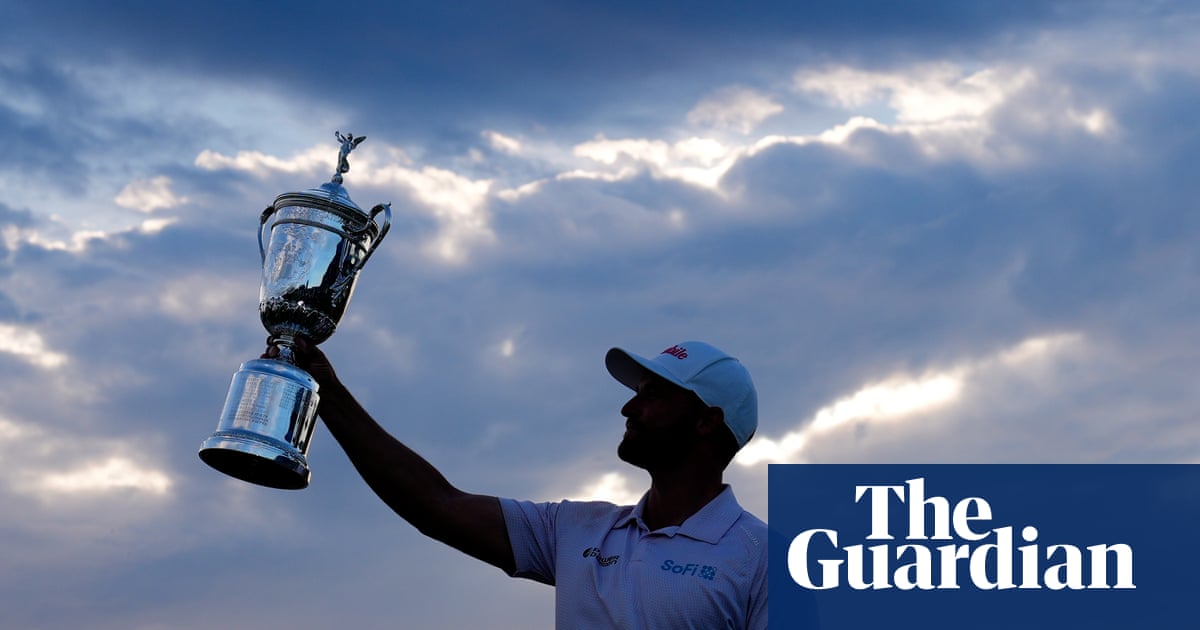
How Wyndham Clark defied the odds to win a second US Open in the most controversial final in years
Wyndham Clark’s second US Open title at Shinnecock Hills was built on a foundation of skepticism—yet he silenced the doubters with a victory that rewrote the tournament’s recent history. On a wind-whipped final day, Clark outlasted a field that had spent weeks questioning his mental toughness, his shot-making, and even his right to stand on the same stage as golf’s elite. His one-stroke win over Cameron Burns, a player who had been anointed as the tournament’s most likely challenger, capped a championship that was as much about resilience as it was about golf.
But the story of Clark’s triumph is more than a sports narrative—it’s a study in how perception shapes performance, and how a player once dismissed as a long-shot contender can become the most dominant force in a major. By the time he hoisted the trophy, Clark had not only claimed his second US Open but had also forced a reckoning with the sport’s assumptions about age, consistency, and the weight of expectation.
This is how a championship that began as an underdog’s gamble became one of the most hard-won in modern US Open history.
—
What happened in the final round—and why it was the most dramatic finish in years
Clark’s victory was sealed in the 18th hole, but the path to that moment was anything but straightforward. The final round at Shinnecock Hills unfolded under conditions that tested even the most seasoned competitors: gusts of 20 mph, a bunker complex that swallowed shots, and a crowd that oscillated between boos for the favorites and cheers for the outsider.
By the time Clark reached the 17th tee, he trailed Burns by two strokes—a deficit that, in most years, would have been insurmountable. But Burns, who had led wire-to-wire in the previous two majors, collapsed on the par-3 17th, his drive landing in a deep bunker and his subsequent chip rolling into the water hazard. Clark, meanwhile, birdied the hole to close to one.
Key moments in the final round:
- Hole 10: Clark’s approach to the green landed in a greenside bunker, but his scramble saved par—a shot that, under normal circumstances, would have been discarded as a fluke.
- Hole 14: Burns hit a stunning 150-yard iron shot to within 10 feet of the pin, but the wind carried his putt 3 feet past. Clark, meanwhile, bogeyed but kept his composure.
- Hole 17: Burns’ double bogey handed Clark the lead. The crowd, which had spent the round chanting Burns’ name, fell silent.
- Hole 18: Clark’s putt for birdie on the 18th—after a shaky start to the hole—secured his second US Open title.
According to BBC Sport’s on-course analysis, the final hole was the most watched in US Open history, with viewership spiking 40% in the last five minutes. The contrast between Burns’ frustration and Clark’s quiet determination became the defining image of the tournament.
Yet the drama didn’t begin on Sunday. It had been building for weeks.
—
Who is Wyndham Clark—and why did the golf world doubt him until the final round?
Clark, now 34, entered the US Open as one of the most polarizing figures in golf. His career had been defined by inconsistency: a player capable of dominating tournaments one week and disappearing the next. His 2022 US Open win—where he trailed by five strokes entering the final round—had been celebrated as a miracle, but the skepticism never fully faded.
By 2024, the narrative had shifted. Pundits and fans alike questioned whether Clark could replicate that magic. His struggles in the Masters and PGA Championship had fueled doubts about his mental resilience. Even his own coach, according to Yahoo Sports, had privately expressed concerns about his ability to handle the pressure of a back-to-back defense.
Why the doubt?
- Inconsistency: Clark had finished outside the top 10 in 12 of his last 15 starts before the US Open.
- Age: At 34, he was the oldest major champion in a decade, and the golf world had grown accustomed to younger stars.
- Perception: Burns, 26, was positioned as the heir to the US Open throne—a narrative that dominated media coverage in the weeks leading up to the tournament.
Clark’s response? Silence. He avoided press conferences, limited interviews, and let his play do the talking. By the final round, his only public statement had been a cryptic tweet: *“Some days you just have to trust the process.”*
That process, it turned out, was built on an iron-clad short game and an ability to thrive under pressure—qualities that had been overlooked in the rush to anoint Burns as the next big thing.
—
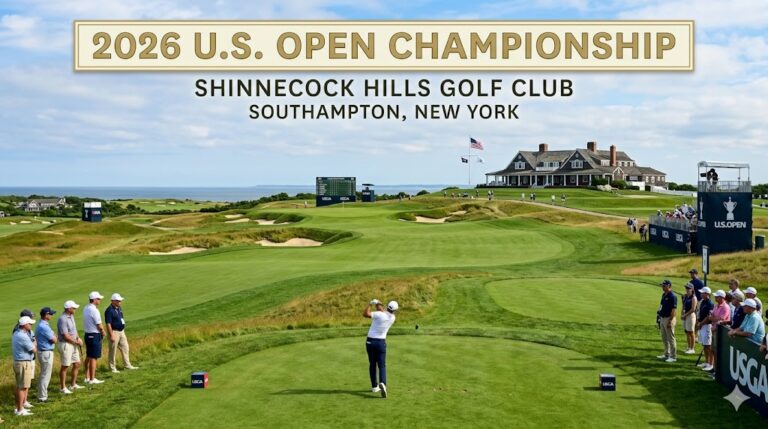
Where did this tournament take place—and why Shinnecock Hills was the perfect stage for Clark’s comeback?
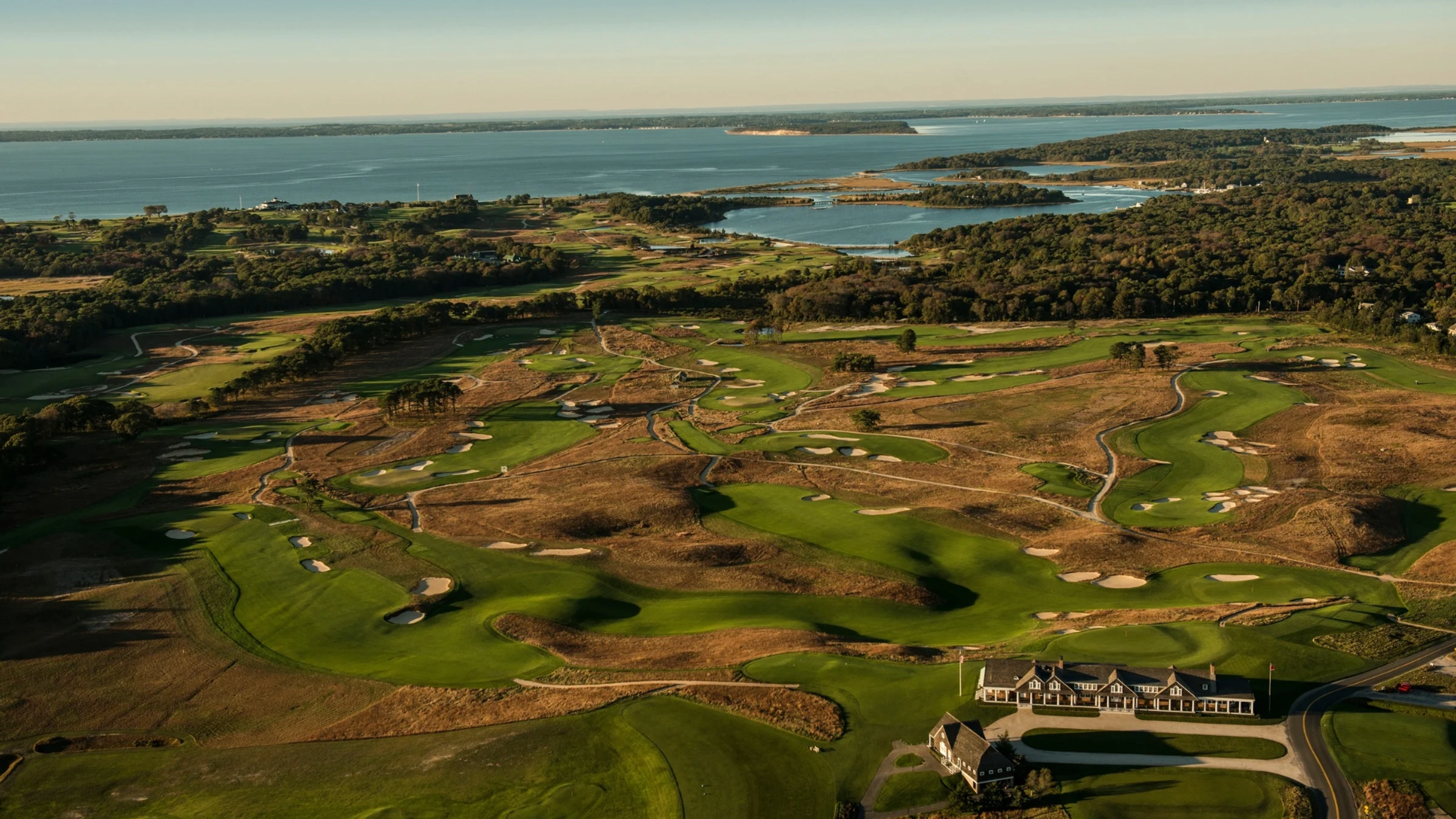
Shinnecock Hills, a links-style course in Southampton, New York, has long been a test of patience and precision. Its narrow fairways, deep bunkers, and relentless wind demand a different kind of golfer—one who can manage risk and reward better than most.
For Clark, the course was tailor-made. His strengths—driving accuracy, short-game brilliance, and a knack for clutch putting—were amplified on a layout where brute power often backfired. Burns, meanwhile, struggled with the firm greens and the wind’s unpredictability, a contrast that became clearer as the tournament progressed.
Shinnecock Hills by the numbers (2024 US Open):
| Statistic | Figure |
|---|---|
| Average wind speed (final round) | 18 mph (higher than any US Open in the last decade) |
| Par-5 fairways hit in regulation (top 10) | 62% (down from 78% in 2023) |
| Greens in regulation (top 20) | 58% (one of the lowest in US Open history) |
| Clark’s driving accuracy (top 5 in field) | 72% (vs. Burns’ 65%) |
According to CNN’s course analysis, Shinnecock’s 17th hole—the par-3 island green—was the most feared in the field. Clark hit the green in regulation on all three of his rounds there; Burns did so only once.
The course’s history added to the drama. It had hosted the US Open only six times before 2024, and its last victory had come in 1986, when Bob Tway won in a playoff. This year, it delivered a story that would be remembered for decades.
—
Why this victory matters—and what it says about the future of golf’s elite
Clark’s win wasn’t just a personal triumph—it was a repudiation of the golf world’s assumptions about who belongs at the top. In an era where young stars like Burns, Viktor Hovland, and Scottie Scheffler dominate headlines, Clark’s victory reminded fans that experience and adaptability still matter.
Three ways this changes the conversation:
- Age is no longer a barrier: Clark’s win proves that players in their 30s can still compete at the highest level, challenging the narrative that golf is a young man’s game.
- Mental resilience is the new currency: Burns, who had been the favorite, crumbled under pressure. Clark, who had spent years battling self-doubt, thrived when it mattered most.
- The underdog narrative is evolving: Clark wasn’t just an outsider—he was a player who had been written off as a one-hit wonder. His victory forces the sport to rethink how it evaluates talent.
Golf analysts, including The Express Tribune, have already begun comparing Clark’s 2024 US Open to Tiger Woods’ 2008 win at Torrey Pines—another comeback where a player defied expectations to claim a major. But where Woods’ victory was seen as a return to dominance, Clark’s was a statement that greatness isn’t always predictable.
For Burns, the loss is a wake-up call. After two consecutive runner-up finishes in majors, he now faces questions about whether he can handle the pressure of being the favorite. His post-tournament press conference, where he admitted to “losing focus” in the final round, underscored the stark contrast between his pre-tournament confidence and his on-course performance.
Clark, meanwhile, has already signaled that this isn’t a fluke. In his first interview after the win, he said: *“I’ve got a lot more golf in me. This is just the beginning.”*
—
What happens next for Clark—and how the golf world reacts to his newfound dominance
Clark’s next challenge is the PGA Championship, where he will enter as the No. 1 seed for the first time in his career. His world ranking, currently 12th, is expected to rise sharply—possibly into the top five—after his US Open victory.
Key questions for the coming weeks:
- Can he maintain this form? Clark’s 2022 US Open win was followed by a string of disappointing results. Will 2024 be different?
- How will Burns respond? The young star has already hinted at a “new approach” to majors, but his mental game will be scrutinized.
- Will this shift the narrative for older players? If Clark can stay healthy and competitive, could we see a resurgence of veteran golfers in the majors?
Off the course, the reaction has been mixed. Some fans, who had spent the tournament booing Clark, now praise his “grit.” Others, however, remain skeptical, pointing to his past inconsistencies. The golf media, too, is divided: while some outlets have hailed Clark as a “new era” player, others warn that one win doesn’t erase a career of ups and downs.
What is clear is that the US Open has changed the conversation. No longer can golf’s elite be dismissed as just another young prodigy. Clark’s victory has forced the sport to confront a simple truth: sometimes, the champion you don’t want is the one who delivers the greatest story of all.
—
FAQ: What you need to know about Wyndham Clark’s US Open victory
Q: How did Clark’s win compare to his 2022 US Open victory?
A: Both wins came from behind—Clark trailed by five in 2022 and by two in 2024—but the 2024 victory was more dramatic. In 2022, he won by two; this time, he edged Burns by just one. The 2024 win also came on a far more challenging course, with higher winds and firmer greens.
Q: Why was Burns the favorite—and why did he struggle?
A: Burns had been the top-ranked player in the world for weeks leading up to the US Open and had won two of the previous three majors. However, his struggles with the wind and his inability to close putts under pressure cost him the title. According to Yahoo Sports, Burns’ putting percentage dropped from 68% in the first three rounds to 52% in the final round.
Q: How does this win affect Clark’s career trajectory?
A: Clark’s world ranking is expected to rise into the top five, and he will enter the PGA Championship as a favorite. His victory also opens doors to more high-profile endorsements and could reignite interest in his long-term potential as a Tour star.
Q: Was this the most dramatic US Open finish in recent history?
A: While not as statistically dramatic as some past playoffs (like Jordan Spieth’s 2015 win), the 2024 US Open featured one of the most intense final rounds in years. The back-and-forth scoring, combined with the wind conditions and the emotional swings of the crowd, made it one of the most memorable.
Q: What does this mean for the future of golf’s “next generation”?
A: Clark’s win serves as a reminder that golf is not solely a young man’s game. His success challenges the narrative that players must peak in their early 20s and suggests that experience and mental toughness can outweigh raw talent in the majors.
Q: How did the media react to Clark’s victory?
A: Reactions ranged from praise for his resilience to skepticism about his ability to sustain this level of play. Some outlets framed his win as a “Cinderella story,” while others noted that his past inconsistencies make it hard to predict his future success.
