Volkswagen cuts 100,000 jobs
Volkswagen cuts 100,000 jobs
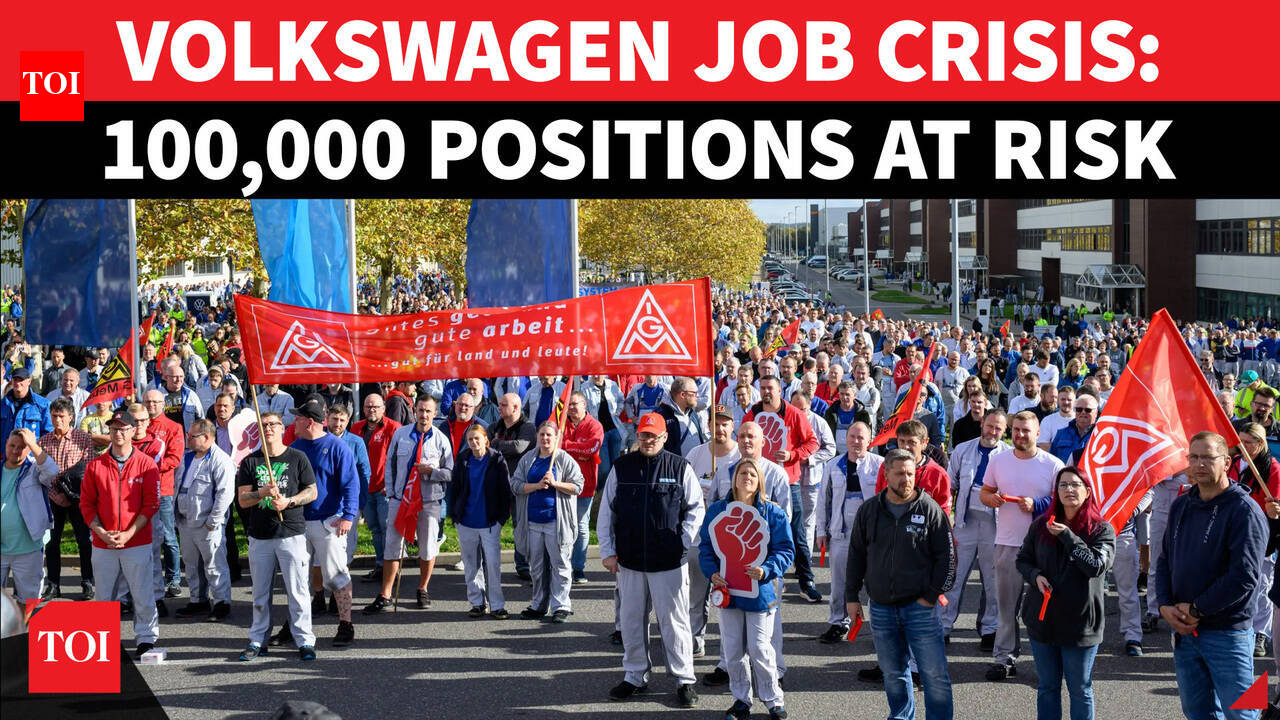
Volkswagen's Historic Restructuring: A Blow to Germany's Auto Industry
The announcement by Volkswagen to cut 100,000 jobs by 2030 has sent shockwaves throughout Germany's auto industry, with the company's workforce and local communities facing an uncertain future. According to Times of India, the restructuring plan is the largest in the global auto industry, surpassing the 50,000 job cuts made by General Motors after its bankruptcy in 2009.The reasons behind Volkswagen's decision to cut jobs are complex, with the company facing fierce competition from Chinese manufacturers, weak demand for electric cars, and the impact of US tariffs on European-built vehicles. As reported by CNBC TV18, Volkswagen's management and unions have agreed to reduce the company's workforce by 50,000 positions, on top of the 50,000 job cuts already approved.
Related YouTube video

The job cuts will have a significant impact on Volkswagen's workforce, with around 15% of the company's global staff facing redundancy. As reported by Novinite, the potential closure of four German factories in Hannover, Emden, Zwickau, and Neckarsulm could also have a devastating impact on local communities, with thousands of jobs at risk.
The situation is particularly dire in the eastern German state of Saxony, where the Zwickau factory is a major source of employment and supports a large network of suppliers and related businesses. According to Eastern Eye, the factory's closure could have a significant impact on the local economy, with one longtime employee describing the potential loss as a "big black spot on the map."
The Human Impact of Job Cuts
The job cuts will have a significant impact on the lives of Volkswagen's employees and their families. As reported by CNBC TV18, the company's management and unions have agreed to reduce the company's workforce by 50,000 positions, on top of the 50,000 job cuts already approved. This will result in the loss of around 15% of the company's global workforce.The impact of the job cuts will be felt not only by the employees who lose their jobs but also by the local communities that rely on the company's factories. As reported by Novinite, the potential closure of the Zwickau factory could have a significant impact on the local economy, with one longtime employee describing the potential loss as a "big black spot on the map."
Global Competition and Market Trends
The global auto industry is facing significant challenges, with the rise of Chinese manufacturers and the impact of US tariffs on European-built vehicles. As reported by TFLCar, Volkswagen's plan to reduce its model range and cut the complexity of its offerings is a response to these challenges, with the company seeking to focus on its most profitable segments and streamline production.The company's decision to cut jobs and reduce its model range is also a reflection of the changing nature of the auto industry, with a shift towards electric and autonomous vehicles. According to CNBC TV18, Volkswagen's management and unions have agreed to reduce the company's workforce by 50,000 positions, on top of the 50,000 job cuts already approved, in an effort to make the company more competitive in the global market.
The next step for Volkswagen will be to implement its approved plans while juggling labor unions, local government, and other shareholders. As stated by CEO Oliver Blume, the company will invest a three-figure billion sum to make its iconic brands even more attractive, stronger, and more competitive. The success of Volkswagen's efforts to adapt to the changing market landscape will depend on its ability to execute its restructuring plan and navigate the complex web of stakeholders involved.
The future of Volkswagen's workforce and the German auto industry hangs in the balance, as the company's restructuring plan sets in motion a series of events that will have far-reaching consequences. The company's ability to implement its plans and achieve its goals will be closely watched, with the outcome having significant implications for the global auto industry. According to TFLCar, Volkswagen's higher-ups say that European manufacturing capacity outstrips demand by more than 500,000 units, and current production at Emden, Hanover, Neckarsulm, and Zwickau could wind down over the next several years. The company's plans to produce 9 million cars by 2030, with an operating margin of 9%, will be a key indicator of its success in navigating the challenges facing the global auto industry.
Archypedia is dedicated to independent, evidence-backed reporting. This briefing was synthesized from primary source reporting, corroborated across independent newsrooms, and verified against our Editorial Standards.
Transparency record
Evidence behind this report
This report synthesizes 5 distinct sources. Open the source ledger below to compare the underlying coverage.
Prepared under the Archypedia Editorial Policy by the Samir Haddad editorial desk profile. AI-assisted tools may support drafting and verification; public accountability remains with Archypedia. Report an error.